
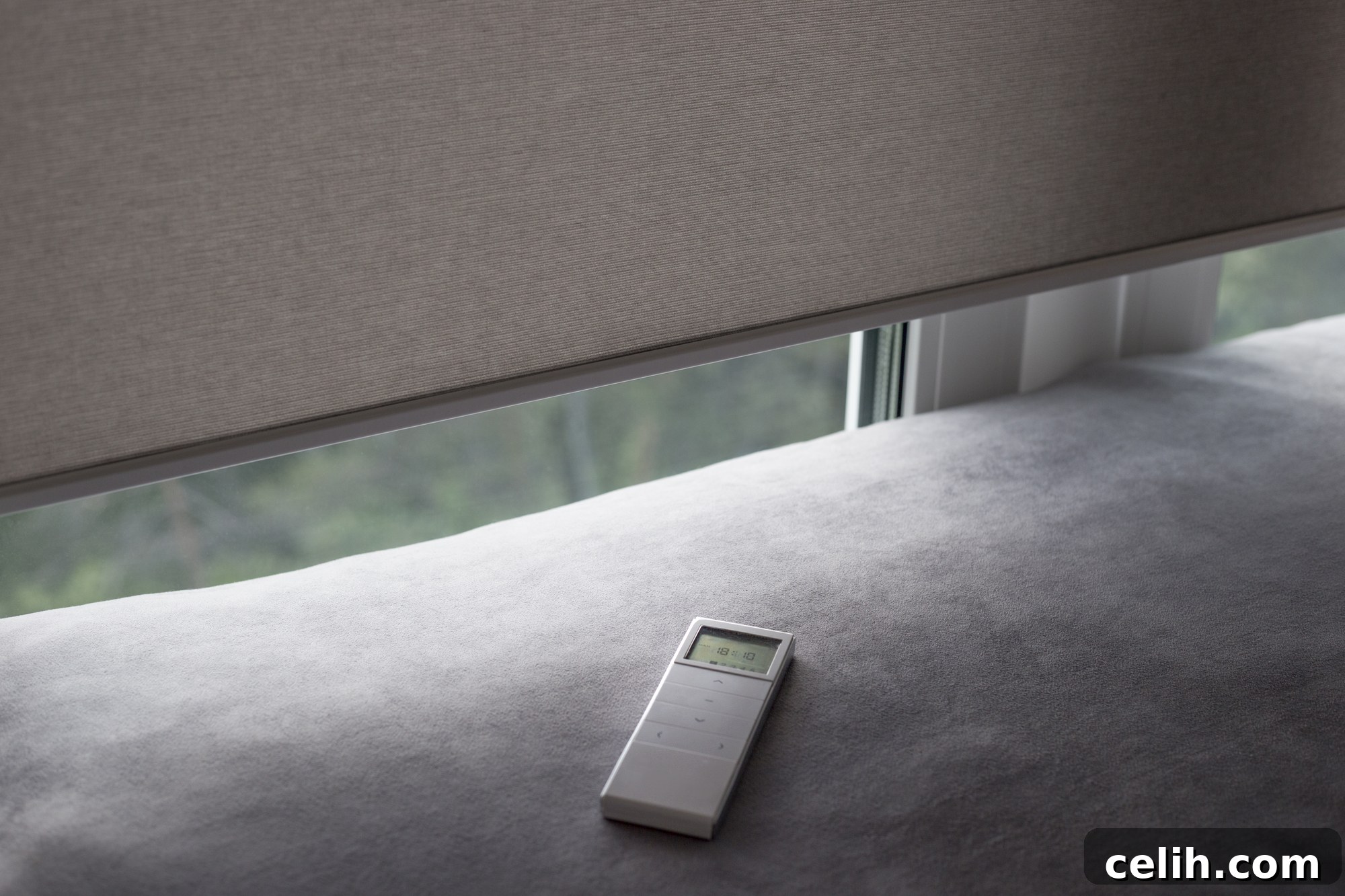
Imagine a home where your window coverings respond to your every need, effortlessly adjusting to greet the morning sun or provide instant privacy with a simple command. This is the promise of custom motorized blinds – a blend of luxury, convenience, and smart technology that can transform your living space. Far beyond mere aesthetics, these innovative window treatments offer a host of benefits designed to enhance your comfort, security, and energy efficiency. However, as with any advanced home improvement, it’s wise to weigh both the advantages and potential considerations before integrating motorized blinds into your home.
The Rise of Smart Living: Embracing Motorized Blinds
The ability to raise or lower your window treatments with the mere touch of a button, a voice command, or even on a pre-set schedule has become a hallmark of modern, intelligent homes. Whether controlled by a sleek remote, a dedicated smartphone app, or integrated into a comprehensive smart home ecosystem, the convenience of custom blinds motorization is undeniable. But what truly sets these automated window coverings apart? Let’s delve into the comprehensive pros and cons to help you determine if they are the right investment for your lifestyle.
Unveiling the Benefits of Motorized Blinds
The advantages of incorporating motorized blinds into your home extend far beyond simple convenience. They address practical concerns, enhance lifestyle quality, and contribute to a more efficient living environment.
- Enhanced Safety for Families and Pets: One of the most compelling reasons to choose motorized window treatments is the elimination of hazardous cords. Traditional manual blinds with dangling cords pose a significant strangulation risk, particularly for small children and curious pets. Motorized blinds offer a completely cordless solution, providing invaluable peace of mind for parents and pet owners, making your home a safer haven.
- Unparalleled Convenience and Comfort: Imagine this: you’re settling in for a movie night, only to find an annoying glare on the screen. With custom motorized blinds, there’s no need to interrupt your comfort. A quick tap on your remote or phone, or even a simple voice command, swiftly adjusts your window treatments to block the sun. This hands-free operation is especially beneficial for large or hard-to-reach windows, making daily adjustments effortless and enhancing your overall comfort.
- Superior Privacy and Robust Security: Motorized blinds offer an immediate and effective solution for privacy. If you live in close proximity to neighbors, you can instantly lower your shades to create a private sanctuary. From a security standpoint, automated blinds are a game-changer. By scheduling your blinds to open and close at different times throughout the day, even when you’re away from home, you create the illusion of occupancy, deterring potential intruders and adding an extra layer of protection to your property.
- Significant Energy Savings and Climate Control: Many automatic window treatments allow you to create customized schedules that automatically open or close your shades based on the time of day, sunlight exposure, or even ambient temperature. This intelligent automation helps to regulate your home’s indoor temperature. During hot summer months, closing blinds on sun-exposed windows can reduce heat gain, easing the burden on your air conditioning system. Conversely, in winter, opening them to harness natural sunlight can reduce heating needs. This strategic management of natural light and insulation can lead to tangible energy savings and a more sustainable home.
- Enhanced Accessibility for Everyone: Motorized blinds are a boon for individuals with mobility challenges, the elderly, or those with disabilities. The effort required to manually operate blinds can be a significant hurdle. With remote control, app control, or voice commands, adjusting window treatments becomes accessible to everyone, promoting independence and ease of living within the home.
- Modern Aesthetics and Clutter-Free Design: Beyond functionality, motorized blinds contribute to a sleek, contemporary aesthetic. The absence of cords provides a clean, minimalist look that complements modern interior designs. This streamlined appearance enhances the overall elegance and sophistication of any room, presenting an uncluttered and refined finish.
- Potential Increase in Property Value: In an increasingly connected world, smart home features are highly desirable. Integrating smart, motorized window treatments can be an attractive selling point, potentially increasing your home’s market value and appeal to tech-savvy buyers looking for convenience and energy efficiency built right in.
Considering the Downsides: What to Keep in Mind
Despite their numerous advantages, it’s important to approach custom motorized blinds with a balanced perspective. A few considerations might influence your decision:
- Initial Investment and Upfront Cost: The most significant factor for many homeowners is the initial financial outlay. Adding motorization to existing blinds, if feasible, will incur a cost for the motor, control system, and potentially installation. If your current blinds aren’t compatible with motorization, you might need to purchase entirely new motorized window treatments, which represent a higher upfront investment compared to their manual counterparts. It’s crucial to evaluate your budget and determine if the long-term benefits align with this initial expense.
- Power Source and Maintenance Requirements: Motorized blinds require a power source. This could be batteries (which need periodic replacement or recharging), a plug-in adapter (requiring an accessible outlet), or a hardwired solution (which typically involves professional electrical installation). Battery-operated blinds offer flexibility but necessitate routine battery checks and replacements, which can be a minor inconvenience. Hardwired systems are low-maintenance once installed but can be more complex and costly initially. Additionally, like any electronic device, motors can wear out or encounter issues over time, potentially requiring professional repair or replacement.
- Technological Dependence and Potential Glitches: While rare, reliance on technology means there’s a possibility of connectivity issues, app glitches, or remote control malfunctions. If your blinds are integrated into a smart home system, any issues with your Wi-Fi network or smart hub could temporarily affect their operation. For some, this dependence on technology might be a minor concern compared to the simplicity of manual blinds.
- Installation Complexity (for certain systems): While many battery-operated retrofit kits are designed for DIY installation, more advanced systems, especially hardwired ones or those deeply integrated with complex smart home hubs, might require professional installation. This can add to the overall cost and time commitment.
Demystifying Motorization: How to Motorize Custom Blinds
Once you’ve weighed the pros and cons, the next natural question is: “How can I motorize my custom blinds?” The process can vary depending on whether you’re retrofitting existing blinds or purchasing new, purpose-built motorized units. As home automation gains popularity, manufacturers are increasingly offering motorization as a standard or add-on feature.
Exploring Your Motorization Options
There are generally two main pathways to motorizing your window treatments:
- Retrofitting Existing Blinds: For some types of custom blinds or shades, particularly roller shades, cellular shades, or horizontal blinds, it might be possible to add a motorization kit. This usually involves replacing the existing manual lifting mechanism with a compact motor. It’s crucial to consult the original manufacturer of your blinds or a specialized vendor to determine compatibility and available kits. They can advise on whether your specific window treatments can be converted and what equipment is needed.
- Purchasing New Motorized Blinds: If retrofitting isn’t an option, or if you’re looking for a complete overhaul, investing in new motorized blinds designed specifically for automation is the way to go. These systems are built from the ground up with integrated motors, often offering a wider range of control options and seamless aesthetics.
The Installation Process: DIY or Professional?
Once you’ve selected your motorization solution, installation is the next step. The complexity often depends on the type of system you’ve chosen:
- DIY-Friendly Options: Many battery-operated retrofit kits and even some new motorized blinds are designed for relatively straightforward self-installation. Manufacturers typically provide detailed instructions, and often, step-by-step videos are available online. Even novice DIYers can often manage these tasks, involving mounting the motor, inserting batteries, and pairing the blinds with a remote or app. Should you encounter any difficulties, most companies offer technical support to guide you through the process.
- When to Call a Professional: For hardwired systems, which require electrical connections, or for complex smart home integrations that involve multiple devices and intricate programming, professional installation is highly recommended. An experienced installer can ensure safety, optimal performance, and seamless integration with your existing smart home ecosystem, saving you time and potential headaches.
Key Considerations for Your Motorized Blinds System
Before making a final decision, think about these crucial aspects:
- Power Source: Will you opt for battery power (convenient, but requires battery changes), plug-in (needs accessible outlets), or hardwired (cleanest look, but more involved installation)? Solar-powered options are also emerging for some exterior or well-lit interior applications.
- Control Method: How do you want to operate your blinds? Options include simple handheld remotes, dedicated smartphone/tablet apps, voice control via smart assistants (like Alexa, Google Assistant), or integration with a central smart home hub (Z-Wave, Zigbee, Apple HomeKit, etc.) for advanced scheduling and automation scenarios.
- Smart Home Compatibility: If you already have a smart home system, ensure the motorized blinds you choose are compatible with your existing platform for a unified and integrated experience.
- Motor Noise: While modern motors are generally quiet, some might be louder than others. If noise is a concern, inquire about decibel ratings or silent motor options.
Making the Smart Choice for Your Home
Motorization can undeniably be a transformative addition to your custom blinds or other window treatments, elevating your home’s functionality, aesthetics, and overall liveability. By carefully considering the myriad pros – from enhanced safety and energy efficiency to unparalleled convenience and security – and weighing them against potential cons like initial cost and maintenance, you can make an informed decision that perfectly suits your home and lifestyle. The future of window treatments is here, offering an intelligent way to manage light, privacy, and comfort with unprecedented ease.