
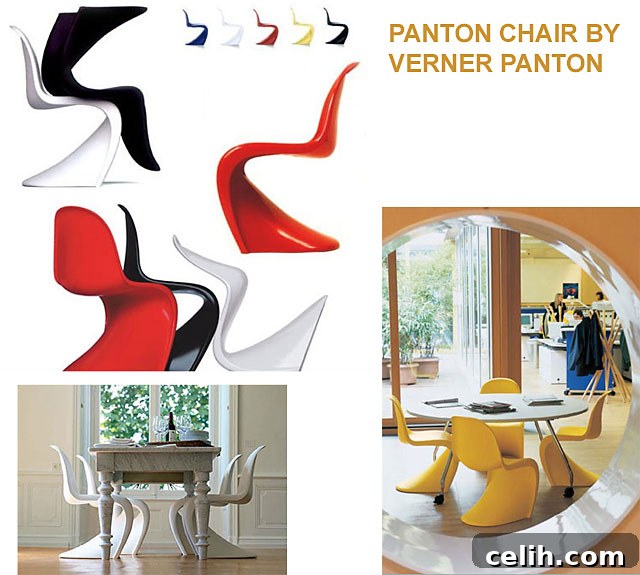
In the vibrant tapestry of modern furniture design, certain pieces transcend mere utility to become timeless icons, shaping our understanding of aesthetics and innovation. Among these celebrated creations, the Panton chair stands out as a true masterpiece. More than just a seat, it represents a pivotal moment in design history – a bold leap into the future that continues to captivate and inspire. Its sleek, flowing lines and singular form mark it as an undeniable classic, instantly recognizable and perpetually modern.
The Visionary Behind the Form: Verner Panton’s Groundbreaking Approach
The genesis of the Panton chair lies in the fertile imagination of Verner Panton, a Danish designer whose work profoundly influenced the 20th century. Born in 1926, Panton was a pioneer known for his radical and experimental approach to design. He rejected conventional furniture forms, instead envisioning pieces that were sculptural, vibrant, and integrated seamlessly into dynamic interior spaces. His philosophy was simple yet revolutionary: furniture should not just be functional; it should be an experience, a statement, and a source of joy. He dared to challenge the traditional boundaries of materials and manufacturing, constantly pushing for new possibilities.
Throughout the 1950s and 60s, Panton dedicated himself to exploring the potential of plastic as a furniture material. He saw in plastic an unparalleled freedom to create organic, cantilevered forms that were impossible with wood or metal. His dream was to design a chair made from a single, continuous piece, free of distracting legs or joints, offering both aesthetic purity and ergonomic comfort. This audacious vision would eventually materialize as the Panton chair, a testament to his relentless pursuit of innovation.
A Revolution in Manufacturing: The Birth of the Single-Piece Chair
The journey to bring the Panton chair from concept to reality was fraught with challenges. Panton’s ambitious design required a manufacturing process that could achieve a complex, fluid shape out of a single piece of material, a feat unheard of in the 1960s. After numerous prototypes and collaborations, he found a willing and equally visionary partner in Vitra, the renowned Swiss furniture manufacturer. Together, they embarked on an intense development phase, experimenting with various plastics and molding techniques.
The initial versions of the chair, launched in 1967 and 1969, were crafted from fiberglass-reinforced polyester. While beautiful, this material was costly and complex to produce on a large scale. Panton and Vitra continued to refine the design, eventually transitioning to injection-molded rigid polyurethane foam, which allowed for mass production while maintaining the chair’s integrity and distinctive form. This technological breakthrough was monumental, earning the Panton chair its revered place in design history as the very first single-piece plastic chair ever produced. This achievement wasn’t merely a manufacturing triumph; it opened doors for an entirely new era of furniture design, demonstrating the boundless potential of modern materials and industrial processes.
Design Philosophy and Enduring Aesthetics
The aesthetic appeal of the Panton chair is undeniable. Its most striking feature is its distinctive S-shaped silhouette, a seamless curve that flows from the base, through the seat, and up to the backrest. This fluid, organic form gives the chair a sculptural quality, making it as much a work of art as a functional piece of furniture. It challenges the rigid lines and angles typically associated with chairs, instead embracing a softer, more dynamic presence that feels both futuristic and timeless.
Panton believed that furniture should be an extension of the body, and the chair’s carefully considered ergonomics reflect this philosophy. The gentle curve of the backrest provides ample support, cradling the user in a comfortable embrace. Despite its unconventional appearance, it offers a surprisingly pleasant seating experience, proving that innovative design can indeed go hand-in-hand with practicality. Its ability to look good from every angle and adapt effortlessly to various interior styles, from minimalist to eclectic, has cemented its status as an iconic statement piece.
The simplicity of its single-piece construction contributes significantly to its visual elegance, eliminating unsightly joints and hardware. This purity of form allows the chair to integrate harmoniously into any space, adding a touch of sophisticated modernism without overwhelming its surroundings. It’s a testament to Panton’s genius that a design conceived over half a century ago still resonates with contemporary aesthetics, demonstrating its enduring power and relevance in today’s design landscape.
Comfort, Durability, and Versatility
Beyond its visual appeal, the Panton chair is celebrated for its impressive combination of comfort, durability, and versatility. Constructed from tough, wipe-clean plastic, it is remarkably resilient and easy to maintain. This robust material makes it suitable for a wide range of environments, from busy family homes to high-traffic commercial spaces. Spills and dirt are easily wiped away, ensuring the chair retains its pristine appearance for years to come. Its resistance to the elements even allows some versions to be used outdoors, blurring the lines between indoor and outdoor living and further expanding its functional appeal.
The ergonomic S-curve is not merely for show; it is meticulously designed to provide excellent lumbar support and distribute body weight evenly, reducing pressure points. This thoughtful engineering ensures that sitting in a Panton chair is not only stylish but also remarkably comfortable, even for extended periods. This balance of form and function is a hallmark of truly great design, elevating the Panton chair beyond a mere aesthetic statement to a highly practical piece of furniture.
Its versatility is another key factor in its sustained popularity. The Panton chair can serve multiple roles with ease: a striking dining chair, an elegant desk chair, a captivating lounge accent, or even a chic outdoor seating option. Its lightweight construction also makes it easy to move and rearrange, adapting effortlessly to evolving needs and design schemes. This adaptability ensures that the chair remains a relevant and desirable piece for diverse lifestyles and architectural settings.
A Kaleidoscope of Colors: Expressing Personality
While the Panton chair’s form is revolutionary, its availability in a spectrum of colors adds another layer to its expressive potential. Initially, the chair was produced in a limited palette, often vibrant and daring to match the spirit of the 1960s. Over the decades, the color options have expanded significantly, allowing designers and homeowners to integrate the chair into virtually any decor scheme. Classic choices such as pristine white, sophisticated black, and vibrant red remain highly popular, offering a bold statement or a subtle accent.
Today, the Panton chair can be found in a choice of rich hues, including timeless red, crisp white, deep black, energetic orange, and calming blue, among many others. These diverse color options allow the chair to transform its character – a bright orange Panton chair can infuse a room with playful energy, while a matte black version exudes minimalist elegance. This flexibility in color ensures that the Panton chair remains a powerful tool for personal expression, allowing individuals to select a shade that perfectly complements their aesthetic vision and interior palette.
The Enduring Legacy of an Icon
Decades after its initial conception, the Panton chair continues to be celebrated as a cornerstone of modern design. Its influence can be seen in countless subsequent furniture creations, which have adopted its spirit of innovation, its organic forms, and its embrace of new materials. The chair is not just an object; it is a symbol of an era that dared to break free from tradition and redefine what furniture could be.
Its presence in major design museums around the world, including the Museum of Modern Art (MoMA) in New York, testifies to its undisputed artistic and historical significance. It frequently appears in films, television shows, and advertising campaigns, cementing its place in popular culture as an emblem of sophisticated, forward-thinking style. The Panton chair is not merely a relic of the past; it is a living design legend, continuing to inspire designers and delight consumers with its timeless appeal and functional artistry.
Authenticity vs. Accessibility: Navigating the Market
For design enthusiasts, owning a genuine Panton chair produced by Vitra is often a coveted aspiration. These authentic pieces represent the pinnacle of quality, craftsmanship, and adherence to Verner Panton’s original specifications. They are investments in design history, cherished for their provenance and lasting value. However, the popularity and iconic status of the Panton chair have also led to the proliferation of “inspired” or “replica” versions available on the market, often at a more accessible price point.
When considering a purchase, it’s essential for buyers to understand the distinctions. Genuine Vitra Panton chairs come with specific markings and certificates of authenticity, reflecting their heritage and the meticulous production standards. These pieces embody the full legacy of Verner Panton’s vision. Reproductions, while making the iconic design more widely available, can vary significantly in material quality, finish, and ergonomic accuracy. For example, a Panton-inspired moulded chair from a retailer might be available for around £165.40, offering a way to experience the aesthetic without the premium cost of a licensed original.
The choice between an authentic original and a high-quality replica often comes down to budget, personal philosophy, and the importance placed on design provenance. Regardless of the choice, the enduring appeal of the Panton chair’s form remains undiminished, allowing a broader audience to appreciate its groundbreaking design and functional beauty. When purchasing any version, researching the seller and understanding the materials used is crucial to ensure satisfaction.
Caring for Your Panton Chair
Given its durable plastic construction, the Panton chair is remarkably easy to care for, ensuring its longevity and maintaining its iconic appearance for many years. Regular dusting with a soft, dry cloth is usually sufficient to keep it clean. For more stubborn marks or spills, a damp cloth with a mild soap solution can be used, followed by a dry wipe to prevent water spots. Avoiding abrasive cleaners or harsh chemicals is advisable, as these can dull the finish or damage the plastic over time. For chairs placed outdoors, occasional cleaning with a hose and gentle soap will keep them looking fresh.
While the plastic is robust, prolonged exposure to direct, intense sunlight can, over very long periods, potentially cause slight fading in some colors. Positioning the chair strategically can help preserve its vibrant hue. With minimal effort, the Panton chair continues to offer both exceptional aesthetics and practical functionality, making it a sustainable and enduring choice for any modern interior or exterior space.
Conclusion: A Timeless Masterpiece
The moulded Panton chair is far more than just a piece of furniture; it is a powerful symbol of ingenuity, an enduring testament to Verner Panton’s visionary genius, and a classic example of how design can truly transform our environment. Its elegant single-piece construction, ergonomic comfort, and vibrant personality have ensured its place as one of modern furniture’s most beloved and significant designs. From its revolutionary origins in the 1960s to its continued presence in contemporary homes and museums, the Panton chair remains a beacon of innovation and timeless style. It invites us not just to sit, but to experience design in its purest, most captivating form, proving that true artistry transcends fleeting trends to become an everlasting source of inspiration.