
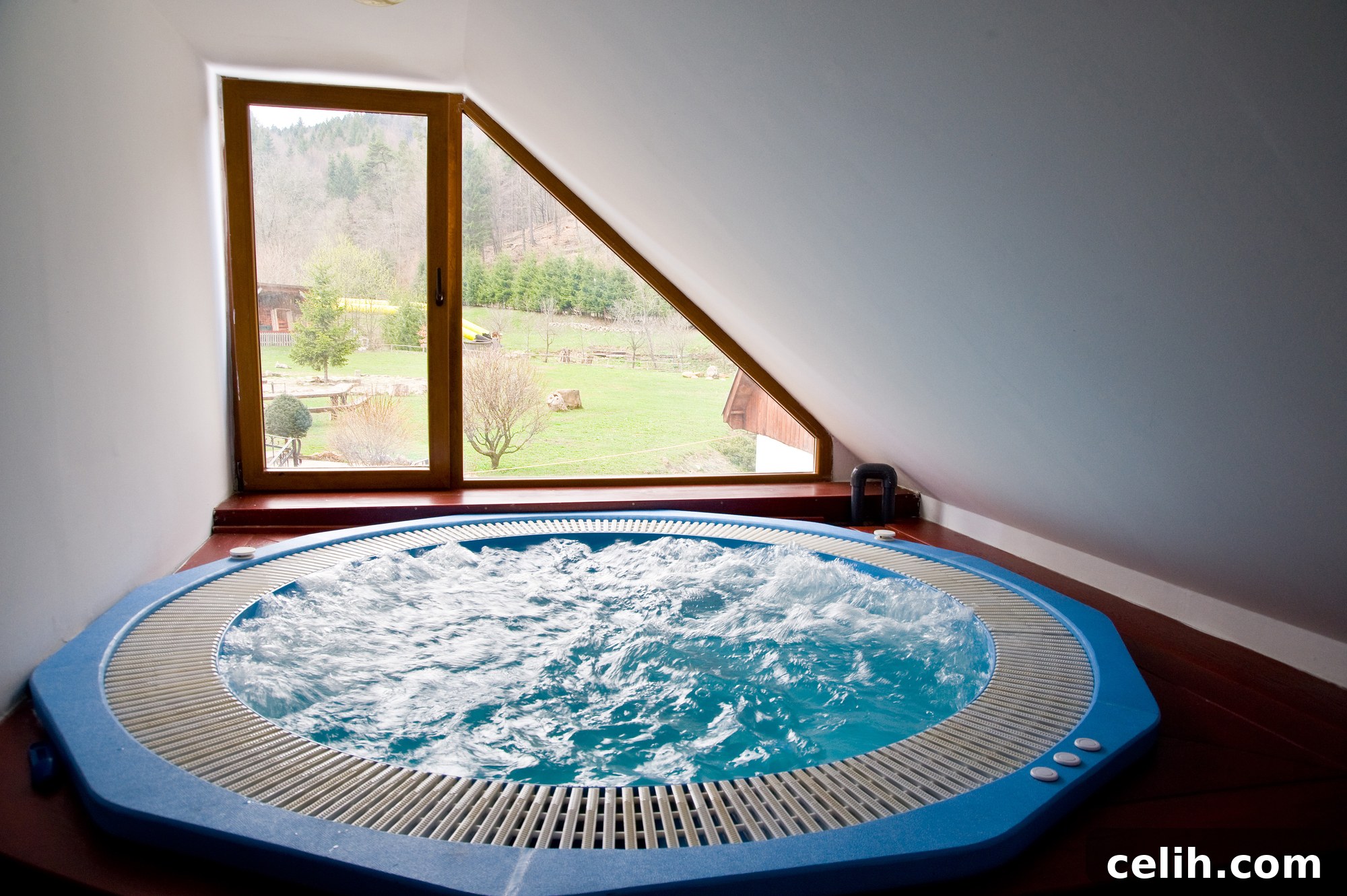
Transforming your home into a personal wellness sanctuary is a dream for many, and installing an indoor hot tub offers an unparalleled blend of luxury, relaxation, and therapeutic benefits. While a hot tub typically enhances a backyard as an attractive water feature, complete with the soothing sounds of a waterfall and the soft glow of LED lights, the idea of having this retreat undercover or indoors holds immense appeal. An indoor hot tub creates a private oasis, allowing you to experience the tranquility and indulgence of a spa regardless of the weather outside. Beyond personal enjoyment, a thoughtfully integrated indoor spa can also significantly increase your property’s value. Achieving a bespoke spa appearance while enjoying the therapeutic advantages of a portable spa requires careful planning and preparation. This comprehensive guide will walk you through the essential considerations for installing an indoor hot tub, ensuring a seamless and successful integration into your home.
The allure of an indoor hot tub extends far beyond mere convenience. Imagine unwinding in warm, bubbling waters on a cold winter’s night, or finding peaceful solitude away from the elements. This indoor haven provides year-round accessibility, enhanced privacy, and a more intimate environment for relaxation and hydrotherapy. From soothing aching muscles to reducing stress and improving sleep, the health benefits of regular hot tub use are well-documented. However, bringing this vision to life requires meticulous attention to several critical factors, from structural integrity to humidity control. Let’s delve into the key aspects that will help you create your ideal home spa.
Setting Up the Appropriate Floor Covering
One of the most crucial considerations for an indoor hot tub installation is the flooring. It’s an undeniable fact that the room housing your indoor hot tub will frequently be exposed to water. A bather exiting the tub can carry out up to a gallon of water each time, not to mention splashes during use. Therefore, ensuring your flooring can bear this substantial moisture load, along with the immense weight of the hot tub itself, is absolutely vital for both safety and longevity.
Avoid materials like wooden floors, as they are highly susceptible to deformation, warping, and decay when exposed to consistent moisture. Hardwood and even engineered wood can rot, grow mold, and become a serious health and structural hazard over time. Similarly, steer clear of carpets. While they might seem cozy, carpets are excellent at retaining water, creating a breeding ground for mildew, mold, and bacteria. They deteriorate quickly in damp environments, leading to unpleasant odors and significant hygiene issues.
Instead, opt for highly durable and water-resistant materials. Ceramic or porcelain tiles are excellent choices. Look for options that feature a non-slip or matte finish to prevent slips from wet feet, enhancing safety around your spa. These tiles are inherently resistant to rotting, mold, and mildew, can easily handle the heavy weight of a filled hot tub, and are remarkably easy to clean and maintain. Proper installation with waterproof grout and a sealed subfloor is paramount to prevent any water seepage. Natural stone tiles are another luxurious option, provided they are properly sealed and maintained. Considerations like adequate drainage, such as a floor drain near the hot tub, can also be a valuable addition to manage excess water effectively.
Planning for Hot Tub Access and Placement
Before you even choose your ideal hot tub, a critical logistical challenge to address is how it will physically get into its designated room. Some individuals embark on constructing entirely separate rooms or extensions specifically for their hot tubs, which often simplifies the process of creating an indoor setup by designing access points from the ground up. On the other hand, many prefer to integrate a hot tub into an existing, underutilized room within their home, such as a basement, garage, or a spacious spare room.
If you’re considering placing your hot tub in a pre-existing room, it’s absolutely essential to meticulously measure and ensure the hot tub can maneuver through all pathways, doorways, and hallways. This includes accounting for its dimensions in terms of width, length, and height, as well as the clearances needed for tilting or turning the unit. Perhaps you are fortunate enough to have large French doors or a wide sliding patio door that will facilitate the transition of the hot tub into the room with relative ease. However, for standard interior doorways, you might find the hot tub is too wide or tall. This could necessitate temporarily removing door frames, doors themselves, or even windows to create sufficient clearance.
Regardless of your specific situation, you need a detailed strategy for moving the hot tub indoors. This might involve professional movers equipped with specialized dollies, straps, and potentially even cranes for larger units if exterior access points are suitable. Failing to plan this aspect can lead to significant delays, damage to your home, or even render the installation impossible. If it turns out to be impractical with the room you currently have – perhaps due to narrow hallways, tight corners, or restrictive doorways – you’ll have to contemplate whether to switch to an outdoor setup, re-evaluate alternative rooms, or assess if your budget allows for constructing a new extension or making significant structural modifications to bring your indoor hot tub vision to life.
Reinforcing and Protecting Your Walls
The high levels of moisture and humidity emitted by hot tubs are a serious concern for the structural integrity and aesthetics of your walls. Regular drywall, commonly used in most homes, is simply not designed to endure such dampness for prolonged periods, making it highly unsuitable for enclosing a hot tub. Even with good ventilation, the walls of your room will be consistently subjected to elevated humidity and moisture levels over time, which can lead to mold growth, mildew, peeling paint, wallpaper damage, and even structural deterioration of the wall studs.
It’s crucial to ensure your walls are equipped to cope with these conditions. In deciding on the room for your indoor spa, you need to make sure the vapor barrier beneath your wall coverings is intact and properly installed. A vapor barrier acts as a shield, preventing moisture from migrating through the walls and condensing within the wall cavities, which could lead to concealed mold and dry rot of the wooden framework. This protective layer is essential for safeguarding your wall frames from succumbing to moisture-related damage and maintaining the long-term health of your home.
In essence, the most suitable walls for an indoor spa are constructed from materials specifically designed for high-moisture environments, similar to those found in bathrooms or kitchens. This includes cement board, fiberglass-reinforced panels (FRP), or specialized moisture-resistant drywall (often referred to as green board or blue board). These materials offer superior resistance to water penetration and the growth of mold and mildew. Beyond the wall material itself, ensure all seams, corners, and penetrations (like electrical outlets) are properly sealed with waterproof caulking or sealant. A high-quality, mold-resistant paint specifically formulated for humid environments should be applied as a final protective layer.
Optimal Ventilation and Humidity Control
Perhaps one of the most overlooked yet absolutely critical aspects of an indoor hot tub installation is proper ventilation and humidity control. Without it, all your efforts in choosing moisture-resistant materials for floors and walls could be in vain, as excessive humidity will inevitably lead to condensation, mold, mildew, and potential structural damage throughout your home. A hot tub releases significant amounts of water vapor into the air, creating a microclimate that can quickly become problematic if not managed effectively.
Investing in a robust ventilation system is non-negotiable. This typically involves installing a powerful exhaust fan, rated for high moisture environments, that can effectively remove humid air from the room and vent it outdoors. The fan’s cubic feet per minute (CFM) rating should be appropriately sized for the volume of your hot tub room. In addition to an exhaust fan, a dedicated dehumidifier is often essential. This can be a standalone unit or, ideally, an integrated part of your home’s HVAC system with a separate zone for the hot tub room. A dehumidifier actively removes moisture from the air, maintaining relative humidity levels between 50-60%, which is ideal for comfort and preventing mold growth.
Beyond active systems, consider natural ventilation where possible. Windows that can be opened for cross-ventilation during favorable weather can supplement mechanical systems. Good air circulation within the room also helps prevent stagnant pockets of moist air. Thoughtful placement of return air vents and supply registers can aid in this. The goal is to create an environment where humidity is constantly managed, ensuring not only the longevity of your home and hot tub but also a comfortable and healthy experience for everyone.
The Foundation of Your Hot Tub
Regardless of the location you choose for your hot tub, it’s absolutely crucial to provide a firm, level, and structurally sound base. Hot tubs are incredibly heavy, especially when filled with hundreds of gallons of water and occupied by several people. The combined weight can easily exceed several thousand pounds. Hot tubs can cause significant damage to their cabinets and internal components if placed on an irregular or inadequate surface, leading to expensive fixes down the line and potentially voiding the manufacturer’s warranty.
For most indoor installations, the primary concern is whether your existing floor can support this substantial load. For ground-level installations or in basements with concrete slabs, a flat concrete pad is often the go-to choice for many when preparing a spot for their hot tub. This pad should be reinforced with rebar and have a minimum thickness to safely distribute the weight. However, if your space already has a robust, water-resistant, and perfectly leveled floor – such as a properly constructed concrete slab or a specially reinforced structural floor system – it can directly accommodate your hot tub.
For installations on upper floors, or if your existing foundation is not a concrete slab, it is imperative to consult with a structural engineer. They will assess your home’s framing and foundation to determine if additional reinforcement is needed to safely support the hot tub’s weight. An inadequate foundation can lead to sagging floors, cracked ceilings below, and even catastrophic structural failure. Furthermore, ensuring the base is perfectly level is critical not only for the hot tub’s structural integrity but also for its efficient operation. Pumps and jets are designed to work optimally when the tub is level, and an uneven base can put undue stress on the shell and plumbing.
Electrical and Plumbing Considerations
Integrating an indoor hot tub requires specialized electrical and plumbing setups, which should only be handled by licensed professionals to ensure safety and compliance with local building codes. Hot tubs typically require a dedicated 240-volt, 50-amp electrical circuit, though some smaller models might operate on 120-volt. It is absolutely essential to have a Ground Fault Circuit Interrupter (GFCI) breaker installed on this circuit. The GFCI is a vital safety device that protects against electric shock by rapidly shutting off power if it detects a ground fault. An experienced electrician will ensure the correct wiring gauge, conduit, and disconnection means are in place, meeting all regulatory requirements for wet environments.
For plumbing, you’ll need a convenient water source for filling the hot tub. This could be an existing spigot or a new dedicated hot water line installed nearby for quicker fills. More importantly, consider drainage for emptying the hot tub, which is necessary for regular cleaning and maintenance. A floor drain directly beneath or adjacent to the hot tub is ideal, allowing for easy and mess-free draining. If a floor drain isn’t feasible, alternative solutions include using a submersible pump to drain the water into a utility sink, toilet, or directly outside, ensuring proper discharge that won’t damage your property or violate local wastewater regulations. Easy access for plumbing maintenance, such as filter changes and component checks, should also be factored into the design.
Cost Implications and Budget Planning
While investing in a personal indoor hot tub can be incredibly valuable for your well-being and home, it’s essential to approach the project with a realistic and comprehensive budget. The overall cost will vary significantly based on numerous factors. The price of your future hot tub itself will differ based on its size, shape, brand, features (e.g., number of jets, lighting, sound systems), and material quality. Beyond the tub, the installation and preparation costs can often rival or even exceed the purchase price of the hot tub.
A professional will need to assess the accessibility of your indoor space to accurately estimate the installation cost. This includes determining the logistics of how the spa will be transported into the appropriate room in your house, which might involve specialized equipment and additional labor. Furthermore, any necessary remodeling will contribute substantially to the budget. This often involves significant structural work, such as setting up water-resistant walls and floors, installing a reinforced foundation, upgrading electrical outlets to handle the power demands, and integrating robust ventilation and humidity control systems. Additionally, the structural needs of the hot tub will require a thorough inspection by an engineer to ensure your home can safely support the immense weight, and any required reinforcements will add to the expense.
Don’t forget to account for permits and inspections, which are mandatory in most areas to ensure your installation complies with local building and safety codes. Finally, factor in ongoing operational costs, including electricity consumption, water, chemicals for maintenance, and periodic filter replacements. By breaking down the budget into these comprehensive categories – hot tub purchase, room preparation, professional labor, permits, and ongoing expenses – you can gain a clear financial picture and make informed decisions throughout the project.
Design and Aesthetics: Creating Your Perfect Spa Retreat
Beyond the technical requirements, the design and aesthetic integration of your indoor hot tub are paramount to creating a truly enjoyable and personal spa retreat. This is where you can infuse your personality and create an atmosphere conducive to ultimate relaxation. Consider how the hot tub fits into the overall room design, ensuring it complements your home’s style rather than simply being a standalone fixture.
Lighting plays a critical role in setting the mood. Ambient lighting can create a soft, inviting glow, while accent lighting can highlight architectural features or the hot tub itself. Many modern hot tubs come with therapeutic LED lighting systems that offer various colors to enhance your relaxation experience. Sound can also elevate the spa atmosphere; think about waterproof speakers for your favorite calming music or integrating a small indoor waterfall for tranquil natural sounds. Privacy is another key element, whether through frosted glass, strategically placed blinds, or the overall room layout, ensuring you feel completely secluded and at ease.
Around the tub, consider comfortable seating or lounging areas where you can relax before or after your soak. The choice of surrounding materials is equally important: natural stone, treated wood accents, or lush, humidity-tolerant plants can enhance the spa-like feel. You might aim for a minimalist modern spa, a tropical oasis, or a rustic sanctuary. The goal is to craft a space that not only functions perfectly but also serves as a beautiful, inviting haven for rejuvenation and peace within your own home.
Endnote: The Value of Professional Installation
Considering the extensive knowledge and specialized expertise required for a safe, compliant, and successful indoor hot tub installation, it’s highly suggested to collaborate with a professional installer. This isn’t just about moving the tub into place; it encompasses critical aspects like structural assessments, complex electrical and plumbing work, advanced ventilation solutions, and adherence to intricate building codes. A qualified professional will possess the experience to meticulously manage each detail, from initial planning and permits to the final touches, ensuring every component is correctly installed and functions optimally.
By entrusting this significant project to experts, you safeguard your investment, protect your home from potential damage, and ensure the long-term safety and enjoyment of your indoor spa. They can advise on the best materials, navigate unforeseen challenges, and provide solutions that are both practical and aesthetically pleasing. Ultimately, partnering with seasoned professionals will provide peace of mind and guarantee an ideal, luxurious, and lasting hot tub experience in your home, transforming your vision into a reality.