
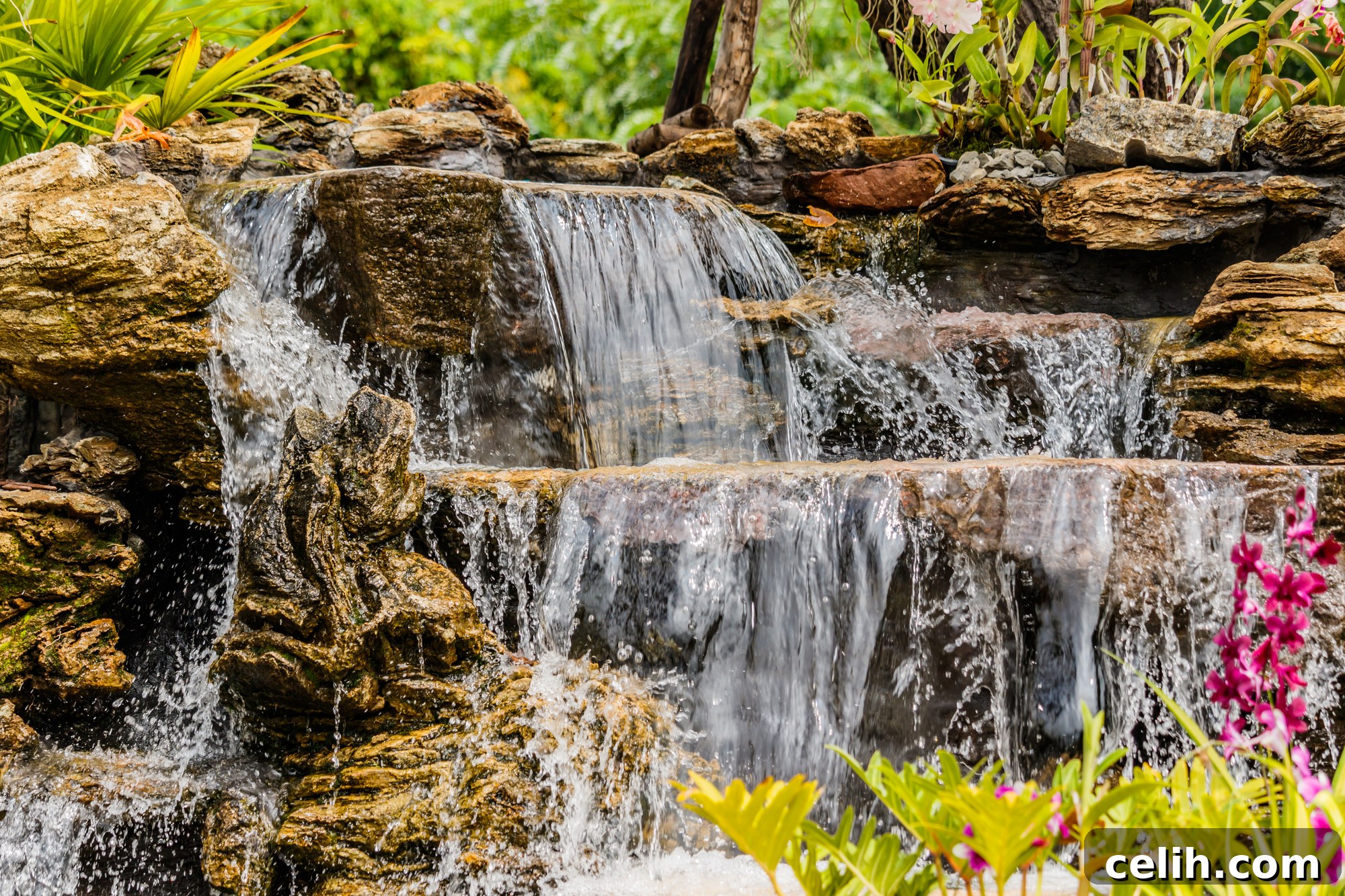
Transforming an ordinary backyard into a tranquil sanctuary doesn’t have to be a monumental task. Imagine the gentle murmur of cascading water, the glistening sunlight reflecting off a serene stream, and the captivating beauty of a natural waterfall, all within your own outdoor space. For homeowners seeking to create a truly enchanting outdoor environment without the demanding upkeep of a traditional pond, pondless waterfalls present an ideal and increasingly popular solution. This comprehensive guide will delve into every aspect of pondless waterfalls, from their fundamental design and myriad benefits to practical installation tips and innovative design ideas. Whether your backyard is a cozy urban retreat or an expansive suburban landscape, a pondless waterfall can elevate your outdoor living experience, offering unparalleled natural beauty, soothing sounds, and a sense of profound relaxation.
1. Understanding Pondless Waterfalls: A Modern Marvel in Landscape Design
At its core, a pondless waterfall is precisely what its name suggests: a breathtaking water feature that incorporates a beautiful waterfall without the presence of an open-water pond at its base. Instead of collecting in a visible body of water, the cascading water disappears into an underground reservoir, typically filled with gravel or river rock. A submersible pump, hidden within this reservoir, then recirculates the water back to the top of the waterfall, creating a continuous, enchanting flow. This innovative design offers the immersive experience of a natural stream and waterfall while eliminating many of the common challenges associated with traditional garden ponds.
The popularity of pondless waterfalls has surged in recent years due to their unique blend of aesthetic appeal and practical advantages. They seamlessly integrate into diverse landscape designs, transforming ordinary backyards into extraordinary havens. Homeowners are increasingly drawn to their ability to create a focal point, provide a calming auditory backdrop, and enhance the overall ambiance of an outdoor space, all while demanding significantly less attention than their pond-equipped counterparts. They offer a dynamic and engaging water element that can fit into various scales and styles, making them a versatile choice for any discerning homeowner looking to upgrade their garden with a touch of aquatic elegance.
2. The Unrivaled Benefits of a Pondless Waterfall System
Choosing a pondless waterfall system for your backyard brings a multitude of compelling advantages that make it a superior water feature option. These benefits extend beyond mere aesthetics, touching upon practicality, safety, and environmental responsibility, making them an ideal investment for modern homeowners.
- Effortless Low Maintenance: One of the primary attractions of a pondless waterfall is its minimal maintenance requirements. Unlike traditional ponds that necessitate regular cleaning for algae, debris, and fish care, pondless systems largely take care of themselves. With no open body of water, there’s less surface area for algae to thrive, and leaves or other debris simply settle into the gravel-filled reservoir, out of sight and out of mind. Occasional top-offs for evaporated water and periodic pump checks are typically all that’s needed to keep your feature pristine, allowing you to enjoy the tranquility without the chore.
- Enhanced Safety for Families and Pets: For households with young children or curious pets, safety is paramount. Pondless waterfalls eliminate the inherent risks associated with open water, providing complete peace of mind. The water disappears into an underground basin, removing any drowning hazard. This makes them an exceptionally safe choice for any family looking to introduce the beauty of water into their garden without compromising on security.
- Unmatched Versatility and Space Efficiency: Whether you boast an expansive estate or a compact urban courtyard, pondless waterfalls offer incredible flexibility in design and placement. They can be tucked into small corners, integrated into existing garden beds, or designed as grand centerpieces. Their ability to fit into small spaces or large gardens allows for creative landscape design solutions that might be impractical with a full pond. This adaptability ensures that every homeowner can enjoy the luxury of a water feature, regardless of their available outdoor footprint.
- Eco-Friendly and Water-Wise: Pondless waterfalls are remarkably environmentally conscious. They operate on a recirculating pump system, meaning the same water is continuously cycled, significantly reducing water wastage through evaporation compared to broad, open ponds. This promotes water conservation, a crucial aspect of sustainable landscaping. Furthermore, by integrating native plants and natural rocks, these features can create micro-habitats that attract local wildlife like birds and butterflies, enhancing biodiversity in your backyard.
- Aesthetic Appeal and Soothing Ambiance: Beyond their practical advantages, the sheer beauty and auditory delight of a pondless waterfall are undeniable. The sight of glistening water flowing over natural stone, coupled with the calming sounds of a gentle cascade, transforms any space into a stress-reducing oasis. This natural soundtrack can mask unwanted urban noise, creating a private retreat where you can unwind and reconnect with nature.
- Increased Property Value: A well-designed and maintained pondless waterfall is not just a personal luxury; it’s an asset. Thoughtful landscape enhancements, especially unique and appealing water features, can significantly boost your home’s curb appeal and overall market value, making it an attractive feature for potential buyers.
3. Designing Your Dream Pondless Waterfall: A Creative Journey
The journey to creating your perfect pondless waterfall begins with thoughtful design. Before you break ground, envision how this elegant garden accessory will integrate with your existing landscape and reflect your personal style. Consider factors such as the ideal placement, the desired scale, and the overall aesthetic you wish to achieve. Think about whether you want to incorporate elements like natural rock formations, a whimsical fairy garden, or a striking garden statue to personalize your feature.
Here are some popular design styles to inspire your pondless waterfall creation:
- Naturalistic Pondless Waterfall: This timeless style aims to mimic the appearance of a waterfall found in nature. It emphasizes organic shapes, irregular rock placement, and a diverse array of native plants that blend seamlessly with your surroundings. Utilize various sizes and types of rocks and stones, from large boulders forming the main drop to smaller river pebbles shaping the stream bed, to create an authentic, rustic charm. The goal is for the waterfall to look as though it has always been a part of the landscape.
- Japanese Zen Influence: For those seeking a serene and meditative outdoor space, a Zen-inspired pondless waterfall is an exquisite choice. This style often features clean lines, meticulously chosen and placed stones, and an emphasis on balance and minimalism. Water flow might be subtle, creating a gentle ripple or a single, elegant cascade. Complementary elements could include carefully raked gravel, moss, bamboo, and strategically placed lanterns to foster an atmosphere of peace and contemplation.
- Contemporary Elegance: A contemporary pondless waterfall offers a sleek, modern aesthetic perfect for urban gardens or homes with minimalist architecture. This design often incorporates geometric shapes, sharp angles, and sophisticated materials such as polished concrete, stainless steel, or glass. The water might flow over a smooth, reflective surface or cascade through a series of structured tiers. Integrated LED lighting can further enhance its architectural beauty, creating a dramatic focal point, especially after dusk.
- Rustic Charm & Farmhouse Style: Embracing natural textures and repurposed elements, a rustic pondless waterfall can bring warmth and character to your garden. Think about using reclaimed wood, old millstones, or rough-hewn boulders to create a charming, weathered look. The water flow can be more informal, perhaps trickling over stacked stones or spilling from an old watering can, evoking a sense of history and connection to the land.
4. Essential Materials and Tools for a Lasting Waterfall
The successful construction of your pondless waterfall hinges on the selection of appropriate, high-quality materials and the right set of tools. Investing in durable components will ensure the longevity and performance of your water feature for years to come. Here’s a breakdown of what you’ll need:
- Liners and Underground Reservoirs: The foundation of any pondless waterfall is its impermeable liner and the reservoir basin. High-quality EPDM (ethylene propylene diene monomer) rubber liners are preferred for their flexibility, durability, and resistance to UV rays and temperature fluctuations. For the reservoir, you can either create a custom basin using liner and gravel or opt for pre-formed basins designed specifically for pondless applications. An underlayment material should always be placed beneath the liner to protect it from punctures caused by roots or sharp stones, safeguarding against water leakage and ensuring the longevity of your waterfall.
- Recirculating Pump and Plumbing: A robust, energy-efficient pump is the heart of your pondless system. submersible pumps are common, chosen for their quiet operation and ability to remain out of sight. The pump’s flow rate (gallons per hour, GPH) must be adequate for the desired height and width of your waterfall. Durable, flexible PVC tubing or rigid PVC pipes will transport water from the reservoir back to the waterfall’s source. Ensure all connections are secure and watertight to prevent leaks and maintain consistent water flow.
- Stones, Rocks, and Boulders: The choice and arrangement of rocks and stones are critical for both the visual appeal and the sound of your waterfall. Source local rocks if possible, as they will naturally blend with your regional landscape. Incorporate a variety of sizes and shapes – large boulders to create structural drops and perches, medium-sized rocks to form the stream bed and direct water flow, and smaller pebbles or gravel to fill gaps and cover the liner. The careful placement of these elements will sculpt the water’s path, influencing how it cascades and the sounds it produces.
- Pre-made Waterfalls and Spillways: For those seeking a simpler installation or a specific aesthetic, pre-made waterfall units or spillways are an excellent option. These can range from natural-looking rock formations that simply need to be plumbed, to sleek, contemporary stainless steel spillways that create a uniform sheet of water. Pre-made waterfall kits can significantly reduce construction time and complexity, making the project more accessible for DIY enthusiasts.
- Essential Tools: Equip yourself with fundamental tools for the job. These include shovels and picks for excavation, a level to ensure proper water flow, a utility knife for cutting liner, a tape measure, and basic plumbing supplies like PVC glue, primer, and clamps. Safety gear such as gloves and eye protection should also be on hand.
- Decorative Gravel/River Rock: After the liner is in place and the structural rocks are set, a layer of decorative gravel or river rock is typically used to cover the reservoir, conceal the pump, and create a natural-looking finish for the stream bed.
5. Turning Inspiration into Reality: Planning and DIY Kits
Once you’ve gathered inspiration and considered your design preferences, the next step is to bridge the gap between abstract ideas and concrete plans. This phase involves refining your vision, creating a detailed layout, and deciding whether to embark on a DIY project or seek professional assistance. Many homeowners find investing in a DIY waterfall kit to be a convenient and cost-effective way to bring their pondless dream to life.
Pondless waterfall kits are available in a wide array of designs, catering to different skill levels and aesthetic desires. You can find kits that facilitate a natural-looking rock cascade, complete with all necessary components like pumps, liners, and filtration pads. Other options include more conventional pondless waterfall designs, or even minimalist kits that produce a simple, elegant cascading sheet of water. The “ultimate pondless waterfall kit system” often includes everything from the reservoir matrix to lighting and plumbing, designed for a comprehensive installation.
When selecting a kit, it’s crucial to assess the complexity of its installation. If this is your first significant garden project, opting for a simpler kit can prevent frustration and ensure a more successful outcome. Many beginner-friendly kits come with clear instructions and pre-selected components that fit together seamlessly. Remember, you can always enhance or upgrade your waterfall in the future with additional features, rocks, or plantings as your confidence and expertise grow. Consider visiting local garden centers or online retailers to explore the diverse styles and kits available, comparing their features, sizes, and ease of assembly. A well-planned approach, whether through a meticulously custom design or a thoughtfully chosen kit, is the cornerstone of turning your pondless waterfall inspiration into a cherished reality.
6. The Step-by-Step Installation Process
Embarking on the installation of your pondless waterfall can be a rewarding project for the seasoned DIYer, but for those less adept, hiring a professional landscaper or water feature specialist is a wise investment. Should you choose the DIY route, here’s a simplified breakdown of the essential steps involved:
- Site Preparation and Excavation: Begin by clearly marking the designated area for your waterfall and its underground reservoir. Use spray paint or stakes and string to outline the shape of the stream bed and the reservoir pit. Next, excavate the soil, digging the reservoir to the required depth (typically 2-3 feet) and shaping the stream bed with a gentle slope. Remember to create shelves or tiers for rocks to sit on and ensure the ground is firm and level where necessary.
- Liner Placement and Underlayment: Lay a protective underlayment fabric over the excavated area to shield the rubber liner from sharp objects and roots. Carefully drape the EPDM liner over the underlayment, ensuring it conforms to the contours of the excavation. Smooth out as many wrinkles as possible, particularly in the waterfall’s cascade area, while leaving ample excess liner around the edges to prevent water loss.
- Pump and Plumbing Installation: Position the submersible pump inside the deepest part of the reservoir, typically within a pump vault or skimmer box to keep it clean and accessible. Connect the flexible PVC tubing to the pump and run it discreetly up the side of the waterfall structure to its highest point, where the water will begin its cascade. Secure all plumbing connections with clamps or appropriate seals to ensure a proper, leak-free recirculating pump and water circulation system.
- Artful Placement of Rocks and Boulders: This is where your creative vision truly comes to life. Begin by placing larger boulders to establish the main structure of the waterfall and create its drops. Gradually add medium and smaller rocks, meticulously arranging them to direct the water flow, create natural-looking rapids, and prevent water from escaping over the liner’s edges. Test the water flow periodically as you place rocks to ensure the desired effect is achieved. The goal is to make the waterfall appear natural and structurally sound, with water flowing over and between the rocks, not behind them.
- Filling and Testing: Once all rocks are in place, carefully fill the reservoir and stream bed with water. Turn on the pump and observe the water flow. Look for any leaks, adjust rock placement to refine the cascade, and ensure the water recirculates efficiently. Make any necessary tweaks to achieve the desired visual and auditory effects.
- Finishing Touches: Trim any excess liner around the edges, leaving a small border to tuck under surrounding soil or landscaping. Backfill around the waterfall structure with soil, gravel, or mulch, integrating it seamlessly into your garden. Now your pondless waterfall is ready for planting and decorative elements.
7. Enhancing Aesthetics with Thoughtful Waterfall Plantings
Once the structural build of your pondless waterfall is complete, the true artistry begins with the integration of carefully chosen plantings. Plants not only soften the hard edges of rocks and create a more natural appearance, but they also contribute to a balanced ecosystem and enhance the overall ambiance of your modern water feature.
Aquatic and Marginal Plants: While pondless waterfalls don’t have an open pond, specific aquatic and marginal plants can thrive around the edges where moisture is abundant. Consider plants like ferns, hostas, marsh marigolds, and various sedges. These plants love consistently moist soil and will flourish at the margins of your waterfall, blending it beautifully with the surrounding garden. Water lilies, while typically pond plants, can sometimes be incorporated in boggy areas adjacent to the waterfall if a perpetually moist zone is created.
- Creating a Balanced Ecosystem: Beyond aesthetics, select plants that contribute to the health and vitality of your garden. Consider incorporating native plants, which are adapted to your local climate and require less care. Plants can also provide shade, which helps to keep the water cooler and reduces algae growth in any exposed water. Taller plants can offer shelter for small birds and insects, attracting desirable wildlife and enhancing the biodiversity of your backyard oasis.
- Integrating Landscaping Plants: Don’t limit your planting to just the immediate vicinity of the water. Extend the naturalistic feel by planting around the entire feature. Ornamental grasses, low-growing shrubs, and colorful perennials can frame the waterfall, drawing the eye and making it a cohesive part of your larger landscape design. Choose plants with varying heights, textures, and bloom times to ensure year-round interest.
- Ongoing Maintenance: To keep your waterfall plantings healthy and looking their best, regular maintenance is key. This includes pruning overgrown foliage, removing any yellowing leaves, and occasional weeding to prevent competition. Ensure adequate drainage for plants that prefer drier conditions, while providing consistent moisture for those that thrive near water. Proper plant care will ensure your botanical garden remains vibrant and harmoniously integrated with your stunning pondless waterfall.
8. Illuminating Your Oasis: Lighting for Evening Ambiance
The beauty of your pondless waterfall shouldn’t fade with the setting sun. Thoughtfully designed garden lighting can transform your water feature into a mesmerizing nighttime spectacle, extending its enjoyment into the evening hours and creating a truly enchanting ambiance for your outdoor space.
- Underwater Illumination: Submersible LED lights strategically placed within the cascading water or at the base of drops can create a dramatic and magical effect. These lights highlight the movement and texture of the water, making it shimmer and glow from within. They can emphasize the crystal-clear quality of the water or create fascinating shadows and reflections against the rocks, adding depth and visual interest after dark.
- Accent and Landscape Lighting: Beyond the water itself, integrating landscape lighting around your pondless waterfall enhances the overall night-time ambiance of your garden. Uplighting on surrounding trees, shrubs, or architectural elements can create soft, inviting pools of light, drawing attention to the feature without overwhelming it. Path lighting leading to and around the waterfall improves safety and guides visitors through your illuminated garden, making it perfect for evening gatherings or quiet contemplation.
- Energy Efficiency with LED Technology: When planning your lighting scheme, prioritize energy-efficient LED technology. Modern LED lights consume significantly less power than traditional bulbs, have an exceptionally long lifespan, and offer a wide range of color temperatures and intensities. This allows you to create a stunning, magical allure for your waterfall at night without incurring high electricity costs, making your illuminated oasis both beautiful and sustainable.
- Smart Lighting Solutions: Consider incorporating smart lighting systems that allow for remote control, dimming capabilities, and even color-changing options. These systems can be programmed to turn on and off automatically, adjust brightness based on ambient light, or even synchronize with music, offering ultimate flexibility and personalization for your evening outdoor experience.
9. The Symphony of Water: Mastering Soundscaping
While the visual appeal of your pondless waterfall is undeniably captivating, the auditory aspect plays an equally crucial role in creating a truly immersive and tranquil outdoor experience. The natural sounds of flowing water can transform your backyard into a meditative retreat, offering a soothing backdrop that masks urban noise and invites relaxation. The art of “soundscaping” with water allows you to customize this natural symphony to your personal preference.
- Customizing Water Flow for Desired Sound: The sound produced by your waterfall is largely determined by how the water interacts with the rocks and the height of the drops. A gentle babbling brook sound can be achieved with shallow, wide cascades over smooth, smaller stones. For a more pronounced, robust cascading effect or a rhythmic splashing, design taller drops where water falls onto a larger pool or strategically placed boulders. Experiment with the pump’s flow rate (if adjustable) and the arrangement of rocks to fine-tune the acoustics, creating anything from a soft whisper to a more vigorous rush of water.
- Integrating with Natural Sounds: When choosing the perfect location for your water feature, consider the existing soundscape of your garden. How will the waterfall complement or enhance the natural sounds already present, such as the cheerful chirping of birds, the gentle rustling of leaves in the breeze, or the distant hum of nature? A well-placed waterfall can either stand out as a primary auditory focal point or blend harmoniously, enriching the overall sonic tapestry of your outdoor space. It can effectively mask undesirable noises from neighbors or traffic, replacing them with the calming rhythm of nature.
- The Therapeutic Power of Water Sounds: The human brain often finds the sound of moving water deeply calming. It’s a natural white noise that can reduce stress, improve concentration, and promote a sense of well-being. By thoughtfully designing the sound profile of your pondless waterfall, you’re not just creating a beautiful feature, you’re investing in a source of continuous auditory therapy that will enhance your quality of life.
10. Effortless Upkeep: Maintaining Your Pondless Waterfall
One of the most significant advantages of a pondless waterfall is its ease of maintenance, making it a practical choice for busy homeowners. While low maintenance, it’s not entirely maintenance-free. Regular, simple care ensures its longevity, pristine appearance, and optimal performance. Neglecting basic upkeep can diminish its beauty and efficiency over time. Here are key aspects to focus on:
- Routine Cleaning and Debris Removal: Periodically remove any accumulated debris, such as fallen leaves, twigs, or other organic matter, from the waterfall’s stream bed, rocks, and the reservoir grate. A long-handled net or even a leaf blower can be effective tools for this task. While the underground reservoir is designed to handle some debris, regular removal prevents excessive buildup that could clog the pump or affect water quality. For even easier cleaning, consider investing in a self-cleaning liner or a pre-filter for your pump.
- Water Quality Management: Although pondless systems are less prone to severe algae issues than traditional ponds, it’s still wise to monitor water quality. Occasionally topping off the reservoir with fresh water helps maintain water levels lost to evaporation. If algae becomes noticeable on the rocks, a gentle brushing with a stiff brush and a small amount of non-toxic algaecide (specifically designed for water features) can keep surfaces clean. A basic filtration system, often integrated with the pump or reservoir, helps keep the water clear and free of suspended particles.
- Pump Maintenance: The pump is the heart of your system, so regular inspection and cleaning are crucial. At least once a season (or more frequently if you notice reduced flow), unplug the pump and remove it from the reservoir. Clean any debris from the intake screen and impeller. This prevents blockages and ensures the pump operates efficiently, extending its lifespan.
- Winterization Procedures: For those in regions with freezing temperatures, proper winterization is essential to prevent damage. Before the first hard freeze, shut off the pump, drain it, and store it in a frost-free location. Remove any sensitive plants that won’t survive the winter or provide them with adequate protection. If your plumbing system is exposed, consider insulating it. The waterfall structure itself, including rocks and liner, can generally remain in place, though some prefer to cover the reservoir opening to prevent excessive debris accumulation.
- Annual Inspection: Perform a thorough inspection of your pondless waterfall annually, ideally in the spring. Check the liner for any tears or punctures, inspect all plumbing connections for leaks, and ensure all electrical components are safe and secure. Addressing minor issues promptly can prevent more significant and costly repairs down the line.
Final Thoughts: Your Backyard Oasis Awaits
Incorporating a pondless waterfall into your backyard landscape is more than just adding a decorative element; it’s an investment in tranquility, natural beauty, and a heightened sense of well-being. This versatile and low-maintenance water feature offers a unique opportunity to transform your outdoor living space into a personal haven, a place where the stresses of daily life simply wash away with the gentle cascade of water. Whether you envision a design that emulates nature’s untamed wonders, embraces the minimalist elegance of a Zen garden, or aligns with contemporary architectural aesthetics, the possibilities for customization are truly endless.
With careful planning, the selection of high-quality materials, and a thoughtful design approach, you can create a stunning masterpiece that not only soothes the senses but also captivates the soul. A pondless waterfall is a captivating focal point that will provide countless hours of relaxation, serve as an inviting backdrop for outdoor entertaining, and offer a continuous connection to the calming rhythms of nature. Embark on this exciting journey to create your own backyard oasis, and enjoy the enduring beauty and serenity a pondless waterfall will bring to your home for many years to come.