
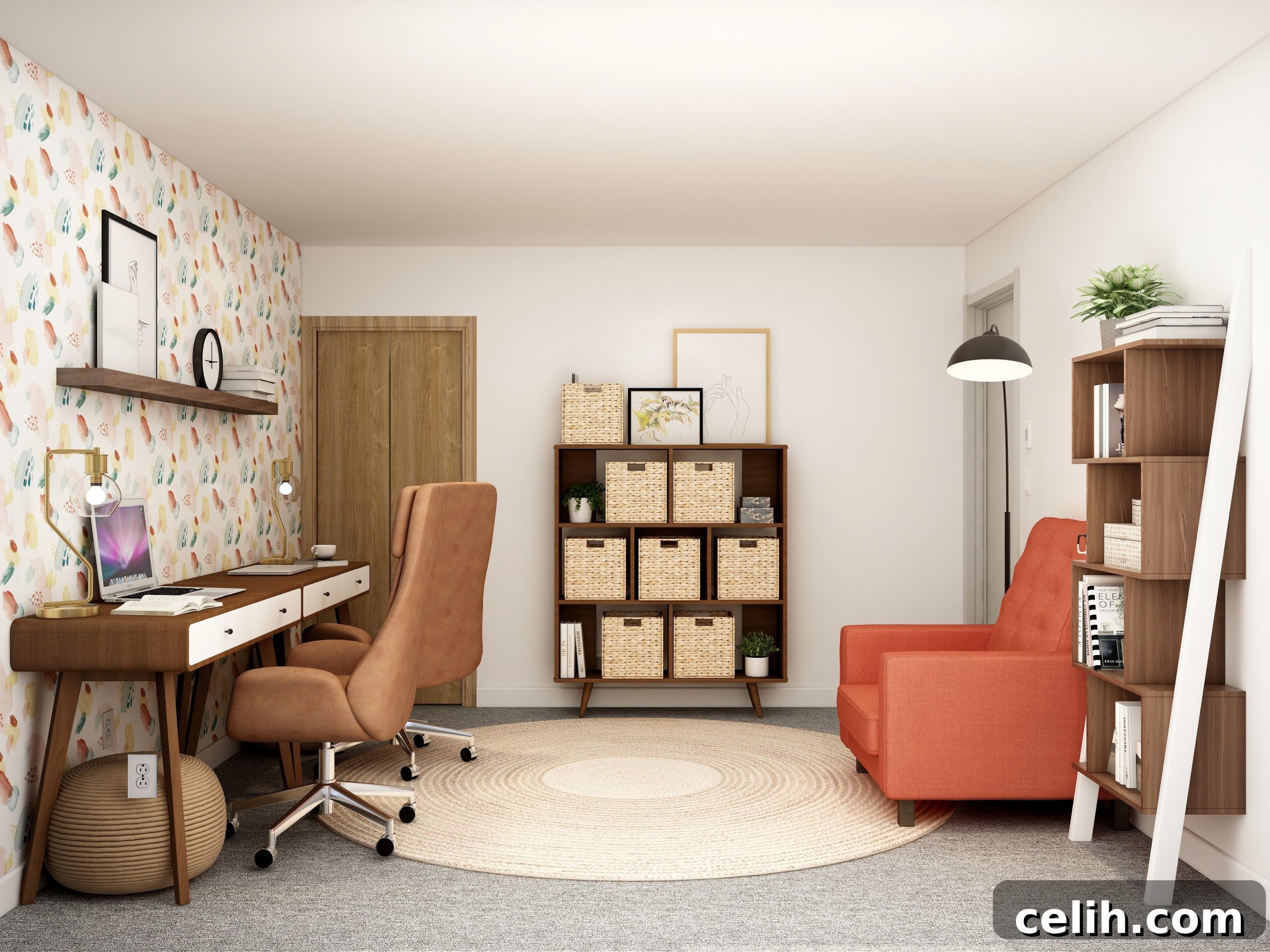
The landscape of work has undergone a significant transformation, with working from home evolving from a niche perk to a widespread reality for millions. Whether operating on a part-time or full-time basis, the allure of remote work often conjures images of effortless productivity – perhaps rolling out of bed directly into a productive workflow from the comfort of a couch. However, the practicalities of spending an entire workday within one’s living space quickly reveal a different reality. This often includes blurred boundaries between professional and personal life, suboptimal ergonomic setups leading to discomfort, and a constant battle against household distractions. To truly unlock your potential for maximum productivity, maintain focus, and effectively complete tasks, establishing a dedicated home office is not just a convenience, but a necessity. This dedicated zone, whether a spare bedroom transformed, a carefully carved-out nook in a bedroom, kitchen, or living room, serves as your professional sanctuary. Beyond boosting your daily efficiency, a thoughtfully designed home office can also significantly enhance your home’s appeal to prospective buyers, reflecting modern living requirements.
Finding Your Ideal Workspace: More Than Just a Desk
When you first transition to working from home, the temptation to set up shop anywhere – the kitchen table, the living room couch, or even a sunny patio – is strong. These seemingly convenient spots might suffice for an hour or two, but it quickly becomes apparent that such a haphazard arrangement is not conducive to sustained focus or long periods of productive work. The mental and physical separation between “work” and “home” is crucial for maintaining sanity and effectiveness. Therefore, the foundational step toward a serious and sustainable remote work setup is to identify a specific area dedicated solely to your professional endeavors and commit to it.
For those fortunate enough to have an extra bedroom, converting it into a dedicated home office is an obvious and ideal choice. This provides a clear physical boundary, minimizing distractions and fostering a professional mindset. However, not everyone enjoys the luxury of surplus space. In smaller homes or apartments, creativity and clever design solutions become paramount. Consider installing a desk that seamlessly folds into a wall when not in use, a compact corner desk that maximizes an often-underutilized space, or even transforming a closet into a discreet yet functional “cloffice.” These innovative solutions help maximize every available square foot, creating a dedicated workspace without sacrificing living area. When it comes time to sell your home, clearly showcasing where a home office could be situated allows potential buyers to easily visualize themselves living and working in your property, making your home significantly more desirable and helping it stand out in the market.
Prioritizing Ergonomics for Lasting Comfort and Health
Spending prolonged hours seated and focused on a computer screen is inherently demanding on the human body. Poor posture, uncomfortable seating, inadequate lighting, and improper equipment can exacerbate these strains, leading to a myriad of issues ranging from chronic back pain and neck stiffness to eye strain and fatigue, all of which severely impede productivity. Once your dedicated workspace is established, the next critical step is to optimize it for ergonomics. An ergonomically sound setup ensures you can comfortably and healthily spend several hours in your space without adverse effects.
While specific needs may vary depending on your type of work, certain ergonomic essentials are universal for anyone spending a significant portion of their workday at a computer. An external monitor, properly positioned at eye level, can prevent hunching over a laptop. A separate keyboard and mouse allow for more natural arm and wrist positioning, reducing strain. However, perhaps the most crucial investment is a high-quality, ergonomic office chair. Look for chairs with adjustable lumbar support, armrests, seat height, and tilt functions to provide optimal support for your spine. Adequate lighting, which we’ll delve into further, is also indispensable for reducing eye fatigue. By prioritizing these ergonomic considerations, you are not just improving comfort; you are investing in your long-term health and sustained productivity.
Mastering Your Home Office Lighting: Boosting Focus and Mood
The quality and type of lighting in your workspace can dramatically influence your productivity levels, mood, and overall well-being. The ideal home office space harnesses the power of adequate daytime light, preferably natural light. Positioning your desk near a window is highly recommended, as natural light has been proven to boost mood, energy levels, and even cognitive function. However, be mindful of direct sun glare on your screen, which can be mitigated with blinds or curtains.
If natural light is scarce or inconsistent, incorporating artificial lighting becomes crucial. Relying solely on harsh overhead lighting can lead to eye strain and headaches. Instead, combine different layers of light: ambient, task, and accent lighting. Floor lamps can provide soft ambient illumination for the general room, while a dedicated desk lamp offers focused task lighting exactly where you need it for reading, writing, or detailed work. Unlike traditional office environments, working from home gives you the autonomy to adjust lighting to your preferences throughout the day. Opt for bulbs with adjustable color temperatures, allowing you to switch from cooler, energizing light in the morning to warmer, more relaxing tones in the evening. During the darker winter months, or if your workday extends into the evening, paying meticulous attention to your lighting setup is even more paramount to combat fatigue and maintain focus.
Personalizing Your Workspace: Infusing Inspiration and Style
A crucial, yet often overlooked, aspect of a successful home office is personalizing the space. Your workspace shouldn’t feel sterile or temporary; it should be an extension of your professional identity, inspiring creativity and motivation. Making the space truly “your own” can significantly impact your mood and engagement with work. If you are fortunate enough to have a dedicated room for your office, consider adorning the walls with artwork that resonates with you, or adding personal photographs that bring a sense of joy. Incorporating living elements, such as a plant on your desk, not only enhances the aesthetic appeal but also contributes to improved air quality and a sense of calm, leveraging principles of biophilic design.
Even if your desk is a more flexible setup, perhaps one that folds away at the end of the day, you can still infuse personality into the surrounding area. Decorate the wall space where your desk sits, or choose accessories that transform the nook into an inspiring backdrop even when the work equipment is tucked away. Think about colors that energize or soothe you, incorporating textures that feel good to the touch, and adding elements that reflect your passions. A well-organized and aesthetically pleasing environment reduces mental clutter and allows you to approach your tasks with a clearer, more positive mindset. This blend of functionality and personal expression ensures your office isn’t just a place where you work, but a space that actively supports and enhances your professional life.
The Art of Separation: Defining Work-Life Boundaries at Home
The single most important rule for thriving in a work-from-home environment is to establish a clear distinction between your workspace and your living space. This separation is not merely physical; it’s psychological and vital for maintaining a healthy work-life balance and preventing burnout. Without clear boundaries, work can seep into every corner of your life, making it difficult to truly disconnect and recharge.
Implementing rituals can greatly assist in this separation. Start your workday with a “commute” – even if it’s just a walk around the block or a few minutes of meditation before sitting down at your desk. This primes your mind for work. Similarly, create an end-of-day ritual: close your office door, turn off your computer, and consciously transition out of work mode. This signals to your brain that the workday is over. Designate other areas of your home as strictly “off-duty” zones, where work is never allowed. Your couch, dining table, or bedroom should be sanctuaries for relaxation, family time, and personal pursuits.
Effective communication with household members about your work hours and the sanctity of your workspace is also paramount. Setting expectations about interruptions helps create a more focused environment. Furthermore, practice digital disconnection. Turn off work notifications outside of business hours, close work-related browser tabs, and resist the urge to check emails late into the evening. The ability to physically and mentally “close the door” on your workday, even if it’s just figuratively, is the ultimate secret to success in remote work, ensuring that productivity doesn’t come at the cost of your personal life and well-being. By thoughtfully designing your home office and adhering to these principles, you create a powerful environment that supports both your professional ambitions and your personal serenity.