
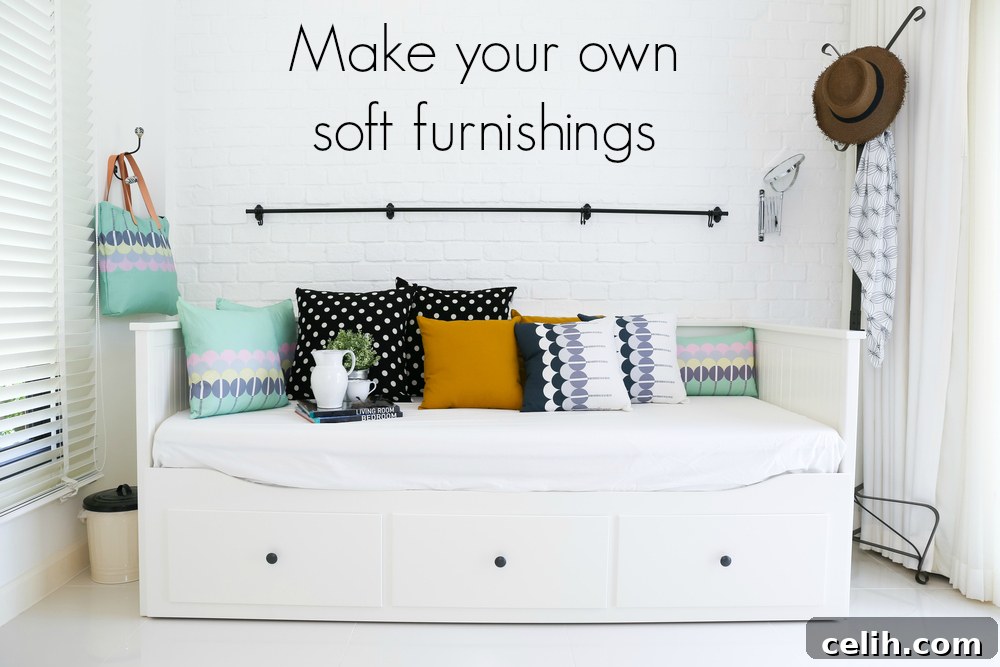
Transforming a house into a home often involves infusing it with personal touches and unique character. In Britain, the enthusiasm for DIY projects, especially in home decor, is deeply ingrained in our culture. There’s an undeniable satisfaction that comes from creating something beautiful and functional with your own hands. However, the path to achieving that perfect homemade cushion cover, a bespoke set of curtains, or an adorable fabric toy for your little one can sometimes feel daunting. Many aspiring crafters envision themselves as domestic goddesses or gods, only to be met with the reality of tangled threads, misplaced stitches, and instructions that seem to defy logic.
The journey into DIY sewing doesn’t have to be fraught with frustration, sharp needle pricks, or unraveling projects. With the right guidance and resources, you can unlock your creative potential and bring your vision to life without the usual beginner mishaps. This comprehensive guide is designed to inspire and equip you with the knowledge to embark on your DIY sewing adventures with confidence, ensuring your hands stay happy and your mind remains clear. We’ll explore a wealth of online resources that make learning to sew accessible, enjoyable, and ultimately, rewarding.
Embracing the World of DIY Soft Furnishings
Before diving into where to find the best tutorials, let’s explore why DIY soft furnishings are such a rewarding endeavor. Firstly, it offers an incredible opportunity for customization. Unlike mass-produced items, your handmade creations can perfectly match your existing decor, reflect your unique style, and fit your specific dimensions. Imagine curtains made from a fabric you absolutely adore, or throw pillows that complement your sofa in a way no store-bought item ever could. This level of personalization brings an unparalleled charm and warmth to any living space.
Secondly, DIY sewing can be incredibly cost-effective. While there’s an initial investment in tools and materials, over time, creating your own items can be significantly cheaper than purchasing high-end soft furnishings. You can often find beautiful fabrics at discounted prices or even repurpose old textiles, contributing to a more sustainable lifestyle. Beyond the financial benefits, there’s the immense sense of accomplishment and pride that comes from crafting something beautiful and functional with your own two hands. It’s a creative outlet that can be deeply therapeutic, allowing you to unwind, focus, and express your artistic side.
Finally, learning to sew is a skill that opens up a world of possibilities beyond just home decor. From mending clothes to creating unique gifts, the techniques you learn for soft furnishings are transferable to countless other projects. It’s a journey of continuous learning and creativity that empowers you to take control of your home’s aesthetic and express your personality through fabric and thread.
Essential Tools for Your Sewing Journey
Embarking on any DIY project requires the right set of tools, and sewing is no exception. While you don’t need to break the bank to get started, having a few core items will make your learning process smoother and more enjoyable. The most fundamental piece of equipment is a sewing machine, though many beginner projects can certainly be tackled by hand. For machine sewing, a basic mechanical model is often sufficient for beginners, offering essential stitches like straight stitch and zigzag.
Beyond the machine, you’ll need a good pair of fabric scissors – dedicated solely to fabric to keep them sharp – and a smaller pair of thread snips. A variety of needles (for both hand and machine, matched to your fabric type) and a thimble for hand sewing are crucial. Pins are indispensable for holding fabric together before stitching, and a pin cushion will keep them organized. Measuring tools such as a tape measure and a clear ruler are vital for accurate cutting and marking. A fabric marker or tailor’s chalk will help you transfer pattern markings onto your material, and a seam ripper will be your best friend when mistakes inevitably happen.
Lastly, don’t underestimate the power of a good iron and ironing board. Pressing your seams as you go is key to achieving a professional finish, making a huge difference in the overall appearance of your completed project. With these basic tools, coupled with quality thread and your chosen fabric, you’ll be well-prepared to tackle a wide array of sewing projects.
Specialist Websites: Your Digital Sewing Mentors
In today’s digital age, learning a new skill has never been more accessible, and sewing is no exception. Specialist websites dedicated to needlecraft offer a comprehensive array of resources, from step-by-step written tutorials to downloadable patterns and vibrant community forums. These platforms serve as invaluable digital mentors, guiding you from fundamental techniques to more intricate projects, ensuring your home truly reflects that cherished DIY touch.
Take www.howtosew.com, for instance. This website is a fantastic starting point for absolute beginners. It typically breaks down complex processes into simple, digestible steps, often accompanied by clear illustrations or photographs. You’ll find guides on everything from threading a sewing machine and mastering basic stitches like the straight stitch and backstitch, to executing fundamental techniques like hemming and creating buttonholes. It’s an ideal place to build a solid foundation, understanding the ‘why’ behind each action, which is crucial for developing confidence.
Another excellent resource is www.sewmamasew.com. While also catering to beginners, this site often leans towards more contemporary projects and fabric trends, providing fresh inspiration for modern home decor. Beyond practical tutorials, you’ll discover blog posts featuring new pattern releases, fabric reviews, and creative project ideas that push the boundaries of traditional sewing. These types of sites often foster a sense of community, allowing you to connect with fellow enthusiasts, share your progress, and seek advice, transforming the solitary act of sewing into a shared experience. As you gain skills, you can explore more advanced sections covering garment construction, quilting, and more intricate soft furnishings.
And for those moments when inspiration wanes, or you’re wondering how to seamlessly integrate your sewing masterpieces into your home, the McCarthy and Stone Pinterest page is a brilliant visual resource. While not a sewing tutorial site itself, it brilliantly showcases how DIY projects, including beautifully crafted soft furnishings, can elevate a living space. It bridges the gap between learning to sew and applying that skill to achieve a chic, cohesive, and deeply personal interior design. Observing how various handmade items complement different aesthetics can spark countless ideas for your next project, demonstrating how simple sewing can transform ordinary rooms into extraordinary havens.
Pinterest: Your Visual Journey for DIY Inspiration
Pinterest has cemented its reputation as a vast visual library for anyone seeking inspiration, and DIY sewing projects are no exception. However, navigating its seemingly endless ‘pins’ can initially feel overwhelming. With a deluge of ideas spanning food, fashion, elaborate decorations, and general creative oddities, it’s easy to feel a pang of inadequacy, wishing you possessed the seemingly innate talent of your Pinterest peers. Many a beginner has optimistically followed a visually appealing pin, only to be left with a cushion cover featuring “wonky” off-centre initials or seams that refuse to align perfectly.
The trick to harnessing Pinterest’s power for your sewing endeavors lies in strategic searching and curated content. Instead of aimlessly scrolling, use specific keywords like “easy cushion cover patterns,” “beginner curtain sewing tutorial,” “simple fabric storage ideas,” or “no-sew DIY home decor.” Creating dedicated boards for your sewing projects allows you to save and organize inspiring ideas and tutorials, making them easy to revisit. Pinterest excels at providing visual brainstorming, helping you discover new styles, fabric combinations, and innovative uses for your sewing skills. It’s an unparalleled platform for gathering ideas for specific rooms, colour schemes, or seasonal decorations.
Thankfully, the platform is also home to a treasure trove of genuinely accessible tutorials. We’ve discovered some truly easy-peasy tutorials specifically for soft furnishings, curated from the internet’s most creative corners. These carefully selected pins are designed to guide even the novice through projects like simple throw pillows, basic placemats, or straightforward window valances, all without the frustration of complex steps or drawing blood from accidental needle pokes. The key is to look for pins explicitly labeled “beginner,” “easy,” or “quick” to ensure the project aligns with your current skill level. Pinterest, when used effectively, becomes an indispensable tool for visual learners, providing the creative spark and the initial steps to transform your fabric dreams into tangible realities.
YouTube: Dynamic Video Learning for Every Stitch
While static images and written instructions are incredibly helpful, some complex sewing techniques simply demand a more kinetic approach. For those trickier stitches, intricate patterns, or the delicate dance of threading a sewing machine, video-formatted ‘how-to’ options are often the definitive answer. This is where YouTube truly shines, transforming abstract steps into clear, visual demonstrations that you can follow along with in real-time.
YouTube hosts an astonishing array of video tutorials for virtually any form of sewing DIY. Whether you’re aiming for a perfectly executed cross-stitch, elegant machine embroidery lettering, or simply understanding how to sew a straight seam, the platform caters to nearly all your decorative and functional sewing needs. The undeniable advantage of video is the ability to see the exact movements of the hands, the precise way fabric is manipulated, and the rhythm of the sewing machine in action. You can pause, rewind, and re-watch segments as many times as you need, ensuring every detail is absorbed before you attempt it yourself. This interactive learning experience drastically reduces the learning curve and boosts confidence, making intimidating techniques feel far more manageable.
For those of you just embarking on your sewing journey, finding the right starting point on YouTube is crucial. A video specifically designed for beginners, such as this helpful beginners video, can be invaluable. Such tutorials typically cover fundamental skills like understanding your sewing machine parts, how to thread it correctly, winding a bobbin, basic stitching techniques, and perhaps even a simple first project like a scrunchie or a small pouch. They often include tips on fabric selection, essential tools, and common troubleshooting advice. Once you’ve mastered these foundational elements, the sky’s the limit. Remember, the power of YouTube lies in its search bar; simply type in exactly what you’re looking for – “how to sew a zipper,” “DIY throw pillow tutorial,” “beginner curtain hemming” – and you’re sure to find a multitude of videos tailored to your specific query. This personalized learning experience ensures you can progress at your own pace, tackling new challenges as your skills grow.
Your First Steps: Recommended Beginner Projects
To build confidence and solidify your newfound skills, starting with simple, achievable projects is paramount. These initial successes will fuel your motivation for more complex endeavors. One of the most popular and rewarding beginner projects is the humble cushion cover. A basic square or rectangular cushion cover with an envelope closure requires only straight seams and minimal finishing, making it perfect for practicing straight stitching and understanding fabric edges. Once comfortable, you can advance to adding zippers or decorative piping.
Another excellent starting point is creating simple curtains. For windows that require basic light filtering or privacy, learning to hem fabric and create a rod pocket is a straightforward process. This project allows you to work with larger pieces of fabric, improving your cutting accuracy and long-line stitching. Similarly, crafting placemats or cloth napkins involves cutting straight lines and executing neat hems, providing excellent practice for precision and an instant upgrade to your dining experience. Even a simple tote bag with straight seams and basic handles is a fantastic way to create a functional item while honing your sewing techniques.
The key is not to aim for perfection on your first attempt, but rather to enjoy the process and learn from each stitch. Each completed project, no matter how small, represents a step forward in your creative journey, adding a unique, handmade element to your home.
Overcoming Common Beginner Pitfalls
Every sewist, regardless of experience, encounters challenges. For beginners, common pitfalls often include fabric bunching, uneven stitches, or seams that don’t quite line up. The best defense against these frustrations is patience and a willingness to learn. Always remember to measure twice and cut once – accuracy in cutting is fundamental to successful sewing. Invest in good quality, sharp fabric scissors; dull scissors can chew through fabric, leading to ragged edges and inaccurate cuts. Similarly, use fresh, appropriately sized needles for your fabric; a bent or dull needle can cause skipped stitches and damage your material.
Another crucial tip is to read through all instructions thoroughly before you begin. Understanding the entire process prevents you from missing critical steps. Don’t be afraid to use a seam ripper; it’s a tool for correction, not a sign of failure. Embrace mistakes as learning opportunities. Most importantly, practice is key. The more you sit at your machine or work with needle and thread, the more intuitive the process will become, and the more refined your skills will grow. Give yourself grace, celebrate small victories, and let your creative spirit guide you.
Unleash Your Inner Creator and Elevate Your Home
With the wealth of resources now at your fingertips, you can confidently pick up your needle and thread, ready to transform your living space into a haven of personalized charm and warmth. The days of struggling with confusing instructions and frustrating mishaps are behind you. Embrace the spirit of DIY, knowing that a vibrant community of online mentors and countless easy-to-follow tutorials are just a click away.
Whether you dream of bespoke curtains, cozy throw pillows, unique table linens, or playful fabric decor, the journey starts now. Utilize specialist websites for foundational knowledge, leverage Pinterest for a visual cascade of inspiration, and turn to YouTube for dynamic, real-time demonstrations that clarify every stitch. These simple yet powerful tools will not only teach you the craft but also empower you to infuse every corner of your home with your unique personality and creative flair. Embark on this rewarding adventure, and watch as your home truly lifts towards DIY heaven, leaving you inspired and never all stitched up.
**Guest post**
(Image credit: Shutterstock)