
The Trailfinders Australian Garden: A Gold Standard in Sustainable Design at Chelsea
The prestigious RHS Chelsea Flower Show annually sets the benchmark for horticultural excellence and innovative garden design. Among the many breathtaking exhibits, some gardens achieve a legendary status, not just for their beauty but for their profound message and groundbreaking approach. The Trailfinders Australian Garden, presented by Fleming’s, is one such exemplar. This remarkable creation not only captivated judges and visitors alike but also secured the highly coveted Gold Medal and the prestigious Best Show Garden award—a triumphant culmination, especially as it marked Fleming’s final year of competition at this esteemed event.
Designed by the visionary Phil Johnson, from Philip Johnson Landscapes, this garden transcended mere aesthetics to deliver a powerful statement on environmental responsibility and the potential of sustainable design. Johnson’s creation served as a vivid demonstration of how residential gardens can harmoniously integrate with natural processes, showcasing a future where human living spaces and ecological stewardship coexist seamlessly. It was a masterclass in blending form and function, proving that sustainability can be profoundly beautiful and incredibly innovative.
The Trailfinders Australian Garden wasn’t just a display; it was an immersive experience that transported visitors to the heart of the Australian landscape, reimagined through a lens of cutting-edge environmental design. Its success underscored a growing global awareness for sustainable practices, positioning the garden as a beacon for future landscape architecture and inspiring countless gardeners to consider more eco-conscious approaches in their own spaces.
A Visionary Approach to Water Management
At the core of Phil Johnson’s design philosophy for the Trailfinders Australian Garden was an ingenious system for natural water harvesting and reuse. In an era where water conservation is paramount, the garden offered practical, scalable solutions applicable to any residential setting. It meticulously demonstrated how rain and floodwater—often viewed as a problem—can be transformed into a valuable resource, managed efficiently within a domestic landscape. This integrated approach tackled both drought resilience and flood mitigation, presenting a holistic model for water sustainability.
A prominent feature illustrating this philosophy was the inclusion of a “billabong.” For those unfamiliar with Australian terminology, a billabong is a stagnant pool of water, typically found in a dry riverbed, formed when a river changes course. In this garden, it was a beautifully designed, functional element, serving as a natural reservoir that collected and filtered water. This central water body was not just a picturesque addition; it was a living ecosystem, contributing to the garden’s biodiversity and playing a crucial role in its self-sustaining water cycle.
Complementing the billabong were elegantly integrated waterfalls and a dramatic rock gorge. These features were far more than just decorative elements; they were integral components of the garden’s active water management system. The waterfalls facilitated aeration, keeping the water healthy, while the rock gorge mimicked natural landscapes, guiding water flow and creating microclimates. The interplay of these elements created a dynamic environment that educated visitors on the vital role of natural processes in maintaining ecological balance, even within a constructed garden space.
The innovative use of water within the Trailfinders Australian Garden served as a powerful reminder that sustainable design does not necessitate compromise on beauty or functionality. Instead, it elevates them, offering solutions that are both aesthetically pleasing and environmentally responsible. It challenged conventional gardening practices, urging a shift towards designs that work with nature, rather than against it, especially concerning precious resources like water.
Celebrating the Resilience of Australian Native Planting
Beyond its advanced water management, the Trailfinders Australian Garden was a vibrant tapestry of native Australian planting, meticulously selected to thrive in varied conditions and showcase the country’s unique flora. Phil Johnson’s choice to highlight indigenous species was a deliberate nod to Australia’s rich botanical heritage and an advocacy for biodiversity. These plants, often drought-tolerant and resilient, require less water and maintenance once established, making them ideal for sustainable landscaping.
The garden featured a diverse array of species, ranging from the iconic Waratah (Telopea speciosissima) with its striking crimson blooms, to various types of Eucalyptus, Acacias, Grevilleas, and Kangaroo Paws. Each plant was strategically placed to contribute to the overall aesthetic and ecological function of the garden. Their textures, colours, and forms created a distinctly Australian ambiance, demonstrating how native plants can create a visually stunning landscape that is also perfectly adapted to its environment.
Incorporating native planting goes beyond mere aesthetics; it fosters local ecosystems by providing habitat and food for native insects and wildlife. In a show garden setting, this served as a powerful educational tool, encouraging gardeners to consider the ecological impact of their plant choices. It highlighted the beauty and practicality of selecting plants that are naturally suited to a region, reducing the need for artificial interventions and promoting a healthier, more self-sufficient garden.
The garden’s vibrant flora beautifully complemented its water features and architectural elements, creating a cohesive and immersive experience. It championed the idea that a garden can be both a sanctuary for humans and a haven for local biodiversity, setting a new standard for environmentally conscious garden design on an international stage. The message was clear: native plants are not just an alternative; they are often the superior choice for creating truly sustainable and authentic landscapes.
The Architectural Gem: A Studio Inspired by Nature
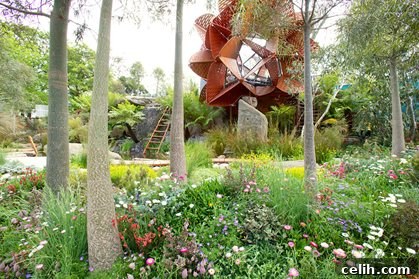
Standing tall and proud amidst the verdant landscape of the Trailfinders Australian Garden was an architectural marvel: a stunning studio crafted entirely from reclaimed timber. This striking structure was a testament to the garden’s overarching theme of sustainability, demonstrating that reclaimed materials can be transformed into something truly spectacular and meaningful. The choice of reclaimed timber underscored a commitment to reducing environmental impact, giving new life to materials that might otherwise have gone to waste.
The studio’s design was particularly captivating, with its timber elements intricately cut into petal shapes and meticulously assembled to form a grand, stylized flower. This artistic interpretation was not arbitrary; it was a deliberate and beautiful representation of the Australian Waratah flower, a distinctive and iconic bloom native to Australia. The Waratah, known for its bold, dramatic form and vibrant red colour, symbolizes strength and beauty, qualities perfectly embodied by the studio’s design.
This architectural feature served as the garden’s central focal point, drawing the eye upwards and adding an undeniable “wow” factor. It seamlessly blended art, architecture, and nature, proving that structures within a garden can be both functional and deeply symbolic. The studio invited contemplation, not just of its form but of its message: that sustainable practices can inspire extraordinary creativity and produce results that are both innovative and deeply connected to their natural context.
The reclaimed timber studio was more than just a building; it was an artistic installation that enhanced the garden’s narrative of ecological sensitivity and Australian identity. It showcased the potential for sustainable building materials to create designs that are not only environmentally friendly but also possess a powerful aesthetic appeal and a profound sense of place. Its presence reinforced the garden’s message that every element, from the smallest plant to the largest structure, can contribute to a cohesive vision of sustainable beauty.
The Lasting Impact and Inspiration of a Chelsea Champion
The Trailfinders Australian Garden’s triumph at the RHS Chelsea Flower Show, securing both a Gold Medal and the Best Show Garden award, was a landmark achievement. This recognition not only celebrated the exceptional talent of Phil Johnson and the meticulous execution by Fleming’s but also shone a global spotlight on the critical importance of sustainable landscape design. Winning the top award in Fleming’s final year of competition added an extra layer of poignancy and triumph to their long and distinguished history at Chelsea.
The garden’s influence extended far beyond the showground. It became a powerful educational tool, inspiring countless visitors, professional landscapers, and home gardeners to reconsider their approach to garden design. By showcasing innovative water harvesting techniques, the beauty of native Australian flora, and the artistic potential of reclaimed materials, it provided tangible examples of how sustainable principles can be integrated into everyday living spaces without sacrificing beauty or functionality.
This Chelsea champion garden left an indelible mark on the landscape of modern horticulture. It set a new standard for what a show garden could achieve, moving beyond purely ornamental displays to present a compelling vision for ecological resilience and environmental stewardship. Its message resonated globally, encouraging a shift towards gardens that are not only aesthetically pleasing but also contribute positively to the planet’s health.
Ultimately, the Trailfinders Australian Garden served as a powerful reminder that gardens are not merely decorative spaces but living ecosystems with the potential to address some of the most pressing environmental challenges of our time. It encapsulated a philosophy where innovative design meets ecological responsibility, proving that with creativity and commitment, we can cultivate spaces that are both beautiful and beneficial for the natural world. Its legacy continues to inspire, reminding us that even in our own backyards, we have the power to make a significant, positive impact.