
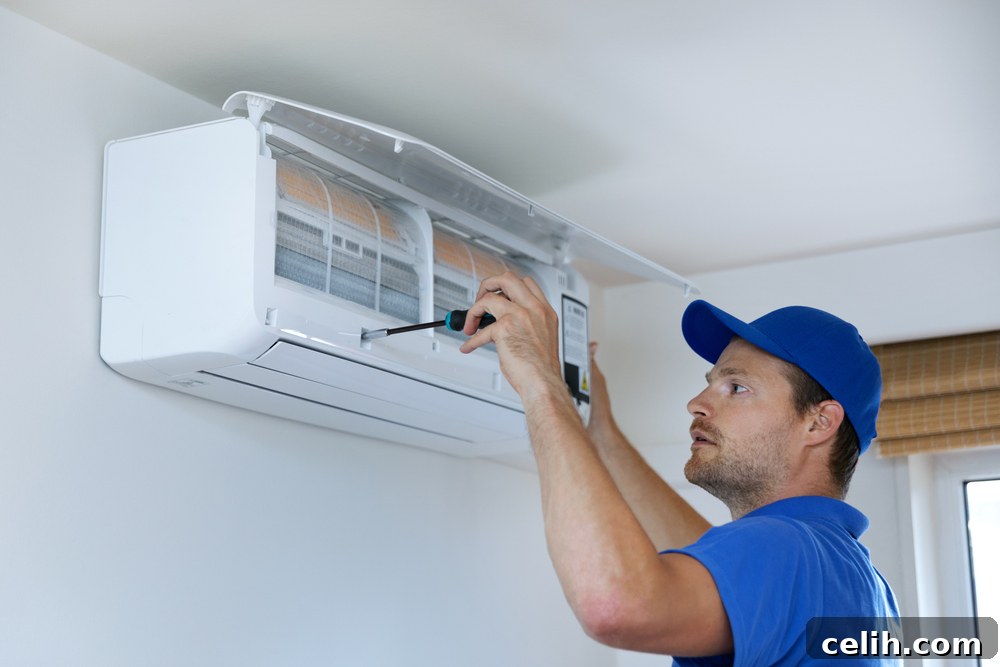
Embarking on DIY projects offers a fantastic opportunity to unleash creativity, learn new skills, and potentially save money. From crafting decorative items to minor home improvements, countless projects are perfect for enthusiasts of all skill levels. However, it’s crucial to understand that not all DIY ventures are created equal. Some tasks, due to their inherent complexity, specialized requirements, and potential risks, are best left to seasoned professionals. Attempting these advanced projects without proper training, tools, or knowledge can lead to disastrous consequences, ranging from compromised safety and significant financial loss to legal repercussions.
Among the categories of home maintenance and repair that demand professional expertise, HVAC installation and repair stand out prominently. Modern heating, ventilation, and air conditioning systems are intricate networks of electrical components, pressurized refrigerants, sophisticated sensors, and precise mechanical parts. Even for a highly skilled DIY enthusiast, the temptation to tackle an HVAC issue can seem appealing, perhaps to save costs. However, this often proves to be a false economy. Delving into the repair or installation of such complex machinery without adequate preparation can turn a minor problem into an expensive catastrophe, jeopardize your family’s health, and even put you at legal risk. It is always wise to consult with certified heating and cooling experts for any significant HVAC work. Here are compelling reasons why professional HVAC service is indispensable and why DIY attempts should be strictly avoided:
1. HVAC Systems Demand Specialized Equipment and Expertise
The complexity of contemporary HVAC systems necessitates more than just a basic toolkit. Installing, maintaining, and repairing these units requires an array of highly specialized tools and diagnostic equipment that are specifically designed for the intricacies of HVAC technology. Unlike simple home repairs that might only call for a screwdriver or pliers, HVAC professionals utilize sophisticated devices such as manifold gauges for measuring refrigerant pressure, vacuum pumps to remove moisture and air from lines, refrigerant recovery units to safely handle and recycle refrigerants, and precise digital multimeters for electrical diagnostics. They also employ specialized leak detectors, thermal imaging cameras, and air balancing equipment to ensure optimal system performance.
These tools are not only expensive but also require extensive training and expertise to operate correctly and safely. Using the wrong tools or improperly using the right ones can lead to significant damage to the unit, reduce its efficiency, or even create hazardous conditions. For instance, without a proper vacuum pump, moisture can remain in the refrigerant lines, leading to system failure. Mishandling refrigerants without a recovery unit is not only harmful to the environment but also illegal. Professionals invest heavily in these high-end tools and continuous training to stay abreast of the latest HVAC technologies and methodologies, ensuring that every job is performed with precision and adherence to industry standards. This level of specialized equipment and knowledge is simply beyond the scope of most DIY enthusiasts.
2. Potential Health and Indoor Air Quality Risks
Your HVAC system is the heart of your home’s indoor environment, directly influencing the quality of the air you breathe every day. Assuming the role of an HVAC maintenance and repair technician means you are directly responsible for your indoor air quality (IAQ) and, consequently, your family’s health. The consequences of improper HVAC installation or repair can be severe and far-reaching. For example, improper installation of heating and cooling units can decrease their efficiency by as much as 30%. This reduction in efficiency isn’t just about higher energy bills; it also means the system struggles to properly filter air, control humidity, and maintain consistent temperatures.
Poorly maintained or incorrectly installed HVAC systems can become breeding grounds for mold, mildew, bacteria, and allergens. Ductwork leaks can draw in dust and pollutants from unconditioned spaces like attics or crawl spaces, circulating them throughout your home. Inadequate ventilation can lead to a buildup of indoor air pollutants, including volatile organic compounds (VOCs) from household products. These issues contribute to a range of health problems, from aggravated asthma and allergies to respiratory infections, headaches, fatigue, and other chronic health conditions. Furthermore, issues with heating systems, particularly furnaces, can lead to dangerous carbon monoxide leaks, an odorless and colorless gas that can be fatal. HVAC professionals are trained to ensure proper sealing, filtration, and ventilation, guaranteeing that your system contributes to a healthy and safe indoor environment, not detracts from it.
3. DIY HVAC Work Can Be Illegal and Void Warranties
Many homeowners are unaware that performing certain HVAC installation and maintenance tasks without proper certification or permits can be illegal. This isn’t merely about personal risk; it extends to serious legal and environmental ramifications. The most significant legal aspect revolves around refrigerants, which are essential for the cooling process in air conditioners and heat pumps. These chemicals, such as hydrofluorocarbons (HFCs), are potent greenhouse gases that contribute to climate change if released into the atmosphere. Due to their environmental impact, the EPA (Environmental Protection Agency) strictly regulates their handling.
The EPA requires that anyone who handles refrigerant must possess a Section 608 Technician Certification. This certification is only awarded after completing rigorous training programs and passing exams for specific types of equipment. Attempting to repair an HVAC unit that involves opening the refrigerant lines without this certification is a federal offense and can result in substantial fines. Beyond refrigerant handling, many localities require permits for major HVAC installations or significant repairs to ensure the work adheres to local building codes and safety standards. Unpermitted work can lead to fines, require costly re-dos by professionals, and even complicate the sale of your home. Furthermore, almost all HVAC manufacturers’ warranties explicitly state that the warranty will be voided if the system is installed, serviced, or repaired by an unlicensed or uncertified individual. Since HVAC units are significant financial investments, voiding the warranty means you’ll be entirely responsible for any future repair or replacement costs, potentially costing you thousands of dollars.
4. HVAC Repairs Present Significant Safety Hazards
Unlike many other simple home maintenance tasks, working on HVAC systems involves numerous serious safety hazards that can lead to severe injury or even death. These systems operate with high voltage electricity, natural gas (in furnaces), and pressurized refrigerants, all of which pose substantial risks if not handled correctly. For starters, the electrical components within an HVAC unit carry enough current to cause electrocution. Without proper knowledge of electrical circuits, lockout/tagout procedures, and the use of appropriate safety gear, the risk of a severe electrical shock or starting a fire is extremely high. For critical electrical components, it is always best to rely on a qualified electrician for electrical panel work to ensure safety and compliance.
Heating and cooling systems also involve chemicals and refrigerants that can be dangerous. Refrigerants, when released, can cause chemical burns, frostbite, and in enclosed spaces, oxygen displacement leading to asphyxiation. Natural gas furnaces present the risk of gas leaks, which can lead to explosions, or improper combustion, leading to the release of deadly carbon monoxide. Additionally, there are mechanical hazards from moving parts like fan blades, sharp edges, and heavy components that can cause physical injury. Professionals are trained to identify and mitigate these risks, using specialized safety equipment such as insulated gloves, eye protection, respirators, and proper lifting techniques. They follow strict safety protocols and are well-versed in emergency procedures, minimizing the risks involved in HVAC service and protecting both themselves and homeowners.
5. Minor DIY Fixes Can Escalate into Costly Catastrophes
One of the most deceptive aspects of DIY HVAC repair is the potential for a seemingly minor issue to mask a much more severe underlying problem. What appears to be a simple HVAC issue, such as a strange noise or an inconsistent temperature, could be an early warning sign of impending catastrophic failure for a major component like the compressor or heat exchanger. Without the diagnostic expertise of a qualified technician, accurately identifying the root cause of the problem is nearly impossible for a homeowner.
Attempting to “patch” a symptom without a thorough expert assessment almost invariably leads to more significant and expensive problems down the line. A small refrigerant leak, if not properly detected and repaired, can lead to the compressor working harder, overheating, and eventually failing—a repair that can cost thousands of dollars. Similarly, an ignored clogged drain line can cause water damage to your home and electrical shorts within the unit. DIY fixes often lack the precision and comprehensive understanding needed to restore the system to optimal functionality, leading to reduced efficiency, higher energy bills, and a shortened lifespan for the entire unit. Investing in professional diagnostics and repairs ensures that issues are addressed completely and correctly the first time, protecting your significant investment in your home’s comfort system.
In conclusion, while the allure of DIY can be strong, especially for home maintenance, it’s critical to discern between manageable tasks and those that require professional expertise. HVAC installation, maintenance, and repair unequivocally fall into the latter category. The complexity of these systems, the specialized tools and knowledge required, the potential for severe health risks, legal liabilities, dangerous working conditions, and the high probability of turning minor issues into costly problems make DIY HVAC work a risky and ill-advised endeavor. Prioritizing the safety of your family, the efficiency of your home, and the longevity of your investment means always entrusting your heating and cooling needs to a certified and experienced HVAC professional. Their expertise ensures peace of mind, optimal system performance, and a safe, comfortable home environment.