
The Hana Table: Shige Hasegawa’s Origami-Inspired Masterpiece Reimagining Modern Furniture
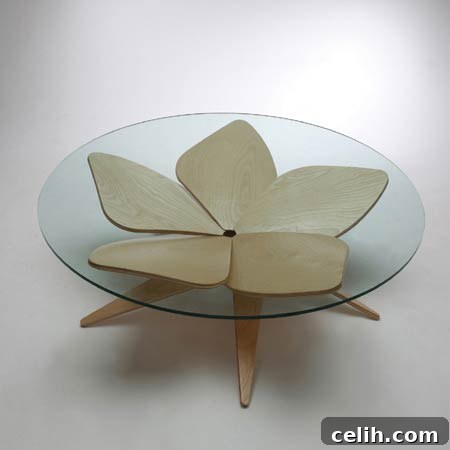
In the realm of contemporary design, where innovation frequently intersects with artistic expression, certain pieces manage to captivate and redefine our perception of everyday objects. Among these noteworthy creations stands the Hana Table, a remarkable furniture piece conceptualized by the esteemed Japanese designer Shige Hasegawa. Moving beyond conventional design motifs often seen in floral imagery, Hasegawa has ingeniously crafted a truly unique, flower-inspired table that marries aesthetic elegance with groundbreaking functionality. Unveiled at the prestigious 2009 Milan Furniture Fair, the Hana Table quickly garnered attention for its distinctive approach to construction and its profound connection to traditional Japanese art forms.
The Visionary Behind the Design: Shige Hasegawa
Shige Hasegawa, a name synonymous with inventive and thoughtful design, embodies a philosophy that seamlessly blends traditional craftsmanship with modern innovation. Hailing from Japan, a country celebrated for its rich heritage in art and meticulous attention to detail, Hasegawa draws heavily from his cultural roots while simultaneously pushing the boundaries of contemporary furniture design. His work often reflects a deep appreciation for simplicity, natural forms, and ingenious structural solutions. The Hana Table serves as a prime example of his ability to translate complex artistic concepts into functional, everyday objects, demonstrating a rare talent for making the intricate appear effortlessly simple. Hasegawa’s vision extends beyond mere aesthetics; he strives to create pieces that not only beautify a space but also enhance the user’s experience through thoughtful design and innovative construction methods.
Unveiling the Hana Table: A Symphony of Design and Ingenuity
The Hana Table, whose name itself means “flower” in Japanese, is much more than just a piece of furniture; it is a testament to design ingenuity and the enduring beauty of natural inspiration. This table is not merely adorned with flower patterns; its very structure embodies the organic grace and delicate strength found in floral forms, interpreted through a modern, sculptural lens. Its debut at the 2009 Milan Furniture Fair, a global benchmark for cutting-edge design, positioned it as a significant contribution to the evolving landscape of interior aesthetics and sustainable manufacturing practices.
Inspiration from Nature: The Enduring Charm of Flowers
Flowers have been an eternal muse for artists and designers across cultures and centuries, symbolizing beauty, growth, and the ephemeral nature of existence. Shige Hasegawa’s interpretation, however, transcends a superficial application of floral motifs. The Hana Table draws its inspiration from the intrinsic structural elegance of a blooming flower, translating its delicate petals and sturdy stem into a robust yet visually light form. This conceptual depth allows the table to resonate with observers on multiple levels, evoking a sense of tranquility and natural harmony within any interior setting. The organic flow of its lines and the way its components converge mimic the natural unfolding of a blossom, making it a living sculpture as much as a functional piece.
Origami Reimagined: From Paper to Plywood
At the heart of the Hana Table’s innovative design lies its profound connection to origami, the traditional Japanese art of paper folding. While origami typically involves intricate folds of paper to create three-dimensional objects, Hasegawa has ingeniously applied these principles to a far less pliable material: wood. This daring translation from paper to plywood is what truly sets the Hana Table apart. Instead of conventional joinery techniques that rely on screws, nails, or complex interlocking mechanisms, the table’s base is formed by five distinct plywood panels that are meticulously folded and interlocked to create a stable, sculptural foundation. This method not only showcases exceptional craftsmanship but also imbues the table with an inherent structural integrity derived from the precise angles and tension inherent in origami forms. The challenge of achieving paper-like fluidity with rigid wood speaks volumes about Hasegawa’s mastery and innovative spirit, offering a fresh perspective on how ancient traditions can inform contemporary design solutions.
Innovative Construction: Beyond Screws and Nails
One of the most remarkable features of the Hana Table is its minimalist construction, entirely devoid of visible screws, nails, or other metallic fasteners typically associated with furniture assembly. The clear glass tabletop is elegantly secured to the meticulously crafted plywood base through the very design of the five interlocking legs. These legs are not merely supportive elements but are integral to the table’s structural coherence, embracing the glass top in a seamless, secure manner. This innovative approach simplifies the assembly process immensely, transforming what can often be a cumbersome task into an intuitive and satisfying experience. The absence of visible hardware contributes significantly to the table’s clean, uninterrupted aesthetic, allowing the beauty of its materials and form to take center stage. This method not only enhances its visual appeal but also reduces material waste and the complexity of manufacturing, aligning with principles of sustainable design.
The Flat-Pack Advantage: Convenience Meets Style
Beyond its aesthetic and structural innovation, the Hana Table is a paradigm of practical design, perfectly engineered for flat-packing. The ability to disassemble and pack the table into a compact, flat form offers a multitude of advantages. For consumers, it means easier transportation from store to home, reduced shipping costs, and convenient storage if the table needs to be moved or temporarily put away. For manufacturers and retailers, flat-pack design significantly lowers logistics expenses, minimizes storage space requirements, and reduces the carbon footprint associated with shipping bulky items. This aspect of the Hana Table design cleverly addresses modern demands for efficient, adaptable, and environmentally conscious furniture solutions. It embodies a forward-thinking approach that prioritizes user convenience and logistical efficiency without compromising on high-quality design or structural integrity.
Exhibition and Impact: Milan Furniture Fair 2009
The Milan Furniture Fair, or Salone del Mobile, is internationally recognized as the most important event in the design world, a crucial platform where established brands and emerging designers showcase their latest innovations to a global audience of critics, buyers, and enthusiasts. Shige Hasegawa’s decision to exhibit the Hana Table here in 2009 was a strategic move that amplified its visibility and impact. The fair served as the perfect backdrop for a piece that so eloquently bridged tradition and modernity, attracting significant attention from design publications like Dezeen.com, which highlighted its unique qualities. Its presence at such a prestigious event not only validated Hasegawa’s innovative approach but also positioned the Hana Table as a noteworthy example of how furniture design could evolve, blending sculptural art with practical utility and sustainable principles. The positive reception underscored a growing appetite within the design community for pieces that tell a story, challenge conventional manufacturing, and offer intelligent solutions for contemporary living.
Aesthetics and Functionality: Where Art Meets Everyday Life
The Hana Table stands as a compelling example of how a piece of furniture can transcend mere utility to become a sculptural work of art that enhances its surroundings. Its aesthetic appeal lies in its clean lines, organic form, and the exquisite interplay between the warmth of the plywood and the cool transparency of the glass. The design is inherently versatile, making it suitable for a wide array of interior design schemes, from minimalist and Scandinavian to more eclectic or contemporary settings. Imagine it as the focal point in a sleek, modern living room, its unique form sparking conversation, or as an elegant addition to a sunlit conservatory, echoing the natural beauty outside. The choice of materials further contributes to its refined character; plywood, a durable and sustainable engineered wood, offers structural strength and a subtle grain, while the glass top provides an expansive, easy-to-clean surface that allows the beauty of the base to be fully appreciated. This harmonious balance of materials ensures that the Hana Table is not only visually striking but also highly functional for daily use.
The Philosophy of Japanese Design Embodied
The Hana Table is a beautiful manifestation of core Japanese design principles. At its heart is the concept of “Wabi-sabi,” an aesthetic philosophy that finds beauty in imperfection and impermanence, valuing simplicity and authenticity. The natural grain of the plywood and the clean, unfussy lines speak to this ideal, avoiding superfluous ornamentation. Furthermore, the table embodies “Shibui,” which refers to an aesthetic of subtle, unobtrusive beauty that appears effortless but is actually meticulously crafted. The ingenuity of its origami-inspired construction, hidden within its elegant form, perfectly illustrates this. Japanese design often emphasizes a deep connection to nature, and the floral inspiration, coupled with the use of wood, reinforces this reverence for the natural world. Finally, the seamless integration of form and function, where every element serves a purpose without ostentation, reflects the Japanese commitment to practical elegance and thoughtful design. The Hana Table, therefore, is more than a piece of furniture; it is a cultural statement, a bridge between ancient art forms and contemporary living.
Sustainability and Modern Living: A Conscious Choice
In an era increasingly focused on environmental responsibility, the Hana Table also stands out for its inherent sustainability aspects. The flat-pack design significantly reduces the carbon footprint associated with shipping, as more units can be transported in less space. The use of plywood, often sourced from sustainably managed forests, positions it as a more environmentally conscious material choice compared to solid hardwoods from less regulated sources. Furthermore, the design’s durability and timeless aesthetic encourage longevity, moving away from a ‘disposable’ culture of furniture. A piece that is well-made, easy to assemble, and visually appealing is more likely to be cherished and kept for many years, reducing waste. Shige Hasegawa’s approach with the Hana Table aligns perfectly with the growing demand for products that are not only beautiful and functional but also respectful of our planet, making it an ideal choice for the eco-conscious consumer seeking to furnish their home with integrity.
Bringing the Hana Table Home: A Statement Piece
Wouldn’t the Hana Table look absolutely magnificent in your living room? Or perhaps in a creative studio, a minimalist dining area, or even a sophisticated waiting room? Its distinctive form and thoughtful construction make it far more than just a surface for objects; it’s a conversation starter, a focal point, and an artistic statement. Its ability to complement various interior styles – from stark contemporary to warm Scandinavian – speaks to its versatility. Paired with minimalist seating, it creates an airy, open feel; with plush textures, it provides an interesting contrast. The Hana Table doesn’t just fill a space; it transforms it, infusing it with an essence of natural beauty, ingenious design, and subtle sophistication. It’s an investment not just in furniture, but in a piece of functional art that celebrates innovation and the timeless allure of nature.
Conclusion: A Legacy of Innovation and Beauty
Shige Hasegawa’s Hana Table is a powerful testament to the limitless possibilities within furniture design. Through its clever fusion of traditional Japanese origami techniques with modern plywood construction, and its commitment to aesthetic purity and practical utility, it redefines what a table can be. Exhibited with acclaim at the Milan Furniture Fair, this flower-inspired masterpiece stands as a beacon of innovative thinking, sustainable design, and understated elegance. It demonstrates that true design brilliance lies in transforming complex ideas into simple, beautiful, and functional forms that enrich our daily lives. The Hana Table is more than just a piece of furniture; it’s a piece of art that invites us to look closer, appreciate the craftsmanship, and marvel at the harmonious blend of nature, tradition, and contemporary ingenuity.
(Original source via Dezeen.com)