
In an increasingly complex world, where individual aspirations often seem to clash with collective well-being, the critical issue of our planet’s future has regrettably become a battleground for fervent debate. For many, the desire to contribute to environmental protection is a deeply held value, yet every effort can feel undermined by those who perceive even minor adjustments as insurmountable burdens. Amidst these challenges, we frequently encounter skepticism, often in the form of the dismissive declaration: “sustainability is a scam.”
However, if this crucial conversation must persist – and there’s a growing consensus that time is a luxury we can ill afford – it’s vital to equip ourselves with robust, well-reasoned responses to the common arguments put forth by sustainability skeptics. This article aims to arm you with insights and facts to confidently address these misconceptions and continue advocating for a healthier planet. Let’s delve into some practical tips for navigating these discussions and reinforcing the undeniable value of sustainable living.
“Living sustainably is for the wealthy and privileged”
This argument often suggests that a healthy, habitable planet is a luxury rather than the fundamental right and bare minimum we should all expect. It’s a misconception that sustainable living demands significant financial investment, when in reality, many core sustainable practices are about conscious consumption, reduction, and efficiency – often leading to savings. Let’s be clear: as environmental degradation worsens, it is precisely those with greater financial resources who will possess the means to mitigate or escape the most severe consequences. Therefore, striving for a sustainable future is not about privilege; it’s about ensuring a decent quality of life for everyone, especially the most vulnerable.
Sustainable living isn’t solely defined by what expensive green technologies you install or new eco-friendly products you purchase. Crucially, it’s about what you don’t buy. Consider the example of transportation: opting to keep your current, well-maintained gasoline car and using it responsibly – perhaps by driving less, carpooling, or combining errands – can have a lower environmental toll than immediately buying a brand new, albeit “green,” electric vehicle. The manufacturing and distribution of any new car, regardless of its power source, carry a significant carbon footprint and resource expenditure. Embracing a philosophy of “reduce, reuse, repair” is far more impactful than constant consumption, even of supposedly sustainable products.
Furthermore, many sustainable choices are inherently economical. Buying preloved clothes, furniture, or electronics from second-hand stores or online marketplaces not only conserves resources and reduces waste but also allows you to acquire unique items at a fraction of the cost of new ones. Repairing household items instead of replacing them, growing some of your own food, or even simply being more mindful about turning off lights and unplugging electronics can significantly reduce utility bills. These actions demonstrate that sustainable living isn’t an exclusive club for the affluent; it’s a smart, financially savvy approach that empowers individuals from all walks of life to reduce their environmental impact while often saving money in the process. It cultivates a mindset of resourcefulness and appreciation for what we already have, challenging the consumerist culture that often drives both environmental degradation and financial strain.
“Solar panels are actually bad for the planet once they’re used up”
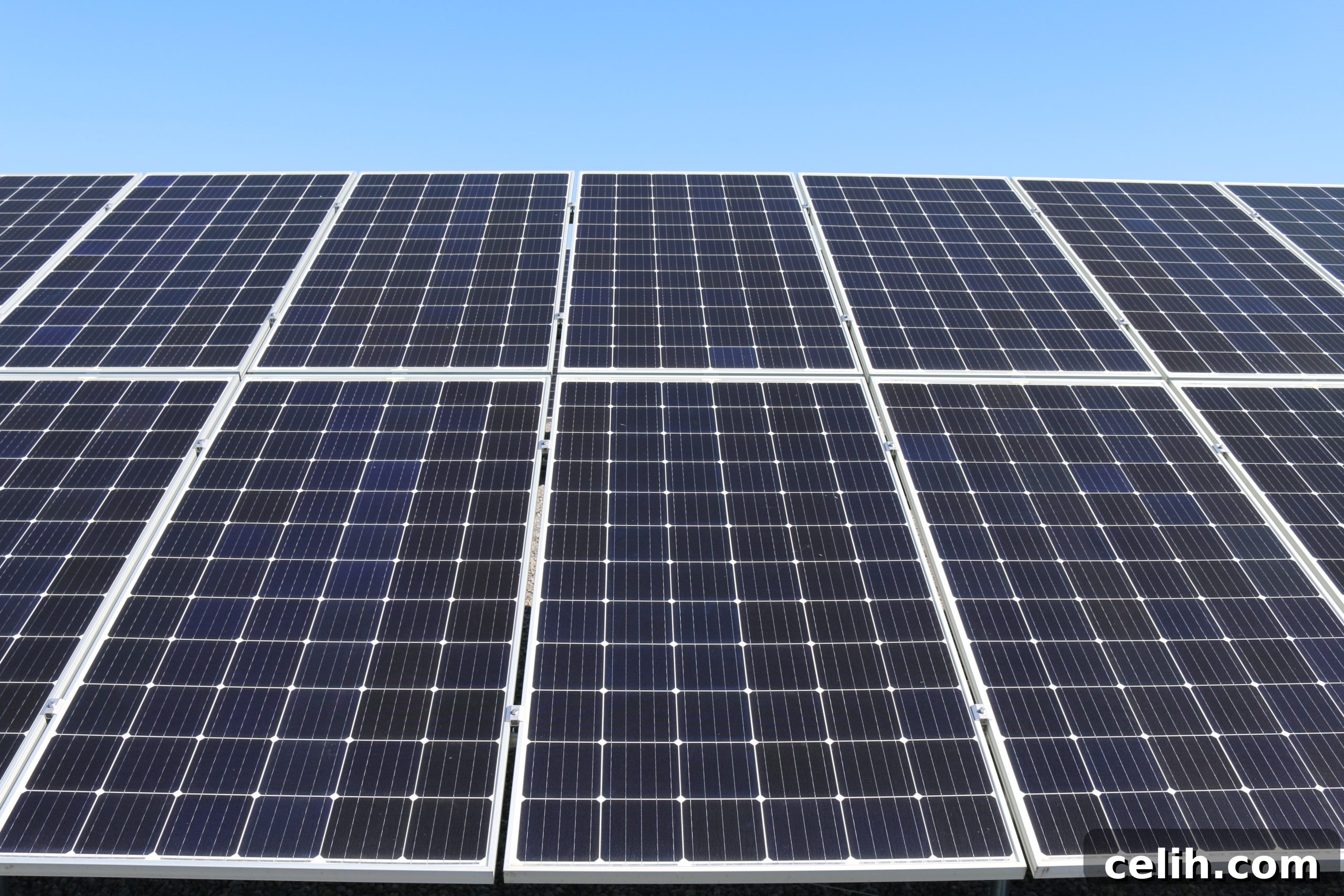
This argument touches on a valid concern regarding the entire lifecycle of any product, and it’s true that improper disposal of anything can lead to environmental pollution. However, to frame solar panels as “bad for the planet” at the end of their life is to ignore the bigger picture and the significant advancements in renewable energy technology and recycling infrastructure. Modern solar panels are built for durability, typically boasting an impressive average lifespan of 25 to 30 years, often with warranties extending beyond two decades. This means a solar installation today will continue to generate clean energy well into the mid-2040s or even 2050s.
During their operational lifespan, solar panels produce electricity with zero greenhouse gas emissions, significantly offsetting the energy and resources used in their manufacturing. When considering the “energy payback time” – the period it takes for a solar panel to generate the amount of energy equivalent to that used in its production – it’s often as short as 1 to 4 years. This means for the vast majority of their operational life, solar panels are net energy producers, contributing significantly to reducing our reliance on fossil fuels.
Furthermore, dismissing solar energy due to end-of-life concerns is short-sighted. The solar industry is rapidly evolving, driven by innovation and increasingly stringent environmental regulations. It is nonsensical to assume that recycling and reuse technologies will not advance significantly over the next two to three decades. In fact, current efforts are already expanding: specialized facilities are emerging globally that can recover valuable materials like silicon, aluminum, glass, and copper from decommissioned panels. Policies, particularly in regions like the European Union, are mandating producer responsibility for recycling, which incentivizes manufacturers to design panels for easier deconstruction and material recovery.
Moreover, the manufacturing processes for solar panels are continually improving, with a growing percentage of panels designed to have a lower carbon footprint from the outset. This includes reducing reliance on hazardous materials, increasing energy efficiency in production, and exploring more sustainable raw material sourcing. While no technology is entirely impact-free, the environmental benefits of transitioning to solar power far outweigh the manageable challenges associated with their end-of-life, especially when compared to the ongoing, widespread, and catastrophic environmental damage caused by fossil fuel extraction and combustion. Investing in solar today is investing in a future where our energy sources are clean, renewable, and increasingly circular in their material use.
“What individuals do doesn’t matter when corporations and other countries pollute so much more”
This argument is a powerful demotivator, and it contains a kernel of truth that needs careful consideration. It’s often cited that a disproportionately small number of companies are responsible for a significant percentage of global greenhouse gas emissions. For instance, the statistic that just 100 companies are accountable for 71% of global industrial greenhouse gas emissions is indeed alarming and highlights the colossal impact of major industries, particularly those in fossil fuels. Similarly, countries like China and India, due to their vast populations and industrial output, do contribute heavily to global emissions. However, concluding that individual actions are therefore irrelevant is a dangerous oversimplification.
Let’s dissect this further. Those 100 companies are primarily fossil fuel producers, meaning their emissions are directly linked to the global demand for coal, oil, and natural gas. Our individual choices, collectively, represent that demand. When we choose to use less energy, opt for renewable energy sources where possible, reduce our consumption of goods that rely heavily on fossil fuel production, or support businesses committed to green practices, we directly impact the market for these fossil fuels. Every kilowatt-hour saved, every journey taken by public transport or bicycle, every eco-friendly purchase sends a signal to corporations that the demand for sustainable alternatives is growing and that unsustainable practices are becoming less viable.
Regarding emissions from other countries, particularly those in the developing world, a significant portion of their industrial output is driven by the manufacturing demands of Western consumer markets. When we purchase cheap goods produced overseas, we are, in essence, outsourcing our emissions. Reducing our overall consumer demand, choosing products with shorter supply chains, and supporting ethical and local manufacturing can help alleviate the environmental burden on these countries. Many of these nations are increasingly signing up to international environmental agreements and are under pressure to meet green responsibilities. Our collective shifts in consumption habits can provide the impetus and the market signals they need to accelerate their transition to cleaner production methods.
Moreover, individual actions extend beyond consumption. They include civic engagement: voting for politicians who prioritize climate action, advocating for stronger environmental policies, and participating in local community initiatives. These collective individual efforts create a powerful social and political mandate for systemic change. While corporations bear a massive responsibility, they operate within a framework of consumer demand and regulatory oversight, both of which are shaped by individuals. To dismiss the impact of individual actions is to ignore the ripple effect they create, the market shifts they drive, and the powerful collective voice they form in demanding a sustainable future from both industries and governments.
“You say you care about the planet, but you still eat meat. Hypocrite much?”
This often-used accusation is designed to shame and silence, implying that unless one adheres to an extreme, perfectly eco-friendly lifestyle, their efforts are invalid. It’s an example of the “all or nothing” fallacy, which hinders progress by making perfect the enemy of good. It is an undeniable fact that industrial farming methods, particularly for meat and dairy, contribute significantly to greenhouse gas emissions, deforestation, land degradation, and water pollution globally. Methane from livestock, for example, is a potent greenhouse gas, and the sheer scale of land required for grazing and feed crops is enormous. Indeed, it would be immensely beneficial for the planet if a significant portion of the global population shifted to a plant-based diet.
However, not everyone can, or is willing to, adopt a fully vegan or vegetarian diet overnight. Dietary changes can be challenging, requiring new cooking skills, knowledge of nutrition, and overcoming long-held cultural habits. For some individuals, attempting a drastic dietary shift could even aggravate existing health issues or lead to nutritional deficiencies if not managed properly. To label someone a hypocrite for not achieving an ideal standard ignores the complexity of personal circumstances and the incremental nature of change.
The crucial point is that every small step matters. We don’t have to be perfect to make a meaningful difference. If every American, for example, reduced their intake of meat by just 25% – which equates to giving up meat for only one meal out of four – that single change could remove an astonishing 82 million tons of emissions every year. This substantial reduction highlights that moderate, widely adopted changes can have a far greater aggregate impact than a smaller number of people achieving a perfect, but rare, zero-impact lifestyle.
Encouraging a “flexitarian” approach – where individuals consciously reduce meat consumption and explore delicious plant-based alternatives – is a pragmatic and powerful strategy. This could mean dedicating certain days to meat-free meals, choosing smaller portions of meat, or opting for more sustainably sourced meat when it is consumed. By focusing on progress, not perfection, we foster a more inclusive and effective movement towards a healthier food system and a healthier planet. It’s about making conscious choices that align with our values, and celebrating every effort to reduce our environmental footprint, rather than succumbing to divisive purity tests.
“Who actually has the time to make all the adjustments they’re asked to?”
In our modern society, despite technological advancements, many people feel perpetually time-poor. The demands of work, family, and personal life often leave little room for what are perceived as “extra” tasks. It’s an understandable sentiment to feel overwhelmed by the sheer volume of changes suggested for sustainable living, from composting all waste to collecting rainwater or overhauling daily routines. In an ideal world, we might all have more leisure time to dedicate to these practices, but reality dictates otherwise.
However, this argument often misunderstands the nature of sustainable living. Many eco-friendly adjustments, once integrated, actually save time or simplify life. Consider the simple act of using reusable canvas tote bags instead of accumulating plastic or paper bags at the supermarket. This isn’t just an environmental win; it’s a time-saver. You’re not fumbling for bags at the checkout, nor are you dealing with a messy pile of single-use bags at home that need to be recycled or thrown away. Similarly, planning meals around fresh, simple ingredients, like a vibrant tossed salad instead of a complex roast or baked dinner, can significantly reduce cooking and preparation time.
Moreover, sustainable living often encourages a reduction in overall consumption, which in itself can free up time. Less shopping for new items means more time for other activities. Opting for quality over quantity in purchases means less time spent replacing broken goods. Embracing minimalist principles often aligns directly with sustainable goals and can declutter not just your home, but also your schedule and mental space.
The key is to view sustainability not as an additional chore, but as a series of small, manageable habit changes. Start with one or two easy shifts – perhaps bringing a reusable coffee cup, using a digital shopping list, or batch cooking plant-based meals once a week. As these adjustments become second nature, the next ones feel less daunting. The more sustainable habits you cultivate, the easier it becomes to incorporate others, building momentum over time. Don’t let the daunting perception of a complete overhaul deter you; focus on achievable steps that demonstrate how sustainability can, in fact, streamline and enrich your daily life, rather than complicate it.
“Why are you making these changes when you can’t see the future? You might not even be alive when we see their impact!”
This argument attempts to diminish the urgency and impact of sustainable actions by appealing to fatalism and short-term thinking. It questions the motivation behind acting for a future one might not personally witness. Let’s engage with this perspective, even hypothetically. Let’s entertain the unlikely premise that the overwhelming majority of climate scientists are somehow incorrect, and that our current actions regarding climate change won’t have the predicted catastrophic impacts. Let’s assume that any positive effects of sustainable living are so far off in the distant future that we won’t be around to see them.
Even under this highly improbable scenario, what exactly would be the “cost” of adopting sustainable practices? We would still be creating cleaner, more breathable air in our cities and rural areas, leading to immediate health benefits and reduced respiratory illnesses. We would save money on household energy bills, grocery shopping, and consumer goods by reducing consumption and waste. We would preserve natural habitats, protecting countless endangered species and biodiversity hotspots from the relentless demolition of ecosystems. We would stop polluting our waterways and oceans, ensuring cleaner drinking water and healthier marine life. Furthermore, we would save billions of dollars globally on healthcare costs associated with pollution-related illnesses, which strain public health systems and diminish quality of life for millions.
Would all these tangible, immediate, and significant benefits truly be “for nothing” simply because a hypothetical future outcome isn’t guaranteed? The answer is unequivocally no. Sustainable actions have direct, measurable, and positive impacts on our lives and the environment *today*. The air is cleaner, our communities are healthier, and our finances are often improved. These are not speculative future gains; they are current realities that enhance our quality of life right now.
Moreover, the truth of the matter is that the changes we make now will have an impact that is visible and felt in the very near future, and indeed, already is. We are already witnessing the initial consequences of climate change, from extreme weather events to changing seasons. It is overwhelmingly likely that our collective efforts will also yield cumulative future benefits that are critical for preventing this planet from becoming uninhabitable for a substantial percentage of humanity. Striving for a cleaner, healthier, and more equitable world is not “virtue signaling”; it is an act of responsibility, compassion, and enlightened self-interest. We must not allow ourselves to be dissuaded by the hollow myths of skeptics that crumble under genuine scrutiny, nor by the notion that positive action is futile if its ultimate reward is not immediately visible to our own eyes. The future is built by the actions of the present, and every sustainable choice is a brick in the foundation of a better world for all.