
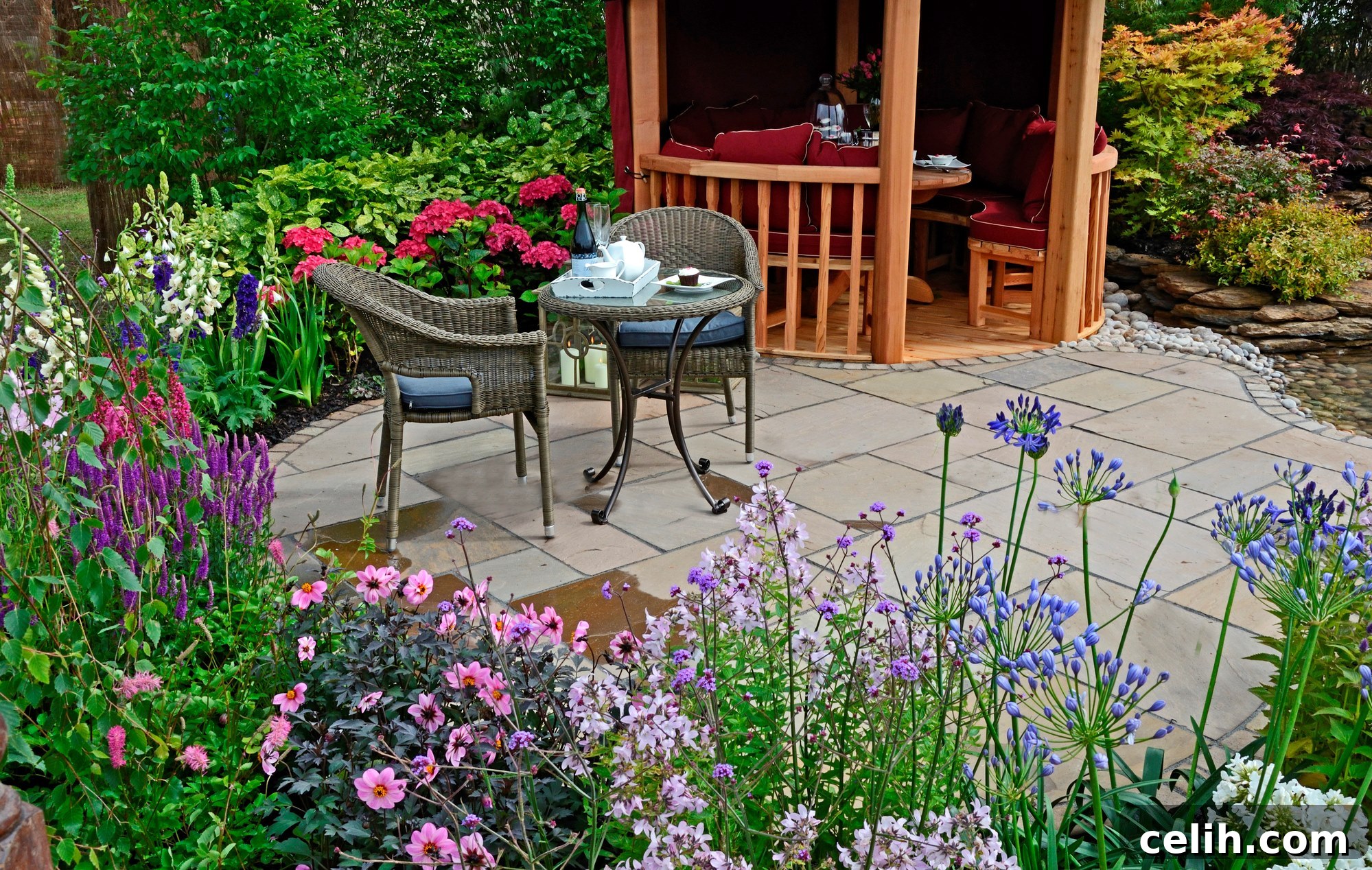
Embarking on a garden transformation is an exciting prospect, promising an enhanced outdoor living space that can bring joy and tranquility for years to come. However, many garden projects stumble not because of poor taste or an insufficient budget, but due to a critical oversight: inadequate planning. The crucial planning stage is often rushed, minimized, or viewed merely as a preliminary step before the ‘real work’ of buying materials and planting begins. This article delves into why proper planning is not just important but is, in fact, the most valuable investment of time you can make in any garden design or landscaping project.
From crafting the perfect pergola design that provides much-needed shade, to strategically placing a patio for optimal enjoyment, or devising a planting scheme that truly flourishes year-round and requires manageable upkeep, none of these elements materialize by accident. They are the direct result of thoughtful, meticulous planning. The hours dedicated to developing a clear, comprehensive vision before any financial commitment is made will invariably be the most productive and cost-saving part of your entire garden project. It sets the foundation for a stunning, functional, and sustainable outdoor oasis.
Here’s a detailed guide on how to approach your garden planning properly, ensuring your vision becomes a beautiful reality.
Start With How You Actually Use Your Garden
While it might seem intuitive, many homeowners mistakenly begin a garden redesign by focusing solely on aesthetics – what they want their garden to look like. This approach, though common, is often misguided. The most effective starting point for any successful garden design is to consider its fundamental purpose: what do you want your garden to do for you and your household? Your garden is an extension of your home, and its functionality should align seamlessly with your lifestyle.
Begin by asking yourself a series of honest, introspective questions that will serve as the bedrock of your design decisions. Do you regularly host gatherings and enjoy dining al fresco, necessitating a spacious outdoor kitchen or dining area? Or is your primary need a tranquil sanctuary for quiet contemplation and reading? Perhaps you have young children or pets who require safe, open spaces for play and exploration. Are you an aspiring horticulturist eager to cultivate your own fruits, vegetables, and herbs, or does the thought of a demanding vegetable patch fill you with dread? Is your garden a space where you actively spend hours nurturing plants, or do you prefer to admire its beauty through a window, with minimal ongoing maintenance?
The candid answers to these fundamental questions will powerfully shape every subsequent decision, from the choice of hardscaping materials to the selection of plant species. A garden meticulously designed for vibrant entertaining, featuring expansive patios and robust seating areas, will look and function vastly differently from one conceived for quiet solitude, complete with secluded nooks and sensory plantings. Similarly, a low-maintenance landscape, ideal for busy professionals or those who travel frequently, will incorporate distinct materials and planting strategies compared to a garden where the owner delights in hands-on gardening every weekend.
Crucially, don’t just ponder these questions mentally. Commit your answers to paper. Writing them down forces a level of clarity and specificity that mere contemplation cannot achieve. This written brief becomes your guiding manifesto, ensuring that your garden design remains true to your practical needs and desires, ultimately leading to a space that truly enhances your daily life.
Assess What You’re Working With: A Comprehensive Site Analysis
Before you can envision your garden’s future potential, you must thoroughly understand its present reality. This comprehensive site analysis is a foundational step, revealing the existing conditions that will either inform or constrain your design choices. Ignoring these crucial factors can lead to significant problems and costly rework later on.
Begin by meticulously observing your garden at various times throughout the day and across different seasons. Pay close attention to the path of the sun: note exactly where sunlight falls, for how long, and at what intensity. This detail is far more critical than many realize. A patio, for instance, might seem perfectly placed in the morning but could be plunged into shade by 3 PM on a summer afternoon, precisely when you’d wish to enjoy it. Conversely, a planting bed receiving full, scorching sun all day will require vastly different plant selections – perhaps drought-tolerant species – compared to one that is in shadow for half the day, which would suit shade-loving perennials. Understanding solar exposure is paramount for both plant health and human comfort.
Next, assess wind exposure. Does your garden experience strong, persistent breezes that could affect plant growth, outdoor comfort, or the stability of structures like pergolas? Identifying windy corridors allows you to plan for windbreaks, sheltered seating areas, or robust plant choices. Similarly, document any slopes, undulations, or significant changes in ground level. These topographical features profoundly impact drainage patterns and can significantly escalate costs if extensive leveling, retaining walls, or terracing are required. Ignoring existing levels can lead to water pooling, erosion, or even structural issues with hardscaping.
Carefully note all existing features. Which mature trees, established shrubs, or existing structures (like a garden shed, wall, or paved area) do you genuinely wish to integrate into your new design? And be brutally honest about those elements you’re clinging to out of sheer habit or sentimentality rather than genuine affection or practical value. Sometimes, removing an outdated feature creates far more design potential than trying to work around it. Also, consider the views both into and out of your garden. Are there unsightly neighboring buildings you wish to screen, or beautiful distant vistas you want to frame and enhance?
To capture an objective perspective, take numerous photographs from multiple angles, including bird’s-eye views from upstairs windows or even a drone if accessible. Seeing your garden from above often reveals awkward proportions, wasted corners, or overlooked opportunities that are not apparent at ground level. This visual documentation, alongside your written observations, forms an invaluable reference point throughout the design process, enabling you to make informed decisions that respect and optimize your unique site conditions.
Understand the Soil and Drainage: The Hidden Foundations
The health and vitality of your garden, particularly its plant life, are inextricably linked to the quality of your soil and its drainage capabilities. These two critical factors are regrettably often ignored until they manifest as frustrating, expensive problems. A proactive understanding here can save a world of trouble.
To begin your assessment, dig a small test hole, approximately 30cm (12 inches) deep, and carefully examine its contents. The soil type you encounter will dictate much about your planting choices and maintenance strategies. For instance, heavy clay soil, characterized by its dense, sticky texture, retains water and nutrients exceptionally well but can become easily compacted and waterlogged. This poor drainage can be detrimental to plants that dislike ‘wet feet,’ leading to root rot. Conversely, sandy soil is coarse and granular; it drains rapidly but struggles to retain moisture and nutrients, drying out quickly in summer. Loamy soil, often considered the gardener’s ideal, strikes a perfect balance, offering good drainage while retaining adequate moisture and fertility. You might also encounter silty soil, which is fine and slippery when wet, falling somewhere between clay and sand.
If you’re uncertain about your specific soil type, many local garden centers offer basic soil testing services, or you can purchase a DIY kit. Reputable organizations like the RHS (Royal Horticultural Society) also provide comprehensive online guides to understanding various soil types and recommending plants that thrive in each condition. Beyond physical texture, consider a soil pH test. Soil pH (acidity or alkalinity) significantly influences nutrient availability and is crucial for selecting plants that will truly flourish.
Once you’ve assessed your soil type, the next critical step is evaluating drainage. Fill your test hole with water and meticulously observe how quickly it drains away. If the water is still standing in the hole an hour later, you almost certainly have a drainage problem. Ignoring this issue and hoping for the best is one of the most expensive mistakes a garden owner can make. Poor drainage leads to waterlogged plant roots, structural damage to foundations and hardscaping, and can even create breeding grounds for mosquitoes. Solutions range from improving soil structure with organic matter, installing French drains, creating swales (shallow depressions that guide water), or even designing a rain garden to effectively manage stormwater. Addressing drainage proactively is fundamental to the long-term success and health of your garden.
Sketch a Rough Layout: Visualizing Your Vision
With your functional requirements and site analysis complete, it’s time to translate ideas into a visual format. You don’t need to be an accomplished artist or possess any technical drawing skills for this stage. A series of rough sketches on paper, or even using simple online tools, is perfectly adequate to begin conceptualizing your garden’s layout. This is about exploring possibilities, not drafting a final blueprint.
Start by accurately marking out the boundaries of your garden. Indicate the position of your house, any outbuildings, existing access points (gates, doors), and any established features you plan to keep. From there, begin to think in terms of ‘zones’ or ‘rooms’ within your garden. Where will your primary seating or dining area be located to optimize sun exposure or privacy? How will the lawn relate to this zone? Where do you envision planted borders, raised beds, or perhaps a children’s play area?
Consider the ‘flow’ and ‘movement’ through your garden. How do you naturally move from the back door to the far end of the garden, or from one functional zone to another? Is there a logical, inviting path, or does the current layout force you to awkwardly traverse the lawn every time you need to reach a specific spot? Small considerations like the width and direction of pathways significantly impact how a space feels and functions in daily use. Think about sightlines and focal points: what do you want to see when you step outside, or from various windows within your home? How can you create visual interest through specimen plants, garden art, or water features?
This initial sketching phase is purely a tool for iterative thinking and spatial exploration. Don’t limit yourself to just one version. Create multiple variations, moving elements around on paper. Experiment with different shapes, sizes, and arrangements for your patio, lawn, and planting beds. It costs absolutely nothing to erase or redraw a line on paper, whereas moving a newly built patio or an established plant can be incredibly costly and disruptive. Embrace this freedom to experiment; it’s where innovative and truly personalized garden solutions often emerge. These sketches will form the basis for more detailed plans later, whether you develop them yourself or bring in a professional.
Set a Realistic Budget, and Then Add 15%: Financial Foresight
One of the most common pitfalls in any home improvement project, and particularly garden transformations, is underestimating the financial investment required. Garden projects have an almost universal habit of costing more than initially anticipated. Material prices can fluctuate unexpectedly, groundwork often unearths unforeseen challenges, and what appears straightforward on paper can prove to be considerably more involved once construction begins. Therefore, setting a realistic budget – and adding a contingency – is an absolutely crucial step.
Establishing a comprehensive budget before you engage with any designers or contractors provides a vital framework for every decision that follows. It allows you to discern immediately which choices are financially viable and which are not, preventing ‘budget creep’ where incremental ‘yeses’ to appealing but expensive options lead to a total expenditure far beyond your initial intentions. Without a clear financial ceiling, it’s easy to get carried away by exciting possibilities, only to face an uncomfortable reality later.
Break down your budget into distinct, manageable categories. Typical categories include:
- Hard Landscaping: This covers all structural elements such as patios, pathways, decking, retaining walls, fencing, pergolas, sheds, and any other built features. Materials like stone, timber, and aggregates fall here.
- Soft Landscaping: This encompasses all living elements – plants (trees, shrubs, perennials, annuals), lawn turf or seeding, and soil preparation (compost, topsoil, amendments).
- Features and Utilities: This category includes items like garden lighting, irrigation systems, water features, sculptures, outdoor furniture, and perhaps even an outdoor kitchen setup.
- Professional Fees: Allocate funds for garden designers, landscape architects, or specialist consultants if you plan to utilize their services.
- Labor and Equipment Hire: Even if you plan to do some DIY, consider costs for skilled labor for specific tasks or machinery hire for groundwork.
Knowing roughly how much you intend to allocate to each category empowers you to have more productive and focused conversations with potential designers or contractors. It also helps you prioritize where to invest more and where to economize if necessary.
Finally, and perhaps most importantly, the recommendation to add a 15-20% contingency fund is not a pessimistic outlook; it’s a realistic acknowledgment of how complex projects unfold. This buffer accounts for unexpected issues like discovering poor drainage, fluctuating material costs, unforeseen site conditions, or even minor design adjustments you might decide on during the project. Having this contingency ensures that minor surprises don’t derail your entire budget or force you to compromise on critical elements. It’s an essential safety net for a smooth and less stressful execution of your dream garden.
Know When to Bring in a Professional: Expert Guidance
While a confident homeowner with a well-developed plan can achieve remarkable results for small, contained garden changes, there comes a point where professional input doesn’t just help – it pays for itself. For projects involving significant alterations to levels, complex drainage solutions, the installation of structural elements, or a comprehensive redesign of a larger plot, professional expertise is invaluable. It’s an investment that can prevent costly mistakes and elevate your garden beyond what you might achieve alone.
A skilled garden designer brings a wealth of experience, knowledge, and an objective perspective that most homeowners lack. They possess a deep understanding of what genuinely works in practice, not just in theory. Their expertise spans material performance and longevity, plant science, spatial planning, and the ability to visualize the entire picture rather than focusing on isolated elements. Moreover, they can help you navigate common pitfalls and costly errors that often occur when homeowners ‘wing it’ through a complex project, such as incorrect plant choices for your soil and light conditions, or an impractical layout that looks good on paper but fails in everyday use.
As Scott MacColl of MacColl & Stokes Landscaping emphasizes, “Getting a contractor involved early in the planning stage profoundly impacts the outcome. Seeing a detailed 3D visualization of your pergola design or full garden layout before any physical work commences means critical decisions are finalized on paper, where changes are inexpensive, rather than on site, where they become incredibly costly and time-consuming.” This collaborative approach ensures that the design is not only aesthetically pleasing but also practical and buildable within your budget.
Consider engaging a professional if your project involves:
- Major structural changes (e.g., extensive paving, retaining walls, multi-level decks).
- Complex drainage issues that require engineering solutions.
- Large-scale planting schemes requiring in-depth horticultural knowledge.
- A complete overhaul of a sizeable outdoor space.
- If you lack the time, specific expertise, or confidence to manage the project yourself.
- When maximizing property value or creating a highly polished, bespoke outdoor living space is a priority.
A professional can help you refine your vision, provide detailed plans for accurate quotes, source quality materials, and even manage the project, ensuring a smooth transition from concept to completion. Their insights can truly transform a good idea into an exceptional garden.
Think About Maintenance From the Start: Designing for Your Lifestyle
This is arguably one of the most overlooked aspects of garden design, yet it holds profound implications for your long-term satisfaction and the sustainability of your outdoor space. The garden you meticulously design is ultimately the garden you will have to maintain – or pay someone else to maintain. The ongoing commitment to maintenance, whether in terms of your time or financial outlay, represents a very real and often underestimated cost, especially when everything looks pristine and perfectly manageable in a design sketch.
Before finalizing any design elements, honestly assess your enthusiasm for gardening and the amount of time you realistically have available each week. This self-assessment is crucial for designing a garden that truly suits your lifestyle, rather than an idealized version that might become a burden.
If you’re seeking a low-maintenance garden, your design should prioritize elements that demand minimal attention. This typically involves:
- Extensive Hard Surfaces: Patios, pathways, and gravel areas require less upkeep than lawns or densely planted beds.
- Structural Planting: Opt for slow-growing shrubs, evergreen perennials, and native plants that are well-adapted to your climate and require less pruning, watering, and pest management. Drought-tolerant species are particularly beneficial.
- Mulching: Generous layers of organic or inorganic mulch suppress weeds, retain soil moisture, and moderate soil temperature, significantly reducing watering and weeding tasks.
- Automated Irrigation: A well-designed irrigation system can drastically cut down on watering time.
- Reduced Lawn Areas: Lawns are notoriously high-maintenance, requiring regular mowing, feeding, and weeding. Consider smaller lawns or alternative ground covers.
Conversely, a higher-maintenance garden will feature elements that require more consistent care. This might include:
- Large Lawns: For active families or those who enjoy a traditional aesthetic.
- Extensive Flowering Borders: While beautiful, these often demand regular deadheading, pruning, feeding, and pest control.
- Vegetable Gardens and Orchards: Highly rewarding but require consistent tending, watering, and harvesting.
- Intricate Water Features: These can require regular cleaning, chemical balancing, and winterizing.
Neither approach is inherently superior; the ‘best’ choice depends entirely on your personal preferences, time constraints, and commitment level. If you’re not a keen gardener, be transparent about it from the outset. Design the garden you will realistically be able to look after and enjoy, not the one you envision a future, more diligent version of yourself tending. A beautiful, well-designed garden that becomes neglected due to unmanageable maintenance requirements is a source of frustration, not joy. By integrating maintenance considerations into the initial planning phase, you ensure your outdoor space remains a source of pleasure for years to come.
The Planning Stage Is the Project: The Ultimate Investment
Here lies the fundamental truth that many people get backward: they often perceive the planning stage as the tedious, necessary evil that must be endured before the exciting ‘real work’ of physical construction and planting can begin. This perspective is a profound misconception. The planning stage is not merely a prelude; it is, in itself, the most critical phase of the entire project, where the success or failure of your garden transformation is ultimately decided.
Think of it this way: no architect would begin constructing a house without a meticulously developed blueprint, and no builder would start without those plans. The same principle applies, perhaps even more so, to a garden, which is a dynamic, living system influenced by countless variables. A garden that has been thoughtfully and thoroughly planned is inherently easier to budget for, simpler to build, and dramatically more likely to result in a space you genuinely love and continue to enjoy five, ten, or even twenty years down the line. Organizations such as the Society of Garden Designers consistently highlight inadequate planning as the primary reason why garden projects fail to meet their owners’ expectations, leading to disappointment, additional costs, and sometimes, complete abandonment.
Embrace the planning phase. Take your time, delving deep into each step outlined above. Ask the hard, practical questions early on, challenging your assumptions and exploring all possibilities. Change your mind on paper as many times as needed – it costs nothing to redraw a sketch or revise a written brief. This iterative process of refinement and exploration is where true value is created and costly mistakes are averted. It’s far better to discover a flaw in your design during the planning stage than after materials have been purchased and work has commenced on site.
When you finally move from the drawing board to the actual implementation, ensure that everyone involved – from contractors to landscapers – fully understands the vision and detailed plan you’ve developed. The finest plan is only as effective as the team that executes it. Clear communication, rooted in a robust plan, is key to bringing your dream garden to life.
Ultimately, a garden project executed with proper foresight and meticulous planning is one of the most rewarding and satisfying home improvements you can undertake, adding immense value, beauty, and enjoyment to your life. Conversely, a garden designed in haste, without thoughtful consideration and a comprehensive strategy, is not merely a missed opportunity; it’s an expensive lesson in the critical importance of proper preparation.