
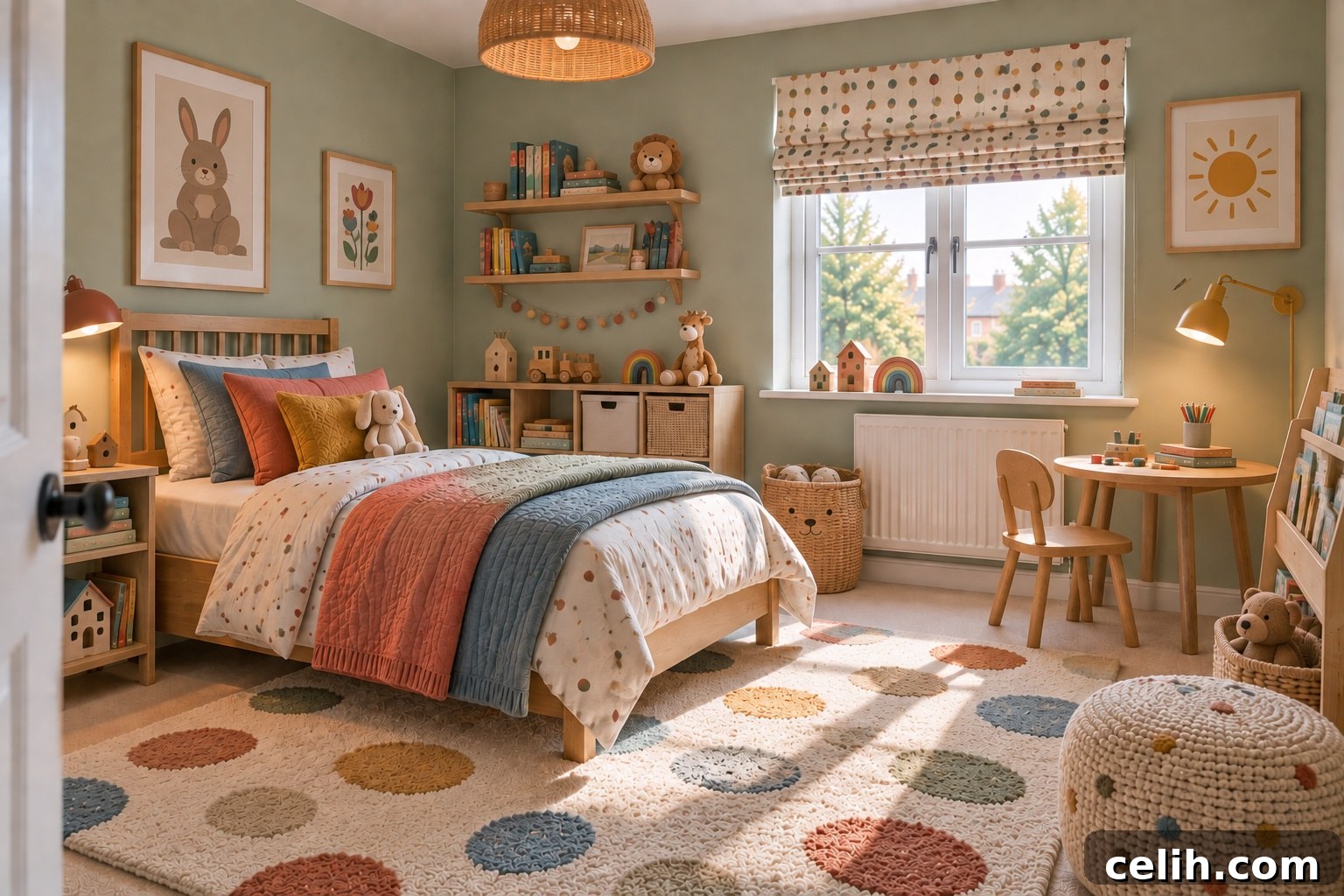
Designing a child’s bedroom is one of the most enjoyable home projects. It’s an opportunity to use colour, pattern and playful ideas you might not choose elsewhere, and to create a space that feels distinctly theirs.
Children’s bedrooms also need to be highly functional. A relatively small room often has to provide space to sleep, dress, play, read, store toys, do homework and spend time with friends. And just when everything seems to work well, your child grows, their interests change and the room must adapt.
Approach a child’s bedroom the way you would plan a living room or kitchen: get the practical layout right first, then have fun with colour and decoration. With sensible planning you can create a room that suits your child now and can evolve with them without frequent, expensive rewrites.
Quick Answer: How to Design a Child’s Room
Start by planning the room layout and the activities it must support. Position the bed first, then plan storage, play or study zones and lighting around it. Choose adaptable furniture for expensive items and use paint, bedding, artwork and accessories to add colour and personality.
Start With How the Bedroom Will Be Used
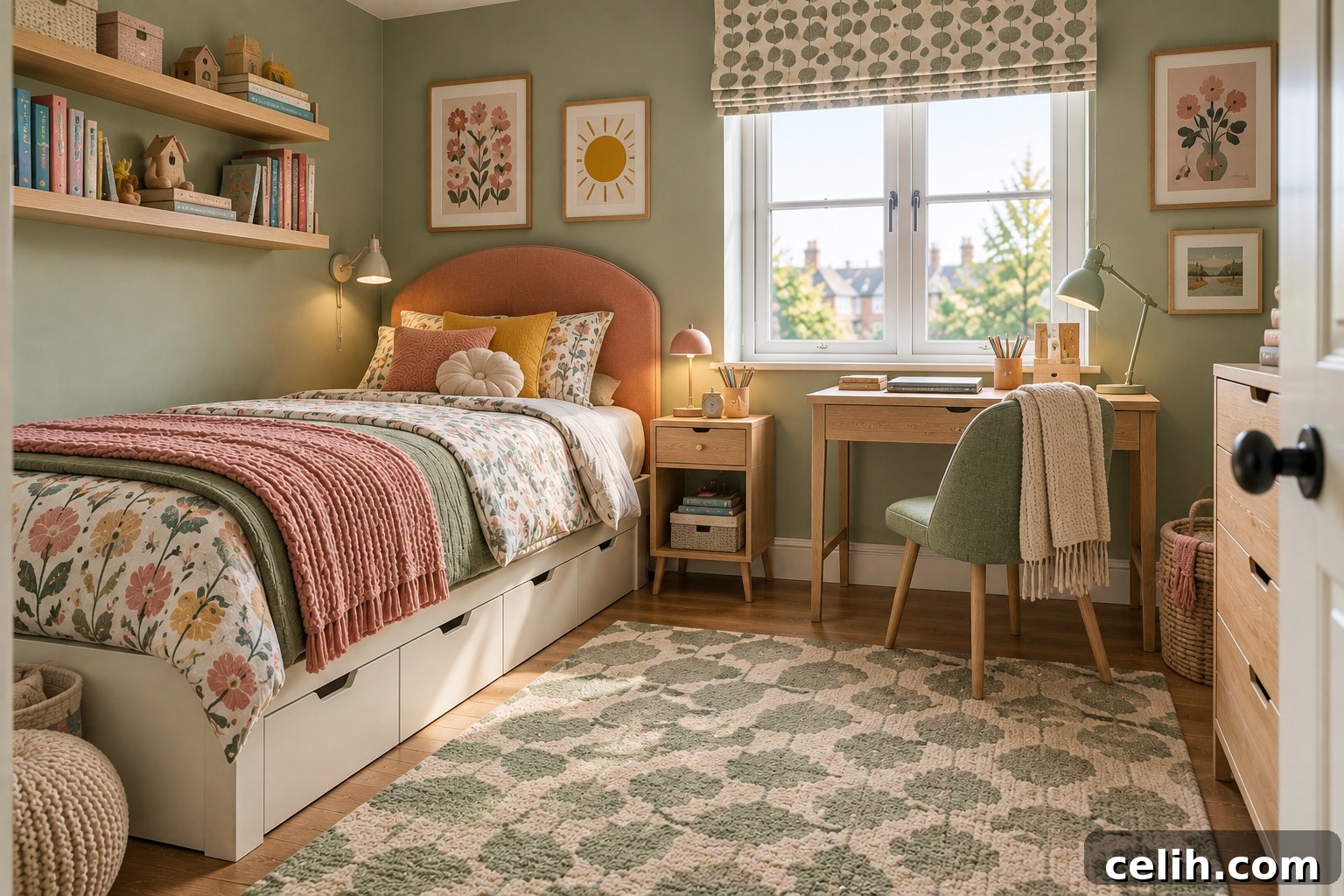
Before picking paint colours or furniture, think about what actually needs to happen in the room. Sleeping is the primary function, but bedrooms commonly need to accommodate:
- Getting dressed and storing clothes
- Playing with toys
- Reading
- Drawing and crafts
- Homework
- Hobbies
- Relaxing
- Displaying collections
- Having friends over
- Sleepovers
Priorities shift with age. Toddlers and preschoolers benefit from accessible toy storage and clear floor space. Primary-school children need more room for books, hobbies and schoolwork. Teenagers often require a proper desk, technology, more clothes storage and a comfortable place to relax.
Plan for current needs but keep one eye on the near future. You don’t need to predict every hobby, just avoid making expensive or permanent choices that will limit the room later.
Measure the Bedroom Properly
Even if you’ve lived in the house for years, measure the room accurately. A few centimetres can make a big difference in a small bedroom.
Measure length and width and note the position of:
- Doors and their swing
- Windows
- Radiators
- Plug sockets
- Light switches
- Built-in cupboards and alcoves
- Chimney breasts
- Sloping ceilings
Draw a simple floor plan on paper or use a room-planning tool. Note ceiling height, especially if you plan a bunk bed, mid-sleeper or tall storage. Before buying large furniture, mark its dimensions on the floor with masking tape to visualise how it will fit.
Decide Where the Bed Will Go First
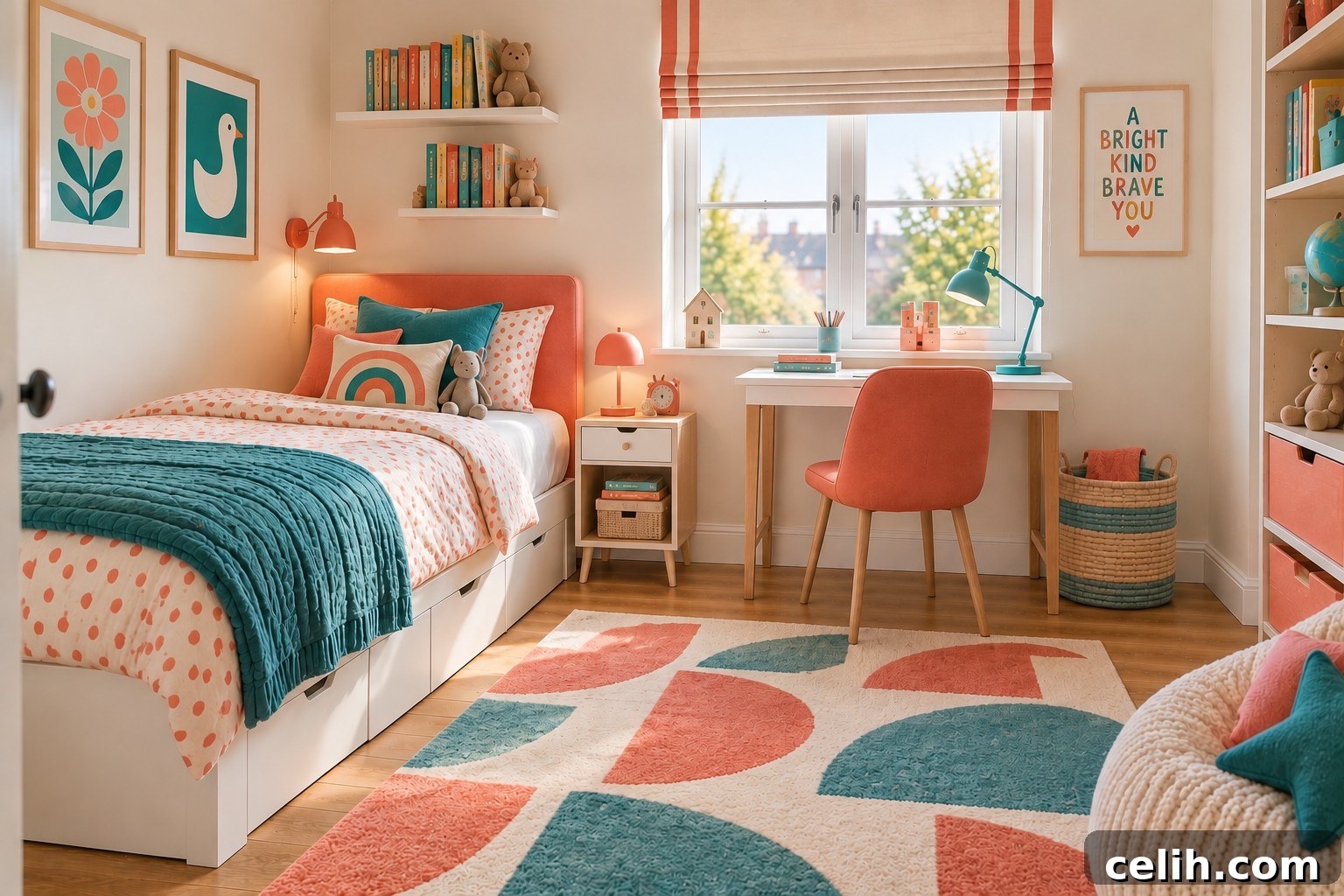
The bed is usually the largest item, so start with its position. Aim for a spot that doesn’t obstruct the doorway, window or radiator and that leaves comfortable circulation around the room. In larger rooms, space on both sides of the bed makes changing bedding easier; in small rooms, pushing a single bed against a wall can free valuable floor space.
Consider what sits beside the bed: does your child need a bedside table, a reading light and a nearby plug socket? Avoid placing beds under heavy shelves or dense wall-mounted storage.
What Size Bed Does a Child Need?
After cot or toddler bed, moving straight to a standard single bed is often the most practical choice. A full-size single can last well into the teenage years. Where space is tight, beds with built-in drawers, cabin beds or mid-sleepers offer storage and desk options underneath. Bunk beds work well in shared rooms but check manufacturer age and safety guidance before purchasing.
Create Zones Within the Bedroom
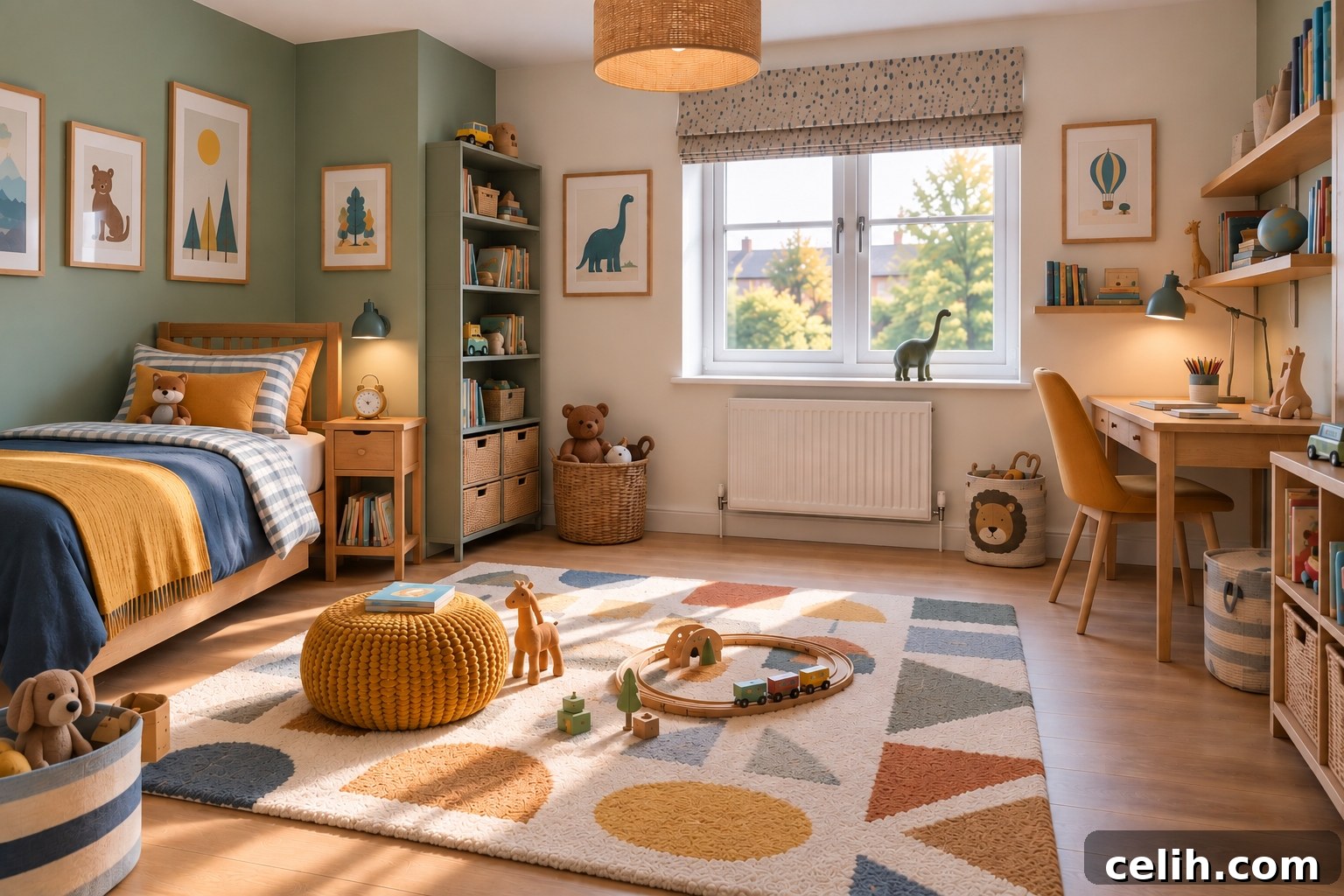
You don’t need a large room to divide it into functional zones. Zoning is especially useful in small rooms because it clarifies the purpose of each area.
The Sleep Zone
Keep the area around the bed calm and comfortable. Bedside lighting, favourite books and a few treasured items make it cosy without cluttering the sleep space.
The Play Zone
For young children a stretch of clear floor space is often more valuable than extra furniture. A rug can define the play area while nearby baskets, drawers or cubbies make tidying easier.
The Reading and Relaxation Zone
If space allows, create a spot separate from the bed for reading and relaxing. A small upholstered chair, beanbag or cushions beside a bookshelf can work just as well as an armchair.
The Study Zone
When homework becomes regular, a dedicated desk is valuable. Position it in good natural light if possible and provide a comfortable chair, task lighting and nearby storage for stationery and books. Shelves above or beside the desk use vertical space efficiently.
Zones can be defined without walls—use rugs, furniture placement, lighting and colour to create visual separation.
Plan Storage Around What Actually Needs Storing
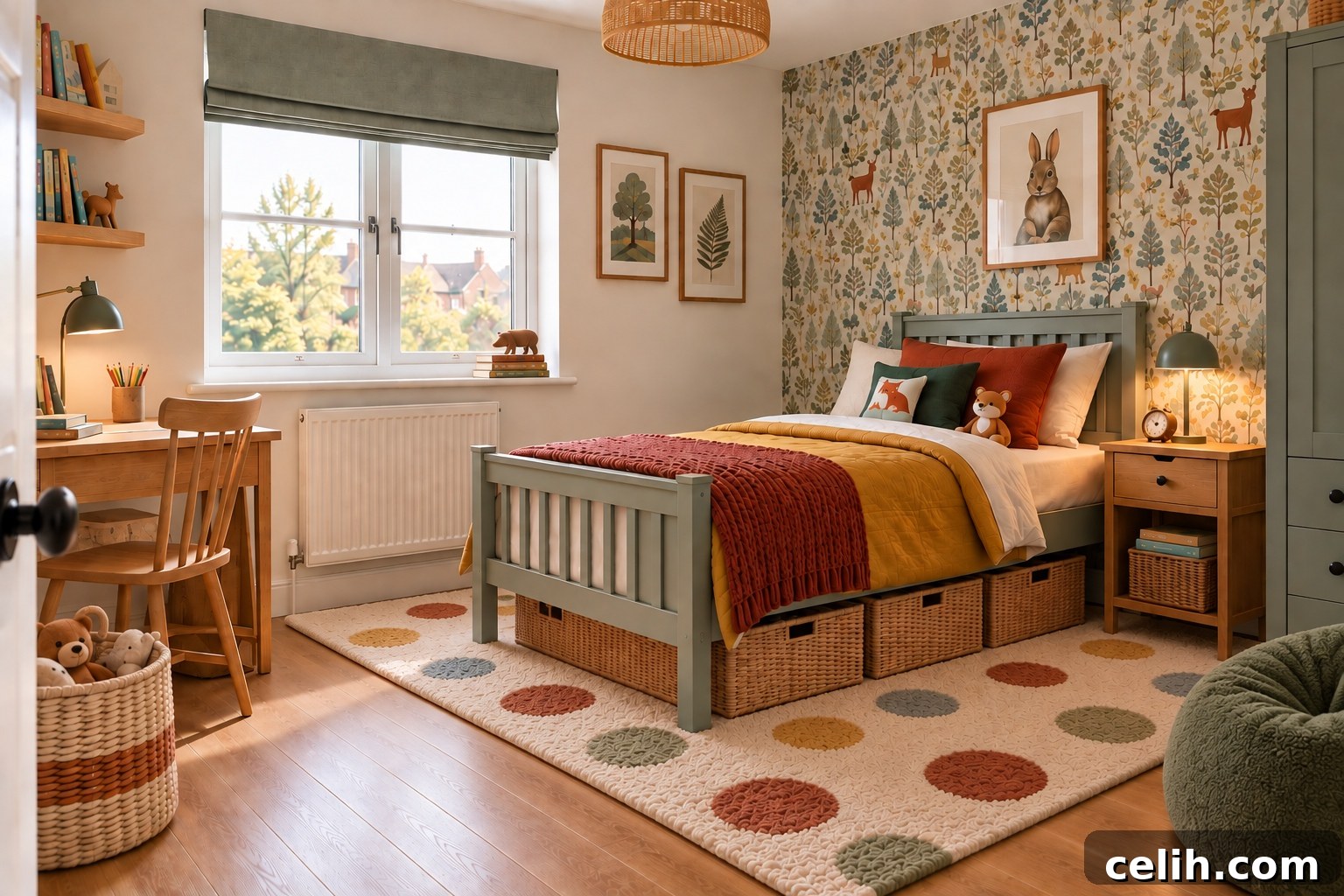
Rather than assuming a wall of storage will be enough, decide what you need to store. Children collect a wide range of possessions and one type of storage rarely suits everything.
Clothes
Depending on age, you need a combination of hanging space, drawers and shelves. In small rooms, a shallower wardrobe plus a chest of drawers can be more efficient than a single deep wardrobe.
Toys
Large baskets and deep drawers are ideal for toys because they’re easy for children to use. Avoid elaborate systems that make tidying up complicated.
Books
Forward-facing book ledges work well for younger children who recognise covers; as their collection grows, conventional shelves become more practical.
Collections and Treasures
A small wall shelf or picture ledge gives space to display models, photographs, trophies or LEGO creations without using floor area.
School and Hobby Supplies
Art materials and stationery spread quickly if not contained. Desk drawers, labelled boxes, small drawer units or shelving beside the desk help keep supplies organised.
A mix of open and closed storage usually works best: open shelves for display and easy access, cupboards or baskets to hide less attractive clutter.
Make Storage Easy for Your Child to Use
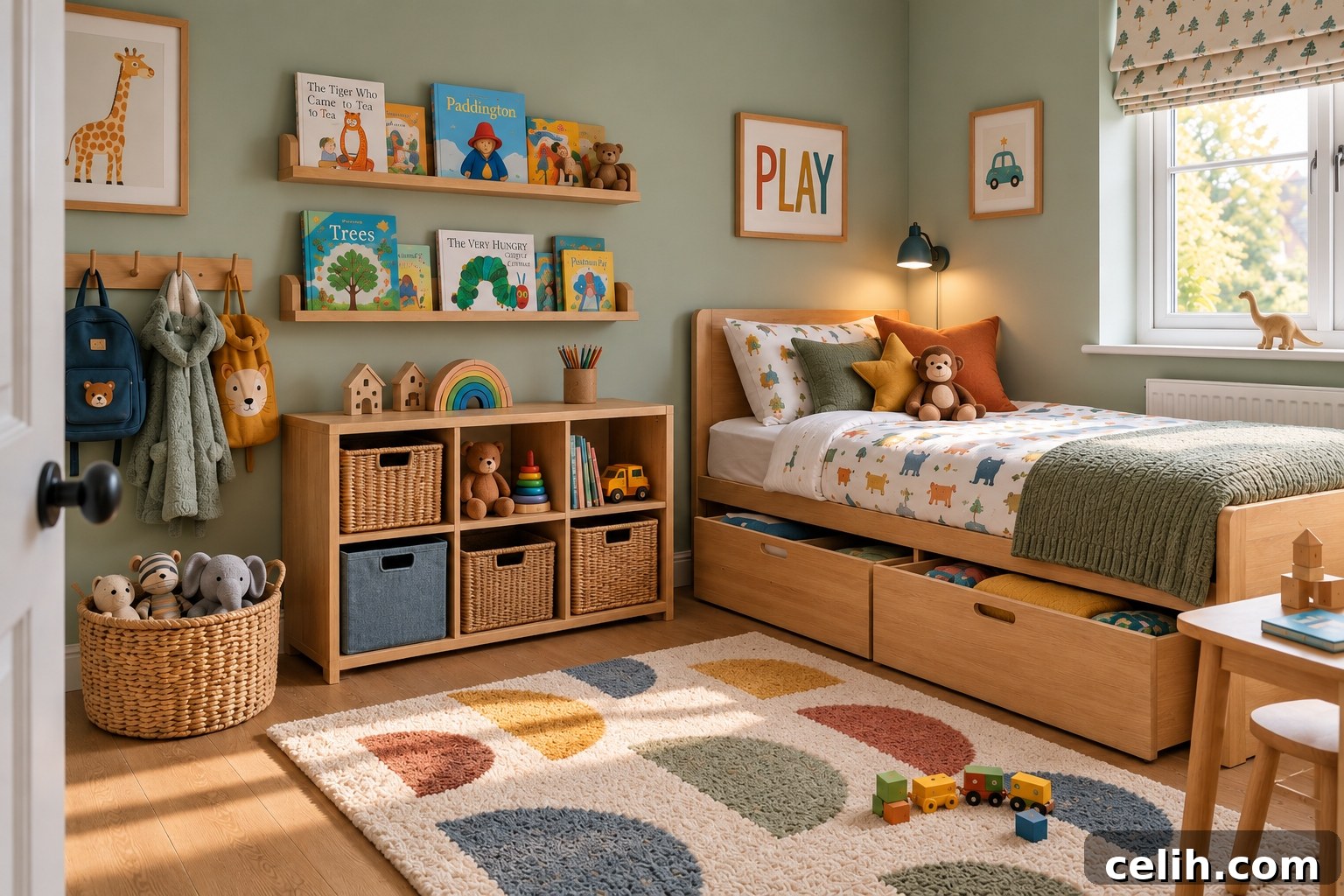
There’s a difference between storage that looks tidy and storage a child can use independently. Hooks at adult height or complex multi-step tidying systems discourage use. Make everyday storage accessible.
Provide where appropriate:
- Low hooks
- Accessible drawers
- Large toy baskets
- Open cubbies
- Low bookshelves
- Simple storage categories
Keep items requiring adult supervision out of reach, but make everyday possessions easy for the child to access and return. The simpler the system, the more likely it will be used.
Choose Furniture That Can Grow With Them
Children grow quickly. Many useful pieces aren’t specifically “children’s” furniture: a simple chest of drawers, bookcase or wardrobe can work from toddlerhood through the teenage years. A well-made single bed may last even longer.
Look for adaptable pieces such as full-size single beds, beds with storage, adjustable desks, modular shelving, simple wardrobes, chests of drawers, storage benches and cube storage.
Neutral doesn’t mean boring: a dark blue wardrobe or painted wooden bed can add personality while remaining versatile. Anchor tall furniture to the wall following manufacturer instructions to ensure safety.
How to Choose a Colour Scheme for a Child’s Bedroom
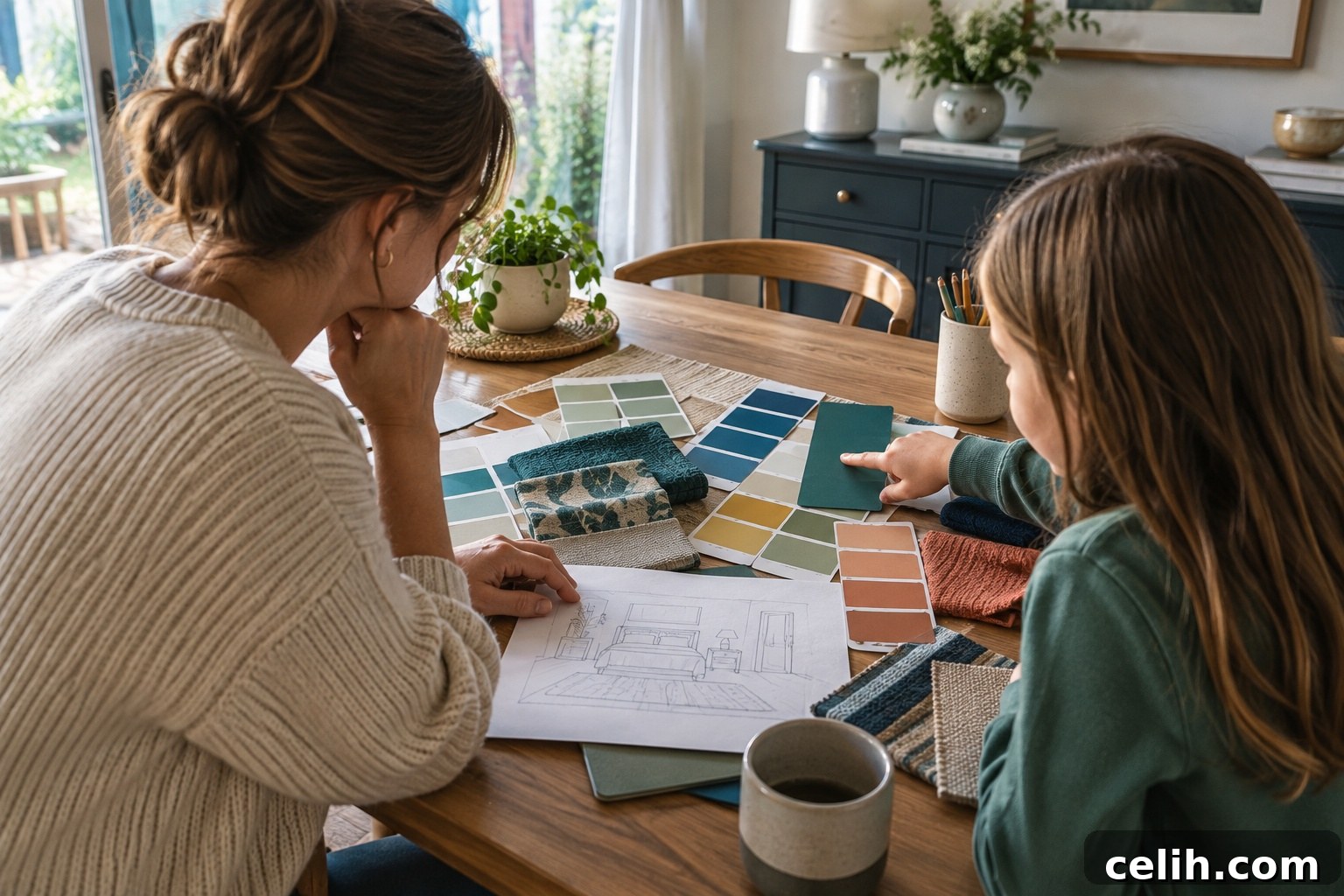
This is the most playful part of the design. Bedrooms can handle bold and varied colours—leafy greens, terracotta, sunny yellow, teal, lilac, burgundy or layered combinations.
Consider the room’s light: a bright south-facing room copes well with stronger colours, while a darker north-facing space may suit warmer tones. Involve your child in choosing colours, offering options you’re happy with to guide the decision.
If your child wants a strong colour, there are many ways to introduce it without committing every permanent element: paint one wall, use the colour below a dado rail, on woodwork or furniture, or pick a softer shade.
Create a Colour Scheme That Can Evolve
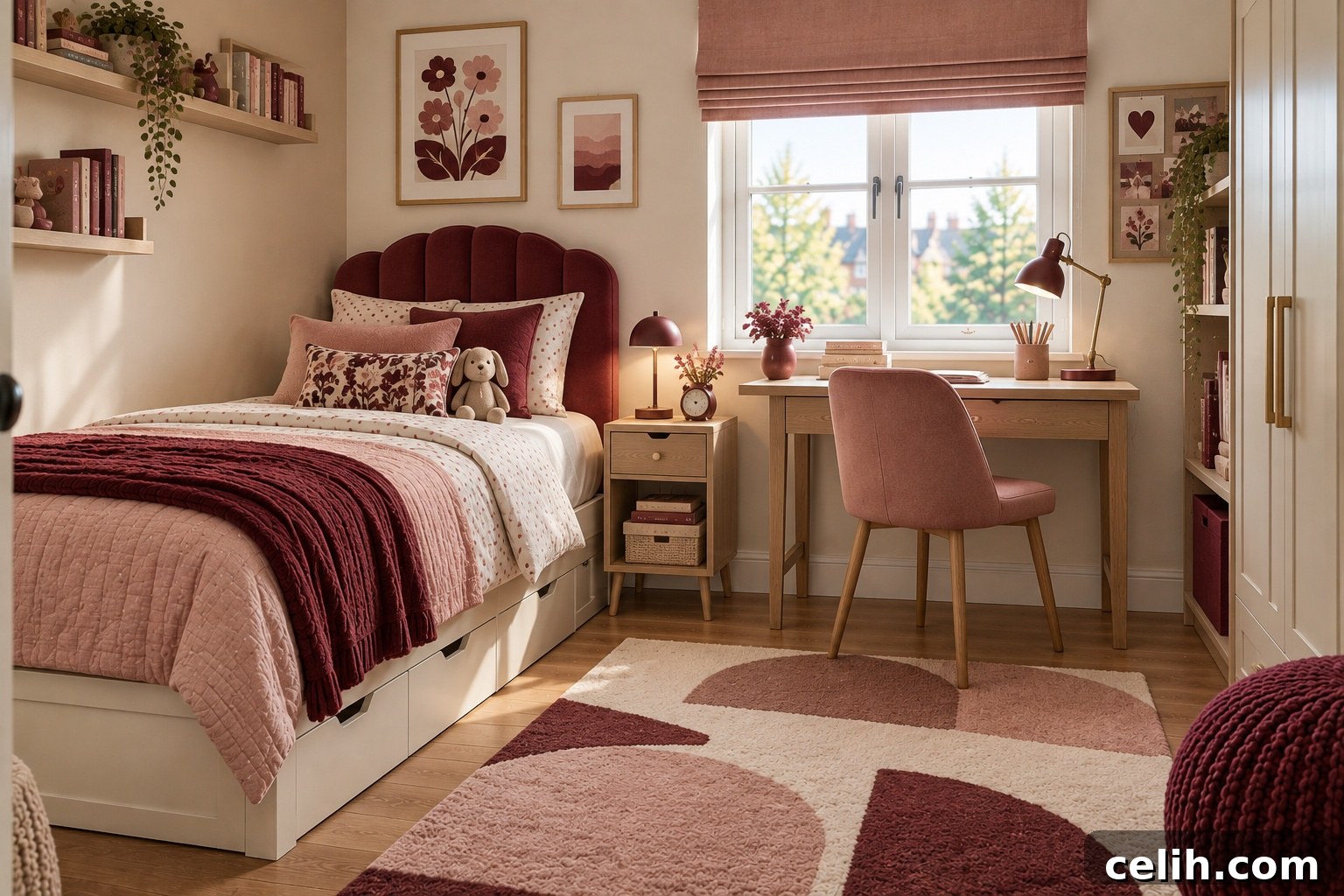
Keep the most expensive elements flexible and introduce bold colour through items that are easy to change, such as bedding, rugs, curtains, cushions, lamps, artwork, storage baskets and accessories. Paint is inexpensive to change, so bright walls can be embraced if you’re prepared to refresh them later.
Add Personality Without Going Overboard With a Theme
Children’s interests are intense but often short-lived. Use easily changeable details to reflect current passions: star-patterned bedding, framed prints and themed lamps instead of permanent themed furniture or full-wall murals. This keeps the room adaptable as tastes change.
Use Wallpaper and Pattern Creatively
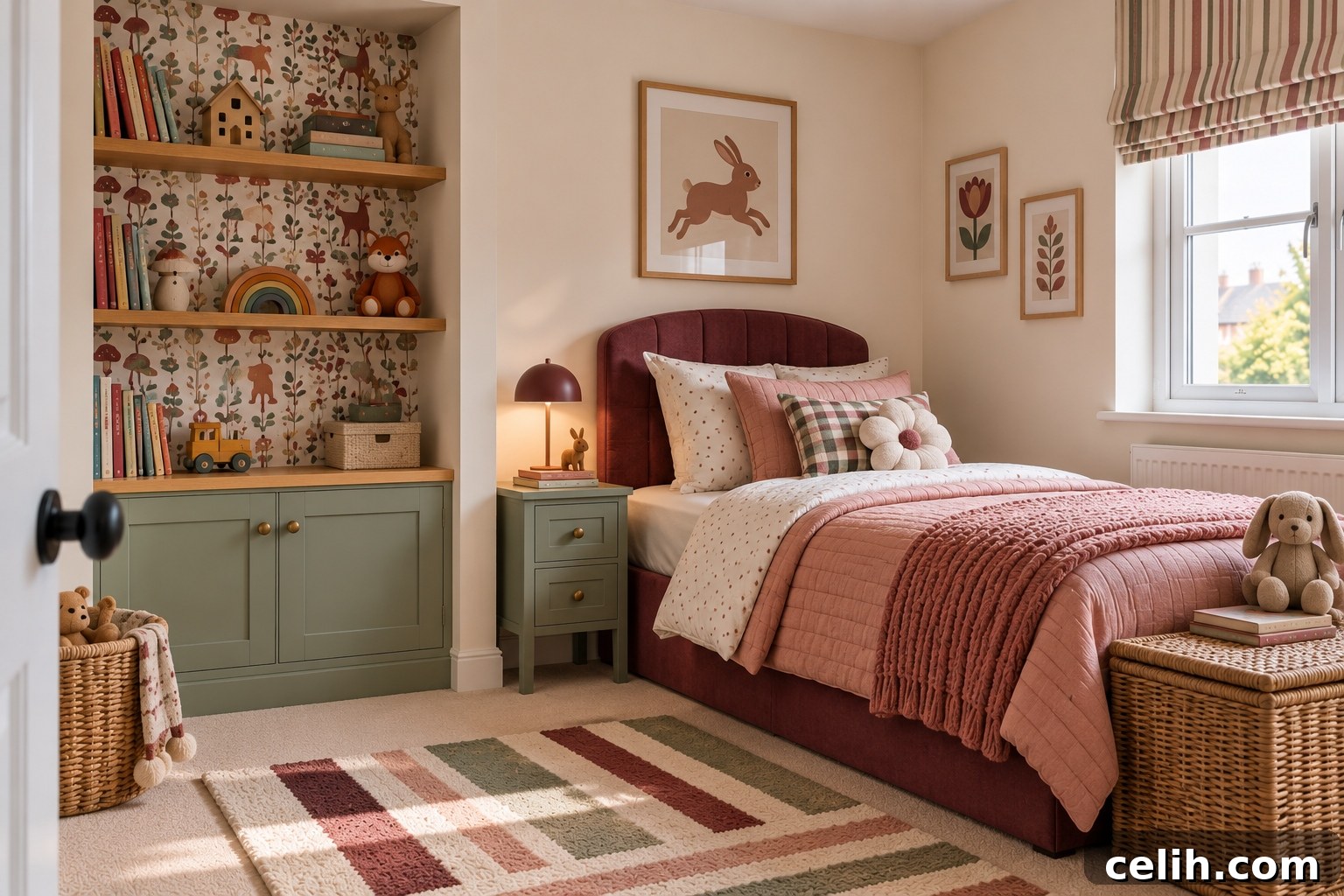
Wallpaper adds character and many sophisticated children’s designs are available. Consider papering a feature wall, the upper half of a wall above panelling, an alcove, behind the bed, the inside of a cupboard or all walls. Smaller patterns can be easier to live with than large themed designs. Murals and removable decals are a practical, changeable option.
Plan Several Types of Lighting
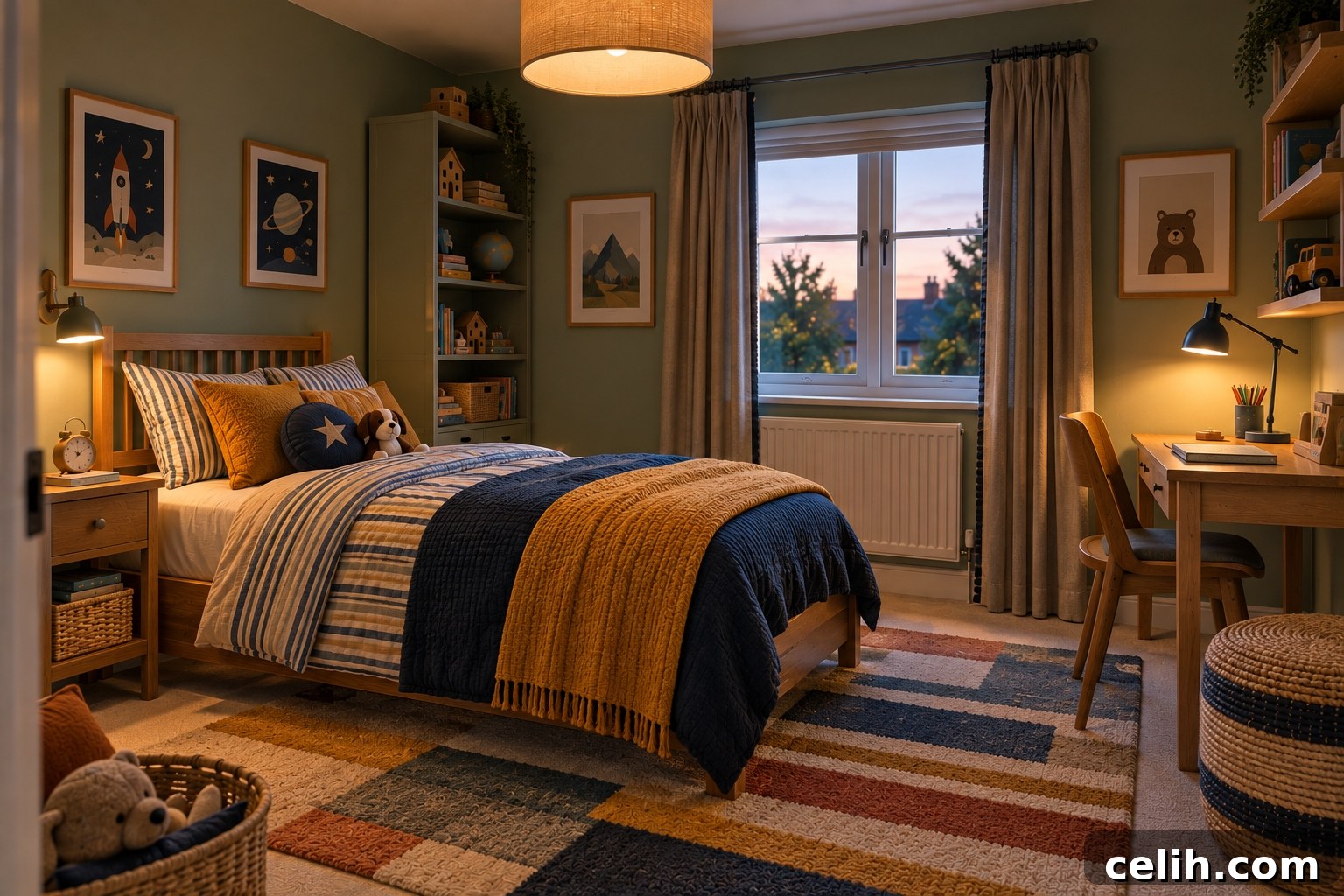
A single ceiling light rarely meets all needs. Combine several sources:
General Lighting
A ceiling pendant, flush fitting or spotlights provide main illumination.
Bedside Lighting
Bedside or wall-mounted reading lights are useful for bedtime stories and independent reading.
Task Lighting
A desk lamp is important for older children doing homework or detailed activities.
Night Lighting
Soft night lights help younger children who prefer some light to sleep. Think about switch placement so older children can turn lights off from bed. Blackout blinds or lined curtains are helpful for early bedtimes during long summer evenings.
Create a Practical Study Area
A dedicated desk isn’t essential for toddlers, but plan where one might fit later. For school-age children place the desk in good natural light, allow room for the chair to be pulled out, add a desk lamp and keep supplies nearby. Consider plug positions for laptops and chargers as children grow.
What If There’s No Room for a Desk?
Alternatives include narrow desks, wall-mounted fold-down desks, alcove desks, compact corner desks or desks built beneath cabin or high sleeper beds. Ensure there’s enough usable surface for books and devices.
Don’t Fill Every Available Space
One common mistake is overcrowding the room with furniture. Leave clear floor space—especially for younger children—so they can play. Position larger pieces around the perimeter and use walls for shelves and hooks. Beds with built-in storage can preserve floor area while providing capacity.
Choose Practical Flooring
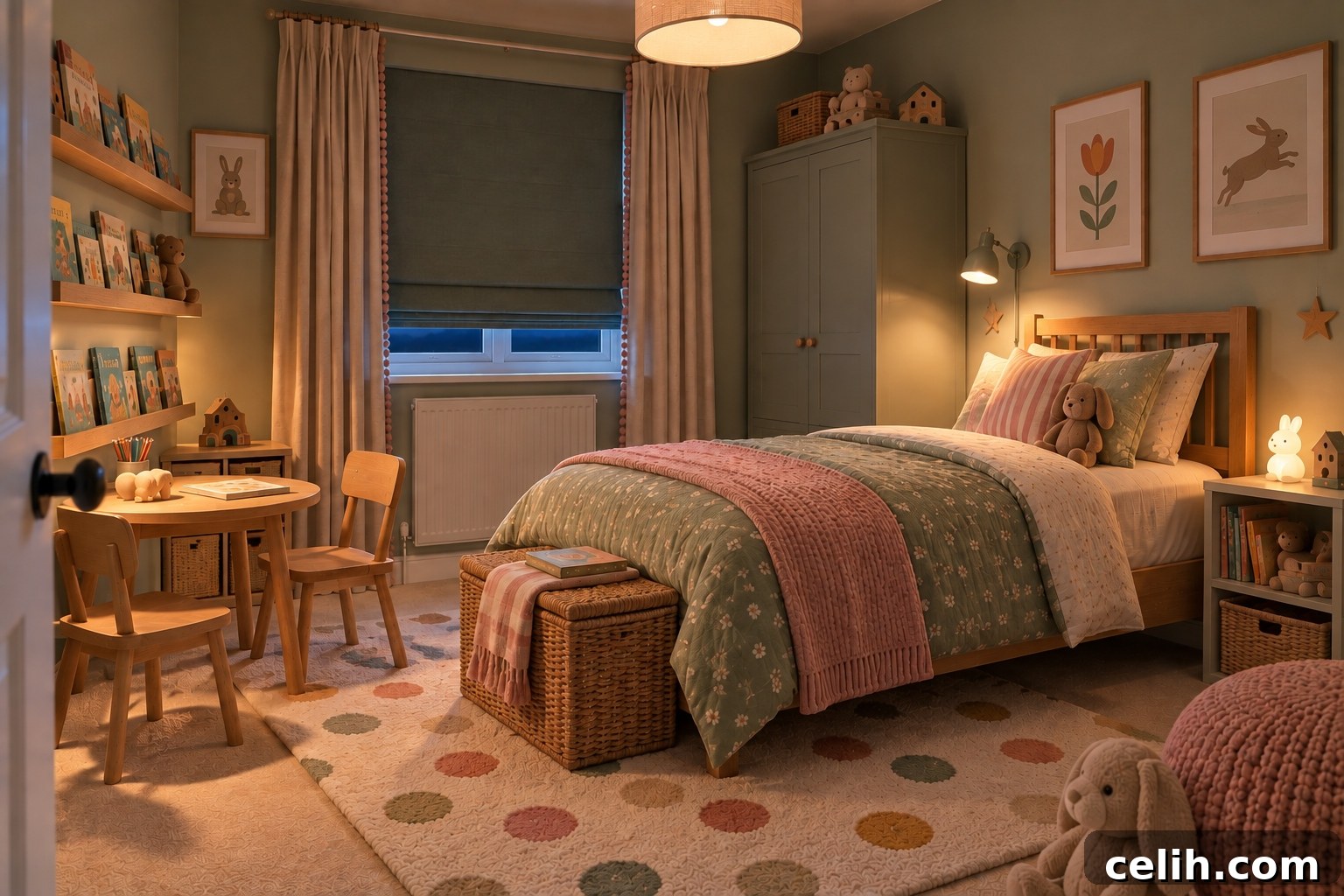
Flooring must withstand everyday wear. Carpet is warm and soft but can stain; hard flooring like wood or laminate is easier to clean but colder and noisier. Rugs combine softness and easy cleaning—choose washable rugs where possible and secure them to prevent slipping.
Choose Window Treatments Carefully
Curtains and blinds have decorative and practical roles. Consider light-blocking ability, privacy, insulation, ease of cleaning, operability and child safety. Blackout linings help early bedtimes; ensure blinds comply with child-safety standards and avoid hazardous cords.
Make Safety Part of the Design
Safety should be integrated without making the room feel clinical. Secure tall furniture to walls, follow age and safety guidance for bunk beds and high sleepers, keep cables tidy, use child-safe window coverings, avoid placing heavy items above beds and ensure furniture is stable and age-appropriate. Always follow manufacturer instructions and relevant safety guidance.
Think About Plug Sockets and Technology
Sockets are easily overlooked but crucial. Even young children need sockets for bedside lamps or night lights; older children require chargers, desk lamps, computers or gaming equipment. When renovating, plan socket locations around furniture to avoid trailing extension leads or inaccessible plugs.
How to Design a Small Bedroom
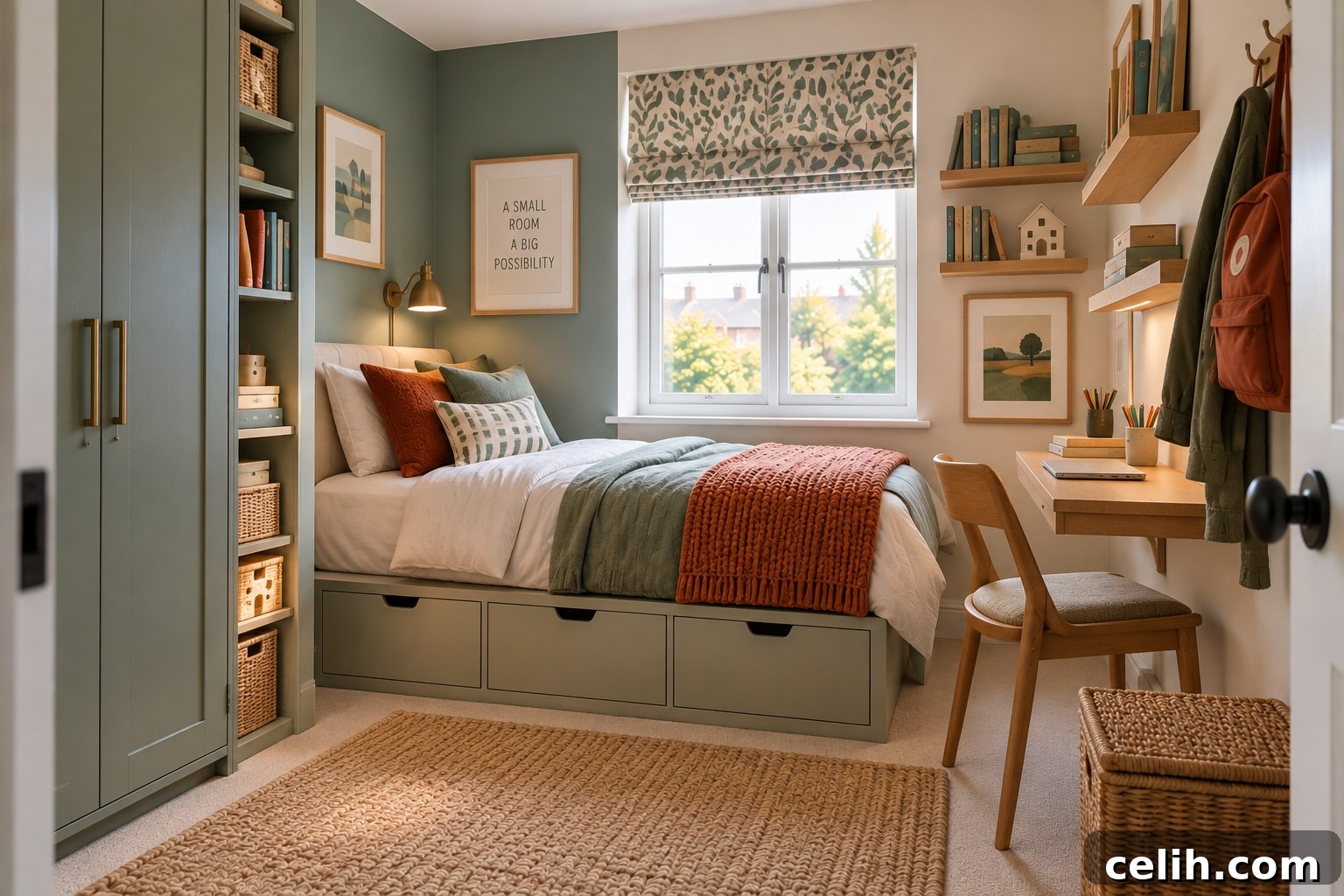
Small bedrooms need careful planning but can feel cosy rather than cramped. Identify essentials and use vertical space. Ideas include beds with drawers, wall-mounted bookshelves, tall narrow storage, hooks behind doors, alcove storage, cabin beds, narrow wardrobes, wall-mounted desks and shelving above desks. Don’t automatically pick tiny furniture; a properly sized bed and one effective wardrobe can outperform several undersized pieces.
How to Design a Shared Children’s Bedroom
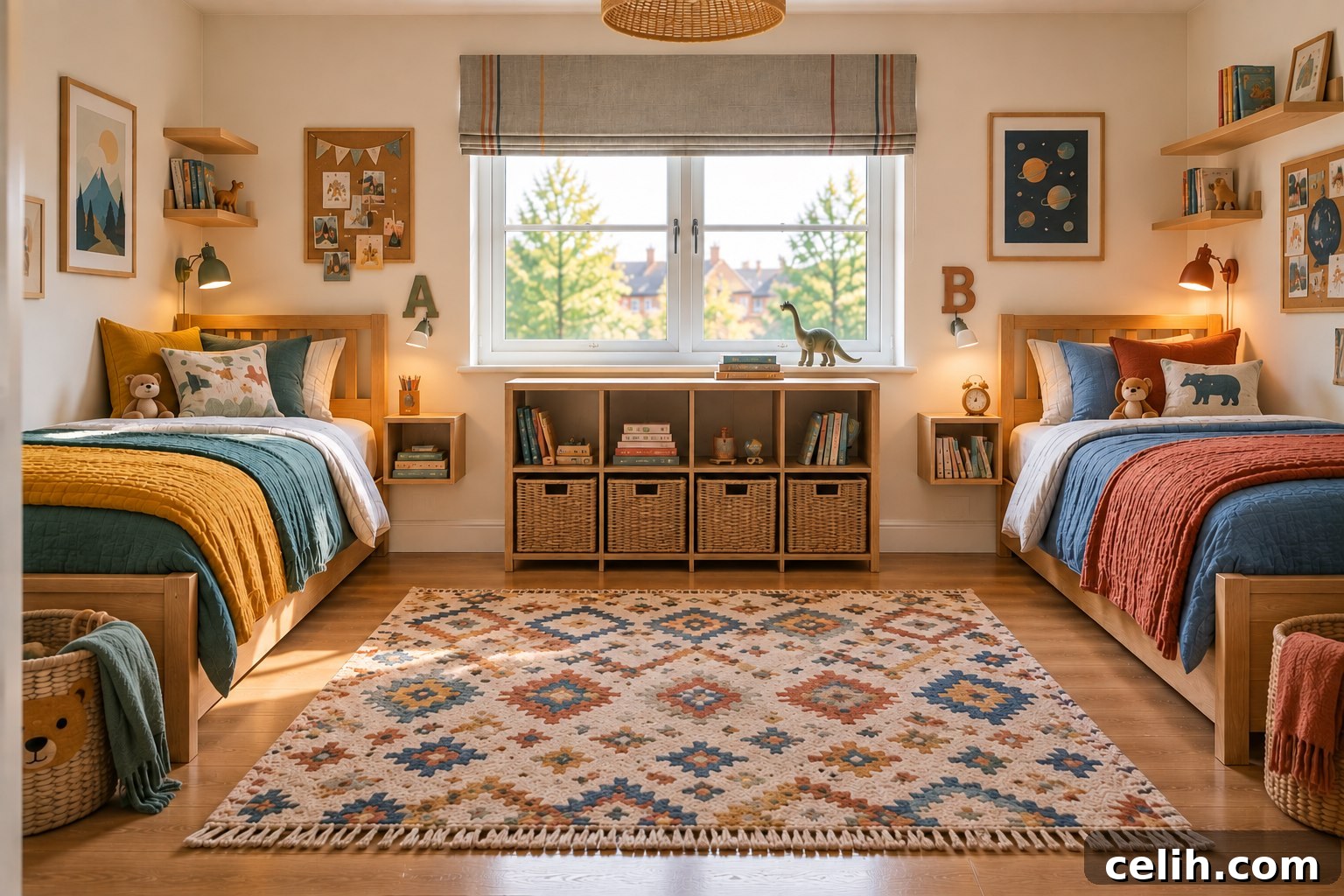
Shared rooms require planning for two personalities. Give each child defined personal space—individual bedside shelves, separate drawers, personal storage baskets, different bedding or their own wall display. Coordinating rather than matching elements keeps cohesion. Bunk beds save floor space but two separate beds can be better for older children who need privacy.
Design a Bedroom That Can Grow With Your Child
Distinguish between elements that are hard to change—flooring, built-in storage, electrical layout, large wardrobes and quality beds—and those that are easy to update such as paint, bedding, artwork, rugs, lampshades, cushions and accessories. Get permanent elements right and let flexible items reflect your child’s current tastes.
Common Children’s Bedroom Design Mistakes
Buying Too Much Furniture: Excess storage can consume usable space; leave room to move and play.
Putting Storage Out of Reach: Children use storage they can reach and understand.
Designing Around One Theme: Interests change quickly; keep themed elements replaceable.
Forgetting That Children Grow: Ensure desks, chairs and beds remain usable as the child grows.
Relying on One Light: Layered lighting makes the room more versatile.
Ignoring Socket Positions: Check sockets against your furniture layout.
Prioritising Looks Over Practicality: Design for real life—laundry, toys and day-to-day use.
Not Involving Your Child: Letting children choose colours, artwork or bedding gives them ownership and improves how they feel about the room.
Child’s Bedroom Planning Checklist
Before finalising plans, run through this checklist:
- Have you measured the room accurately?
- Is the bed in the best position?
- Can doors and windows open properly?
- Are radiators unobstructed?
- Is there enough clothes storage?
- Is everyday storage accessible to your child?
- Is there somewhere for books?
- Is there sufficient clear floor space?
- Does your child need a desk now or soon?
- Are plug sockets conveniently positioned?
- Is there general, bedside and task lighting where required?
- Are the window coverings practical and safe?
- Is appropriate furniture secured?
- Can the bedroom adapt as your child grows?
- Has your child had some say in how their room looks?
Frequently Asked Questions
What Should You Plan First When Designing a Child’s Bedroom?
Measure the room and decide the bed position first. Getting the bed located correctly makes it easier to plan wardrobes, drawers, a desk and other storage around it.
Where Is the Best Place to Put a Bed in a Child’s Bedroom?
Keep the doorway, windows and radiators unobstructed and maintain an easy route through the room. In small rooms, positioning a single bed against a wall helps maximise floor space.
How Can You Make a Child’s Bedroom Grow With Them?
Choose adaptable furniture and keep permanent elements reasonably flexible. Use paint, bedding, artwork, rugs and accessories to reflect current tastes and update them as those tastes change.
How Much Storage Does a Child’s Bedroom Need?
There’s no single ideal amount. Work out what needs to be stored and provide the right type of storage for each category: clothes, toys, books, school supplies and treasured possessions all benefit from different solutions.
How Do You Design a Child’s Bedroom on a Budget?
Repurpose existing furniture where possible and spend on essentials like a good bed and mattress. Paint, second-hand pieces, new bedding and colourful accessories can refresh a room affordably.
Creating a Room That Really Belongs to Them
The best child’s bedroom isn’t necessarily the most fashionable—it’s the one that works. There should be a comfortable place to sleep, practical storage, space for play or study and flexibility to adapt as the child grows. With solid practical foundations you can be adventurous with colour and decoration. Most importantly, remember whose room it is: give your child some freedom to choose colours, display favourite things and celebrate their current passions. It might not be the bedroom you would design for yourself—but that’s the point.
For more ideas and inspiration, explore children’s room decorating and furnishing options using the resources you already find helpful in your planning process.