
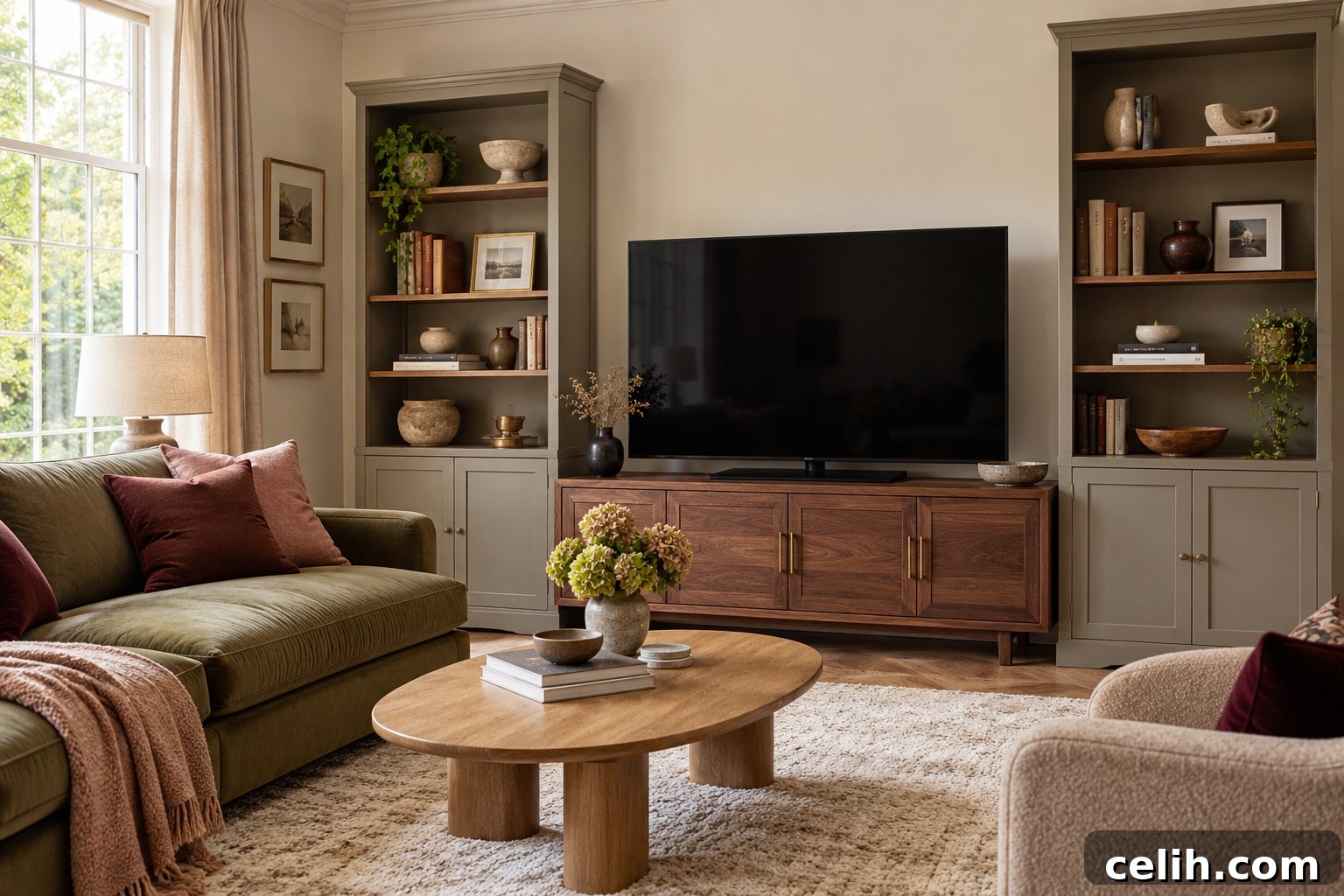
A living room organized entirely around a television can slowly feel like a media cave rather than a comfortable family space. When every shelf and cabinet exists to serve the screen, the room loses the warmth, personality, and functionality that make it inviting for everyday life.
You don’t have to hide the TV to restore balance. Instead, give technology an appropriate home while keeping books, art, and personal objects visible. With a few practical choices—correct equipment storage, furniture that reads as furniture, tidy cord management, flexible storage, and minimal finishing work—you can create a living room that serves both entertainment and everyday living.
Table of Contents
1. Decide Which Devices Actually Need to Disappear
Not every piece of electronics must be hidden. A key consideration is heat: devices that run cool, such as streaming sticks, most cable boxes, routers, and remote controls, can live behind closed doors or inside drawers. Equipment that generates significant heat—game consoles under load, AV receivers, and some amplifiers—needs ventilation and should sit in vented cabinets or near fans to avoid overheating.
Think about visual organisation separately from thermal needs. Opaque doors conceal clutter, while glass-fronted cabinets let you display neatly arranged items without exposing dust or cable tangles. Open shelves are best for items meant to be seen: books, framed photos, and curated decorative objects.
Before arranging the room, sort devices by storage requirement. Put remotes and small accessories in drawers; give heat-producing equipment ventilated locations. This simple separation makes room for decorative elements to coexist with technology rather than compete with it.
2. Choose Furniture That Still Looks Like Furniture
Storage around a television should read as deliberate living room furniture, not just racks for electronics. Matching finishes, balanced proportions, and a mix of closed and display storage make a setup feel composed and intentional. Consider coordinated wall systems or modular furniture that provides the look of a built-in without dominating the space.
Select pieces with solid construction, subtle hardware, and tempered glass where appropriate to create an elevated appearance. Leave some surfaces intentionally clear—group decorative items rather than filling every shelf—so the display feels styled rather than cluttered.
3. Give Cords a Route That Stays Out of_Sight
Cable clutter often results from a lack of planning. Identify where each device will sit and map how its cables will reach power and signal connections. Use rear openings in cabinets, cable channels, sleeves, or Velcro ties to keep runs neat and grouped together.
Avoid draping cords over furniture edges or across pathways where they interfere with doors and drawers. Keep power cables accessible and positioned according to manufacturer guidelines. A tidy cord plan makes an otherwise attractive TV wall look finished and intentional.
4. Choose Storage That Can Grow With the Room
Living rooms evolve: new books, decor, and devices accumulate over the years. Modular systems and matched cabinet collections let you expand storage without replacing existing pieces. When adding to a setup, match dimensions, finishes, and hardware so new elements integrate seamlessly.
Choose units with adjustable shelving to accommodate different object heights and flexible compartment layouts so usage can shift over time. Planning for growth reduces future expense and keeps the wall balanced as needs change.
5. Avoid Furniture That Needs Extra Work to Look Finished
A cohesive TV wall shouldn’t require extensive DIY finishing—cutting, painting, or trim work—to look polished. Some modular and semi-custom systems arrive ready to assemble with coordinated finishes, offering a finished aesthetic without additional construction. However, check assembly requirements in advance: many systems still require consumer assembly even when no on-site carpentry is needed.
If you prefer a fully finished look without extra work, choose furniture that ships with matching surfaces and hardware so the final arrangement feels complete upon installation.
A Living Room That Feels Like a Living Room
A comfortable TV-focused living room depends on more than the position of the screen. Thoughtful equipment storage, furniture-led design, concealed cord routes, adaptable cabinetry, and sensible assembly expectations all help the television feel like one element of a balanced interior.
When technology supports daily life instead of dictating the room’s appearance, the space is more inviting and more useful. Coordinated storage, considered proportions, and a mix of display and practical surfaces let the television sit naturally within the wider living room.
FAQ
How Do I Hide a TV, Cable Box, and Gaming Consoles in a Living Room?
Use opaque cabinets for devices that can be enclosed, and reserve ventilated or open shelving for heat-generating equipment like gaming consoles. Glass-fronted cabinets offer a middle ground: they hide dust while keeping neatly arranged components visible.
What’s the Best Kind of Storage for Hiding Cable Boxes and Streaming Devices?
Opaque cabinets work well for low-heat devices. For any equipment that runs hot, choose vented cabinets, mesh panels, or add a small cooling fan to ensure safe operation and long equipment life.
What Does Living Room Storage That Doesn’t Look Like Dorm Furniture Usually Have in Common?
Coordinated finishes, balanced proportions, and a mix of closed and display storage create a more finished, intentional appearance. Leaving some surfaces clear reduces visual clutter and elevates the overall look.
Does Furniture That Looks Finished Still Need Assembly?
Often yes. Even coordinated furniture systems that look finished may arrive in multiple boxes and require assembly. The difference is that they usually do not need onsite cutting, painting, or trim work to appear complete.