
Embrace Indulgence: The Allure of a Freestanding Bath in Your Home
The quest for a truly luxurious home often leads us to draw inspiration from the most opulent spaces imaginable – high-end hotels and exclusive resorts. These bastions of comfort and design continually set new benchmarks for interior trends, pushing the boundaries of what’s considered conventional. One such intriguing concept that has migrated from plush hotel suites into the realm of residential design is the idea of incorporating a freestanding bath directly into the bedroom. This bold design choice blurs the lines between bathing and relaxation areas, promising an unparalleled sense of indulgence.
The Hotel-Inspired Trend: A Bath in the Bedroom
Imagine unwinding after a long day, not in a separate, closed-off bathroom, but within the comforting confines of your personal sleeping sanctuary. This is the dream that a bedroom bath offers. Unlike a traditional en-suite, which maintains a distinct separation with a door, a bath in the bedroom is an open invitation to uninterrupted luxury, situating your soaking tub just steps away from your bed. This trend, undeniably rooted in the grand, spacious rooms of five-star hotels, aims to replicate that serene, spa-like escape within your own home.
The concept gained significant attention when lifestyle publications, such as a notable article in the Sunday Times, explored its feasibility and appeal for homeowners. While it conjures images of romantic getaways and ultimate relaxation, the practicality of integrating such a feature into a private residence presents a unique set of considerations. Is it a sublime enhancement to your home, or a design decision fraught with potential challenges?
Beyond the En-suite: Why the Bedroom Bath Captivates
For many, the appeal of a bath in the bedroom lies in its sheer audacity and the unadulterated luxury it represents. It’s a statement piece, a commitment to self-care and an elevated lifestyle. This arrangement offers an intimate connection to relaxation, making a leisurely soak an even more accessible and integral part of your daily routine. Proponents of this trend often highlight:
- Unrivalled Luxury: It transforms a standard bedroom into a private spa retreat, offering an experience typically reserved for high-end hotel stays.
- Unique Design Statement: A freestanding bath acts as a stunning focal point, adding architectural interest and a “wow” factor to the room.
- Ultimate Convenience: Imagine stepping out of a warm bath and directly into your dressing gown, just moments from your bed – the epitome of seamless comfort.
- Enhanced Ambiance: With thoughtful lighting and decor, a bedroom bath can create an incredibly romantic and tranquil atmosphere.
Navigating the Practicalities: Is a Bedroom Bath Right for Your Home?
While the allure of a bedroom bath is strong, its successful implementation hinges on several crucial practicalities. As the original article noted, general consensus suggests that this trend truly thrives at the high end of the market, in homes where space is abundant and conventional bathrooms are already established.
Space: The Foremost Consideration
The most significant hurdle for most homeowners is space. A freestanding bath requires ample room not just for the tub itself, but also for comfortable circulation around it. Cramming a bath into a standard-sized bedroom can look awkward, feel cramped, and detract from both the aesthetic and functional appeal of the room. For a bedroom bath to work, the room needs to be exceptionally large, allowing the tub to breathe and integrate harmoniously with the existing furniture, rather than dominating it.
Moisture and Humidity: A Critical Challenge
Introducing a significant water source into a bedroom brings inherent risks related to moisture and humidity. Regular bathing can lead to condensation, which over time can cause damage to carpets, wooden flooring, plaster walls, and even electronics. Proper ventilation is paramount. An effective extractor fan system is not just recommended, but essential, to mitigate the risk of mould, mildew, and structural damage.
Plumbing and Installation: More Than Just a Bathtub
Integrating a bath into a non-traditional bathroom space like a bedroom demands careful planning and professional installation. This involves extending hot and cold water lines, and crucially, ensuring adequate drainage. The floor may need to be reinforced to support the weight of a filled bathtub, especially heavy materials like cast iron. Waterproofing the surrounding floor area is also non-negotiable to prevent leaks and water damage.
Privacy and Resale Value
While the idea might appeal to some, a bedroom bath is a highly personal design choice. It might not appeal to future buyers, especially in standard homes where such a feature could be perceived as impractical or even off-putting. For anyone with a typical semi-detached or terraced home, investing in a bedroom bath might not add value and could potentially limit the pool of interested buyers. Conversely, in a truly high-end, bespoke property with multiple bathrooms, it could be seen as an additional luxury.
The Timeless Elegance of Freestanding Baths: A Universal Appeal
While the bedroom bath trend remains a niche luxury, the freestanding bath itself possesses a universal and timeless appeal that extends far beyond the bedroom. Thankfully, the classic freestanding bath works exceptionally well in conventional bathrooms, offering all the aesthetic and comfort benefits without the complexities of a bedroom installation. With none of the problems of accidentally splashing water on the carpet or bedding, a freestanding bath transforms any bathroom into a sanctuary of style and relaxation.
Freestanding baths have long been celebrated for their sculptural beauty, acting as magnificent focal points in any bathroom design. They embody elegance, offering a sophisticated alternative to built-in tubs. Their versatility in style, material, and placement makes them a popular choice for homeowners looking to elevate their bathroom’s aesthetic.
Choosing Your Perfect Freestanding Bath
The market for freestanding baths is diverse, offering a wide array of options to suit every taste, bathroom size, and budget:
Materials:
- Acrylic: As highlighted by the slipper style bath in the original article, acrylic is a popular choice for its lightweight nature, excellent heat retention, and affordability. Double-skinned acrylic, in particular, offers superior insulation and durability, ensuring a long-lasting and comfortable soak. Acrylic baths are also highly versatile in terms of shapes and colours.
- Cast Iron: For those seeking a truly classic and robust option, cast iron baths are unsurpassed. They are incredibly durable, retain heat exceptionally well, and exude a sense of heritage and grandeur. However, they are very heavy and require strong floor support.
- Stone Resin/Composite: These modern materials offer a luxurious, smooth finish and allow for intricate, contemporary designs. They are durable, good at retaining heat, and often provide a weighty, premium feel similar to natural stone.
Styles:
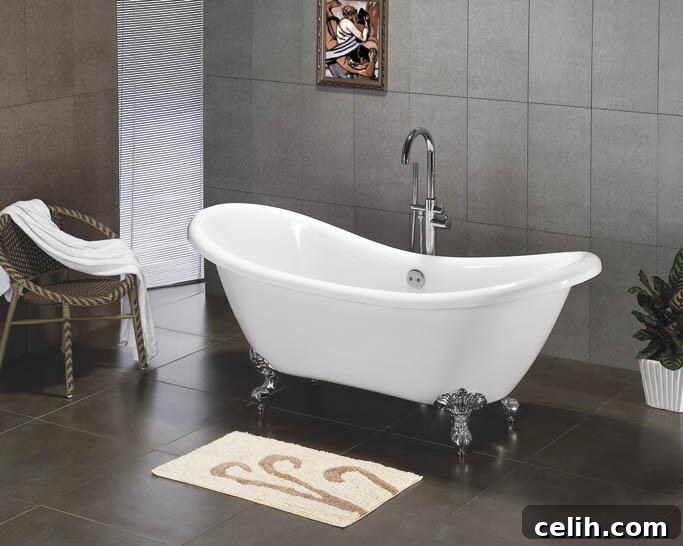
- Slipper Baths: Characterised by one raised, sloping end, slipper baths (like the one pictured) are ergonomically designed for maximum comfort, allowing you to recline and relax fully. They are perfect for solo indulgence.
- Double-Ended Baths: Featuring symmetrical, sloping ends, these baths allow for comfortable bathing from either end, making them ideal for couples or those who simply enjoy more versatility. The bath in the accompanying image is a beautiful example of a double-ended freestanding bath.
- Roll-Top Baths: A traditional classic, roll-top baths feature a gentle, curved edge around the rim, offering a soft aesthetic and a comfortable armrest.
- Modern & Contemporary Designs: Sleek, minimalist lines, geometric shapes, and integrated plinths define modern freestanding baths, perfectly complementing contemporary bathroom designs.
Feet and Finishes:
Many traditional freestanding baths come with decorative feet, such as the beautiful ball and claw or large claw feet in polished chrome mentioned in the original text. These details add significant character and can be chosen to match other bathroom fixtures. Modern designs often feature a hidden plinth or a solid base, giving the impression of the bath floating or resting directly on the floor.
Making Luxury Accessible: A Freestanding Bath for Every Home
The beauty of the freestanding bath market today is that luxury doesn’t always come with an exorbitant price tag. Innovations in materials, particularly with double-skinned acrylic, have made these stunning baths more accessible to a wider range of budgets. For instance, the elegant slipper style bath pictured, made from double-skinned acrylic and complete with beautiful ball and claw or large claw feet in polished chrome, was available for only £298.97. This demonstrates that you can indeed achieve the luxury and visual impact of a freestanding bath without a hefty cost.
Investing in a freestanding bath, whether for a grand master bathroom or a more modest family bathroom, is a statement of personal style and a commitment to creating a calming, beautiful space. It transforms a utilitarian room into a personal sanctuary, a place where you can truly unwind and escape the stresses of daily life.
Conclusion: Crafting Your Personal Oasis
While the captivating trend of a bath in the bedroom remains a luxurious choice best suited for expansive, high-end properties with careful planning, the overarching appeal of the freestanding bath is undeniable and universally applicable. It’s a design element that promises elegance, comfort, and a touch of indulgence to any home. By thoughtfully considering your space, style preferences, and budget, you can select the perfect freestanding bath to elevate your bathroom, creating a stunning focal point and a truly inviting retreat. Whether you opt for a classic slipper bath with ornate feet or a sleek, modern design, a freestanding bath offers a timeless upgrade that will bring joy and sophistication to your home for years to come.