
Elevate Your Culinary Game: The Indispensable Role of a Food Processor in Modern Kitchens
For many home cooks, the thought of adding another appliance to an already bustling kitchen can be daunting. One such gadget that often sparks debate is the food processor. Historically, I’ve found myself in this very camp, often wondering if a food processor truly warrants a permanent spot on my countertop or valuable cupboard space. Every so often, typically when confronted with a complex recipe that confidently directs me to ‘process until smooth’ or ‘pulse ingredients,’ I reconsider. The initial hesitation often stems from concerns about price and the worry that it might not see enough action to justify the investment. However, a recent discovery has genuinely piqued my interest and might just be the catalyst for me to finally welcome this versatile kitchen tool into my home.
Unlocking Kitchen Efficiency: Why Every Home Cook Needs a Food Processor
The modern kitchen is a hub of activity, and today’s home chefs are constantly seeking ways to simplify meal preparation without compromising on quality or flavor. This is precisely where a high-quality food processor shines. Far from being a luxury item, it’s an indispensable workhorse that can transform the way you cook. Its unparalleled versatility allows it to tackle a myriad of tasks that would otherwise be time-consuming, laborious, or difficult to achieve by hand. Let’s delve into the core reasons why a food processor isn’t just another gadget, but a fundamental tool for any culinary enthusiast.
Time-Saving and Speed
Imagine dicing an onion in mere seconds, or shredding a block of cheese in a fraction of the time it would take with a box grater. A food processor dramatically cuts down on preparation time, making it easier to whip up healthy, homemade meals even on the busiest weekdays. From quickly chopping vegetables for stir-fries and soups to pureeing ingredients for sauces and dips, the speed it offers is truly revolutionary. This efficiency encourages more home cooking, reducing reliance on processed foods and takeout.
Unmatched Versatility for Every Recipe
The true power of a food processor lies in its multifunctional capabilities. Equipped with various blades and attachments, it can perform an impressive range of tasks:
- Chopping and Mincing: Perfect for onions, garlic, herbs, nuts, and spices. Achieve perfectly uniform pieces every time.
- Slicing and Shredding: Effortlessly slice vegetables like cucumbers, carrots, and potatoes, or shred cheese, cabbage, and carrots for salads, coleslaw, or gratins.
- Pureeing and Blending: Create silky smooth hummus, pestos, sauces, salsas, and baby foods with ease.
- Dough Making: Some models come with a dedicated dough blade, making quick work of kneading bread, pizza, or pie crust doughs, saving your hands and arms from tedious labor.
- Emulsifying: Whisking mayonnaise, vinaigrettes, or creamy dressings becomes a simple, one-step process.
This wide array of functions means a single appliance can replace several individual tools, streamlining your kitchen and reducing clutter.
Achieving Consistent and Professional Results
One of the hardest things to achieve manually is uniform chopping or slicing. A food processor excels at this, ensuring that all ingredients are processed to a consistent size. This not only makes your dishes look more appealing but also contributes to even cooking. When all your vegetables are the same size, they cook at the same rate, preventing some pieces from being overcooked while others remain raw.
Fostering Healthier Eating Habits
With a food processor at your disposal, preparing meals from scratch becomes less intimidating. This encourages a healthier lifestyle, as you have complete control over the ingredients, allowing you to reduce preservatives, excessive salt, and unhealthy fats often found in store-bought alternatives. Making your own nut butters, vegetable purees, or fresh salads is quick and satisfying, helping you stick to dietary goals.
Navigating the Market: What to Look for in a Food Processor
With so many options available, choosing the right food processor can feel overwhelming. However, by considering a few key factors, you can find a model that perfectly suits your culinary needs and budget.
Capacity: Bowl Size Matters
Food processors come in various sizes, typically measured by the capacity of their work bowl. Common sizes include:
- Mini Choppers (1-3 cups): Ideal for small tasks like mincing garlic or herbs, making salad dressings, or processing nuts.
- Compact Models (4-7 cups): Good for individuals or couples, handling everyday tasks like chopping onions, making dips, or slicing smaller batches of vegetables.
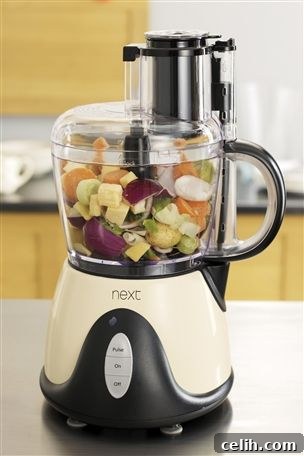
- Full-Size Models (8-14 cups): The most popular choice for families and frequent cooks. They can handle larger quantities of ingredients for meal prepping, dough making, or entertaining. The cream food processor I’ve been eyeing, with its generous three-liter bowl (approximately 12 cups), strikes a fantastic balance, offering ample capacity without being overly cumbersome.
- Commercial Grade (16+ cups): Designed for professional kitchens or very large families.
Consider the typical volume of food you prepare to choose an appropriate size that won’t require processing in multiple batches.
Motor Power and Performance
The wattage of a food processor’s motor indicates its power. Higher wattage generally means a more powerful motor that can handle tougher tasks like kneading stiff doughs or processing hard vegetables and nuts without stalling. Look for models with at least 500-700 watts for a full-size processor to ensure reliable performance and durability.
Blades and Attachments
Beyond the standard S-blade (also known as the “chopping blade”), many food processors come with a suite of useful attachments:
- Slicing Disc: For uniformly slicing fruits and vegetables.
- Shredding Disc: For grating cheese, vegetables, or even chocolate.
- Dough Blade: A plastic blade designed for kneading dough without over-processing.
- Emulsifying Disc/Whisk: For whipping creams or creating fluffy meringues.
Assess which tasks you’ll perform most often and ensure the chosen model includes the necessary attachments.
Controls and Ease of Use
Most food processors feature simple controls, often just “On,” “Off,” and “Pulse.” The pulse function is critical, allowing for precise control over the consistency of ingredients, preventing over-processing. Look for intuitive controls that are easy to understand and operate.
Ease of Cleaning and Durability
No one wants a kitchen gadget that’s a nightmare to clean. Opt for models with dishwasher-safe parts, and minimal crevices where food can get trapped. The build quality is also important; sturdy bases, durable BPA-free plastic bowls, and sharp stainless steel blades contribute to the longevity of the appliance. A good warranty can also offer peace of mind.
Design and Footprint
Kitchen space is often at a premium. Consider the overall design and footprint of the food processor. Will it fit comfortably on your countertop, or will it need to be stored away? If storage is a concern, look for more compact designs that are still powerful enough for your needs. The “nice design” and “compact enough to not take up masses of room” aspects of the Next model are particularly appealing for this very reason.
A Closer Look: The Next Cream Food Processor – Value Meets Style
Having weighed the general considerations for buying a food processor, my attention keeps returning to the particular model I discovered. This cream food processor from Next seems to hit all the right notes for someone like me, who is keen to dive into the world of food processing without breaking the bank. It’s remarkably well-priced at just £45, an enticing figure that addresses my initial apprehension about cost.
Beyond its attractive price point, it boasts features that align perfectly with practical kitchen needs. The three-liter bowl capacity is a significant advantage, offering ample space for preparing meals for a family or handling larger quantities of ingredients for batch cooking. Despite its generous capacity, its design appears to be compact enough to not dominate precious countertop real estate, a crucial factor for smaller kitchens. The aesthetic is also a plus; its cream finish offers a clean, classic look that would blend seamlessly into various kitchen decors. Coupled with some positive reviews from existing users, this particular model presents itself as an excellent entry point into the world of food processing, promising efficiency and style at an accessible price.
Maximizing Your Investment: Tips for Using Your Food Processor
Once you’ve made the leap and acquired a food processor, mastering its use will ensure you get the most out of your investment.
- Prep Your Ingredients: Cut larger ingredients into uniform pieces that can fit through the feed tube, preventing the motor from overworking.
- Use the Pulse Function: This is your best friend for precise control. Instead of continuous processing, pulse in short bursts until you reach the desired consistency. This prevents over-processing, which can turn ingredients into a mushy paste.
- Don’t Overfill: Respect the maximum fill line of the work bowl. Overfilling can lead to uneven processing and strain the motor.
- Layering Ingredients: When making a sauce or dressing with liquid, add the liquid through the feed tube while the processor is running. For chopping, add harder ingredients first, then softer ones.
- Safety First: Always ensure the lid is securely locked in place before operating. Never put your hands inside the work bowl while the blades are spinning. Use the food pusher for guiding ingredients through the feed tube.
- Clean Immediately: Cleaning the work bowl, lid, and blades immediately after use makes the process much easier, preventing food from drying and sticking.
Dispelling Common Myths and Concerns About Food Processors
It’s natural to have reservations, but many common concerns about food processors are often based on outdated perceptions or simply misconceptions:
- “It’s just another gadget that will gather dust.” While any appliance can gather dust if not used, a food processor’s versatility means it truly can replace many manual tasks and even other single-purpose gadgets, proving its worth over and over again.
- “They are too noisy.” Modern food processors are designed with quieter motors and improved housing to minimize noise, making them much more pleasant to use than older models.
- “They are difficult to clean.” As discussed, many contemporary models feature removable, dishwasher-safe parts, making cleanup surprisingly straightforward.
The Verdict: Is a Food Processor Worth It?
Based on its ability to save time, enhance meal preparation, and encourage healthier eating, a food processor is undoubtedly a worthwhile investment for nearly any kitchen. From quickly dicing vegetables for a weeknight dinner to creating elaborate sauces and doughs for special occasions, its utility is boundless. My exploration of the options, particularly this appealing model from Next, has certainly convinced me that the benefits far outweigh the initial apprehension.
Now, I turn to you, seasoned cooks and kitchen enthusiasts: do you own a food processor, and if so, how often does it make an appearance in your culinary adventures? I’d genuinely love to hear your experiences and any food processor recommendations you might have! Share your thoughts and help others make an informed decision on this essential kitchen tool.