
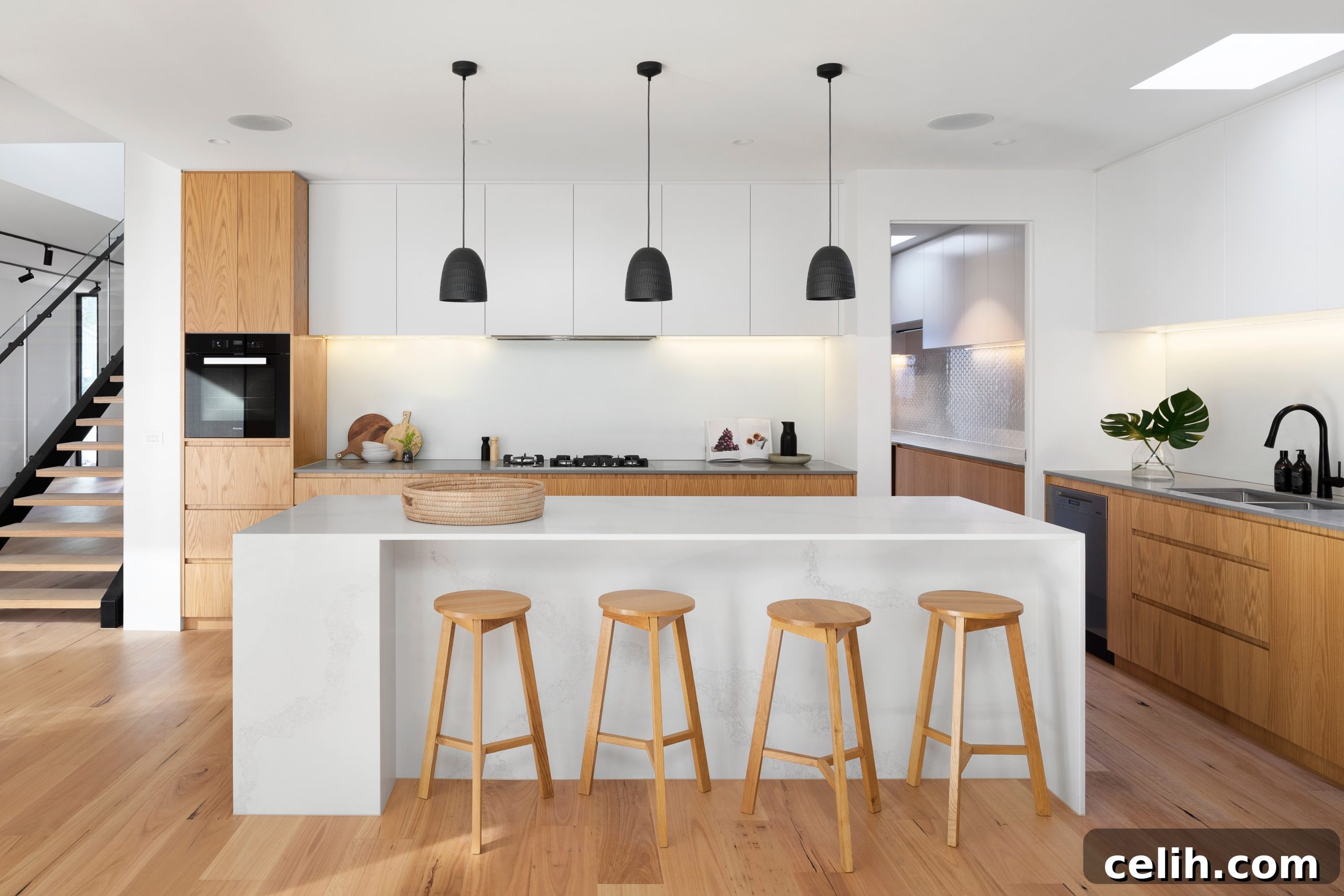
Have you ever stepped into your kitchen and been immediately overwhelmed by a cascade of clutter, a maze of appliances, and an assortment of items spilling from every corner? If this resonates with you, rest assured, you are far from alone. The desire to alleviate the stress of a chaotic kitchen space forms the very essence of minimalism – a profound philosophy rooted in the beauty of simplicity and intentional living. Embracing minimalism can be a powerful catalyst for decluttering not just your physical environment, but also your mental landscape, fostering a greater sense of calm and clarity. While the kitchen, with its inherent need for numerous tools and gadgets, often presents a unique challenge for minimalist principles, it is precisely here that the benefits of an organized, streamlined space become most apparent. If your aspiration is to cultivate your ideal minimalist kitchen, a sanctuary of efficiency and serenity, then these comprehensive tips are designed to guide your transformation.
Seamless Integration: The Power of Built-In Appliances
Kitchen appliances, from refrigerators to microwaves, often consume a significant portion of your available floor plan and precious counter space. In a quest for a truly minimalist kitchen, traditional freestanding appliances can quickly become visual obstructions, disrupting the clean lines and open feel you aim to achieve. Fortunately, contemporary design offers ingenious solutions that allow you to integrate essential appliances seamlessly into your home’s architecture, maximizing both aesthetic appeal and operational efficiency.
Consider the transformative impact of built-in models. Dishwashers, refrigerators, wine coolers, and even advanced coffee systems can be artfully concealed behind custom cabinetry panels, blending effortlessly with your kitchen’s overall design scheme. This approach not only liberates valuable counter space but also creates a cohesive, uninterrupted visual flow that is characteristic of a sophisticated minimalist aesthetic. Imagine a kitchen where the only visible elements are sleek surfaces and carefully chosen decor, rather than a jumble of stainless steel and black plastic.
For instance, integrated wall oven-microwave combos, available from reputable retailers like Goedeker’s, exemplify smart space utilization. By stacking these vital cooking appliances vertically within a cabinet, you consolidate your cooking station into one convenient, dedicated zone. This not only keeps your countertops impeccably clear but also enhances the ergonomics of your kitchen, making cooking and baking a more fluid and enjoyable experience. Such combinations are prime examples of kitchen appliances that brilliantly marry functionality with an undeniable space-saving design, perfectly aligning with the core tenets of a minimalist lifestyle. Embracing built-in options is a fundamental step towards achieving a truly uncluttered, elegant, and highly functional minimalist kitchen.
Streamline Your Dinnerware: Ditching Duplicates and Excess
Take a moment to truly assess your collection of cups, plates, forks, and knives. How many of these items do you genuinely use on a regular basis? While some homeowners might revel in hosting grand dinner parties requiring multiple elaborate dish sets, the reality for most individuals and families is far simpler. Realistically, an average household typically utilizes a smaller, core collection of dinnerware, reserving the larger quantities for those infrequent occasions or, regrettably, for when the dreaded chore of dishwashing has been postponed for too long.
A critical step in cultivating a minimalist kitchen is to identify and retain only the dinnerware that truly serves your daily needs and brings you joy. Begin by evaluating your inventory: if you own thirty plates but consistently only use six, it’s time to re-evaluate. The goal is not deprivation, but rather intentional living – surrounding yourself with items that are both beautiful and functional. Once you’ve determined your essential set, consider donating the surplus to a local charity or selling them. This act of freeing up precious cabinet space will not only make your kitchen feel lighter and more organized but will also ensure that every piece you keep is one you genuinely appreciate and use, contributing to a more sustainable and less wasteful approach to living. This mindful curation is key to transforming your kitchen into a truly minimalist home design.
Curate Your Culinary Tools: Focus on Versatility and Necessity
Let’s be honest: that specialized melon baller, the single-purpose avocado slicer, or the manual orange juice press you received as a gift years ago has likely seen little to no action. A common pitfall in kitchen organization is holding onto items with the hopeful, albeit often misguided, notion that “one day” they might prove useful. The reality is that when that elusive day finally arrives, you’ll probably spend more time searching for the forgotten gadget than actually using it, only to realize a simpler, more versatile tool could have accomplished the same task.
For a truly minimalist kitchen, prioritize tools that offer multiple functionalities. Instead of a dedicated rice cooker, consider if your existing slow cooker or Instant Pot can handle rice perfectly while also excelling at a myriad of other tasks, such as preparing stews, cooking meats, or making chili. A high-quality chef’s knife, for example, can often replace an entire block of specialty knives, simplifying your prep work and reducing clutter. Similarly, an immersion blender can perform many tasks typically reserved for a bulkier stand blender, saving valuable cabinet space.
Everyone has a few specialty tools they genuinely love and use constantly – perhaps a beloved stand mixer for baking or a unique coffee grinder. These are the exceptions that prove the rule. The key is to be ruthless in your assessment: only retain the tools that actively simplify your cooking process, are used frequently, and truly enhance your culinary experience. By embracing this philosophy of versatility and necessity, you will transform your kitchen into a highly efficient and streamlined workspace, embodying the very best of minimalist kitchen design.
Embrace the Serenity of Clear Countertops
One of the most immediate and impactful ways to achieve a minimalist kitchen aesthetic is by clearing your countertops. Kitchens, by nature, possess a wealth of hidden storage potential in cabinets and drawers. Once you have diligently decluttered your dinnerware and culinary tools, you’ll likely discover that you have ample space to house everything out of sight. The visual expanse of clean, uncluttered surfaces instantly evokes a sense of calm, order, and spaciousness, transforming your kitchen from a chaotic workspace into a serene culinary haven.
Imagine walking into your kitchen and seeing expansive, sparkling surfaces, ready for food preparation, rather than a crowded landscape of small appliances, spice racks, and various knick-knacks. Not only does this enhance the visual appeal, but it also provides practical benefits. Cleaning becomes a breeze – a simple wipe down without the need to move countless items. More importantly, it creates generous, unimpeded work zones, making cooking more efficient and enjoyable.
If you feel the need to decorate your countertops, do so with extreme intentionality. Opt for items that seamlessly blend aesthetic appeal with practical utility. For example, a sleek, minimalist fruit bowl filled with fresh produce, a beautifully designed cutting board that can be leaned against the backsplash, or perhaps a single, elegant plant. Consider items that double as tools, like a stylish utensil holder for frequently used cooking spoons, though even these can often be stored in a drawer. The guiding principle is to ensure that every item on your counter is either actively in use, truly essential, or contributes significant beauty without adding visual noise. By committing to clear countertops, you maintain the clean lines and open feel of the room, profoundly enhancing the minimalist experience.
Reimagine the “Junk Drawer”: A Space for Purpose
Pause for a moment and consider the contents of your designated “junk drawer.” What mystery items reside within? Batteries, rubber bands, spare keys, defunct chargers, old receipts, and an assortment of miscellaneous tools – these are common inhabitants of this often-overlooked kitchen anomaly. The fundamental question is: why do these items, which bear no relation to food or food preparation, occupy prime real estate in your kitchen? This ubiquitous phenomenon is far more widespread than one might imagine, with studies indicating that over 80% of people admit to having a junk drawer.
In a minimalist kitchen, every drawer, every cabinet, and every surface must serve a clear purpose. The “junk drawer” concept directly contradicts this principle. To truly embrace minimalism, embark on the mission to empty and reorganize this cluttered space. Categorize its contents:
- **Relocate:** Items like batteries, lightbulbs, and small tools belong in a dedicated utility drawer, a home office desk, or a workshop – spaces where they logically fit and are easily found when needed.
- **Discard:** Old receipts, broken items, dried-up pens, and anything else that has outlived its usefulness or simply doesn’t belong should be recycled or disposed of.
- **Reimagine:** Once emptied, this drawer can be transformed into a valuable, organized space for legitimate kitchen essentials. Perhaps it becomes home to your frequently used cooking utensils, neatly separated with drawer dividers, or a dedicated spot for foils, wraps, and parchment paper.
By junking the junk drawer, you eliminate a hidden pocket of chaos and unlock new potential for a highly organized and functional kitchen, aligning perfectly with your minimalist aspirations.
The Principle of Place: Giving Everything a Home
The foundation of a truly organized and minimalist kitchen lies in a simple yet profound principle: every single item must have a designated home. Without a specific place to reside, an item is destined to create clutter. It will inevitably end up lingering on a countertop, displacing another item, or worse, becoming perpetually lost in the depths of a cabinet, leading to frustration and inefficiency. This problem is precisely what a well-structured organizational system aims to circumvent.
Implement this principle by taking the time to assign a logical and accessible spot for everything in your kitchen. This might involve:
- **Zone Planning:** Group similar items together. All baking supplies in one cabinet, spices near the stove, everyday dishes in an easily reachable cupboard, and cleaning supplies under the sink.
- **Drawer Dividers & Organizers:** Utilize these simple tools to prevent items from mixing and to make everything visible and accessible. Cutlery trays, spice rack inserts, and adjustable dividers can transform chaotic drawers into orderly storage.
- **Vertical Storage:** Maximize cabinet space with stackable shelves, risers, and pull-out organizers for pots, pans, and food containers. This eliminates the need to unstack multiple items to reach what you need.
- **Clear Containers:** For pantry items, transferring dry goods like pasta, rice, and cereals into clear, airtight containers not only looks tidy but also helps you monitor stock levels and reduces visual clutter.
When everything has a specific, logical home, the act of tidying up becomes intuitive and quick. You and your family will know exactly where to return items after use, preventing accumulation and maintaining the clean aesthetic of your minimalist kitchen. This diligent approach to organization doesn’t just keep the room clean; it fosters a sense of peace, efficiency, and promotes a genuinely minimalist experience in your daily life.
The Art of Maintenance: Sustaining Your Minimalist Kitchen
Achieving a minimalist kitchen is not a one-time decluttering event, but rather an ongoing commitment – an art of mindful maintenance. To preserve the serenity and efficiency you’ve cultivated, it’s crucial to adopt habits that prevent clutter from creeping back in. This sustained effort ensures your kitchen remains a harmonious space for cooking, gathering, and living.
Embrace the “One-In, One-Out” Rule
Before introducing any new item into your kitchen, whether it’s a novel gadget, an additional mug, or a new cookbook, commit to the “one-in, one-out” rule. For every new item that enters, an existing, comparable item must leave. This simple principle acts as a powerful gatekeeper, preventing accumulation and forcing you to continually assess the true value and necessity of your possessions. It encourages conscious consumption and reinforces the idea that every item in your kitchen should earn its place.
Regular Review and Declutter Sessions
Schedule periodic, perhaps quarterly or bi-annual, mini-decluttering sessions. These aren’t as extensive as your initial overhaul but serve as crucial check-ups. Use these opportunities to:
- **Expire Check:** Review pantry items, spices, and condiments for expiration dates.
- **Utility Check:** Re-evaluate tools and small appliances. Have you used that panini press in the last six months? If not, it might be time to let it go.
- **Duplicate Check:** Notice any new duplicates that have snuck in? Address them immediately.
- **Donation Box:** Keep a small donation box or bag somewhere discreet (perhaps in a closet) for items that no longer serve you. When it’s full, take it to charity.
Mindful Purchasing Decisions
Before making any new kitchen-related purchase, ask yourself:
- Do I truly need this, or is it a “want”?
- Do I already own something that can perform the same function?
- Where will this item live in my kitchen? Does it have a designated home?
- Is it of good quality and built to last, or will it quickly become another piece of clutter?
By cultivating these mindful purchasing habits, you proactively prevent unnecessary items from entering your space, saving money and maintaining your minimalist ethos.
Less is More: The Enduring Rewards of a Minimalist Kitchen
Once you have successfully transformed your space into a minimalist kitchen design, you will be genuinely astonished by the profound positive changes it brings to your daily life. The absence of superfluous items significantly reduces visual noise, creating an environment that is not only aesthetically pleasing but also remarkably functional. Meal preparation, once a potentially stressful endeavor amidst chaos, becomes a far more intuitive and enjoyable process. With clear countertops, logically organized drawers, and only essential tools at your disposal, you can focus entirely on the art of cooking, rather than battling disorganization.
This newfound sense of order extends beyond the kitchen itself, permeating other aspects of your routine. The mental clarity derived from a tidy, purposeful space helps you maintain focus and tackle your entire day with greater ease and efficiency. A minimalist kitchen is more than just a trend; it’s an investment in your well-being, offering a sanctuary of calm, promoting healthier habits, and allowing you to reclaim valuable time and energy. Embrace this journey, and discover the lasting rewards of a kitchen where every item has a purpose, and less truly feels like so much more.