
Welcome to the forefront of modern design, where innovation meets elegance, and everyday objects are transformed into works of art. In the realm of contemporary furniture, few names resonate with such clarity and consistent brilliance as Kartell. Known globally for their groundbreaking use of plastic and their collaborations with the world’s most visionary designers, Kartell consistently pushes the boundaries of what furniture can be. Among their stellar collection, one piece stands out not just for its striking aesthetic, but also for its intriguing name: the Mr. Impossible chair.
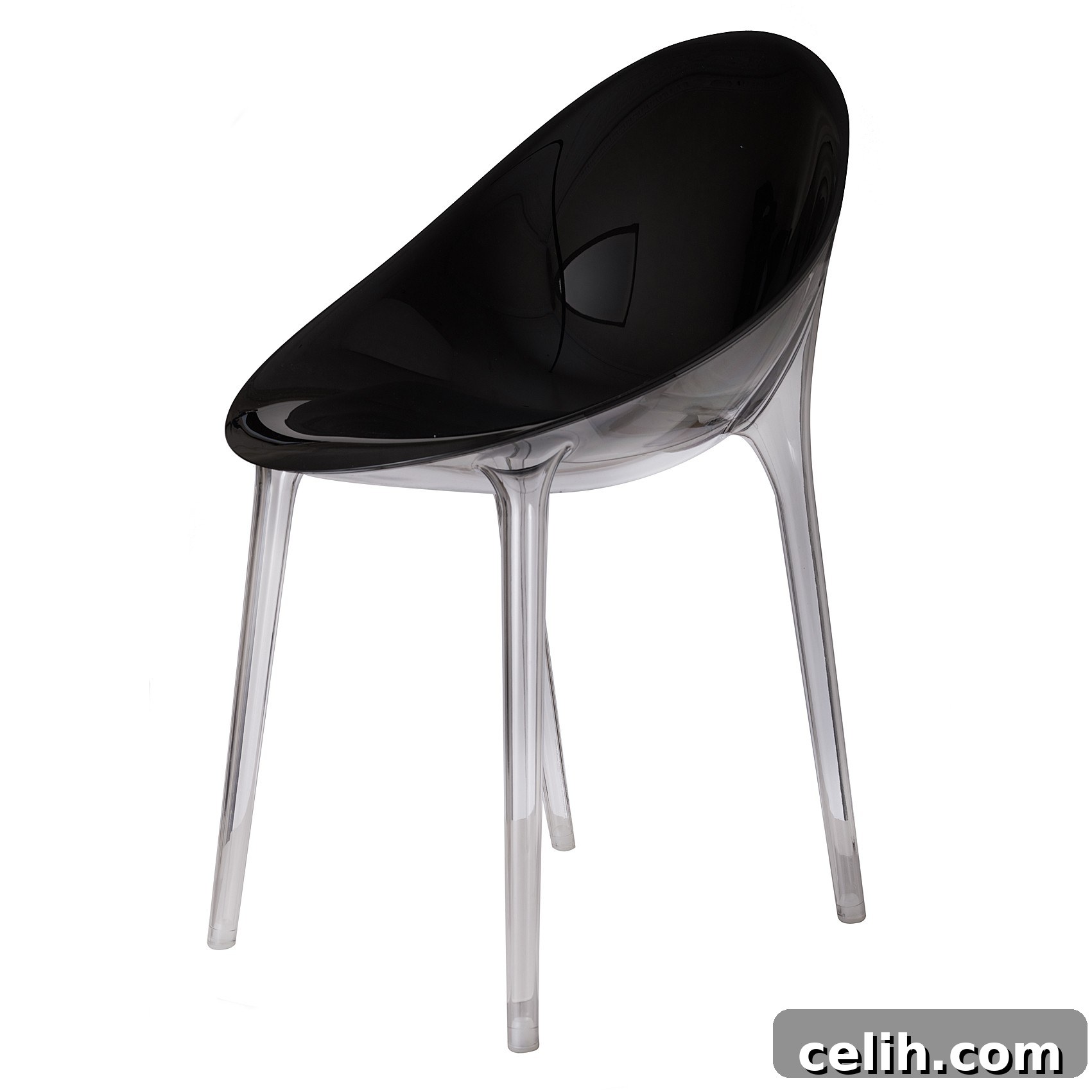
Far more than just a piece of seating, the Mr. Impossible chair embodies a sophisticated blend of revolutionary design, advanced material science, and a playful spirit. Crafted through the ingenious minds of design maestros Philippe Starck and Eugeni Quitllet, this chair defies conventional expectations, proving that comfort, style, and durability can coexist seamlessly within a seemingly impossible structure. Its distinctive silhouette and innovative construction quickly elevated it to an iconic status, making it a coveted item for design enthusiasts and a functional showpiece in a myriad of environments.
Kartell: A Legacy of Innovation in Design
To truly appreciate the Mr. Impossible chair, one must first understand the powerhouse behind its creation: Kartell. Founded in 1949 by Giulio Castelli, Kartell began its journey by producing plastic items for home and laboratory use. However, it was their ambitious pivot into furniture design, driven by a commitment to industrial innovation and a passion for artistic expression, that cemented their place in design history. Kartell transformed plastic from a mere utilitarian material into a medium of high design, challenging perceptions and demonstrating its immense potential for aesthetics and functionality.
Over the decades, Kartell has championed collaborations with an illustrious roster of international designers, including the likes of Anna Castelli Ferrieri, Vico Magistretti, Joe Colombo, and of course, Philippe Starck. This collaborative spirit, combined with relentless research into new technologies and materials, has allowed Kartell to consistently produce pieces that are not only aesthetically pleasing but also technically pioneering. Their commitment to sustainability, through recycling programs and the development of eco-friendly plastics, further underscores their forward-thinking approach, ensuring their legacy extends beyond mere aesthetics to encompass environmental responsibility.
The Power of Plastic: Kartell’s Material Mastery
At the heart of Kartell’s success lies their unparalleled expertise in plastic. They have mastered various polymers, including polycarbonate, polyethylene, and polypropylene, transforming them into objects of desire. For the Mr. Impossible chair, polycarbonate was the material of choice. This high-performance thermoplastic offers exceptional transparency, akin to glass, combined with remarkable strength, impact resistance, and durability. These properties make it ideal for creating furniture that is both visually light and structurally robust, capable of withstanding the rigors of daily use without compromising on its elegant appearance. Kartell’s ability to manipulate this material with such precision and artistry is a testament to their continuous investment in manufacturing excellence.
The Visionaries Behind the Design: Philippe Starck and Eugeni Quitllet
The Mr. Impossible chair is the brainchild of two extraordinary designers: Philippe Starck and Eugeni Quitllet. Philippe Starck, a household name in the design world, is renowned for his prolific and diverse portfolio, ranging from hotels and yachts to everyday consumer goods. His philosophy often centers on making design accessible and functional, yet always imbued with a touch of wit and unexpected charm. Starck’s designs are characterized by their organic forms, innovative use of materials, and an inherent sense of timelessness that transcends fleeting trends.
Eugeni Quitllet, a Catalan designer, is often described as a “disoñador,” a Spanish neologism combining “designer” and “dreamer.” He is known for his ability to distill complex ideas into simple, fluid forms, often experimenting with transparency and lightweight structures. Quitllet worked alongside Starck for many years, contributing significantly to numerous iconic projects before establishing his own studio. Their collaboration on the Mr. Impossible chair represents a culmination of their shared vision for pushing design boundaries and exploring the poetic potential of industrial materials.
A Partnership Forged in Innovation
The synergy between Starck and Quitllet is palpable in the Mr. Impossible chair. Starck’s conceptual brilliance and playful naming conventions merge seamlessly with Quitllet’s mastery of form and material. Together, they tackled what seemed like an insurmountable manufacturing challenge: joining two separate polycarbonate shells without visible seams or fasteners. This seemingly impossible feat of engineering and design not only gave the chair its memorable name but also defined its unique character. Their combined genius resulted in a piece that is both technically sophisticated and aesthetically captivating, embodying a minimalist elegance that belies its complex creation process.
Unpacking “Mr. Impossible”: A Chair of Contradictions and Brilliance
The name “Mr. Impossible” is not just a catchy moniker; it’s a direct reference to the technical marvel achieved in its construction. The chair comprises two oval polycarbonate shells – one for the seat and one for the backrest – that are laser-welded together. The challenge lay in creating a perfectly smooth, durable, and visually seamless bond between two such distinct components made from a material known for its rigidity. This innovative welding technique, a result of extensive research and development by Kartell, allows the two shells to merge into a single, cohesive entity, giving the impression of a single, flowing form. This process was indeed considered “impossible” by many, hence the name, reflecting Starck’s characteristic humor and penchant for challenging norms.
The “Impossible” Challenge: Seamless Polycarbonate Construction
The technical ingenuity behind the Mr. Impossible chair is truly remarkable. The laser welding process ensures that the chair is not only aesthetically flawless but also structurally sound. The two polycarbonate halves, molded separately, are then fused at an invisible point, creating a vacuum-sealed interior. This advanced manufacturing technique allows for a range of finishes: the chair can be entirely transparent, entirely opaque, or, most strikingly, feature a transparent base with an opaque, colored seat. This last option creates a captivating visual effect, making the chair appear to float, highlighting its lightness and ethereal quality while also offering a comfortable, supportive surface.
The choice of polycarbonate further emphasizes the chair’s modern appeal. It is a lightweight, yet incredibly robust material, resistant to scratches and everyday wear. Its inherent properties allow for vibrant color saturation in the opaque versions and crystal-clear transparency in others, ensuring that each variant of the Mr. Impossible chair makes a distinct statement. This masterful application of material and technology results in a chair that is both durable and delightfully comfortable, defying any preconceived notions one might have about plastic furniture.
Form Meets Function: Aesthetics and Ergonomics
Beyond its innovative construction, the Mr. Impossible chair is a triumph of aesthetic design. Its sleek, organic curves and minimalist profile give it a timeless quality that allows it to integrate seamlessly into a wide array of interior styles, from ultra-modern to subtly classic. The chair’s form is intentionally inviting, with a generous seat and a gently curved backrest that provides excellent lumbar support. Despite its hard plastic construction, it is surprisingly comfortable, designed to cradle the user and offer a pleasant seating experience even for extended periods. This ergonomic consideration, often overlooked in avant-garde designs, underscores the chair’s practical appeal.
The interplay of light with the polycarbonate material is another key aesthetic feature. Transparent versions catch and refract light, creating dynamic patterns and lending an airy, expansive feel to any space. Opaque versions, available in a sophisticated palette of colors, add a pop of contemporary flair or a touch of understated elegance, depending on the chosen hue. This versatility ensures that the Mr. Impossible chair is not just a piece of furniture, but a sculptural element that enhances its surroundings.
Versatility and Style: Integrating Mr. Impossible into Your Space
The inherent versatility of the Mr. Impossible chair makes it suitable for diverse environments. It excels as a sophisticated dining chair, adding a touch of contemporary chic to any table. In an office setting, it provides comfortable and stylish seating for meeting rooms or individual workspaces, projecting an image of modern professionalism. For residential use, it can serve as an accent chair in a living room, a statement piece in a hallway, or a practical yet elegant addition to a study or bedroom. Its robust construction also makes it suitable for contract use in cafes, restaurants, and hotels, where durability and distinctive design are paramount.
Whether you opt for the classic transparency that evokes a sense of lightness and openness, or a vibrant opaque color that makes a bold design statement, the Mr. Impossible chair adapts effortlessly. Its ability to blend into various decorative schemes while simultaneously standing out as a piece of exceptional design is a testament to the masterful vision of Starck and Quitllet. It’s a chair that does not merely occupy space; it defines it, elevating the ambiance with its unique presence.
Why Mr. Impossible Endures: An Icon of Modern Furniture
The Mr. Impossible chair has transcended its initial innovative appeal to become a recognized icon in the world of modern furniture design. Its enduring popularity stems from several factors: its groundbreaking use of technology, its timeless aesthetic, the comfort it provides, and the prestige associated with its designers and the Kartell brand. It represents a successful marriage of art and industry, proving that mass-produced items can still possess soul, character, and an undeniable sense of luxury.
As an investment in design, the Mr. Impossible chair offers lasting value. It’s not just a functional object but a collectible piece that embodies the spirit of an era of innovation. It challenges perceptions of plastic furniture, demonstrating that sustainable, durable, and sophisticated design can emerge from this versatile material. This chair continues to inspire, surprise, and delight, solidifying its place as a cornerstone of contemporary interior design and a testament to the limitless possibilities when creativity meets advanced engineering.
In conclusion, the Mr. Impossible chair by Philippe Starck and Eugeni Quitllet for Kartell is a true masterpiece. It is a symbol of how innovative materials and design ingenuity can overcome perceived impossibilities, resulting in a piece of furniture that is not only visually stunning but also incredibly functional and comfortable. Its sleek lines, advanced construction, and versatile appeal make it a highly desirable addition to any modern interior, proving that great design truly is everlasting and universally appreciated.