
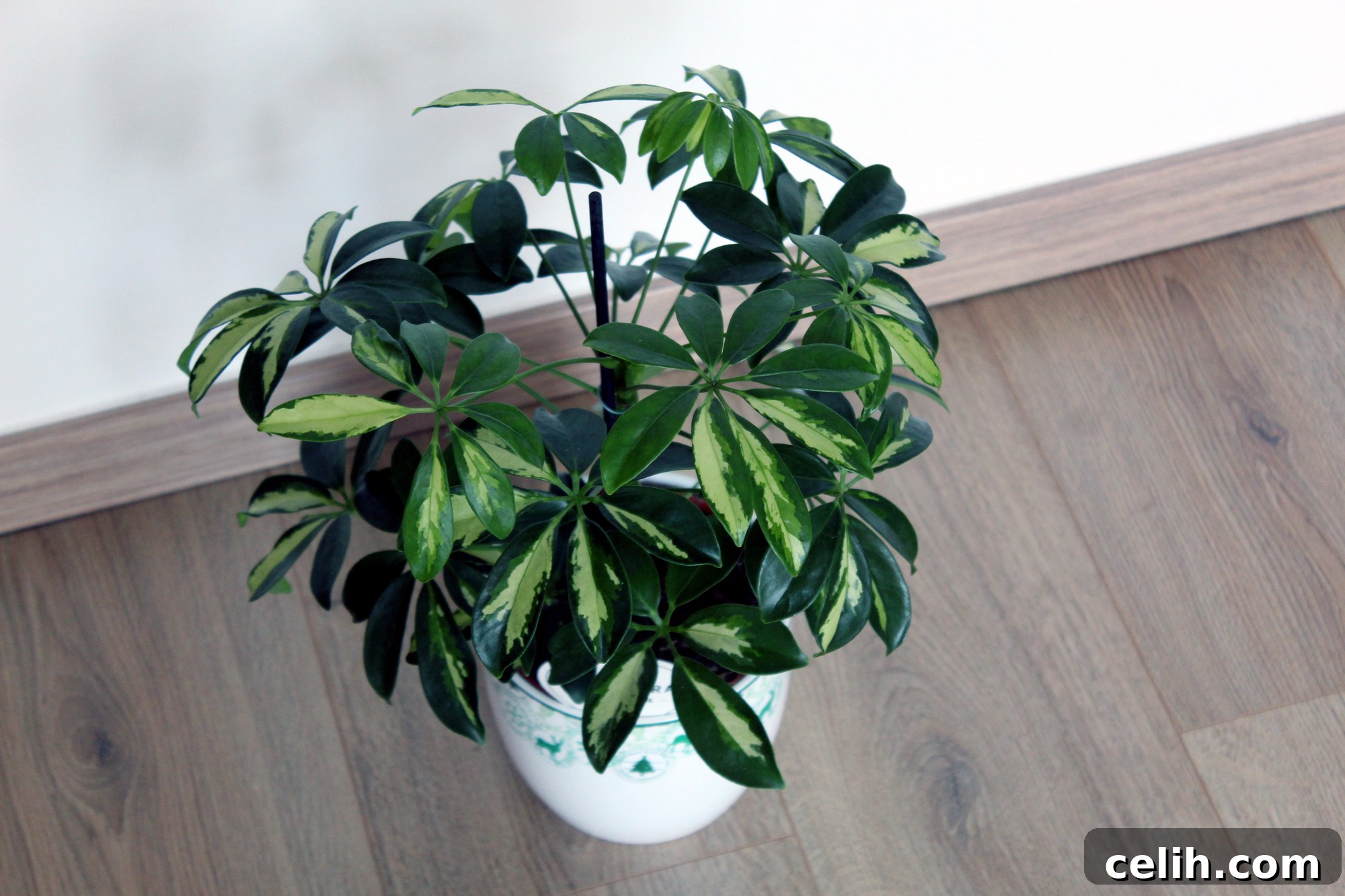
Nurturing a vibrant umbrella plant (Schefflera) doesn’t require a green thumb or extensive horticultural knowledge. It simply demands an understanding of its fundamental needs and the ability to interpret its subtle cues. Forget the guesswork and the impulse to over-manage; this guide will empower you to cultivate a flourishing indoor companion with confidence.
Most issues encountered with umbrella houseplants stem not from neglect, but often from well-intentioned overdoing. Common pitfalls include automatic, unthinking watering, improper placement, or overlooking the early warning signs before a plant declines. Whether it’s yellowing leaves, drooping stems, or sparse growth, these problems rarely appear overnight and are never random occurrences. They are clear signals from your plant, indicating an imbalance in its environment.
The encouraging news is that the umbrella plant is celebrated as one of the most resilient and forgiving houseplants available. Master a few crucial care elements, and it will reward you with rapid growth, a lush, dense canopy, and an elevated sense of natural elegance in your living space, all with minimal fuss.
In this comprehensive guide, we’ll delve into the precise requirements of your umbrella plant, teach you how to identify early signs of distress, and provide actionable solutions to ensure its sustained health and beauty. Say goodbye to second-guessing and hello to a thriving indoor garden.
The Enduring Appeal of the Umbrella Plant in Modern Homes
The umbrella plant has earned its coveted spot in homes and offices worldwide for a compelling reason: its remarkable resilience and tolerance for occasional lapses in care. Unlike many fussier houseplants that react dramatically to missed waterings, the Schefflera typically endures periods of slight neglect without showcasing visible signs of suffering. This makes it an ideal choice for busy individuals, beginners, or anyone seeking a low-maintenance yet impactful botanical addition.
Beyond its forgiving nature, the umbrella plant offers significant aesthetic value. It boasts a vigorous growth habit, quickly filling vertical spaces with its distinctive, umbrella-like foliage. The glossy, vibrant green leaves reflect light beautifully, adding a dynamic texture and a touch of sophistication to any corner. Its architectural form can transform an ordinary space into one that feels thoughtfully curated and full of life.
However, despite its popularity and hardiness, “popular” doesn’t equate to “indestructible.” While it tolerates more than most, understanding its specific preferences will unlock its full potential for lush growth and vibrant health.
Two primary varieties dominate the houseplant market, each with unique growth characteristics:
- Schefflera actinophylla (the Australian umbrella tree): This variety is the larger, more robust cousin, known for its ability to reach impressive heights of eight feet or more indoors if given ample space and left unpruned. Its leaves are typically larger, with more leaflets radiating from a central point.
- Schefflera arboricola (the dwarf umbrella tree): As its name suggests, this is the more compact and manageable version, usually staying between two to four feet tall. It’s perfect for smaller spaces or as a tabletop plant, featuring smaller leaves and a denser growth habit. Many variegated forms, with streaks of cream or yellow, belong to this species.
Crucially, both these popular species share nearly identical care requirements and exhibit similar responses to environmental factors. They forgive the same mistakes and, when something is amiss, will communicate their needs through consistent visual signals—if you know what to observe. If your goal is a plant that exudes elegance, grows dependably, and doesn’t require advanced botanical expertise to maintain, the umbrella plant is an outstanding choice.
Decoding the Light Needs of Your Umbrella Plant
One of the most frequent misconceptions in umbrella plant care revolves around light. While it’s true that umbrella plants do not tolerate harsh, direct sunlight that can scorch their leaves, they absolutely require bright, indirect light to flourish. Insufficient light is a common culprit behind leggy growth, diminished vibrancy, and a sparse, unappealing appearance—a far cry from the full, bushy aesthetic you likely envisioned when you brought it home.
Bright indirect light represents the optimal sweet spot for these plants. This typically means positioning your umbrella plant a few feet back from a south or west-facing window that receives intense full sun for several hours a day. Alternatively, placing it directly next to an east-facing window, where it benefits from the gentler morning sun, is often ideal. The key is consistent, ample light without direct, unfiltered rays beating down on the foliage, especially during the harshest midday hours.
If your plant is relegated to a dim hallway, a corner far from any window, or a windowless office, it might survive, but it will certainly not thrive. In low-light conditions, growth will significantly slow down. The stems will stretch excessively, reaching desperately for any available light source, leading to large gaps between leaves. This results in a “leggy” or “etiolated” appearance, where the plant looks stretched, weak, and generally unhappy.
Vigilantly observe these signs, which indicate your umbrella plant isn’t receiving the right amount of light:
- Stretching stems: The plant appears to be “reaching” or leaning dramatically towards the nearest light source, with noticeable elongation between leaf nodes.
- Pale or small new growth: New leaves emerge lighter in color and considerably smaller than mature leaves, indicating a lack of energy for robust development.
- Lower leaves yellowing and dropping: While overwatering can cause yellowing, if your watering regimen is sound, insufficient light can also trigger the shedding of older, lower leaves as the plant conserves energy.
- Loss of variegation: For variegated varieties, the distinctive cream, yellow, or white streaks may fade or disappear entirely, reverting to solid green as the plant tries to maximize chlorophyll production in low light.
To ensure uniform growth and prevent your plant from becoming lopsided, make it a habit to rotate the pot a quarter turn every week or two. Umbrella plants exhibit strong phototropism, meaning they actively grow towards light sources. Without regular rotation, one side will become dense and lush, while the other remains sparse and underdeveloped. Consistent spinning encourages the entire plant to fill out evenly, maintaining a symmetrical and attractive shape.
Conversely, too much direct, unfiltered sun exposure can be detrimental, leading to burned patches or a bleached appearance on the leaves. The goal is to find that perfect middle ground: ample brightness without the intensity of direct midday sun. Achieving this balance will reward you with consistent, compact, and vibrant growth from your umbrella plant.
Strategic Placement for a Thriving Umbrella Plant
Choosing the right location for your umbrella plant is critical and often where novice plant parents misstep. It’s not simply about having light somewhere in the room; it’s about the quality and intensity of light that the plant itself actually receives at its specific spot. Microclimates within your home can drastically alter light conditions.
A few reliable placements that consistently provide suitable light for your umbrella plant include:
- Directly next to an east-facing window: This is often considered ideal. East windows provide gentle morning sun, which is bright enough to promote vigorous growth without the risk of scorching leaves.
- A couple of feet back from a south or west-facing window: These windows typically offer the most intense light. Positioning the plant a little further away prevents the harshest midday or afternoon sun from directly hitting and potentially burning the foliage.
- In a bright room where you can comfortably read a book or magazine during the day without needing to turn on artificial lights: This is a good rule of thumb for assessing overall ambient brightness. If a room feels dim to you, it’s likely too dim for your umbrella plant.
Conversely, here are places you should generally avoid to prevent common issues:
- Dark hallways or corners that receive no natural light: While the plant might survive for a period, it will exhibit signs of stress like leggy growth and pale leaves.
- Immediately next to radiators, heating vents, or air conditioning units: These appliances create extreme temperature fluctuations and dry drafts that can stress the plant, leading to leaf drop and brown tips.
- Near drafty doors or frequently opened windows in cold weather: Sudden blasts of cold air can shock the plant and cause leaf shedding. Consistency in temperature is key.
If you’re ever uncertain about your plant’s placement, let the plant be your guide. Observe its behavior over a few weeks. If it starts leaning noticeably, stretching its stems, or thinning out, these are clear indicators that it’s actively seeking more light and needs to be moved to a brighter location. Adjusting its position can often resolve many growth issues before they become severe.
Mastering Watering: Rules You Can Reliably Implement
It’s a common paradox in houseplant care: most umbrella plants succumb to overwatering rather than underwatering. The temptation to water on a fixed schedule, regardless of the plant’s actual needs, is a leading cause of decline. Understanding how to properly hydrate your umbrella plant is arguably the most critical factor in its long-term health.
The golden rule for watering an umbrella plant is simple: allow the top two to three inches of soil to dry out completely between waterings. The most effective way to check this is with the “finger test.” Stick your finger deep into the soil. If it feels damp or cool, resist the urge to water and check again in a day or two. If it feels dry to the touch, it’s time to water. When you do water, do so thoroughly until excess water drains freely from the bottom of the pot. This ensures that the entire root ball receives adequate moisture.
This plant absolutely does not need a rigid watering schedule. Its watering frequency will naturally vary based on environmental factors like light intensity, temperature, humidity, and the season. In the warmer, brighter months of summer, you might find yourself watering once a week. In the cooler, darker winter months, it could extend to every two or even three weeks. The key is to respond to what your plant and its soil are telling you, rather than sticking blindly to a calendar. Consistent but mindless watering often leads to more plant deaths than occasional neglect because it disregards the dynamic needs of the plant.
Learning to interpret your plant’s signals regarding water is crucial:
- Yellow leaves: Almost invariably a sign of overwatering. The roots are suffocating from lack of oxygen in constantly wet soil.
- Brown, crispy leaf tips or edges: This often indicates underwatering, where the plant isn’t receiving enough moisture, leading to desiccation.
- Mushy stems or a foul odor from the soil: These are tell-tale signs of severe overwatering and developing root rot, a fungal disease that can quickly kill the plant.
- Drooping leaves that perk up after watering: This suggests you waited a bit too long to water, but thankfully caught it in time before permanent damage occurred. The plant is expressing thirst.
After watering, it is paramount to pour out any standing water that accumulates in the saucer within 15-30 minutes. Umbrella plants absolutely abhor “wet feet,” meaning their roots cannot sit in stagnant water. Proper drainage holes are non-negotiable. If your current pot lacks drainage, you must repot your plant immediately into a container with adequate holes. Failure to do so will almost certainly lead to root rot within a matter of months, jeopardizing your plant’s life.
Remember to reduce watering significantly during the winter months. During this period, most houseplants enter a semi-dormant phase where their growth slows, and they utilize significantly less moisture. Gradually increase watering frequency again in spring when you observe new leaves pushing out and the plant enters its active growing season. This seasonal adjustment in watering is a critical factor that distinguishes thriving umbrella plants from those that merely limp along, perpetually shedding leaves.
Soil and Potting: Your First Line of Defense Against Root Rot
The foundation of a healthy umbrella plant lies in its soil. Without a fast-draining, aerated potting mix, the plant’s roots will inevitably sit in soggy conditions, leading to suffocation and the dreaded root rot. This is a common and often fatal issue that can be entirely prevented with the right potting strategy.
While a standard all-purpose potting mix can be a starting point, it’s generally too dense for umbrella plants on its own. To enhance drainage and introduce crucial airflow around the roots, you must amend it. A common and highly effective amendment is perlite, which helps create tiny air pockets and improves the porosity of the soil. Horticultural charcoal or small orchid bark chips can also serve a similar purpose, adding structure and allowing water to pass through more freely.
A good starting ratio is a 70-30 mix of good quality potting soil to perlite. This blend ensures that the substrate is loose enough for water to drain efficiently, preventing pooling at the bottom of the pot and promoting a healthy root environment. You want a mix that feels light and airy, not heavy and compacted.
Crucially, avoid heavy, moisture-retaining potting blends. Many commercial soils are marketed for “moisture-loving plants” or promise to “retain water for longer.” These are precisely the formulations you want to steer clear of for your umbrella plant. They will hold too much moisture, creating the constantly soggy environment that is a breeding ground for root rot. The ideal soil for an umbrella plant dries out completely within the top few inches between waterings, rather than remaining damp for extended periods.
The choice of pot material also plays a significant role in soil moisture. Terracotta pots are excellent for those prone to overwatering, as their porous nature allows moisture to evaporate more quickly from the soil. This provides a greater margin for error and helps the soil dry out faster. If, however, you tend to underwater, or live in a very dry climate, sticking with plastic or glazed ceramic pots might be more suitable, as they retain moisture for longer periods.
Repotting your umbrella plant is typically necessary every two to three years, or when you notice clear signs that it has outgrown its current container. These signs include roots emerging from the drainage holes, the plant becoming top-heavy and unstable, water running straight through the soil without absorbing, or a general slowdown in growth despite consistent care. When repotting, move up only one pot size (e.g., from an 8-inch to a 10-inch pot) to avoid overwhelming the root system with too much new soil, which can retain excessive moisture. Refresh the soil with your well-draining mix and, if you encounter any dark, soft, or mushy roots during the process, trim them away with clean, sterile shears. The best time for repotting is in early spring, just as the plant emerges from its winter dormancy and enters its active growth phase, allowing it to recover quickly.
Ultimately, superior drainage, both in your soil mix and your choice of pot, is the single most important factor in safeguarding your umbrella plant from common ailments. Prioritize this, and you’ll lay a robust foundation for its enduring health.
Temperature and Humidity: Unlocking Optimal Conditions
One of the reasons umbrella plants are so widely loved is their adaptability to standard indoor conditions. They thrive in much the same temperature range that humans find comfortable, making them a remarkably low-fuss addition to most homes and offices. This natural alignment with typical indoor environments reduces the complexity of their care significantly.
The ideal temperature range for umbrella plants is consistently between 60°F and 75°F (15°C to 24°C). They can tolerate slightly warmer temperatures during the peak of summer and a little cooler in winter, but sustained exposure below 50°F (10°C) can cause significant stress, leading to chilling damage and dramatic leaf drop. To ensure their comfort, always place them in warm, stable areas, away from cold drafts originating from frequently opened windows or doors. Similarly, avoid positioning them directly in the path of air conditioner vents or heating registers, as blasts of hot or cold air can rapidly dehydrate leaves and cause stress.
When it comes to humidity, umbrella plants are quite adaptable, and their requirements are often overestimated. Average indoor humidity levels (typically 40-60%) are perfectly adequate for most Schefflera plants. You usually don’t need to go to great lengths to increase humidity unless your home becomes exceptionally dry, particularly during winter months when heating systems are running constantly and humidity can drop below 30%.
If you notice tell-tale signs of low humidity, such as brown, crispy leaf edges or tips, a few simple interventions can help:
- Regular misting: Lightly misting the foliage once a week can provide a temporary boost of localized humidity. However, ensure good air circulation to prevent fungal issues.
- Pebble tray: A more consistent solution involves placing the plant pot on a tray filled with pebbles and water. As the water evaporates, it creates a microclimate of increased humidity around the plant without turning your entire living room into a rainforest. Ensure the pot sits on the pebbles and not directly in the water to prevent soggy roots.
- Grouping plants: Placing several plants together can naturally increase localized humidity as they release moisture through transpiration.
Be particularly mindful of sudden temperature swings. Umbrella plants are creatures of habit and dislike abrupt environmental changes. Moving a plant from a warm, cozy room to a chilly, exposed porch, or placing it in an area with constant temperature fluctuations, can induce shock and lead to leaf drop. Stability is key to consistent, healthy growth. If you are comfortable in your home, chances are your umbrella plant is comfortable too, and its lush, bushy growth will be a testament to the stable conditions you provide.
Fertilizing Schefflera Plants Without Overdoing It
While umbrella plants are not heavy feeders, providing them with appropriate nutrients during their active growth phase can significantly boost their vitality and foliage development. The key, as with most aspects of plant care, is moderation and timing. Fertilize your umbrella plant during its growing season, which typically spans from spring through early fall, and completely abstain from feeding during the winter months when growth naturally slows or halts.
When fertilizing, opt for a balanced liquid houseplant fertilizer (one with equal or similar NPK ratios, like 10-10-10 or 20-20-20). The most crucial step is to dilute it to half strength (or even a quarter strength for sensitive plants) before application. Use this diluted solution once a month during the active growing period. Applying full-strength fertilizer is a common mistake that can lead to chemical burns on the roots, manifesting as brown leaf tips and edges that can be confused with underwatering. These burns are caused by an accumulation of mineral salts in the soil, which can hinder the plant’s ability to absorb water.
Be observant for these signs, which indicate you might be over-fertilizing your umbrella plant:
- White crust building up on the soil surface or pot rim: This is a visible accumulation of excess mineral salts from the fertilizer.
- Leaf tips turning brown and crispy: Even if your watering routine is perfectly dialed in, fertilizer burn can mimic underwatering symptoms.
- Sudden yellowing and dropping of older, lower leaves: While this can be a sign of low light or overwatering, it can also point to nutrient excess.
- Stunted or distorted new growth: Too much fertilizer can inhibit proper development, causing new leaves to appear misshapen or unnaturally small.
If you notice any of these symptoms, it’s essential to take corrective action promptly. Flush the soil thoroughly with plain water. This involves pouring a large volume of water through the pot, allowing it to drain completely, to wash out accumulated salts. Repeat this process a couple of times, then skip fertilization for at least two months to give the plant time to recover and rebalance.
For those who prefer a less frequent approach, slow-release fertilizer granules can be a convenient alternative. Simply sprinkle the recommended amount on the soil surface in spring, and these granules will gradually release nutrients over a period of three to four months, providing a steady supply without the need for monthly liquid applications.
An important rule of thumb: never fertilize a stressed or unhealthy plant. If your umbrella plant is struggling with issues like root rot, pest infestations, or is recovering from a major pruning session, its energy should be focused on healing and stabilization. Introducing fertilizer at this point can add further stress and hinder recovery. Wait until the plant shows clear signs of improvement and renewed vigor before resuming a feeding schedule.
Remember, when it comes to fertilizing, less is almost always more. A slightly underfed umbrella plant might grow a bit slower, but it will remain healthy and robust. An overfed plant, however, can quickly suffer severe damage and take significantly longer to recover, if it recovers at all.
Pruning and Shaping Your Umbrella Plant for a Fuller, Bushier Look
Left to its own devices, an umbrella plant can become tall and leggy, with sparse foliage on lower stems, especially in less-than-ideal light conditions. Regular pruning is not just about maintenance; it’s a vital technique for encouraging a bushier, more compact, and aesthetically pleasing plant. Don’t be intimidated by pruning; umbrella plants are incredibly resilient and respond vigorously to a good trim.
The optimal time for significant pruning is in early spring, just before the active growing season kicks in. This allows the plant to quickly recover and channel its energy into new growth. To achieve a bushier shape, identify the stems you wish to shorten. Make clean cuts just above a leaf node (the point where a leaf or branch emerges from the stem). When you cut above a node, the plant is stimulated to branch out from that point, producing multiple new shoots rather than simply continuing to grow as a single, elongated stem. This strategic cutting is the secret to transforming a sparse, leggy plant into a dense, full specimen.
Beyond shaping, it’s also crucial to remove any yellow, brown, or damaged leaves as soon as you spot them. These leaves are past their prime, will not recover, and are essentially consuming the plant’s valuable energy that could be better directed towards healthy growth. Use clean, sharp scissors or pruning shears to snip them off neatly at the base of their stem. This also helps improve air circulation around the plant, which can deter pests and fungal issues.
If your umbrella plant is becoming too wide for its designated space, you can trim back the outer stems to tighten its silhouette. If the plant has grown excessively tall and you desire a more manageable height, don’t hesitate to “chop” the main stem. The plant will typically branch out robustly from below the cut point, initiating new growth and a fuller top.
Never be afraid to prune your umbrella plant. It’s a natural and beneficial process for its health and appearance. The more thoughtfully you shape it through pruning, the more attractive and vibrant your plant will become, rewarding you with denser foliage and a more controlled form.
Common Umbrella Plant Problems and Swift Solutions
Even with the best intentions, plants can sometimes show signs of distress. The good news is that umbrella plants are excellent communicators. Understanding these common problems and their solutions can help you quickly get your plant back on track.
- Yellow leaves: This is the most common indicator of overwatering. Your plant’s roots are likely suffocating in constantly wet soil.
- Fix: Allow the soil to dry out significantly more between waterings. Always use the finger test. Ensure your pot has excellent drainage holes and that no standing water remains in the saucer. Consider repotting into a faster-draining soil mix if the problem persists.
- Brown leaf tips/edges: This can be caused by either underwatering or fertilizer burn.
- Fix: First, check the soil moisture. If it’s bone dry, you’re not watering enough. If soil moisture is adequate, consider if you’ve recently fertilized. If so, flush the soil thoroughly with plain water to wash out excess salts and reduce fertilizer strength/frequency. Low humidity can also contribute, especially in dry environments.
- Dropping leaves: Sudden leaf drop usually points to environmental shock.
- Fix: Common triggers include abrupt temperature changes (drafts, cold windows), severe overwatering, or insufficient light. Move the plant to a brighter location with stable, consistent temperatures. Review your watering habits; ensure the soil dries out between waterings.
- Sticky leaves/honeydew: A sign of sap-sucking pests like spider mites, aphids, or scale insects. The stickiness is honeydew, a sugary excretion from the pests.
- Fix: Isolate the plant to prevent spread. Wipe down all affected leaves (top and bottom) and stems with a cloth dampened with a mild soapy water solution (a few drops of dish soap in a liter of water) or a neem oil spray. Repeat this treatment weekly for several weeks until all signs of pests are gone.
- Leggy, stretched growth with large gaps between leaves: A clear signal of insufficient light.
- Fix: Move your plant to a significantly brighter spot, ideally closer to an east, south, or west-facing window (with protection from direct afternoon sun). Remember to rotate the pot a quarter turn weekly to encourage even growth.
- Mushy stems or foul smell from soil: Definitive signs of severe overwatering and root rot.
- Fix: This requires immediate intervention. Carefully unpot the plant. Gently shake off as much old soil as possible. Inspect the roots; healthy roots are firm and white or light tan. Trim away any dark, soft, or mushy roots with sterilized shears. Repot into fresh, fast-draining soil, ensuring excellent drainage. Water *much* less frequently going forward, allowing the soil to dry out thoroughly.
- Slow or no growth: Normal during winter dormancy. If it’s summer and growth is stagnant:
- Fix: Re-evaluate light levels; ensure it’s receiving bright indirect light. If light and watering are optimal, consider if it’s time for a diluted fertilizer feed during the active growing season. Also, check if it’s pot-bound and needs repotting.
The vast majority of umbrella plant problems can be traced back to two primary factors: improper watering or inadequate light. By mastering these two crucial aspects of care, you’ll eliminate about 90 percent of potential drama and ensure your umbrella plant remains a healthy, beautiful fixture in your home.
Understanding the Potential Size of Your Umbrella Plant
The ultimate size an umbrella plant will achieve indoors is influenced by a combination of its specific variety, the care it receives, and the environment it’s grown in. While some can become impressive, tree-like specimens, others remain more modest.
- Schefflera actinophylla (Australian Umbrella Tree): This larger species has the potential to grow quite tall, often reaching 6 to 8 feet indoors, and sometimes even more, if it’s planted in a large container and left unpruned. Its more vigorous growth habit makes it suitable for filling large, empty spaces.
- Schefflera arboricola (Dwarf Umbrella Tree): This is the more commonly sold variety for typical indoor settings. It generally stays between 2 to 4 feet tall, making it a much more manageable size for most homes and apartments. With consistent pruning, it can be kept even more compact and bushy.
Several factors play a significant role in determining your plant’s final size:
- Light availability: Plants in bright, indirect light will grow faster and larger than those in low light.
- Pot size: The size of the pot directly influences root growth and, consequently, the overall plant size. A larger pot allows for more expansive root development, leading to a larger plant.
- Pruning: Regular pruning is the most effective way to control height and encourage bushiness. If you desire a compact plant, consistent trimming is essential. If you prefer height, provide ample space, a large pot, and allow it to grow upwards with minimal pruning.
When to Repot Your Umbrella Plant: Key Signs to Look For
Repotting an umbrella plant isn’t about adhering to a strict calendar schedule; rather, it’s about observing your plant for specific indicators that it has outgrown its current container and requires more space. Forcing a repot when it’s not needed can actually stress the plant, so learning to read its signals is important.
Watch for these definitive signs that your umbrella plant is ready for a new home:
- Roots growing out of the drainage holes: This is perhaps the most obvious and common sign. If you see a tangled mass of roots emerging from the bottom of the pot, your plant is definitely root-bound.
- Water running straight through without soaking in: When the soil is densely packed with roots, it becomes difficult for water to penetrate and be absorbed. Water will simply flow over the root ball and out the drainage holes quickly.
- Soil drying out much faster than usual: If you find yourself watering much more frequently than before, it’s often because the roots have taken up most of the available soil, leaving little medium to retain moisture.
- Slowed or stalled growth despite proper care: Even with adequate light, watering, and fertilization, a root-bound plant will struggle to produce new growth because its roots have no room to expand.
- The plant becoming top-heavy and unstable: As the canopy grows, if the root ball remains restricted, the plant may become prone to toppling over.
If you observe one or more of these signs, it’s time to repot. When you do, choose a pot that is only one size larger than the current one (e.g., if it’s in a 6-inch pot, move to an 8-inch pot). This prevents the plant from being overwhelmed by too much new soil, which can retain excessive moisture and lead to root issues. Always refresh the soil with a new batch of your well-draining potting mix, and prune any circling or unhealthy roots you encounter during the process.
How to Propagate an Umbrella Plant from Cuttings
Propagating your umbrella plant is a fantastic way to multiply your plant collection for free, especially if you’re already pruning to maintain its shape. It’s a relatively straightforward process that yields satisfying results.
Here’s a simple step-by-step guide to propagating your umbrella plant:
- Select a healthy stem: Choose a vigorous, non-flowering stem from your mature umbrella plant. Look for a stem that is relatively new but firm, not overly woody or too soft.
- Take a cutting: Using clean, sharp pruning shears or scissors, take a cutting that is approximately 4-6 inches (10-15 cm) long. Make your cut just below a leaf node, as this is where root hormones are concentrated, and new roots are most likely to emerge.
- Prepare the cutting: Carefully remove the lower leaves from the cutting, leaving only a few leaves at the top. This prevents the cutting from expending energy on maintaining old foliage and reduces moisture loss while it focuses on root development. If your leaves are very large, you can cut them in half horizontally to further reduce transpiration.
- Choose your rooting medium: You have two primary options for rooting umbrella plant cuttings:
- Water propagation: Place the prepared cutting in a clear glass or jar filled with clean water. Ensure that at least one leaf node is submerged in the water. Change the water every few days to keep it fresh and prevent bacterial growth.
- Soil propagation: Alternatively, you can plant the cutting directly into a small pot filled with a moist, well-draining propagation mix (such as a mix of peat moss and perlite, or a seed-starting mix). You can dip the cut end in rooting hormone powder beforehand, though it’s not strictly necessary as umbrella plants root fairly easily. Ensure the soil remains consistently moist but not soggy.
- Provide optimal conditions: Place your cutting in a location that receives bright, indirect light. Avoid direct sunlight, which can be too intense for a vulnerable cutting. A warm environment (around 70-75°F or 21-24°C) will also encourage faster rooting.
Roots typically begin to appear within 2-4 weeks, especially with water propagation. For soil-rooted cuttings, you can gently tug on the cutting after a few weeks; if you feel resistance, roots have formed. Once the roots are well-established (around 1-2 inches long in water, or a solid network in soil), you can pot the water-rooted cutting into soil or move the soil-rooted cutting to a slightly larger pot. From this point forward, treat your new plantlet with the same care as a mature umbrella plant.
Propagating is one of the easiest and most rewarding ways to expand your plant collection and share the joy of gardening without any additional cost.
Styling Your Umbrella Plant to Enhance Home Aesthetics
The umbrella plant isn’t just a resilient houseplant; it’s also a versatile design element that can significantly enhance the aesthetic appeal of your home. Its distinctive foliage and architectural form make it a natural focal point or a complementary accent, earning its place beyond simple survival.
For the most impactful styling results, consider utilizing your umbrella plant to:
- Fill an empty corner: A tall, bushy umbrella plant can transform an otherwise drab corner into a vibrant, inviting space, adding vertical interest without creating visual clutter. Its broad canopy helps to soften harsh architectural lines.
- Add height next to sofas or shelving units: Positioning an umbrella plant beside lower furniture, such as a sofa, armchair, or bookshelf, can create a sense of balance and bring greenery up to eye level, adding depth and visual flow to the room.
- Balance out lower furniture: In rooms with a lot of low-slung furniture, a well-placed umbrella plant can provide crucial vertical balance, making the space feel more harmonious and less squat.
- Pair with smaller plants to create layers: For a more dynamic and lush display, group your umbrella plant with smaller, complementary houseplants. Varying heights and textures creates a rich, layered look that mimics natural botanical settings.
- Define spaces: In open-plan living areas, a strategically placed large umbrella plant can subtly define zones without the need for physical barriers, creating a sense of intimacy in larger rooms.
When selecting a pot, remember that the umbrella plant itself is a striking visual element. A simple terracotta, neutral ceramic, or woven basket pot is often the best choice, as it allows the plant’s natural beauty to shine without competing for attention. These classic choices seamlessly integrate with almost any interior design style, from minimalist modern to bohemian eclectic. The plant does the heavy visual lifting, so there’s no need to overcomplicate the container choice. Focus on finding a pot that complements your existing decor while providing adequate drainage for the plant’s health.
Important Toxicity Warning for Pets and Children
While the umbrella plant is a beautiful and resilient addition to any home, it’s crucial for plant owners to be aware of its toxicity, particularly if you have curious pets or small children. Umbrella plants, like many popular houseplants, contain calcium oxalate crystals.
These needle-like crystals are contained within the plant’s sap and can cause significant irritation if chewed or ingested. When an animal or child bites into the leaves or stems, these crystals are released, causing immediate and often painful irritation to the mouth, tongue, throat, and digestive tract.
Common symptoms observed in pets (dogs, cats, and sometimes birds) after ingesting umbrella plant material include:
- Excessive drooling: Due to oral irritation and discomfort.
- Pawing at the mouth: An attempt to relieve the stinging sensation.
- Vomiting: As a result of gastrointestinal upset.
- Difficulty swallowing or reduced appetite: Due to pain and swelling in the mouth and throat.
- Swelling of the lips, tongue, or pharynx: In more severe cases.
While ingestion of umbrella plant material is generally not considered life-threatening in pets and humans, it is undeniably painful and unpleasant. It’s rare for an animal to consume enough of the plant to cause severe systemic poisoning, primarily because the immediate discomfort usually deters them from eating large quantities. However, it’s always better to err on the side of caution.
To prevent accidental ingestion:
- Strategic Placement: Keep your umbrella plant entirely out of reach of curious cats (who might climb), dogs (who might chew low-hanging leaves), and small children who are prone to putting things in their mouths. Consider placing taller plants on high shelves or in rooms inaccessible to pets and kids.
- Physical Barriers: Use plant stands or decorative cages to create a barrier if necessary.
- Training: For pets, consistent training can sometimes deter them, but supervision is always the most reliable method.
If ingestion occurs:
- Immediately rinse the affected individual’s mouth with cool water to help remove any lingering crystals.
- Contact your veterinarian or local poison control center (for humans: 1-800-222-1222 in the US; for pets: ASPCA Animal Poison Control Center at 1-888-426-4435) for advice. Provide them with the plant’s name and an estimate of how much was ingested.
Most cases resolve on their own with supportive care, but professional guidance can provide peace of mind and ensure the best outcome. The umbrella plant is not the most toxic houseplant, but it is certainly not harmless. Plan its placement thoughtfully and enjoy its beauty responsibly within your home.
Umbrella Plant FAQs
Here are answers to some of the most frequently asked questions about umbrella plant care, providing quick solutions and clarifying common concerns.
Q: Why is my umbrella plant dropping leaves suddenly?
A: Sudden leaf drop is typically a response to environmental shock or stress. The most common triggers are abrupt temperature changes (e.g., cold drafts, moving to a cooler spot), severe overwatering that leads to root issues, or a significant drop in light levels. Assess recent changes in its environment and adjust accordingly.
Q: Can umbrella plants grow in low light conditions?
A: While umbrella plants are quite resilient and can *survive* in low light for a period, they will not thrive or look their best. Expect significantly slower growth, a leggy and stretched appearance as stems reach for light, and smaller, paler leaves. For optimal health and a bushy form, bright, indirect light is essential.
Q: How often should I water my umbrella plant in winter?
A: In winter, an umbrella plant’s growth naturally slows down, meaning it requires much less water. The best practice is to always check the soil moisture before watering, rather than sticking to a schedule. During dormancy, it may only need watering every two to three weeks, or even less frequently, depending on your home’s temperature and humidity. Always ensure the top 2-3 inches of soil are completely dry.
Q: Is it okay to keep an umbrella plant in a bedroom?
A: Yes, an umbrella plant can be a wonderful addition to a bedroom, provided it receives sufficient bright, indirect light during the day. Ensure the room’s temperature is stable and within its preferred range, and be mindful of its toxicity if pets or small children share the space.
Q: How do I encourage my umbrella plant to become bushier?
A: The most effective method for encouraging a bushier umbrella plant is regular pruning. By cutting back stems just above a leaf node, you stimulate the plant to produce multiple new shoots from that point. This leads to a denser, fuller canopy instead of a single, tall, leggy stem. Prune in early spring for the best results, as the plant will quickly fill out with new growth.
Final Thoughts on Cultivating a Thriving Umbrella Plant
The common perception that keeping houseplants alive is a matter of luck or an innate “green thumb” is often misleading. With an umbrella plant, success is not a roll of the dice; it’s a direct result of attentive observation and making small, timely adjustments before minor issues escalate into major problems. This resilient plant is incredibly communicative, and by learning its language, you unlock its full potential.
You don’t need to micromanage your umbrella plant or strive for an impossible perfection. The journey to a healthy, vibrant plant largely hinges on getting the fundamental care elements right: providing adequate bright, indirect light to maintain a full, lush form; watering based on the actual dryness of the soil rather than a rigid schedule; and ensuring its potting mix offers superior drainage to prevent root issues. Once these core principles are firmly established, the plant’s overall management becomes significantly simpler and more intuitive.
Should any challenges arise, they are rarely enigmatic. Your umbrella plant will clearly signal its needs through visual cues. Yellowing leaves, stretching stems, or shedding foliage are not indicators of failure on your part, but rather straightforward signals from the plant itself. By learning to read these signals early, making minor tweaks to your routine, and having the confidence to adjust your care, you’ll find that your umbrella plant recovers with remarkable speed and resilience.
Offer your umbrella plant a bit of consistency, a dose of thoughtful attention, and the empowerment to adapt your care as needed, and it will do more than merely exist in the background. It will transform into one of those dependable, low-effort elements of your home that consistently exudes natural beauty, providing enduring green elegance without demanding excessive in return. Embrace the process, and enjoy the flourishing results.