
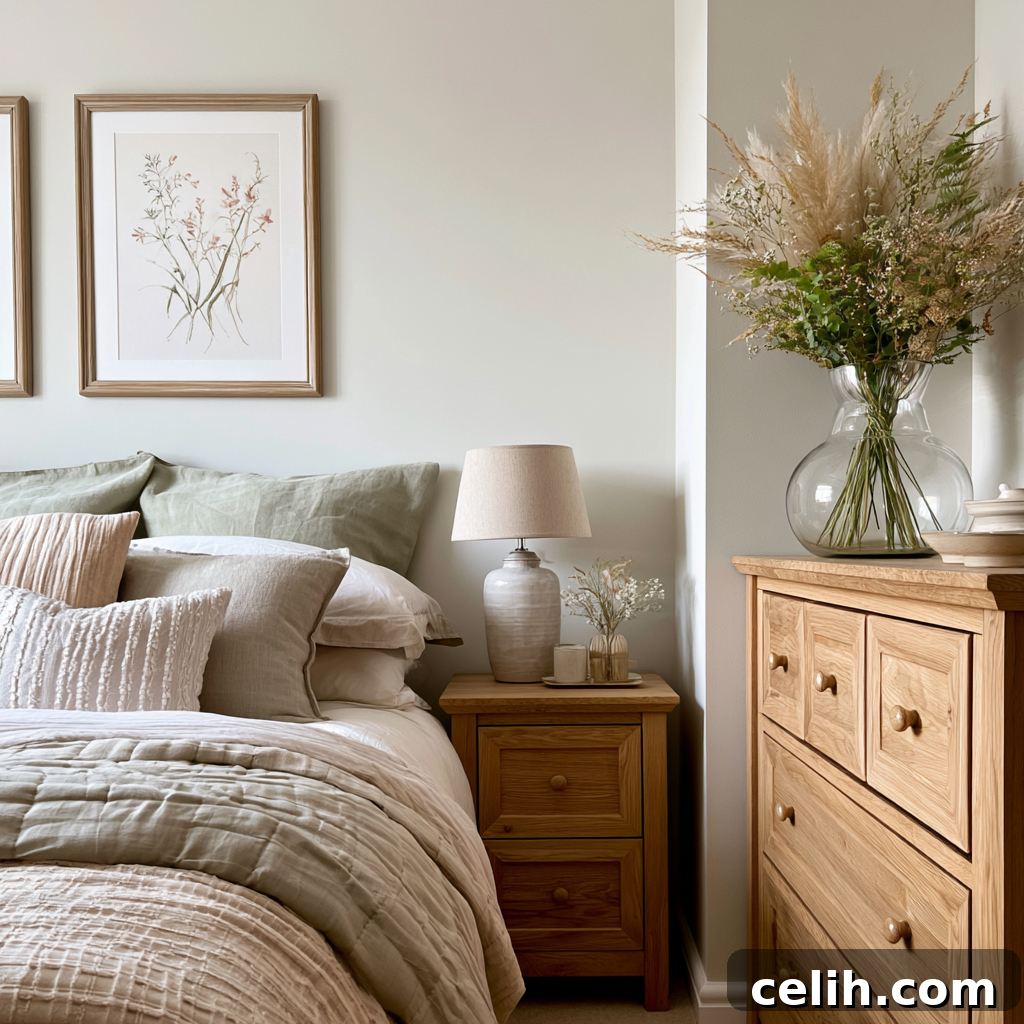
Modern farmhouse furniture and decor combine the warmth and familiar charm of country homes with the clean lines and restraint of contemporary design. The result is relaxed but purposeful, rustic without feeling outdated, and practical without appearing utilitarian. At its best, modern farmhouse interiors feel lived-in, calm, and quietly confident — never fussy or forced.
This approach suits anyone who wants a comfortable, personalised home that still feels thoughtfully styled. It celebrates natural materials, honest craftsmanship, and neutral colour palettes while incorporating subtle contemporary details so the look feels fresh rather than merely nostalgic.
This guide explains what defines modern farmhouse decor, the furniture that works best room by room, colour schemes that set the right tone, materials to prioritise, and the finishing touches that help the style feel authentic rather than staged.
What Defines Modern Farmhouse Style?
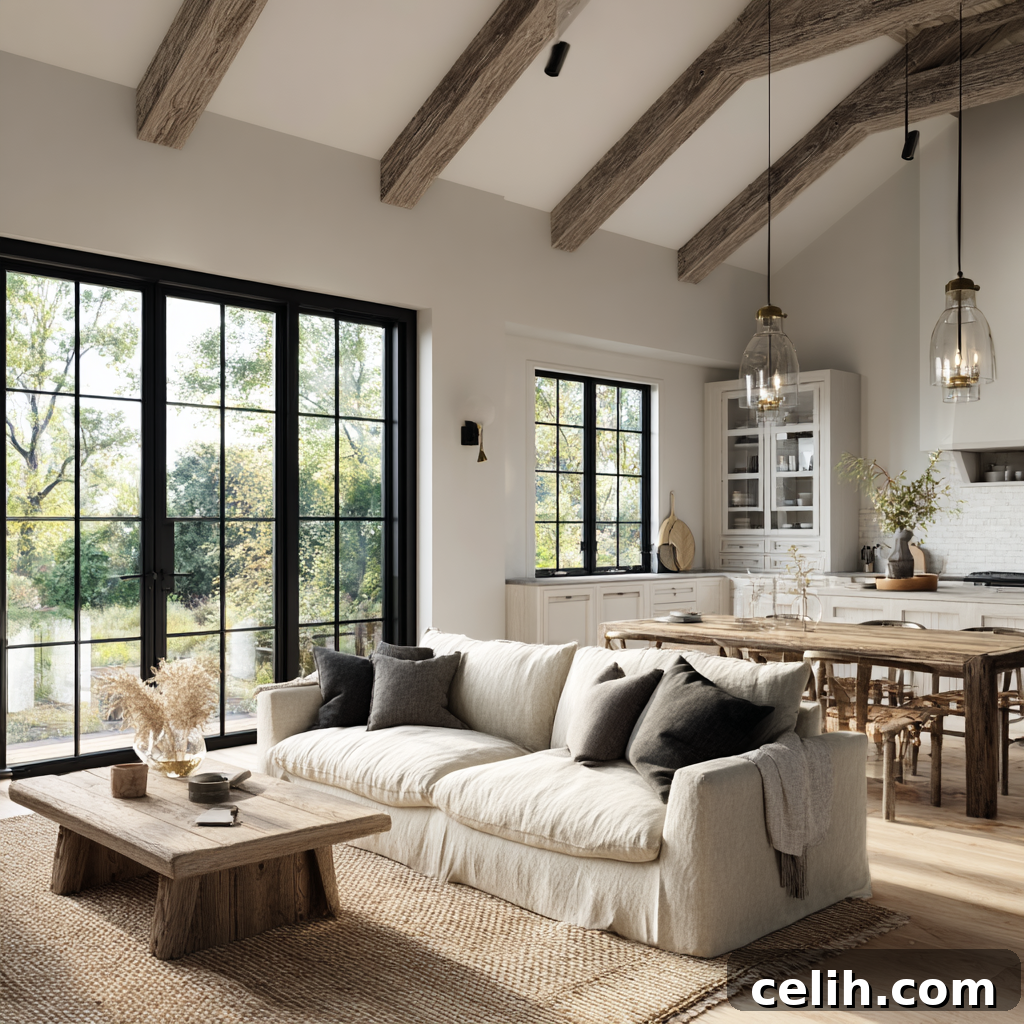
Modern farmhouse design is ultimately about balance. It takes familiar farmhouse elements — wood, simplicity, and practicality — and pares them back with modern principles like clean lines, uncluttered spaces, and a focus on function.
Key characteristics include:
- A neutral, nature-inspired colour palette
- Solid, well-proportioned furniture with simple silhouettes
- Natural materials with visible texture and grain
- A mix of old and new rather than a single “theme”
- Comfort as a design priority
Unlike traditional farmhouse style, which often relies heavily on vintage references, modern farmhouse avoids excessive ornamentation. You won’t need distressed finishes everywhere, novelty signage, or over-the-top rustic details. Instead, the aesthetic feels grounded, calm, and timeless — a home that ages gracefully rather than chasing short-lived trends.
Colour Palettes for Modern Farmhouse Interiors
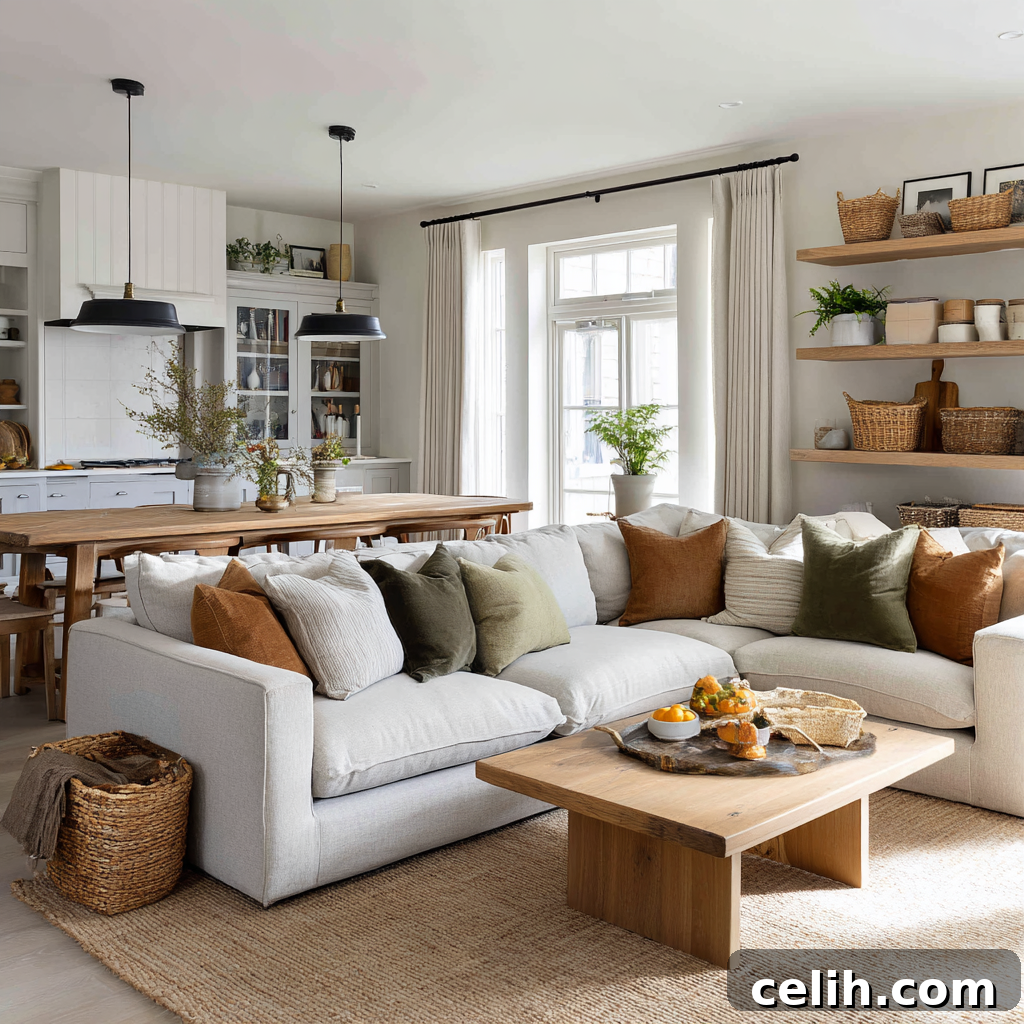
Colour shapes the mood of a modern farmhouse home. The palette is typically restrained and drawn from nature rather than bright trends.
Core Neutrals
Most modern farmhouse interiors are built around warm neutrals:
- Soft whites and off-whites
- Cream and ivory
- Warm greys and greige
- Taupe and stone
These tones create a calm backdrop that lets texture and materials take centre stage.
Accent Colours
Accents are usually muted and earthy. Common choices include:
- Sage green and olive
- Soft blues and blue-greys
- Warm terracotta and clay tones
- Charcoal and soft black
Use these colours sparingly — on an island, a piece of furniture, or through accessories — to add depth without overwhelming the space.
Materials That Define Modern Farmhouse Style
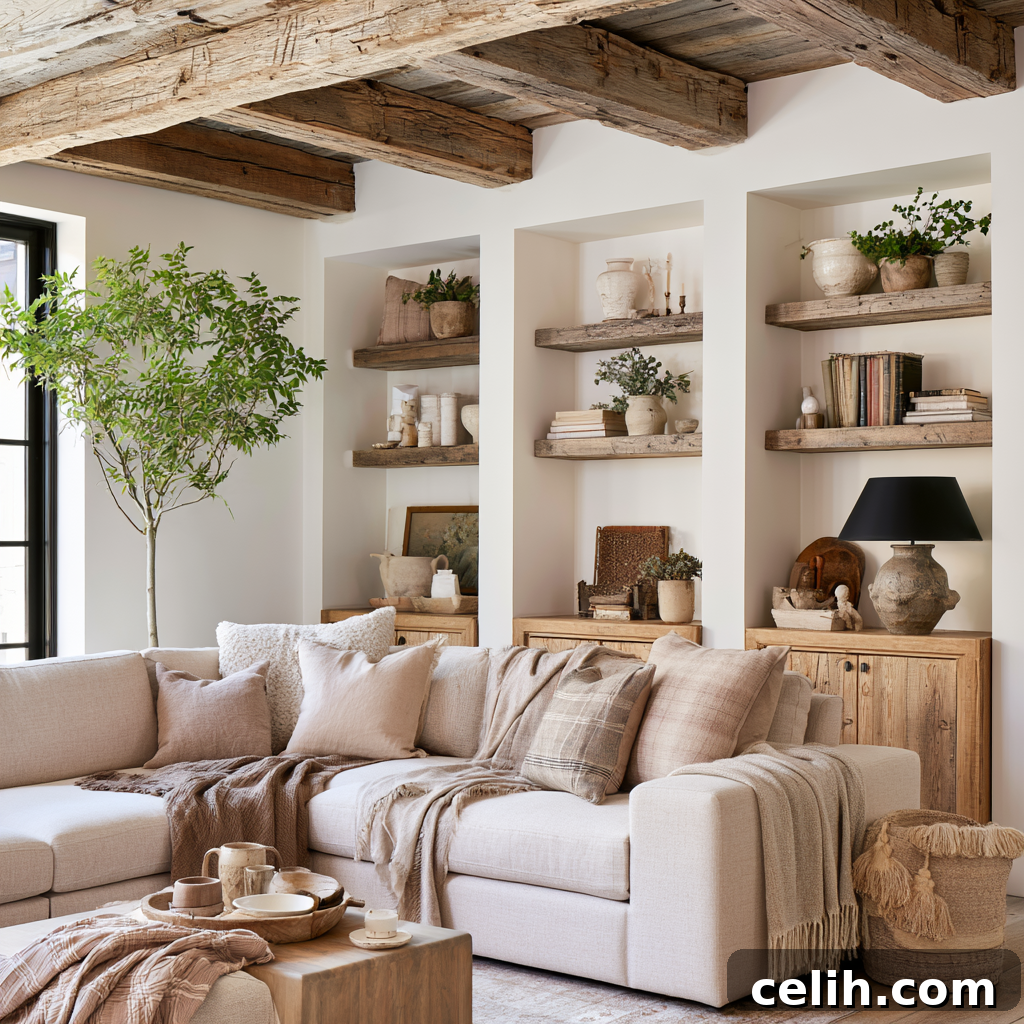
Material choice is where modern farmhouse design comes alive. The emphasis is on authenticity, texture, and durability — natural elements that feel honest and tactile.
Wood
Wood is the backbone of the style. Whenever possible, choose real wood — reclaimed, lightly finished, or painted. Visible grain, knots, and natural variation add character and warmth.
Metals
Metal accents add a modern edge. Matte black, aged brass, and brushed steel are popular choices. Use metal sparingly in lighting, hardware, or furniture frames to maintain balance.
Textiles
Natural fabrics soften the space and add comfort. Linen, cotton, wool, and jute work beautifully. Opt for relaxed curtains, textured cushions, and layered bedding rather than crisp, shiny fabrics.
Stone and Ceramics
Stone surfaces, ceramic accessories, and handmade pottery introduce another layer of texture. These elements feel grounded and timeless, reinforcing farmhouse charm without slipping into cliché.
Modern Farmhouse Living Room Furniture & Decor
The modern farmhouse living room prioritises comfort, with style woven in quietly. It should feel welcoming, relaxed, and genuinely lived-in — a place to sit down, put your feet up, and stay awhile. Modern interpretations focus on simplicity, balance, and thoughtful restraint.
Sofas and Main Seating
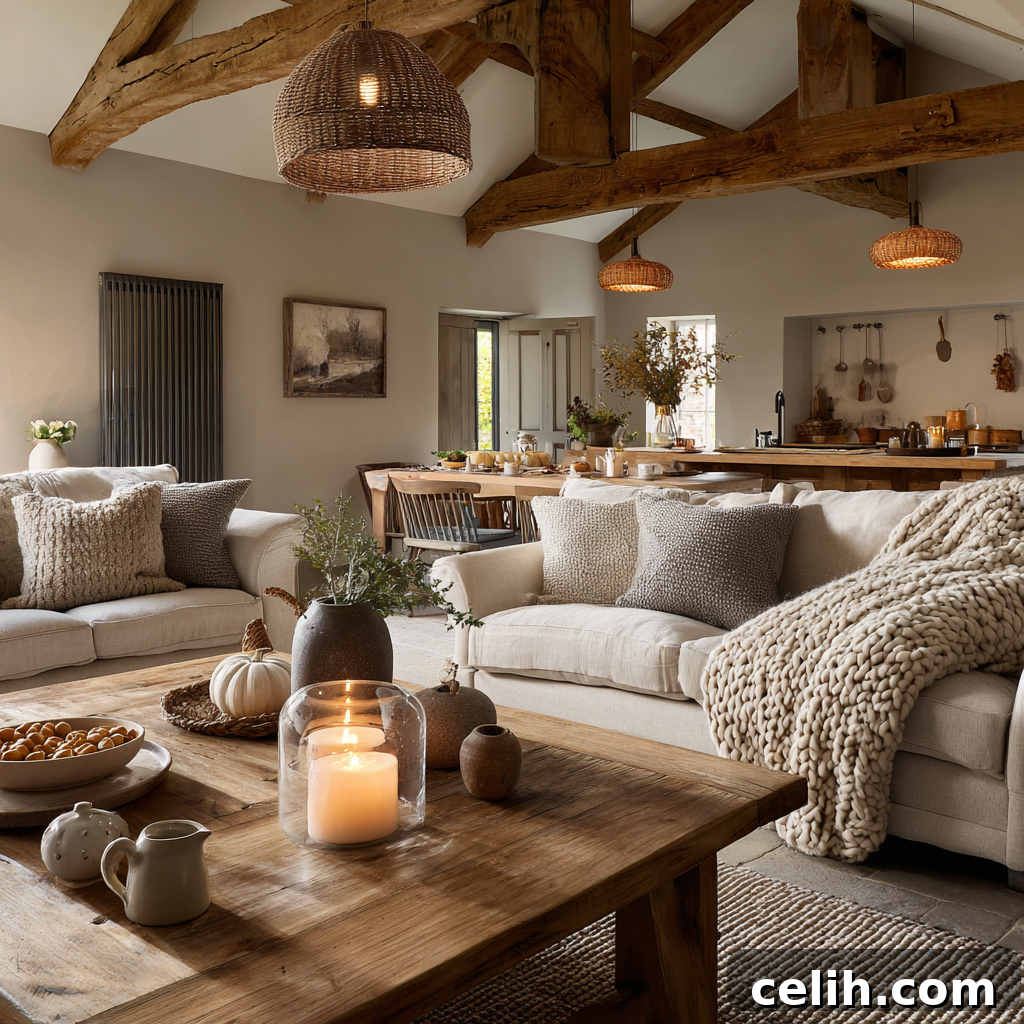
The sofa anchors the room and comfort is essential. Choose generously sized sofas with supportive cushions and simple lines. Neutral fabrics like linen, cotton blends, or performance textiles in warm whites, stone, beige, or soft grey work best.
Slipcovered sofas are popular for their relaxed, practical feel. Slightly rolled arms or gently squared silhouettes read as authentic; sharp, angular designs can feel out of place.
Additional seating should complement rather than compete. Armchairs in natural leather, woven cane, or textured upholstery add contrast and warmth. Mixing seating styles helps the room feel collected rather than overly matched.
Coffee Tables and Accent Tables
Coffee tables tend to feel substantial and tactile. Solid wood pieces with visible grain, plank tops, or trestle bases anchor the seating area. Reclaimed or lightly weathered wood works well, provided finishes feel natural rather than contrived.
Side tables and accents introduce subtle modern details: slim metal frames, gently curved shapes, or mixed materials keep the room from tipping too rustic. Balance one heavier, grounding piece with lighter accents for harmony.
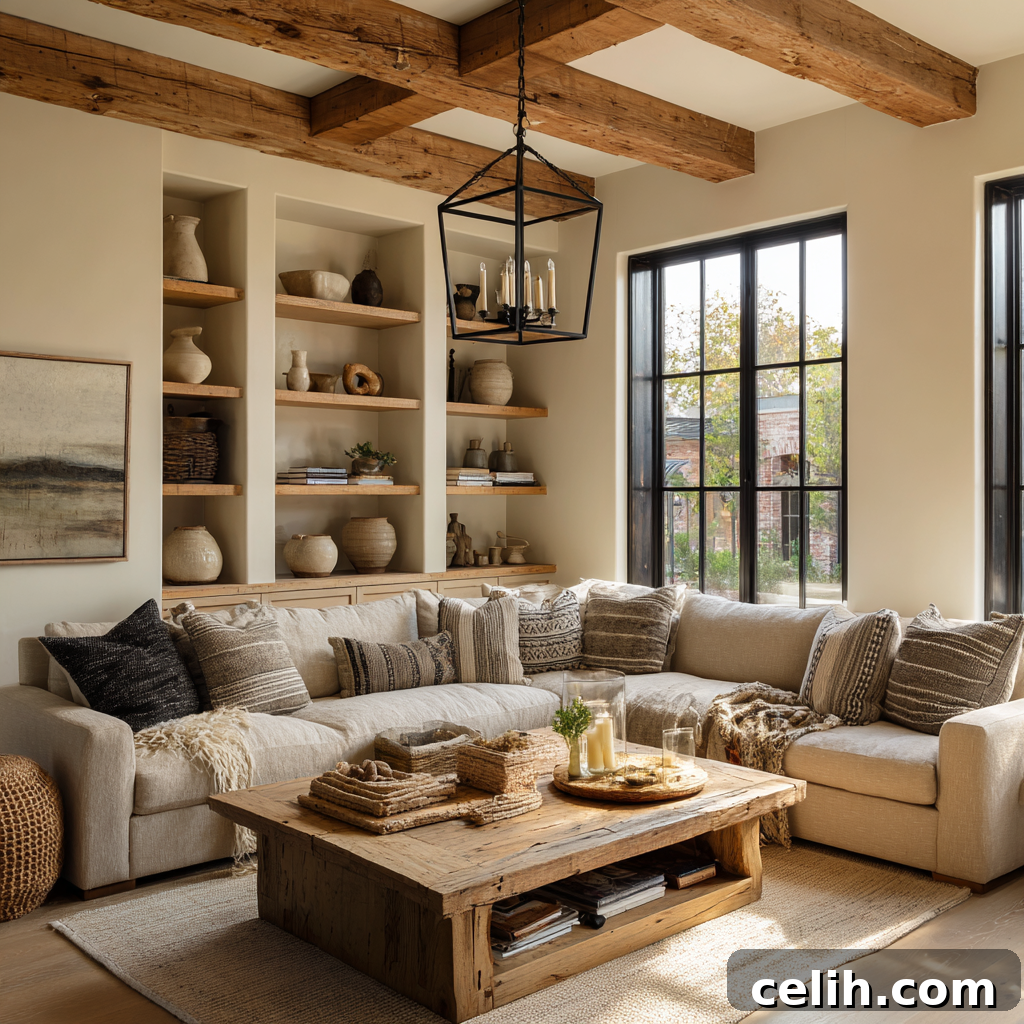
Storage, Shelving and Media Units
Storage should be practical, well-proportioned, and visually calm. Low-profile wooden media units in natural or painted finishes ground the room without dominating it. Choose simple panelled doors, open shelving, or discreet drawers rather than ornate detailing.
Style open shelves lightly: a few books, ceramics, and personal objects create interest without clutter. Built-in shelves or alcoves can be softened with wooden shelves or painted back panels to add depth.
Colour Palette and Layering
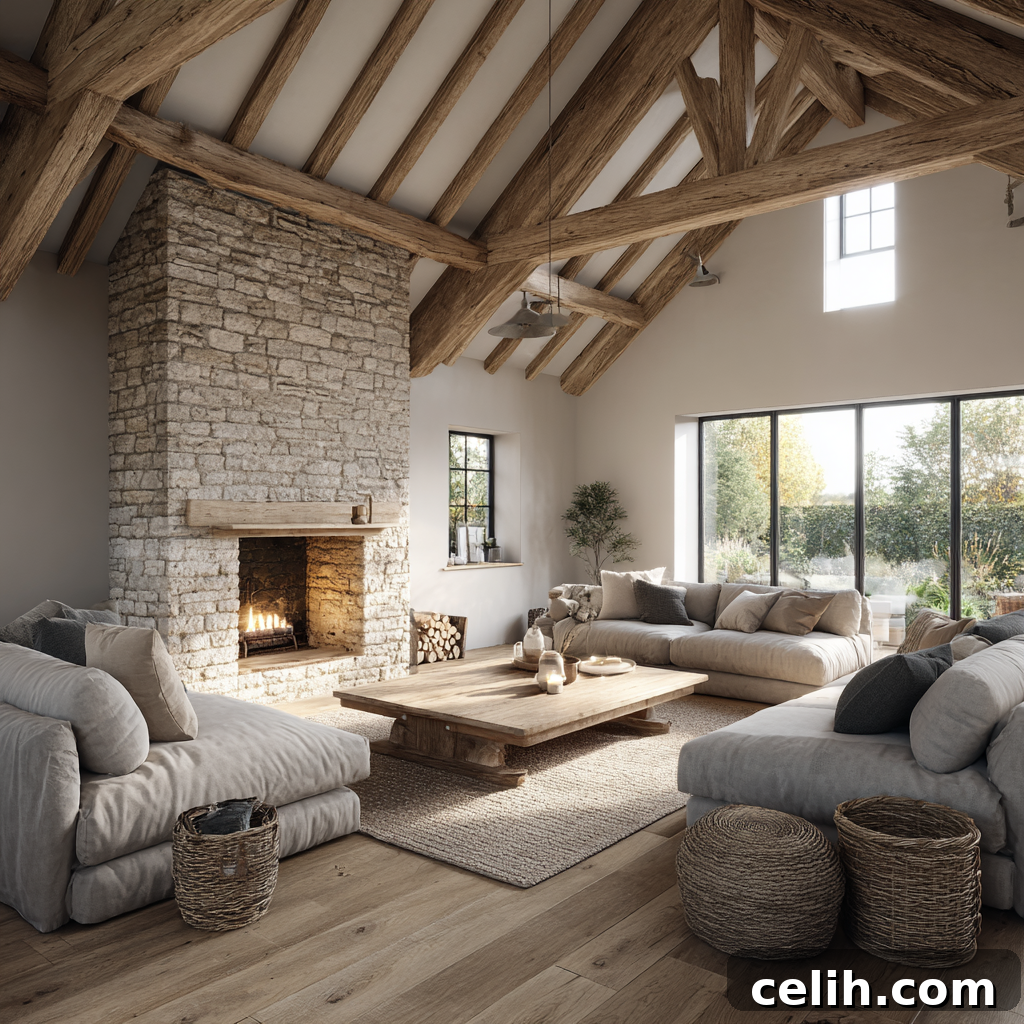
Living rooms suit the full range of modern farmhouse colours, from soft neutrals to deeper accents. Warm whites, greige, taupe, and soft grey form a versatile base, while sage green, muted navy, charcoal, or earthy browns add richness.
Layer colour through textiles rather than painting walls in bold tones. Cushions, throws, and rugs add warmth and contrast without overwhelming the space.
Rugs and Soft Furnishings
Rugs anchor seating areas and add softness. Natural fibre rugs like jute or sisal suit the aesthetic, while wool rugs add comfort underfoot.
Prioritise texture over pattern: linen cushions, chunky knit throws, and subtly woven fabrics create depth without visual noise. When patterns appear, keep them understated — stripes, small checks, or gentle geometrics rather than bold prints.
Lighting and Atmosphere
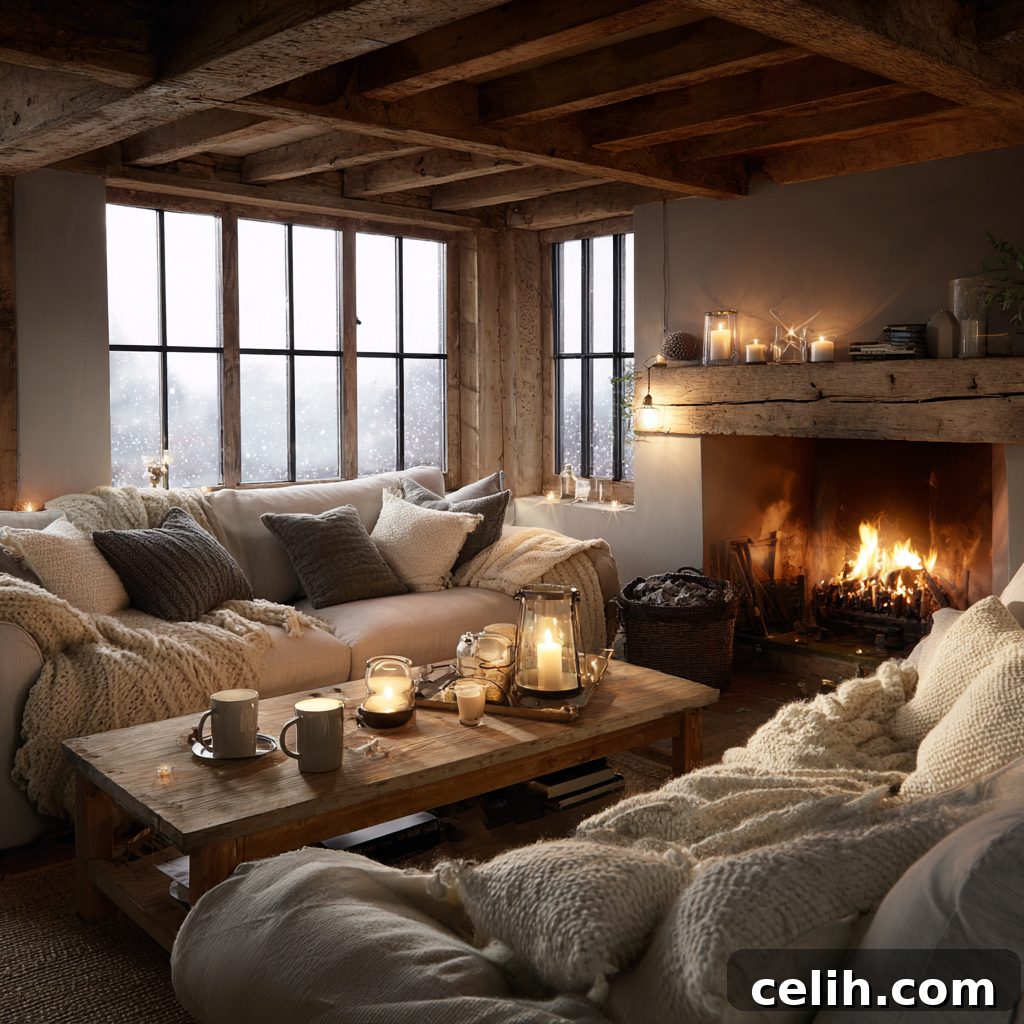
Lighting should be layered and warm. Overhead fixtures set the tone, but secondary lighting creates atmosphere. Table lamps with ceramic or fabric bases, wall sconces in metal finishes, and floor lamps with simple shades all contribute to a cosy glow.
Avoid overly industrial fixtures or cold, stark lighting. Warm bulbs and soft, diffused light help achieve the welcoming ambiance this style is known for.
Decorative Accessories and Finishing Touches
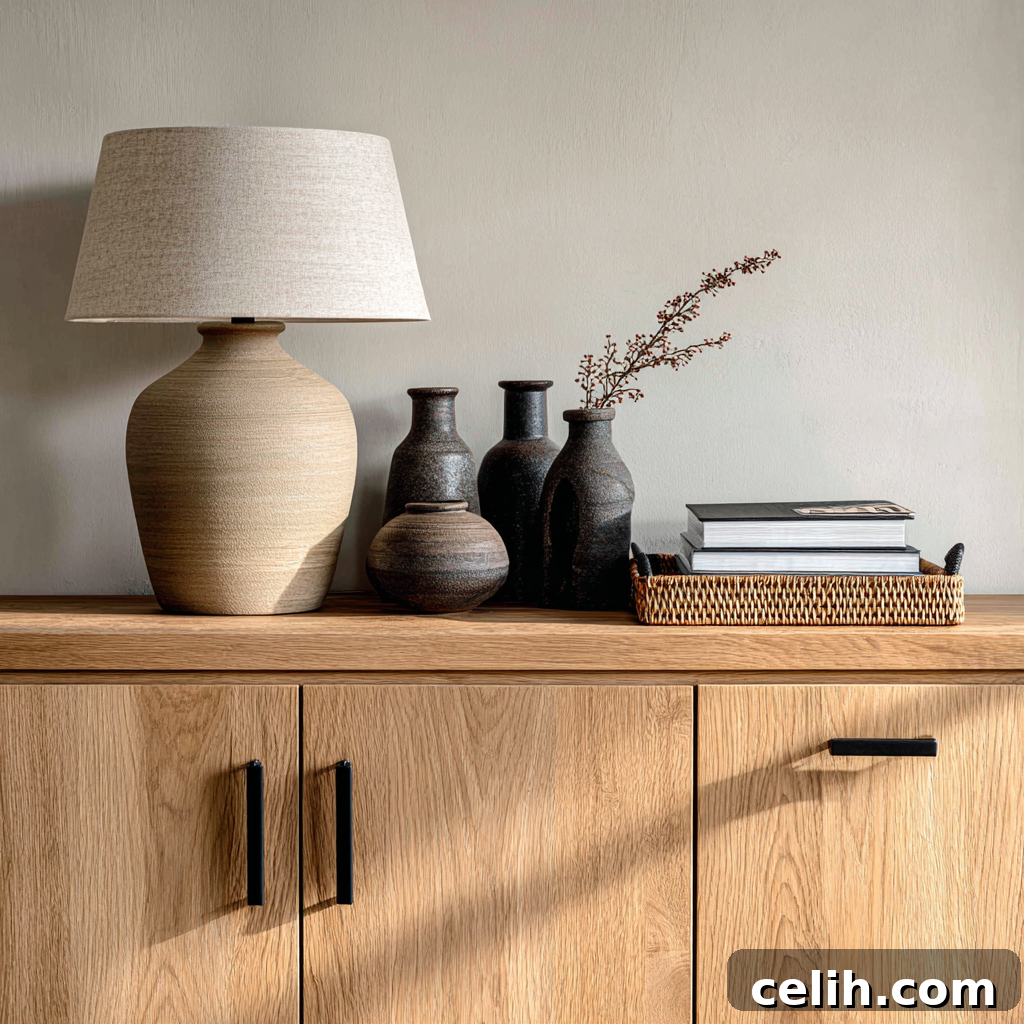
Accessories reveal personality. Mix old and new — a vintage mirror, handmade ceramics, framed artwork, or a small stack of well-worn books feels authentic.
Woven baskets provide practical storage for throws or magazines and reinforce natural texture. Plants and greenery soften the space and add life, especially in simple ceramic or terracotta pots.
Resist over-styling. A modern farmhouse living room should feel easy and relaxed, not overly curated. Leaving some empty space gives the room breathing room.
What to Avoid in a Modern Farmhouse Living Room
To keep the look fresh and modern, avoid:
- Overly distressed or faux-aged furniture
- Themed decor or novelty farmhouse signage
- Too many matching pieces
- Cold, high-gloss finishes
Aim for a classic farmhouse room that feels timeless and personal rather than trend-driven.
Modern Farmhouse Kitchen Furniture and Decor
The modern farmhouse kitchen balances practicality, warmth, and everyday beauty. It should feel welcoming and hardworking — a space for real cooking, gathering, and daily life rather than just show.
Kitchen Layout and Flow
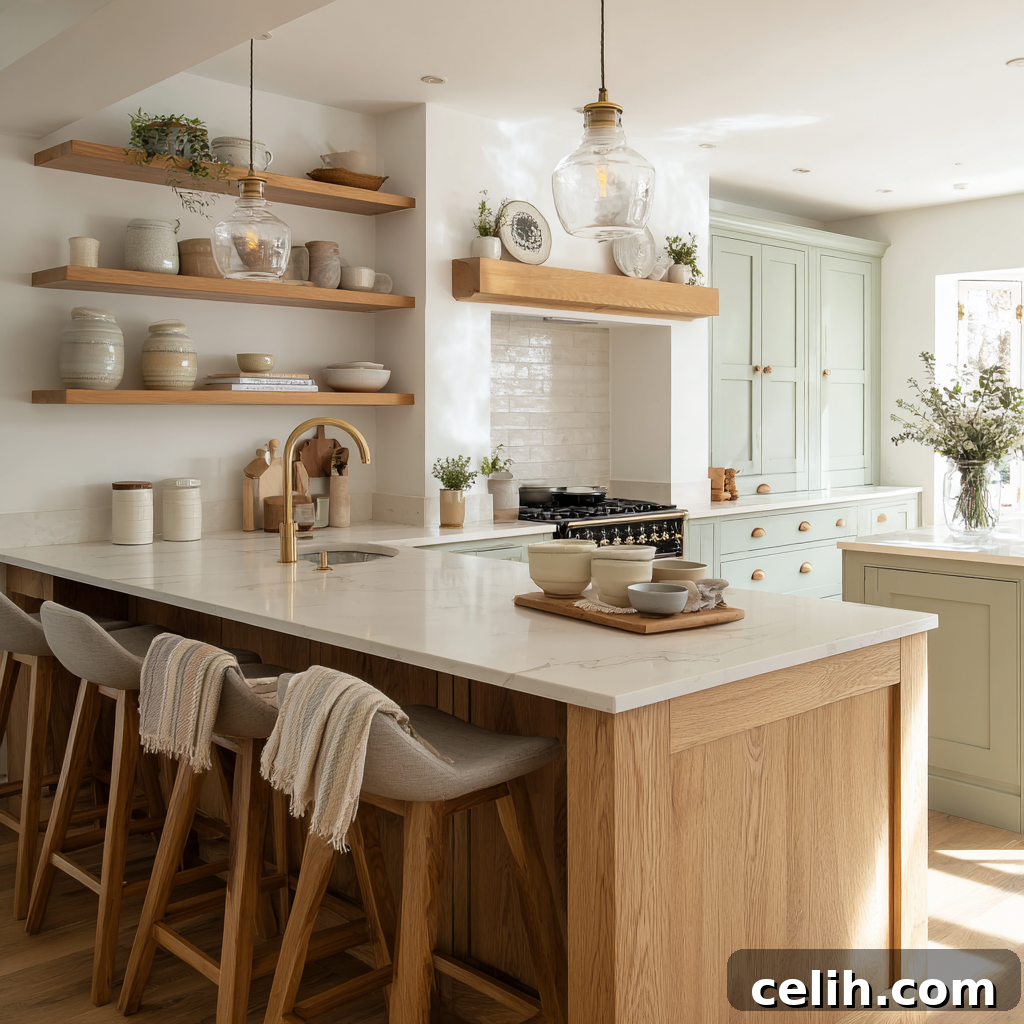
Open or semi-open layouts suit farmhouse kitchens well, making the space sociable and relaxed. Islands often become the heart of the room — a prep surface, dining spot, and gathering point. Generous walkways and clear sightlines help the kitchen feel calm and functional.
In smaller kitchens, apply the same principles: prioritise smart storage, keep finishes simple, and let materials and texture provide visual interest rather than cluttering the space.
Cabinets and Joinery
Shaker-style cabinetry is common, but modern farmhouse leans toward flatter profiles and minimal detailing. Subtle bevels or slim frames feel fresher than heavy panelling.
Painted cabinets in warm whites, soft greys, sage, muted blues, or clay tones work well. Two-tone schemes — lighter perimeter cabinets with a darker island — are popular for adding character.
Use open shelving sparingly: a few wooden shelves with everyday ceramics or glassware feel natural; entire walls of open shelving can become impractical.
Worktops and Surfaces
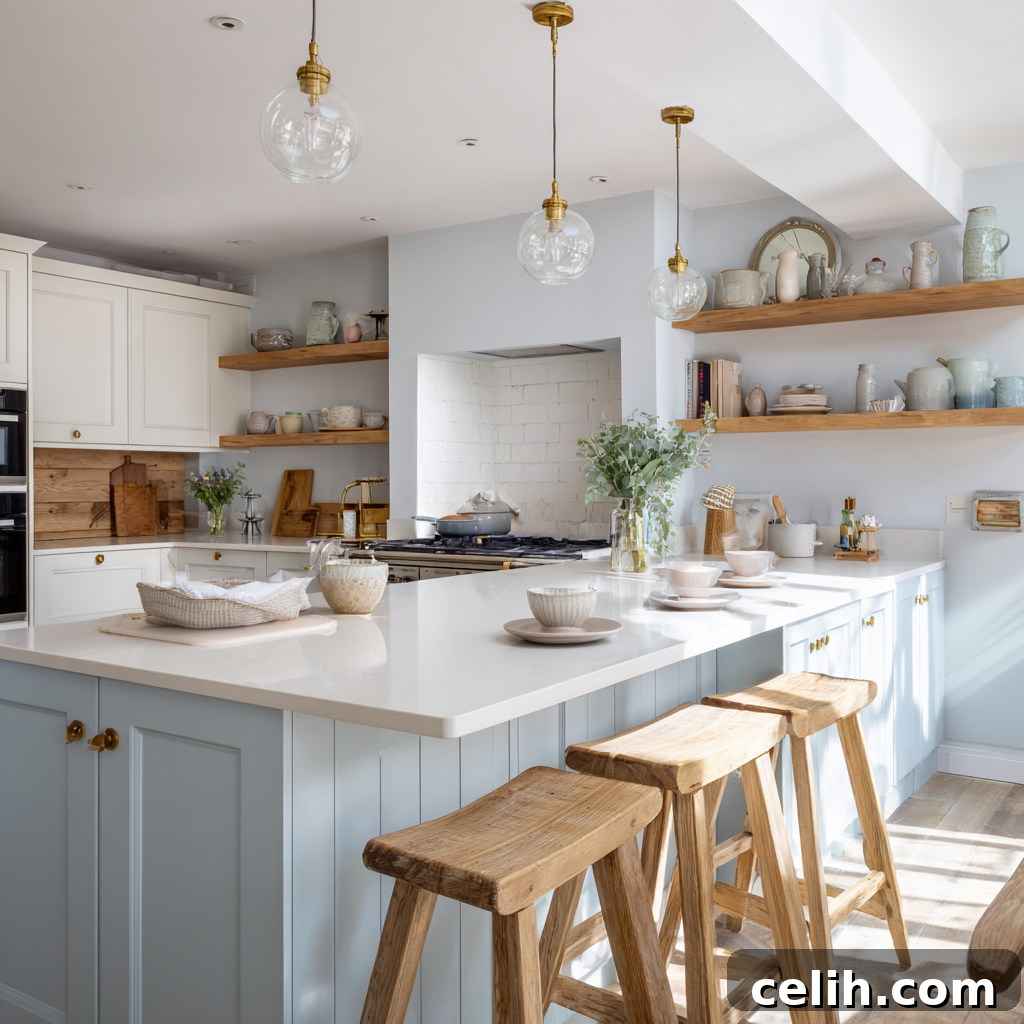
Worktops balance rustic charm with modern practicality. Popular options include quartz or composite stone with a natural look, honed marble or marble-effect surfaces, and select solid wood tops, often used on islands.
Avoid ultra-high gloss finishes or overly rustic surfaces. The ideal surface feels refined but not precious.
Dining Areas and Kitchen Seating
Dining furniture should feel sturdy and welcoming. Solid wood farmhouse tables with simple legs or trestle bases are natural fits. Mixing seating — chairs, benches, or stools — creates an unfussy, collected look.
Textiles also soften the area. Upholstered dining chairs in neutral fabrics add everyday comfort and pair well with rustic wood tables.
Lighting in the Kitchen
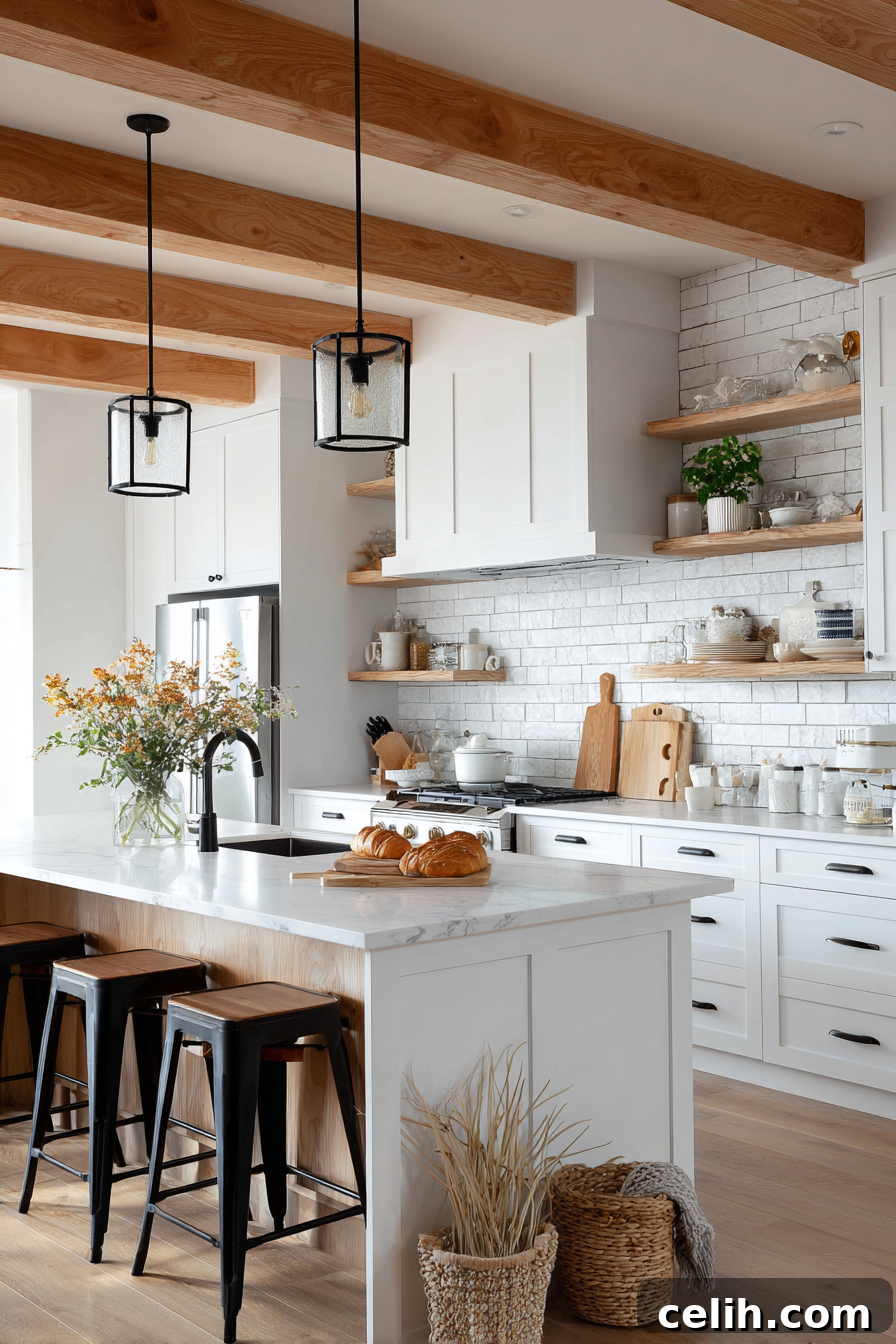
Lighting should be layered and warm. Pendants over islands or tables provide practical light and act as visual anchors. Shades in metal, glass, or ceramic with simple forms work well.
Under-cabinet lighting adds function without disrupting the aesthetic, while wall lights or small accent lamps make evenings feel cosy rather than stark.
Modern Farmhouse Bedroom Furniture & Decor
Modern farmhouse bedrooms prioritise calm, comfort, and softness. These rooms should feel like a retreat — grounded and cosy without being heavy. Focus on quality materials, gentle textures, and a sense of ease.
Bed Frames and Focal Points
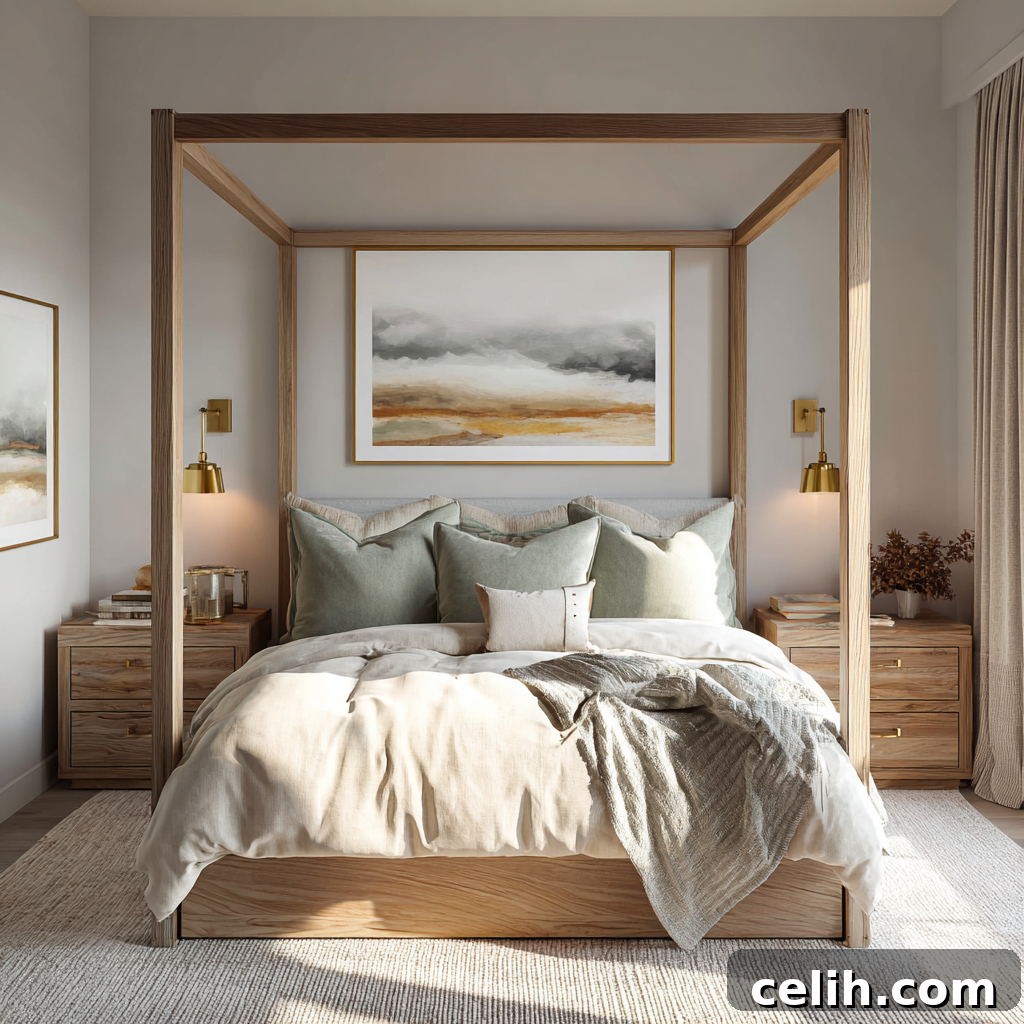
Beds serve as focal points and should feel solid but understated. Wooden frames with clean lines, simple panelled headboards, or softly curved silhouettes work well. Upholstered headboards in linen or cotton add warmth while keeping the look refined.
Avoid ornate carving or heavy distressing — simplicity keeps the bedroom feeling current.
Bedside Tables and Nightstands
Bedside tables should be functional and grounded. Solid wood pieces with drawers or shelves provide storage and visual weight. Perfect matching sets aren’t necessary; slight variation in finish or shape can make the room feel more relaxed, as long as scale remains consistent.
Storage Furniture and Wardrobes
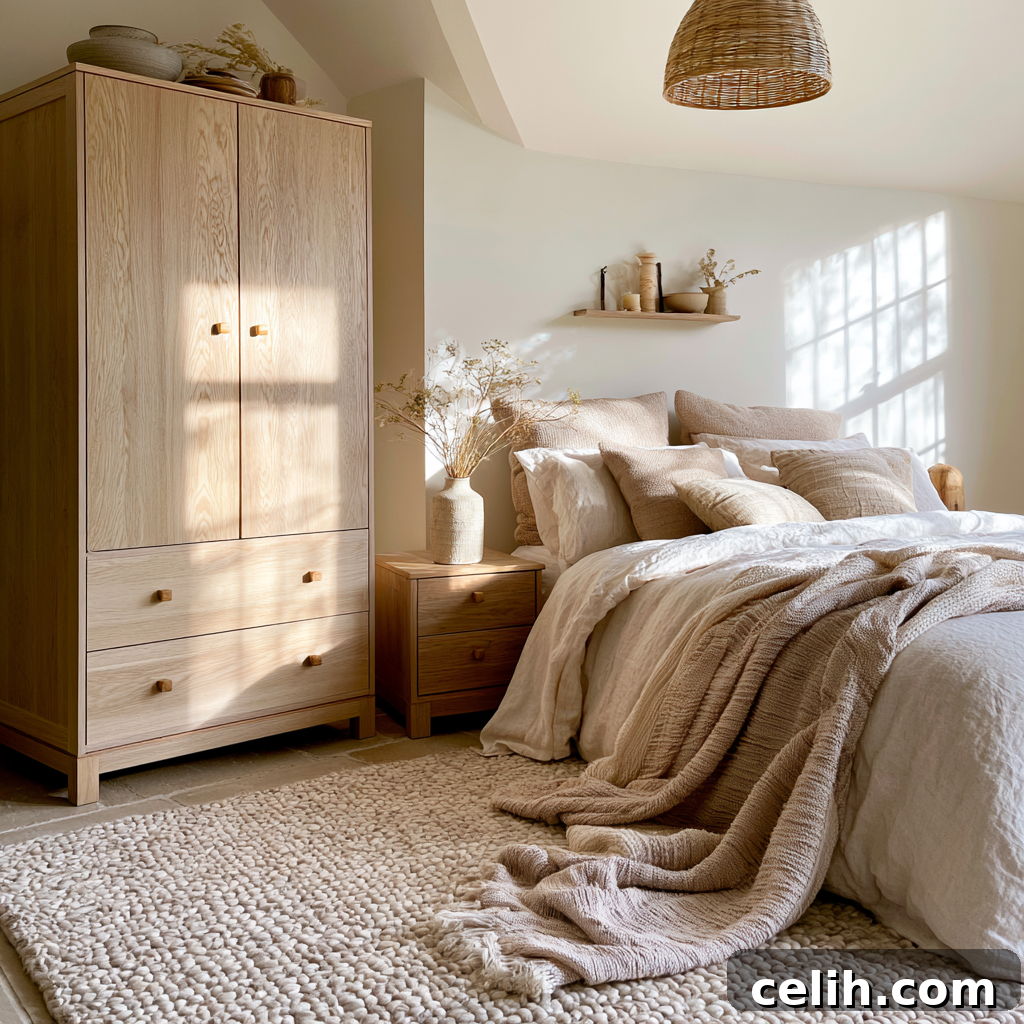
Storage should blend into the room rather than dominate it. Dressers, wardrobes, and chests work best when well-proportioned and made from natural materials. Painted finishes in soft neutrals or muted colours feel calming, while exposed wood adds warmth. Keep hardware simple and tactile.
Textiles and Layering
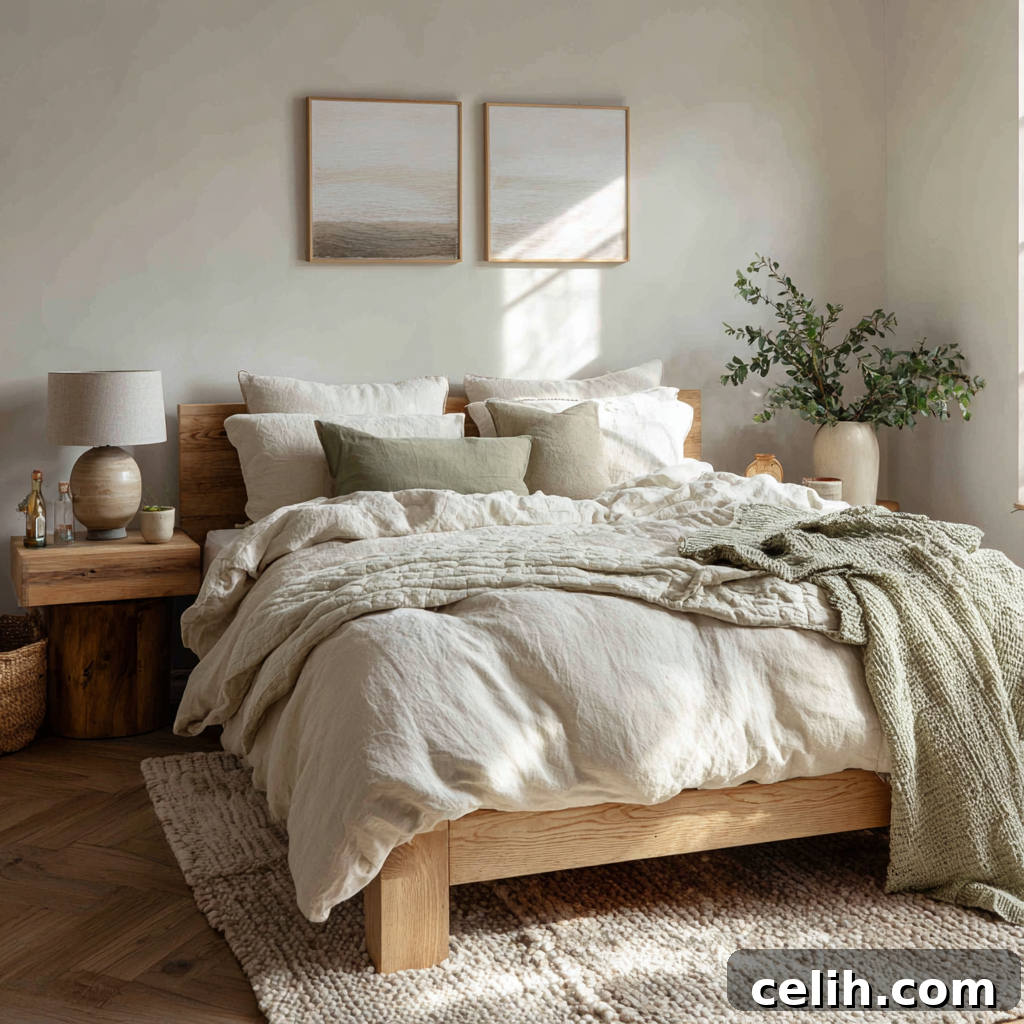
Textiles shape the bedroom’s mood. Layered bedding — sheets, duvets, quilts, and throws — creates an inviting, sink-in feel. Choose natural fabrics where possible:
- Linen for breathability and texture
- Cotton for softness and ease
- Wool or chunky knits for warmth and depth
Patterns should be subtle — fine stripes, checks, or woven textures in earthy tones rather than bold prints.
Colour and Atmosphere
Bedrooms suit a warmer, softer palette. Creams, warm whites, pale greys, and taupes create a restful base, while muted greens, dusty blues, or soft terracotta add interest without disturbing the calm.
Lighting should be warm and gentle. Bedside lamps, wall-mounted reading lights, and diffused overhead lighting create a layered, restful atmosphere.
Accessories and Personal Touches
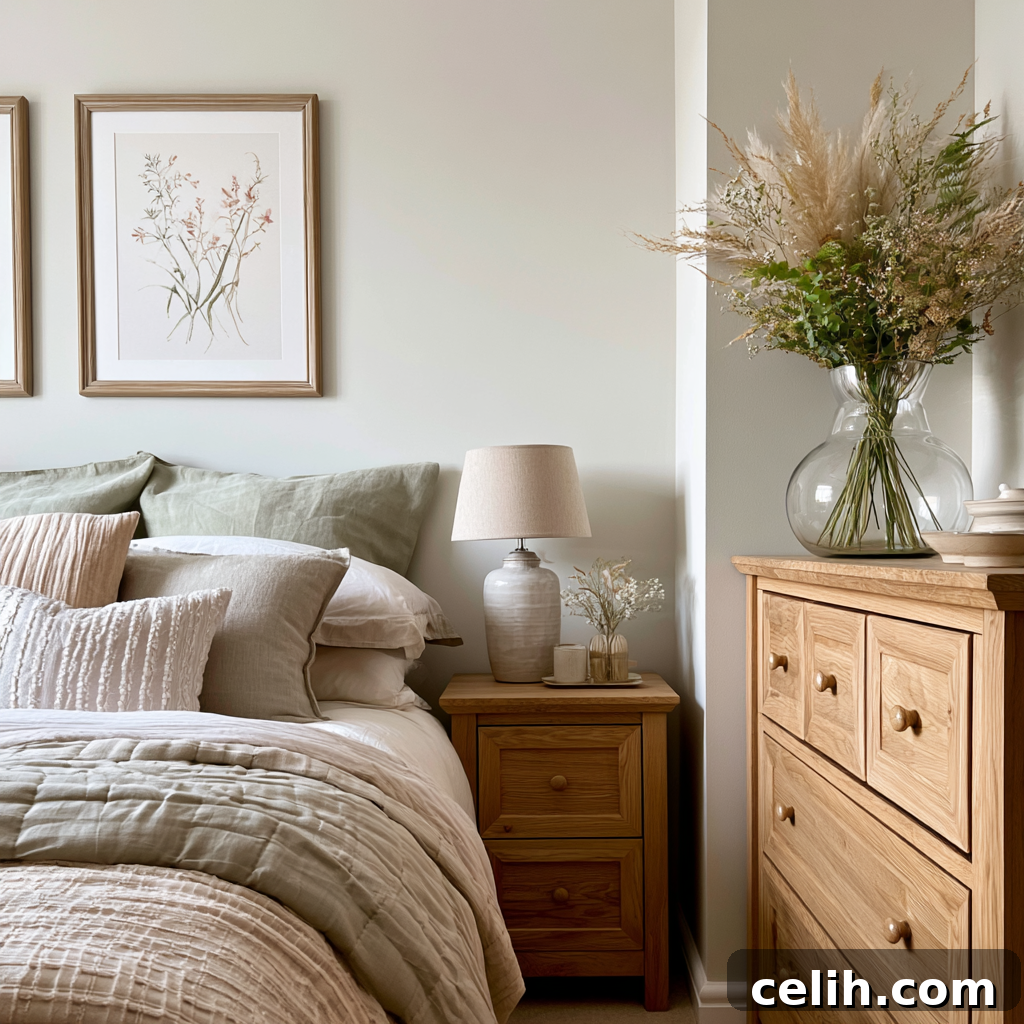
Keep accessories minimal and meaningful: a few framed prints, a ceramic lamp, a woven basket, or a wooden stool are often enough. Plants add softness and life where light allows. Above all, the bedroom should feel personal and thoughtfully assembled, not overly staged.
Modern Farmhouse Bathroom Style
A modern farmhouse bathroom should feel calm, clean, and quietly restorative — practical but gently luxurious. Avoid anything overly rustic or overly sleek; aim for warmth, texture, and simplicity paired with contemporary finishes that keep the space fresh.
Bathroom Furniture and Vanities
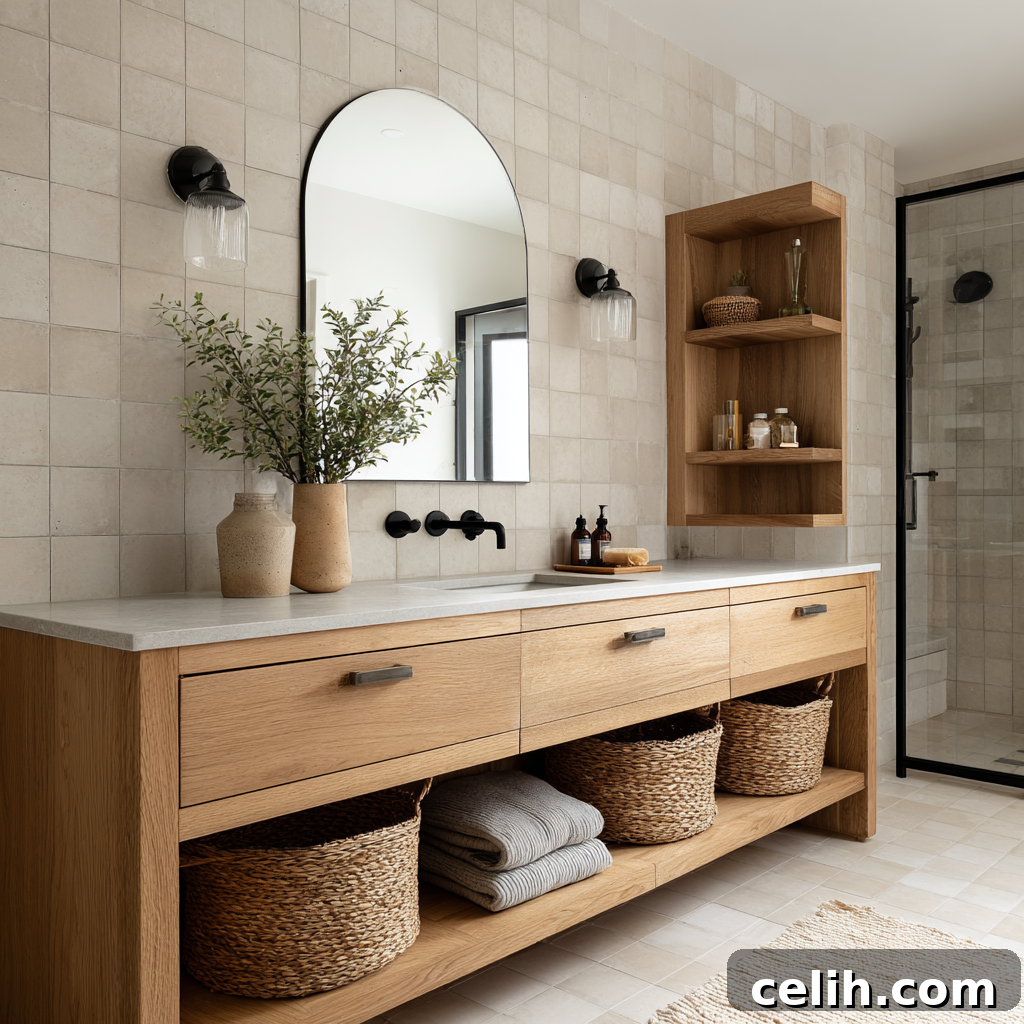
Vanities anchor the bathroom. Wooden units with simple shaker-style doors, flat-front drawers, or open shelving work well. Natural oak, painted soft whites or warm greys, and muted tones like sage or blue-grey all fit the style.
Freestanding, furniture-style vanities add character while remaining design-led. Keep lines clean and proportions solid rather than ornate.
Open shelving can be effective in smaller bathrooms; wooden shelves with neatly folded towels, baskets, and ceramics add warmth without clutter.
Baths, Showers and Sanitaryware
Freestanding baths remain a classic choice, especially simple slipper or roll-top styles with streamlined silhouettes. Paired with taps in brushed brass, aged bronze, or matte black, they balance traditional and contemporary elements.
Walk-in showers with clear glass screens keep the room open and modern. Metro tiles, vertically stacked tiles, or stone-effect tiles in soft neutrals work well.
Choose sanitaryware with clean lines and minimal detailing to keep the bathroom timeless rather than trend-driven.
Materials and Surfaces
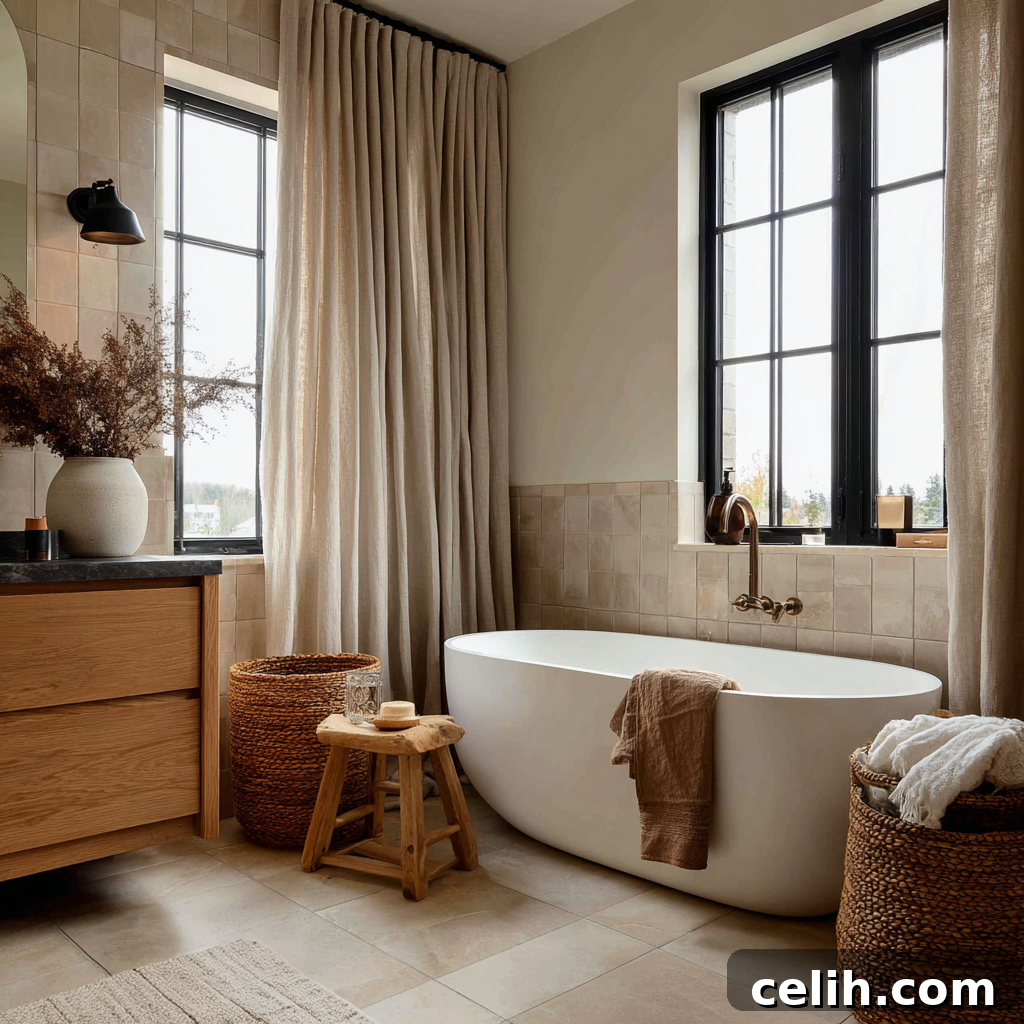
Natural textures bring warmth to bathroom spaces. Consider:
- Wood for character and warmth, properly sealed for moisture
- Stone or stone-effect tiles for texture and longevity
- Ceramic tiles with a handmade or slightly imperfect finish for authenticity
Avoid overly polished, high-gloss surfaces; matte and satin finishes feel more in keeping with the style.
Colour Palette for Farmhouse Bathrooms
Neutral tones form the backbone: soft whites, creams, warm greys, and pale taupes create a calming backdrop. Accent colours like sage green, muted blue, clay tones, or charcoal can appear on vanities, tiles, or painted panelling. Use black sparingly for taps, lighting, or mirrors to add contrast.
Accessories and Finishing Touches
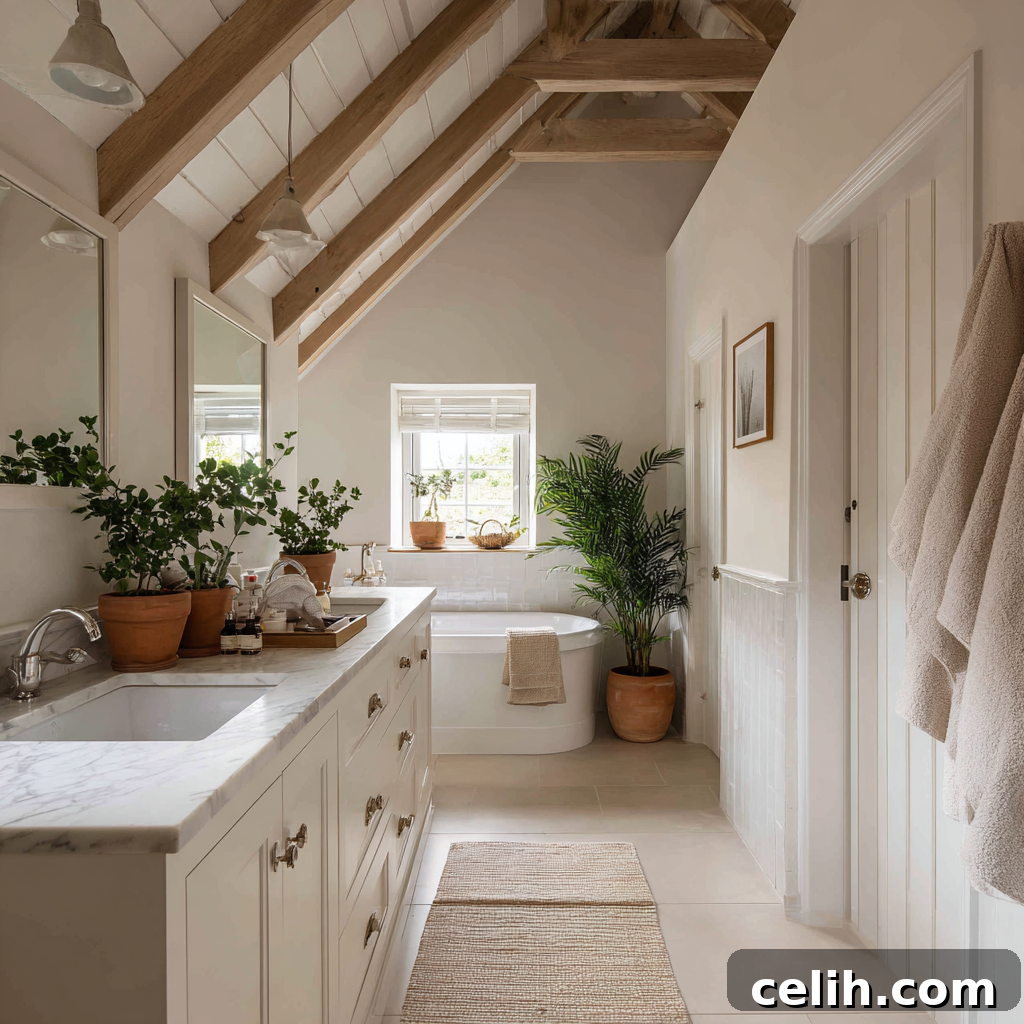
Accessories should be useful as well as decorative: woven baskets for storage, simple ceramic soap dispensers, wooden stools, and soft cotton or linen towels. Mirrors with slim metal frames or gently curved wooden frames suit the style. Plants, where light allows, soften the space and reinforce the connection to nature.
Lighting in a Modern Farmhouse Bathroom
Lighting should be warm and flattering. Wall lights on either side of a mirror, simple pendants, or small sconces in metal finishes help layer the space and avoid harsh overhead brightness.
The end result should be a bathroom that feels relaxed, practical, and quietly elegant — a room that supports daily routines while offering moments of calm.
Accessories and Finishing Touches For a Modern Farmhouse Interior
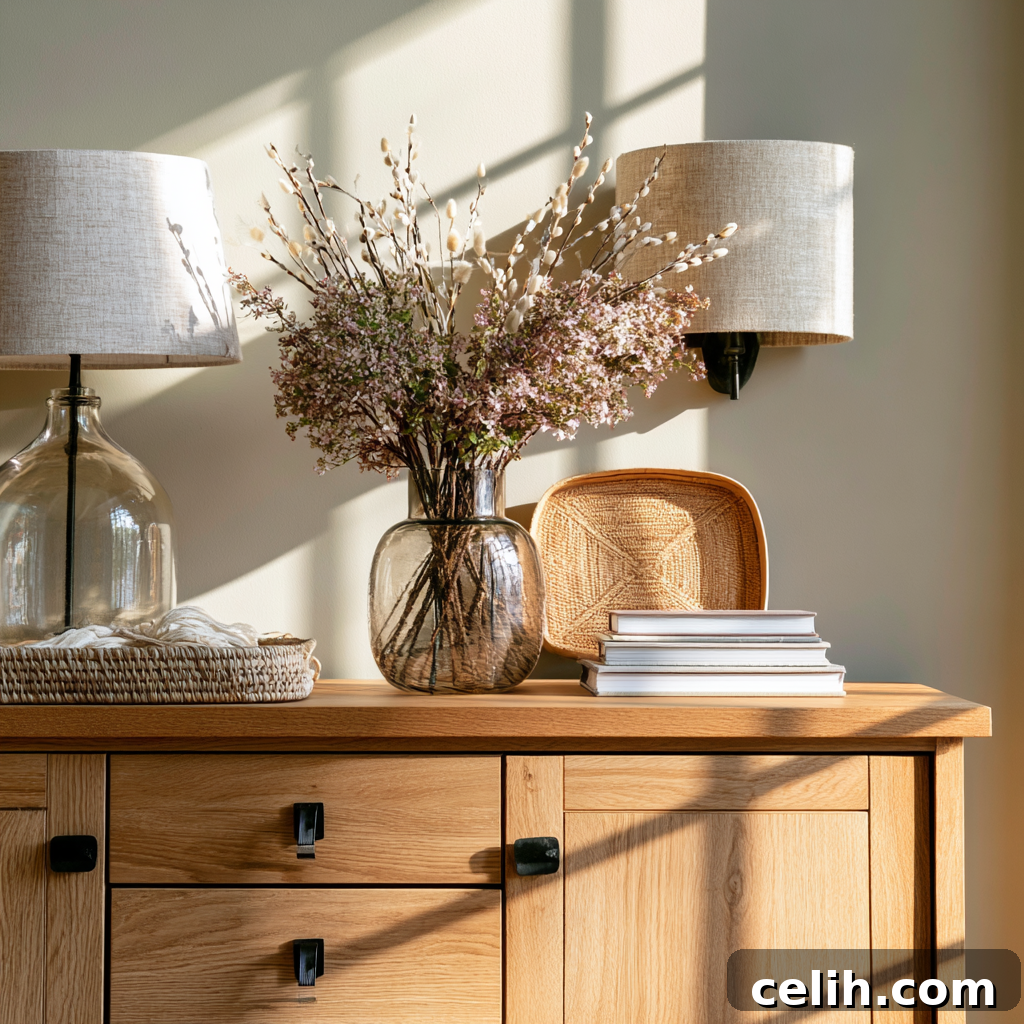
Accessories are where a modern farmhouse space becomes personal. The aim isn’t to fill every surface but to choose a few favourite items that feel meaningful and considered.
For example:
- Simple ceramic vases
- Woven baskets for storage
- Soft throws and cushions
- Subtle artwork, landscapes, or abstract prints
- Vintage or antique pieces mixed with modern finds, such as candle holders or lamps
Avoid novelty decor or overly themed items. Modern farmhouse style works best when it feels collected over time rather than styled all at once.
Bringing It All Together
Modern farmhouse furniture and decor are less about rigid rules and more about feeling. The goal is a home that feels welcoming, practical, and quietly beautiful — a place where everyday life is supported rather than staged.
Choose well-made furniture, maintain a calm colour palette, prioritise natural materials, and allow room for imperfection to create a modern farmhouse home that feels genuinely lived-in and deeply personal.
This style invites you to slow down, settle in, and make your space your own — which is why it continues to resonate in real homes year after year.