
Tejo Remy’s “You Can’t Lay Down Your Memory”: A Masterpiece of Upcycled Design and Sustainable Art
Discover the Revolutionary Chest of Drawers That Blurs the Lines Between Furniture and Fine Art
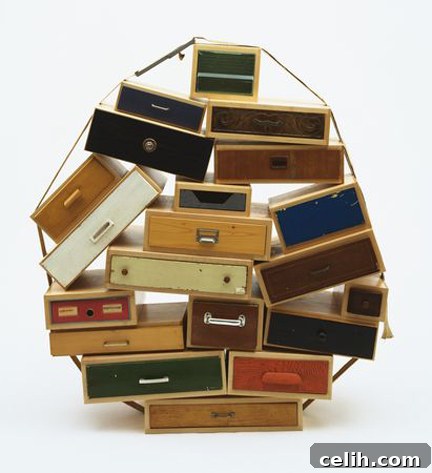
In the realm of contemporary design, where innovation often pushes the boundaries of conventional aesthetics and functionality, certain pieces emerge that redefine an entire category. Among these groundbreaking creations, Tejo Remy’s extraordinary chest of drawers, aptly titled “You Can’t Lay Down Your Memory,” stands as a monumental work. This isn’t merely a piece of furniture; it’s a profound artistic statement, a testament to sustainable design, and a captivating exploration of memory and repurposed materials. Far from the mundane storage units one typically encounters, Remy’s design challenges perceptions, invites contemplation, and instantly becomes the focal point of any space it inhabits.
The Genesis of a Design Icon: Tejo Remy’s Vision
Conceived by the Dutch designer Tejo Remy, a prominent figure associated with the influential Droog Design movement, this unique chest of drawers first captivated the world in 1991. Remy’s philosophy often revolves around taking ordinary, discarded objects and transforming them into something extraordinary, imbuing them with new life and a refreshed narrative. “You Can’t Lay Down Your Memory” perfectly embodies this ethos, showcasing an avant-garde approach to recycling and upcycling long before these terms became mainstream buzzwords in design and sustainability circles.
The essence of this particular piece lies in its deconstructed yet harmoniously reassembled form. It comprises an astonishing collection of 20 individual drawers, each rescued from various origins and retained in their original, untouched state. This means every scratch, every faded paint job, every unique handle tells its own story, contributing to the overall mosaic of history and character. These disparate drawers are then meticulously encased within a specially constructed, minimalist wooden frame, providing structure and contrast to their organic chaos. The entire ensemble is then cinched together, not with traditional fasteners, but with a robust furniture mover’s strap. This ingenious detail serves both a practical purpose, holding the eclectic collection firmly in place, and an aesthetic one, adding an industrial, almost provisional touch that enhances its distinctive charm.
Beyond Function: Art as Furniture, Furniture as Art
The immediate impression of “You Can’t Lay Down Your Memory” is one of playful disorder contained within rigid order. The varied sizes, shapes, and finishes of the drawers create a rich visual texture, challenging the viewer to look beyond mere utility. Each drawer, with its unique patina and history, carries a fragment of untold stories, making the entire piece a poignant commentary on discarded items and the memories they once held. This interaction of past and present, utility and art, makes it more than just a place to store belongings; it’s a conversation starter, a sculptural installation, and a piece of functional art.
Remy’s work provocatively asks: when does an everyday object transcend its function and become art? With this chest of drawers, the answer is clear. By celebrating the imperfections and individual histories of each component, Remy elevates the ordinary to the extraordinary, transforming reclaimed materials into a thought-provoking design statement that resonates deeply with contemporary sensibilities regarding sustainability and individuality.
An Exquisite Limited Edition: Craftsmanship and Exclusivity
Adding to its allure and significance, “You Can’t Lay Down Your Memory” is produced in an incredibly limited edition. Tejo Remy personally oversees the creation of only 14 of these unique pieces each year. This scarcity ensures that each chest of drawers is not just a manufactured item, but a hand-assembled work of art. Every single piece is truly unique, primarily because no two sets of salvaged drawers will ever be identical. Each one is meticulously numbered and signed by Remy himself, certifying its authenticity and adding to its collectible value. This dedication to limited production and individual craftsmanship underscores the piece’s status as a bespoke design artifact rather than a mass-produced item.
The careful selection and arrangement of the recycled drawers require a keen artistic eye and a deep understanding of composition. The wooden frame provides a stable, almost architectural backbone, while the furniture mover’s strap, a mundane industrial item, is cleverly repurposed to bind the collection together, symbolizing both unification and the ephemeral nature of transport. This blend of raw, reclaimed materials and precise, intentional assembly results in a piece that is both ruggedly authentic and sophisticatedly conceptual.
The Enduring Impact of Sustainable Design
Tejo Remy’s “You Can’t Lay Down Your Memory” is not just a landmark in aesthetic design; it is a foundational piece in the sustainable design movement. Decades before “circular economy” and “upcycling” became common terminology, Remy demonstrated the immense potential of giving new life to discarded objects. His work inspired a generation of designers to look at waste not as an end product, but as a valuable resource with inherent beauty and untapped potential. This chest of drawers serves as a powerful reminder that truly innovative design can be both environmentally responsible and artistically profound.
- Environmental Consciousness: By using existing materials, the design significantly reduces demand for new resources and minimizes landfill waste.
- Narrative and Authenticity: Each drawer brings its own history, adding layers of narrative and authenticity that manufactured materials simply cannot replicate.
- Challenge to Consumerism: It encourages consumers and designers alike to reconsider consumption patterns and value the inherent character of reused items.
- Inspiration for Innovation: The piece continues to inspire designers to explore unconventional materials and construction methods, fostering creativity within sustainable parameters.
Understanding the Value: Art, Scarcity, and Investment
Given its status as a pioneering work of art and design, its limited edition nature, and the meticulous craftsmanship involved, the price tag associated with “You Can’t Lay Down Your Memory” is understandably substantial. While the original article playfully warns about the price, it’s crucial to understand what contributes to such a valuation. This isn’t merely the cost of wood and old drawers; it’s the cost of a unique concept, the designer’s vision, an exclusive art piece, and a significant contribution to design history.
Purchasing a Tejo Remy chest of drawers is akin to investing in a piece of fine art. It represents:
- Artistic Merit: Recognized globally as a seminal work in contemporary design and a museum-quality piece.
- Designer’s Pedigree: Tejo Remy is a highly respected designer, and his works are highly sought after by collectors.
- Scarcity: With only 14 produced annually, each piece is inherently rare and collectible.
- Sustainability Statement: It’s a tangible commitment to eco-conscious living and a conversation piece about environmental responsibility.
- Handcrafted Uniqueness: No two pieces are ever truly identical, ensuring an exclusive acquisition.
Therefore, while the initial cost may seem high for what appears to be a chest of drawers, its value extends far beyond its functional purpose. It is an investment in art, design heritage, and a statement of discerning taste, making it a prized possession for collectors, art enthusiasts, and those who appreciate the deeper narratives embedded within their living spaces.
Where to Discover More About Tejo Remy and Sustainable Design
For those intrigued by this extraordinary creation and looking to delve deeper into the world of sustainable and conceptual design, platforms like Generate (GNR8) often feature or have featured such avant-garde pieces. These curated design platforms serve as vital links between visionary designers and collectors or individuals who appreciate furniture that pushes boundaries. Exploring their offerings can provide further insights into the global movement of design innovation, especially in areas like upcycled and eco-friendly furniture.
Tejo Remy’s “You Can’t Lay Down Your Memory” remains a powerful emblem of creativity, sustainability, and the profound stories objects can tell. It’s an essential piece for anyone interested in the intersection of art, memory, and functional design, continuing to inspire and provoke thought decades after its initial creation.