
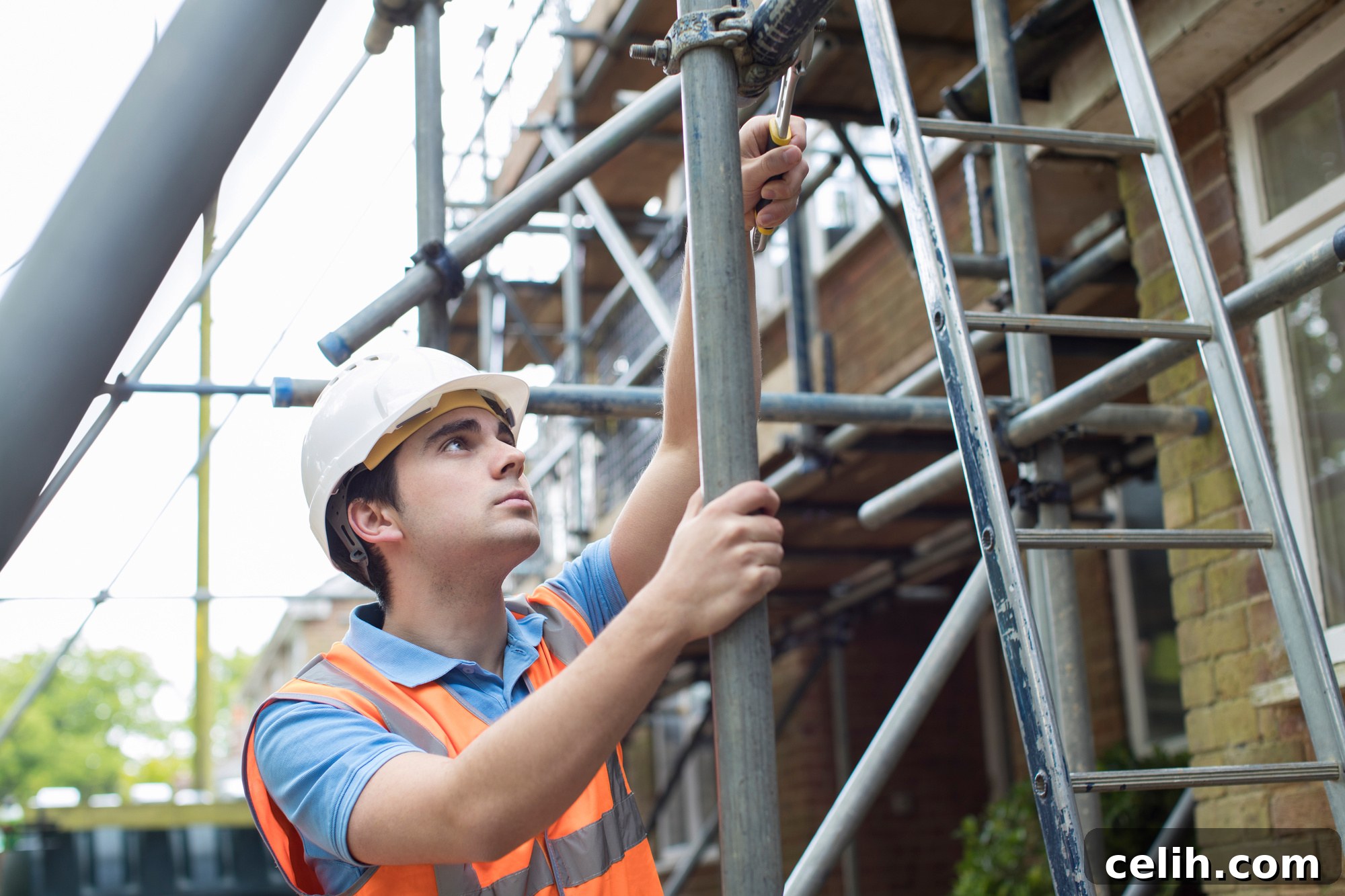
Embarking on a home renovation journey is an exciting prospect, promising to transform your living space into the dwelling of your dreams. Whether you’re planning a subtle refresh or a complete structural overhaul, successful home renovation projects demand meticulous planning, precise execution, and, most importantly, a steadfast commitment to safety. Amidst the myriad of decisions, one critical component that is often overlooked, yet vital for projects involving any significant height, is professional scaffolding.
Scaffolding isn’t merely a fixture on towering skyscrapers or vast commercial construction sites. Its indispensable role extends to residential projects, where it provides a stable and secure working platform for tasks ranging from exterior painting and roof repairs to window installations and facade improvements. But what precisely defines scaffolding, and why is it paramount for ensuring both the safety and efficiency of your home renovation endeavors?
At its core, scaffolding is a robust, temporary support structure erected to facilitate safe access for workers and secure placement of materials during the construction, maintenance, or repair of buildings. More than just a safety measure, it serves as a powerful tool designed to significantly enhance the overall efficiency and quality of your renovation project. How does a professionally installed scaffolding system achieve these multifaceted benefits? Let’s delve into the crucial details.
Beyond the Basics: Unpacking the Essence of Scaffolding in Home Renovation
While scaffolding might initially appear as a straightforward assembly of metal tubes and wooden planks, it is, in reality, a meticulously engineered system with a rich historical lineage. Its proper erection and safe utilization, often guided by comprehensive scaffolding erection guides and stringent industry standards, are absolutely critical for guaranteeing the safety and optimizing the workflow of any renovation or construction undertaking, especially within a residential context.
The concept of temporary elevated platforms has been a companion to human ingenuity since antiquity, playing a pivotal role in the construction of iconic structures across the Greek and Egyptian civilizations. This age-old solution has undergone continuous evolution, adapting to the dynamic demands of modern construction and home renovation projects. Today’s scaffolding systems are a testament to advanced engineering, designed for maximum stability, adaptability, and user safety, ensuring that even the most ambitious residential transformations can be carried out without compromise.
Understanding the foundational aspects and historical significance of scaffolding lays the groundwork for appreciating its contemporary relevance. Now that you’re familiar with its origins and fundamental purpose, let’s explore the diverse types of scaffolding solutions available and how they cater to specific renovation needs.
Navigating Options: Exploring Different Types of Scaffolding for Residential Projects
Scaffolding systems are available in a variety of configurations, each meticulously designed with unique features and distinct benefits to cater to specific project requirements and site conditions:
- Tube and Coupler Scaffolding: Renowned for its unparalleled versatility and robust nature, this traditional type of scaffolding utilizes individual steel tubes interconnected by clamps (couplers). Its adaptability makes it an ideal choice for complex structures, irregularly shaped homes, or heritage buildings where standard modular systems may not fit. It allows for custom configurations around challenging architectural features, ensuring safe access to every nook and cranny of your home’s exterior, from intricate cornices to unique rooflines.
- System Scaffolds: These are modular scaffolding systems, characterized by pre-fabricated vertical and horizontal components that interlock to form a rigid structure. System scaffolds, such as Ringlock or Kwikstage, offer significantly faster assembly and disassembly times compared to tube and coupler systems. Their ease of installation makes them perfect for time-constrained home renovation projects like exterior painting, siding replacement, or standard roofing work on homes with relatively straightforward facades.
- Mobile Scaffolds (Rolling Scaffolds): Mounted on heavy-duty castors, these scaffolds provide exceptional flexibility and ease of movement around a job site. Mobile scaffolds are particularly useful for tasks that require frequent repositioning at consistent heights, such as interior painting of high ceilings, drywall installation, or exterior work on a single-story home where lateral movement is more important than extreme vertical reach. Their mobility helps reduce downtime and enhance worker efficiency, making them a popular choice for adaptable residential tasks.
- Suspended Scaffolds: Unlike ground-supported scaffolding, suspended scaffolds are hung from the roof or structural elements of a building using ropes or chains and motorized hoists. They are the quintessential choice for high-rise residential renovations, window cleaning on multi-story homes, facade repairs at great heights, or exterior painting where ground access is restricted. These specialized systems provide unparalleled access to vertical surfaces without occupying valuable ground space, making them highly efficient for specific, elevated tasks.
- Trestle Scaffolds: Though perhaps less “professional-grade” for major exterior work, trestle scaffolds consist of pre-fabricated trestles (or ‘horses’) that support working platforms. They are commonly used for indoor tasks or low-level exterior work on single-story homes, such as plastering, ceiling repairs, or painting at heights up to approximately 5 meters. They are easy to assemble and disassemble, offering a practical solution for smaller, less intensive residential renovation needs.
By thoroughly understanding these diverse types of scaffolding, homeowners and contractors can make well-informed decisions, selecting the most appropriate and cost-effective solution for their specific home renovation projects. This strategic choice is fundamental, directly influencing the safety, efficiency, and overall success of the project. But beyond variety, how does professional scaffolding fundamentally enhance safety on your renovation site? Let’s explore this critical aspect.
Safety First, Always: The Unwavering Role of Professional Scaffolding in Enhancing Site Security
In the dynamic and sometimes unpredictable environment of home renovations, scaffolding stands as your ultimate safety sentinel. Its presence is not just a convenience but a fundamental requirement for mitigating risks and protecting everyone on or near the site. Here’s how professional scaffolding significantly elevates the safety standards of your renovation project:
- Promotes Uncompromised Worker Safety: Working at elevated heights inherently carries significant risks. Scaffolding provides a robust, level, and entirely secure platform, dramatically reducing the risk of falls and related injuries, which are among the leading causes of construction accidents. Equipped with guardrails, mid-rails, and toe boards, a professional scaffold system prevents workers from falling off and protects those below from falling tools or debris. This stable environment allows workers to focus on their tasks with confidence, rather than constantly worrying about their footing.
- Mitigates Hazards and Protects Property: A professionally erected scaffold system acts as a protective barrier. It effectively mitigates typical site hazards such as falling tools, construction materials, or debris, safeguarding not only the workers but also home occupants, neighbors, and passersby. Furthermore, by providing a controlled working area, it minimizes the risk of accidental damage to the property itself, preventing costly repairs stemming from clumsy handling or precarious working conditions.
- Ensures Strict Compliance With Safety Regulations: Reputable professional scaffolding services operate in strict adherence to local and national safety standards and regulations, such as those set by OSHA (Occupational Safety and Health Administration) in the United States or similar bodies elsewhere. This adherence ensures that the scaffold is not only robustly constructed but also regularly inspected, stable, and perfectly secure. Choosing a certified provider means your project benefits from structures that meet the highest safety benchmarks, providing crucial liability protection and peace of mind for the homeowner.
- Enhances Emergency Response Capabilities: In the unlikely event of an emergency, a well-planned and professionally installed scaffold can provide clear egress routes and easier access for emergency services, if required. Clear pathways and stable platforms can make a critical difference in such situations.
With safety comprehensively addressed and meticulously managed, you, as the homeowner, can breathe a significant sigh of relief. The assurance that your property, workers, and family are protected is invaluable. But the advantages of scaffolding extend beyond just safety. Could this temporary structure also significantly fast-track your home renovation project? Read on to uncover the remarkable efficiency factor of scaffolding.
Accelerating Success: How Scaffolding Boosts Efficiency and Project Completion Timelines
Scaffolding is not solely defined by its safety contributions—it is equally a powerful catalyst for operational efficiency. A strategically designed and expertly erected scaffold system can make a profound difference in the pace and productivity of your home renovation project, translating directly into faster completion times and reduced labor costs. Here’s how:
- Unparalleled Ease of Access: Scaffolding provides consistent, stable, and unobstructed access to all areas of work that might otherwise be difficult, dangerous, or time-consuming to reach using ladders or other temporary means. Workers can move freely along expansive platforms, reaching greater heights and wider sections of the house without the constant, laborious need to reposition ladders. This continuous access is critical for tasks like facade restoration, roof repairs, window replacements, and exterior painting, where comprehensive coverage is required.
- Significantly Increased Work Speed: With a stable, spacious platform to work from, multiple workers can simultaneously carry out their tasks in parallel or sequentially. There is substantially less time wasted on maneuvering equipment, climbing up and down ladders, or setting up new access points. This seamless workflow enables tradespeople to perform their duties more efficiently, consistently, and without interruption, directly accelerating the pace of your renovation project and bringing completion dates closer.
- Enhanced Quality of Work and Precision: When workers feel confident in their safety and can easily access their designated work areas, the quality of their craftsmanship invariably improves. Tasks requiring precision, such as detailed painting, intricate plastering, precise masonry work, or delicate roof tile installation, can be executed with greater stability, focus, and care. This secure environment minimizes errors, reduces rework, and ultimately ensures a higher-quality finish that stands the test of time, adding lasting value to your home.
- Optimized Material Handling: Scaffolding platforms can also serve as temporary staging areas for tools and materials. This means workers have necessary items within arm’s reach, reducing trips up and down, and ensuring materials are stored safely and conveniently. Efficient material management further contributes to a smoother and faster workflow.
Therefore, investing in professional scaffolding can actually shorten your renovation timeline and ensure a superior-quality output, often justifying the initial cost through savings in labor, reduced risk, and enhanced final results. But how do you ensure the scaffolding service you select is truly up to these critical standards?
Making the Smart Choice: Selecting the Right Professional Scaffolding Service
Choosing the right professional scaffolding service is a pivotal decision that directly impacts the safety, efficiency, and overall success of your home renovation project. As you prepare to make this crucial selection, let’s narrow down the key factors that truly matter:
- Experience and Expertise: Always prioritize a company with a proven track record in similar residential projects. An experienced provider understands the unique challenges of home renovations, can anticipate potential issues, and offers tailored solutions. Inquire about their portfolio and how long they’ve been serving the local community.
- Certification and Comprehensive Insurance: It is paramount that any scaffolding provider you consider is fully certified and holds appropriate insurance policies, including liability insurance and workers’ compensation. Certification indicates adherence to rigorous industry standards and best practices, while comprehensive insurance protects you, the homeowner, against potential liabilities stemming from accidents or property damage during the scaffolding erection or use. Request to see current certificates of insurance and proof of relevant licenses.
- Quality of Equipment and Maintenance: The integrity of the scaffolding system is directly linked to the quality and condition of its components. Robust, well-maintained, and regularly inspected scaffolding equipment is non-negotiable for ensuring both safety and efficiency. A reputable company invests in high-grade materials and adheres to strict maintenance schedules, replacing worn or damaged components promptly.
- Exceptional Customer Service and Communication: Opt for a company that demonstrates clear communication, responsiveness, and supportive service throughout your project’s duration. This includes detailed site assessments, transparent quotes, clear timelines for erection and dismantling, and readily available support for any questions or adjustments needed. A service-oriented provider will be a partner, not just a vendor.
- Site Assessment and Custom Solutions: A professional scaffolding company will conduct a thorough on-site assessment before providing a quote. This ensures the proposed scaffolding solution is perfectly tailored to your home’s specific architectural features, ground conditions, and renovation requirements. They should be able to design a system that is both effective and minimally invasive to your property.
- Transparency in Pricing: Seek a company that provides a clear, detailed, and transparent breakdown of all costs involved, including erection, rental period, dismantling, and any potential additional fees. Avoid providers with vague or hidden charges.
By meticulously focusing on these key areas during your selection process, you are not only setting your home renovation project up for unparalleled success but also safeguarding your investment and ensuring complete peace of mind.
Conclusion: Elevating Your Home Renovation with Professional Scaffolding
The journey of home renovation, while immensely rewarding, can indeed be a challenging undertaking. Professional scaffolding, though frequently underestimated or overlooked, plays an undeniably crucial role in transforming this journey into a seamless and successful experience. Its benefits extend far beyond mere safety, encompassing significant improvements in project efficiency, worker productivity, and, ultimately, the superior quality of the finished work.
As you meticulously plan your next residential transformation, ensure that the inclusion of professional scaffolding is a non-negotiable item on your checklist. Partnering with the right scaffolding service means you’re not just renting equipment; you’re investing in a safer working environment, a faster project timeline, and a more precise, high-quality outcome for your beloved home. With the strategic support of professional scaffolding, you are taking a definitive step closer to achieving a successful, smooth, and worry-free renovation project that truly brings your architectural visions to vibrant life. Here’s to successful home renovations that stand as testaments to careful planning and professional execution!