
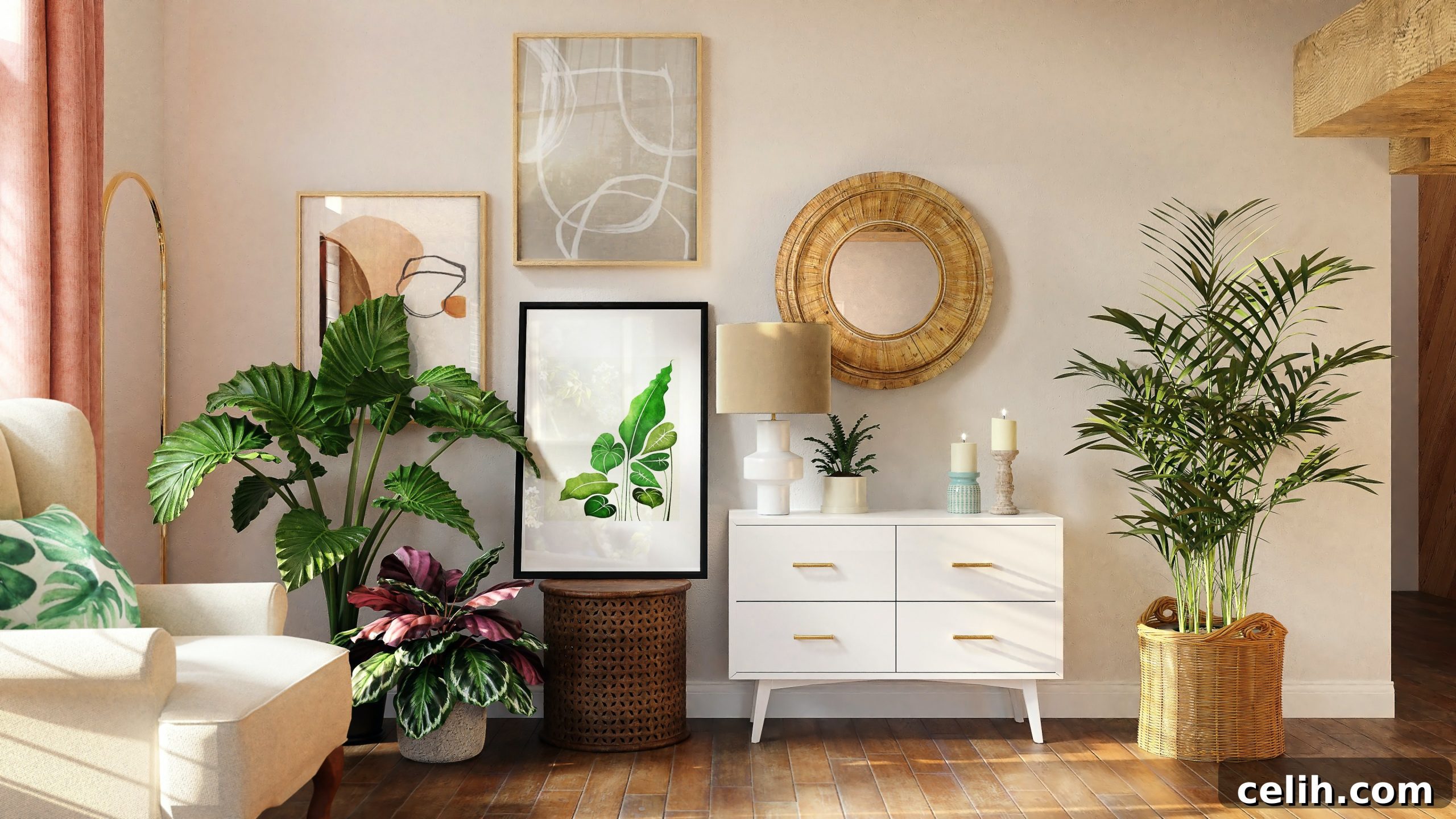
Mirrors are much more than just reflective surfaces; they are powerful design tools capable of dramatically transforming any living space, especially smaller ones. In a small living room, mirrors can work wonders, from creating the illusion of boundless space to adding layers of depth and intricate visual interest. They are the ultimate secret weapon for designers and homeowners alike who wish to make a cozy, intimate room feel expansive, brighter, and more inviting. By strategically incorporating mirrors, you can manipulate light, enhance perceived dimensions, and infuse your living room with a unique sense of style and sophistication.
If you’re looking to elevate your compact living area, these ten creative and impactful strategies will guide you on how to effectively use mirrors to unlock its full potential.
Transform a Small Living Room into a Spacious Sanctuary
One of the most widely celebrated benefits of mirrors in interior design, particularly for compact spaces, is their ability to make a small living room appear significantly larger and more open. This effect is primarily due to their reflective properties. Mirrors inherently bounce light around a room, effectively amplifying both natural and artificial light sources. This increase in luminosity makes the space feel brighter, airier, and consequently, much more spacious than its actual dimensions might suggest. The clever placement of a mirror can completely alter the perception of your living area, making it feel less confined and more breathable.
Beyond simply reflecting light, mirrors are masters of illusion when it comes to creating depth. A particularly effective technique is to position a large mirror on a wall directly opposite a focal point or an area you wish to visually extend. For instance, if placed opposite a window, the mirror will reflect the outdoor view, essentially bringing the outside in and creating an additional “window” within your room. If positioned opposite an entryway or another room, it can trick the eye into perceiving an extension of the space, giving the impression that the room continues beyond its physical boundaries. This psychological trick plays on our perception, making the room feel far more expansive and dynamic. This method isn’t exclusive to rooms with towering ceilings; mirrors are incredibly versatile and can enhance any living space, regardless of its size or architectural style. They skillfully break up large, unbroken wall surfaces, introducing visual interest and preventing a monolithic feel, which further contributes to a sense of openness and varied dimensions.
Double the Visual Impact of a Narrow Living Room with Paired Mirrors
For those grappling with a particularly narrow living room, the strategic use of two mirrors can provide a powerful visual solution. By placing a pair of mirrors at opposing angles, perhaps on adjacent walls or even facing each other from a distance, you can create a fascinating optical illusion that effectively doubles the perceived size of your space. This technique not only generates the impression of a much wider and longer room but also amplifies the light within. The reflections from both mirrors interact, bouncing light back and forth, illuminating every corner and eradicating any shadowed areas that might otherwise contribute to a cramped feel. The key is to experiment with angles to find the sweet spot where the reflections create an endless vista, truly opening up the room without overwhelming it. Consider mirrors with minimalist frames to keep the focus on the expansive reflection, or opt for decorative frames to add an extra layer of style.
Elevate Your Decor: Employ an Oversized Mirror as a Statement Art Piece
An oversized mirror transcends its utilitarian function to become a magnificent piece of art in its own right, especially in a small living room where it can command attention and establish a strong focal point. Instead of merely reflecting, a large mirror, particularly one with a beautifully crafted or unique frame, can serve as the centerpiece of your interior design scheme. Its sheer size and reflective quality draw the eye, adding a layer of sophistication and grandeur. Imagine a striking, intricately framed mirror above a fireplace or behind a sofa, instantly transforming a plain wall into an artistic statement.
Furthermore, if you possess an existing art collection, strategically placed full-length or large mirrors can enhance the viewing experience. Instead of placing them directly opposite your artwork, consider positioning them on adjacent walls or at angles that catch and bounce light off the wall surfaces, around your paintings, and into the room. This technique subtly illuminates your art, highlights textures, and creates a dynamic interplay of light and shadow, making your collection even more captivating. The mirror itself, with its own aesthetic appeal, becomes an integral part of your curated display, adding another dimension to your artistic narrative.
Amplify Natural Light: Lean an Oversized Mirror Against a Window
To infuse a dimly lit small living room with an abundance of natural light, try an unconventional yet highly effective strategy: lean a substantial oversized mirror directly in front of a window. This clever placement harnesses the existing light by allowing the mirror’s expansive reflective surface to capture and bounce it deep into the room. The result is an immediate and dramatic increase in brightness, creating the powerful illusion that your space benefits from far more natural light than is actually present. This is an excellent technique for urban apartments or rooms with smaller windows, where natural light might be limited.
Beyond boosting luminosity, leaning a mirror against a window also has the added benefit of visually expanding the outdoor view. The reflection creates a duplicate of the scene outside, connecting your indoor space with the exterior and contributing to a feeling of openness and tranquility. When selecting a mirror for this purpose, opt for a sturdy, well-framed piece that can safely lean without risk of toppling. This simple yet impactful design trick offers an ingenious way to maximize light and expand the visual boundaries of your small living room, making it feel brighter and more integrated with its surroundings.
Integrate Mirrors into Your Gallery Wall for Dynamic Artistry
Gallery walls are a fantastic way to personalize a small living room and showcase your taste, and incorporating mirrors into these arrangements adds an extra layer of dimension, light, and visual intrigue. Instead of limiting your gallery to only photographs, prints, and traditional artwork, strategically intersperse mirrors of various shapes, sizes, and frame styles. This creates a dynamic, eclectic look that feels curated and unique. For instance, you could use a striking sunburst mirror as a central anchor, surrounded by smaller geometric mirrors, framed prints, and even three-dimensional objects.
The beauty of integrating mirrors into a gallery wall lies in their ability to break up the flat surfaces of artwork with reflective elements. This not only adds depth but also helps to bounce light across the entire display, making the whole wall feel more vibrant and alive. When designing your mirror-inclusive gallery wall, consider mixing and matching frame materials – a rustic wooden frame next to a sleek metallic one, for example – to enhance the eclectic appeal. Pay attention to balance and spacing to ensure a cohesive yet visually stimulating composition. This approach allows the mirror to function as both a decorative piece and a light-enhancing element, making your small living room feel larger and more artfully adorned.
Embrace Charm: Enclose Your Mirror in a Vintage Frame
A simple mirror can be transformed into a captivating focal point in your small living room by enclosing it within a unique, vintage frame. This design approach infuses your space with character, history, and a touch of antique elegance that modern frames often lack. The beauty of vintage frames lies in their inherent charm – the subtle imperfections, the intricate carvings, and the distinct patina that only time can create. These elements tell a story, making your mirror not just a reflective surface, but a conversation piece.
Hunting for the perfect vintage frame can be an enjoyable adventure. Explore local car boot sales, jumble sales, charity shops, antique markets, or browse online marketplaces. You might discover frames made from richly carved wood, ornate gilded plaster, or rustic distressed metal. Once acquired, you can either embrace its original condition, preserving its aged beauty, or choose to restore it with a fresh coat of paint or a gentle cleaning. A vintage-framed mirror can be hung above a console table, a fireplace, or even leaned against a wall to create an effortlessly chic statement. This personal touch adds depth and warmth, making your small living room feel richer and more thoughtfully designed.
Cultivate a Quirky Focal Point by Mixing Large and Small Mirrors
Don’t shy away from being creative and unconventional with your mirror arrangements. A fantastic way to create a truly unique and eye-catching focal point in a small living room is by mixing and matching a diverse selection of mirrors in various sizes, shapes, and styles. This approach moves beyond the traditional single mirror and allows for a dynamic, artistic display that not only enhances the space but also showcases your personality. Imagine a central, large rectangular mirror flanked by smaller circular, oval, and even irregularly shaped mirrors, all contributing to a cohesive yet intriguing composition.
To amplify the visual impact, consider adding unusual frames to the mix. A rustic wooden frame, a sleek metallic one, and an ornate, antique-inspired frame can coexist harmoniously, creating textural and stylistic contrast. This interplay of different elements prevents the arrangement from feeling monotonous and draws the eye, encouraging closer inspection. Such a mirror cluster acts as a decorative statement that both reflects light and expands the perceived dimensions of the room, while also serving as an engaging piece of wall art. It’s an excellent method for adding depth, character, and an undeniable ‘wow’ factor to any compact living space.
Soften Architectural Lines with the Gentle Curves of a Round Mirror
Modern interior design often emphasizes clean, sharp lines and angular furniture, which can sometimes lead to a space feeling rigid or stark, especially in a small living room. To introduce a sense of balance and softness, a round mirror is an excellent design choice. The gentle, continuous curve of a round mirror provides a striking visual contrast to the straight edges and sharp corners found in contemporary sofas, tables, and architectural features. This deliberate juxtaposition creates visual harmony, making the room feel more inviting and less austere.
Positioning a round mirror strategically, such as above a rectangular console table, over a square fireplace, or as part of a gallery wall with predominantly straight-edged frames, immediately draws the eye and breaks up the linearity of the space. The psychological effect of curves is often associated with comfort, fluidity, and natural elements, which can instantly soften the overall ambiance of your living room. Available in various sizes and frame styles, from minimalist to ornate, a round mirror can be chosen to perfectly complement your existing decor while serving as a crucial element in creating a more harmonious and visually appealing environment.
Enhance Shelves and Consoles with Reflective Accents
For small living rooms equipped with deep shelves, built-in bookcases, or media consoles, mirrors offer an ingenious way to inject additional visual interest and perceived depth without consuming valuable floor space. Instead of merely filling these surfaces with books and decorative objects, consider propping up smaller mirrors, particularly those adorned with attractive or unique frames. This technique immediately elevates the aesthetic of your shelving units and creates dynamic micro-displays within your room.
When strategically placed, these mirrors can highlight specific furniture items or decorative pieces. For instance, a small, ornate mirror positioned behind a delicate lamp can magnify its light and beauty, creating a more dramatic effect. Similarly, placing a mirror behind a collection of cherished objects on a shelf can make the collection appear larger and more curated. Mirrors on shelves also help to brighten often shadowed areas, making the entire display feel more open and accessible. This subtle integration of reflective surfaces adds layers of sophistication and light, transforming ordinary storage units into integral parts of your small living room’s design narrative.
Achieve Balance and Order: Utilize Mirrors to Create Symmetry
Mirrors are incredibly effective tools for establishing symmetry within a room, a design principle that brings a sense of balance, order, and calm to any living space, particularly in a small one where visual clutter can quickly overwhelm. When strategically deployed, mirrors can create a visually pleasing equilibrium that enhances the overall aesthetic and functionality of your living room. The concept is simple yet powerful: by mirroring elements on either side of a central axis, you achieve a harmonious and structured look.
Consider placing a pair of identical mirrors on opposite sides of a fireplace, or above matching end tables flanking a sofa. This creates a strong symmetrical statement that draws the eye and anchors the space. Similarly, in an entryway or hallway leading into your living room, two mirrors placed on opposing walls can not only create depth but also provide a symmetrical welcome that feels grander and more intentional. This balanced arrangement introduces a sense of elegance and sophistication, making the room feel well-composed and thoughtfully designed. Furthermore, if your living room has corners or areas that struggle with a lack of natural light from windows or skylights, adding mirrors to these darker spots is a brilliant solution. The reflection will help to bounce any available light into these areas, effectively brightening them and making the entire room feel more evenly illuminated and inviting.
Conclusion: Embrace the Transformative Power of Mirrors in Your Small Living Room
Incorporating mirrors into a small living room is a design strategy that yields remarkable results, significantly enhancing both aesthetics and functionality. If you’ve found yourself grappling with how to make your compact space feel more open, brighter, and stylish, hopefully, the suggestions above have provided ample inspiration. Remember, there’s no need to overwhelm your walls with reflections; the key is thoughtful and strategic placement. Whether you opt for one grand, oversized mirror that acts as a focal point, or scatter several smaller, creatively framed mirrors throughout the room, each choice contributes to a more expansive and luminous environment.
Mirrors are versatile, impactful, and accessible tools that empower you to reimagine your living room’s potential. Experiment with different placements, shapes, and styles to discover what best suits your personal taste and space. By embracing the transformative power of mirrors, you can turn a small living room into a sophisticated, light-filled sanctuary that feels much larger than its actual footprint.