
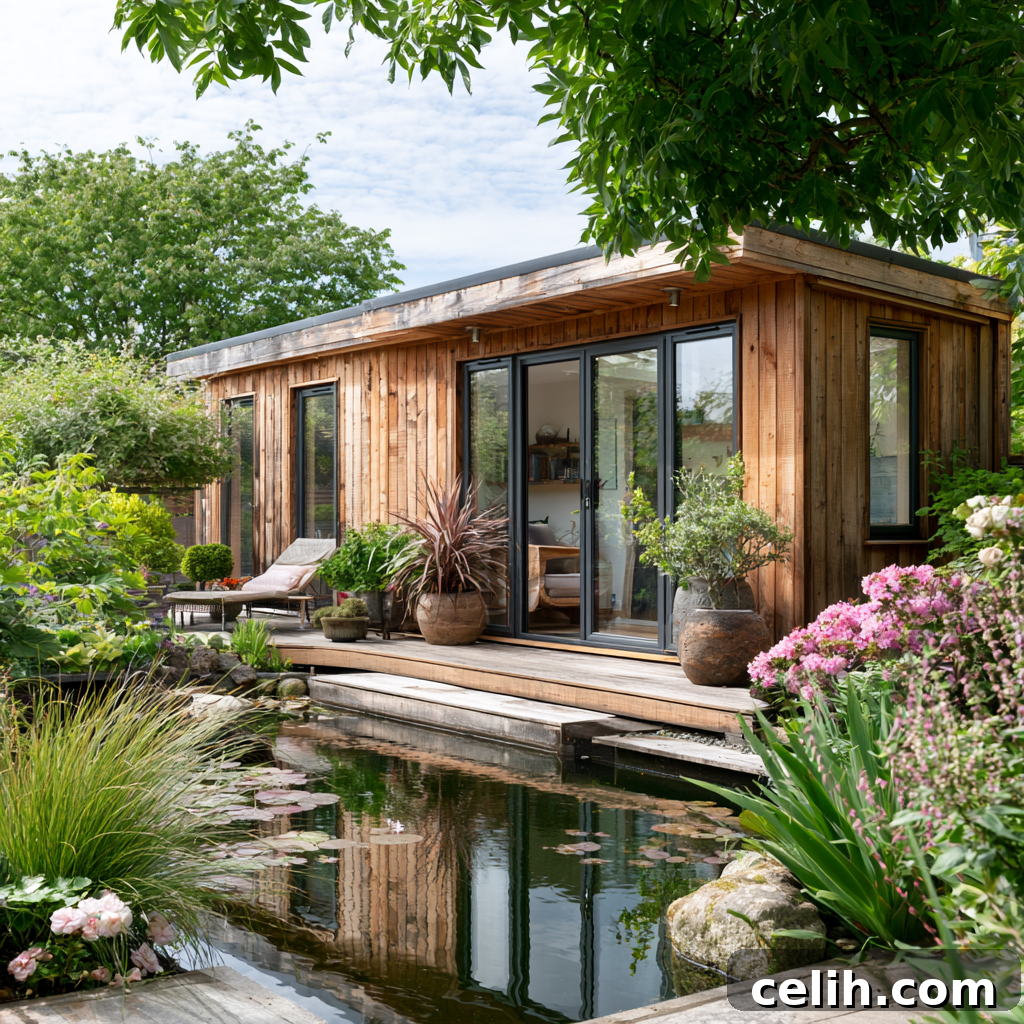
If you are considering adding a garden room, upgrading an existing one, or refining your outdoor space this year, the materials you choose at specification will shape not just the finished look, but how it performs and appears a decade from now. Thoughtful material selection at the start avoids expensive repairs and frequent maintenance later.
The UK garden room market has matured a great deal in recent years. Modern structures are generally better insulated, better detailed and better constructed than those from a decade ago. Yet the external finishes used to clad and deck these buildings have not always kept pace: many otherwise high-quality garden rooms are still finished with pressure-treated softwood cladding and decking that will demand significant maintenance within three to five years.
Fortunately, higher-performance alternatives are more accessible than before. Below is a practical guide to help you specify durable, low-maintenance external finishes for a garden room that will age well.
Why Timber Species Choice Matters More Than You Think
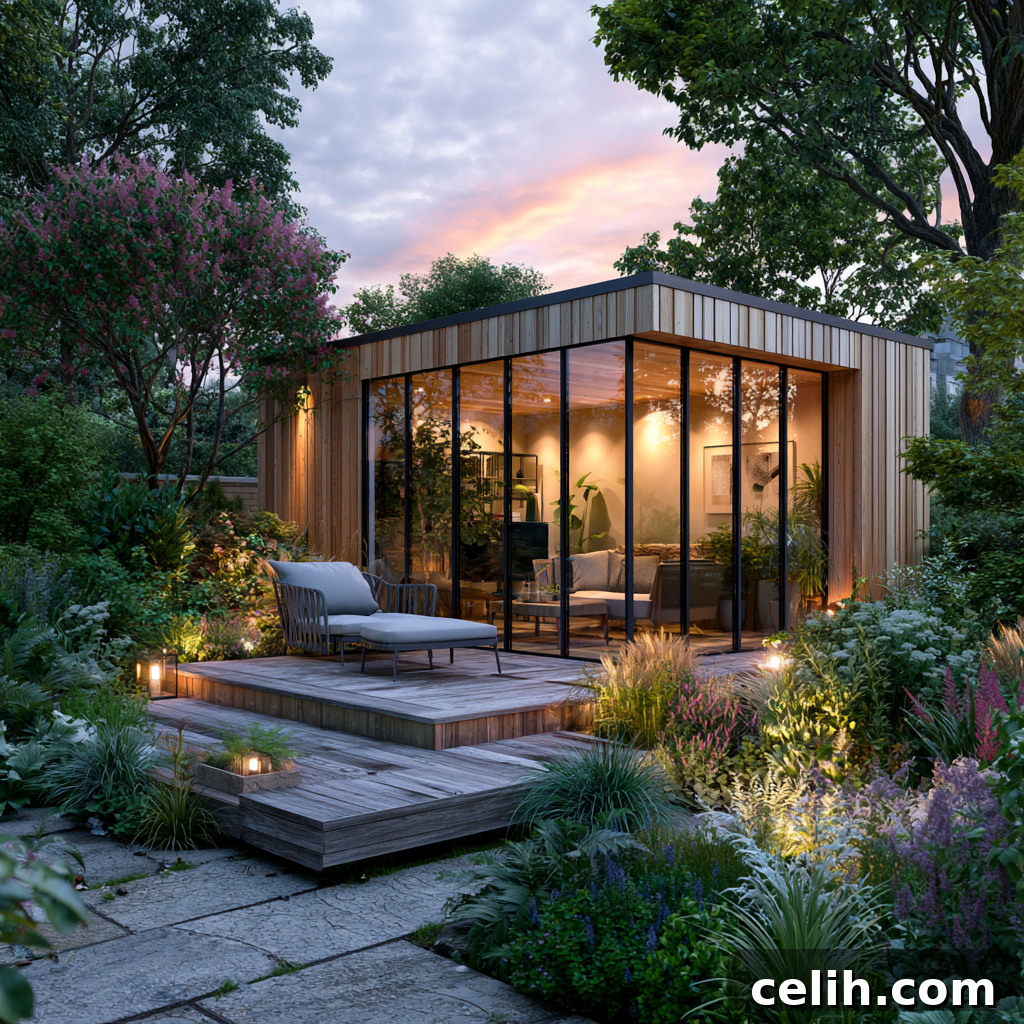
Not all timber decking and cladding behaves the same in a British garden. Species, modification processes and board profiles all influence durability, appearance and maintenance needs. The performance gap between the best and the worst options is significant, not marginal.
Pressure-treated softwood, the common option supplied by many garden room builders, gains durability through chemical impregnation. That treatment works, but it is not permanent: surface coatings degrade and the timber typically requires annual or biennial retreatment to maintain protection. Miss treatments and greying, mould and surface decay begin to appear; miss more than one season and fixings and board ends can start to show structural fatigue.
By contrast, naturally durable species such as Siberian larch perform without chemical modification. Its density and natural resins give it genuine resistance to biological decay that treated pine achieves only through preservative chemicals. The upshot is lower ongoing maintenance, a more consistent appearance over time, and simpler disposal at end of life. For rooms used daily as home offices, studios or workshops, reduced maintenance is a real quality-of-life improvement.
Siberian larch is offered in smooth and ribbed profiles to suit different design intentions and practical requirements. Boards are commonly available in both standard AB grade and premium A grade, and typical widths range from narrower 28x90mm sections to wider contemporary 28x140mm boards for a cleaner, modern look.
What Does a Well-Specified Garden Room Actually Cost?
A common frustration in the garden room market is the gap between an attractive base quote and the final cost of a well-finished project. Base structures may be competitively priced, but sensible upgrades — better insulation, higher-quality glazing, more durable cladding and superior decking — add up. Understanding the realistic costs of those upgrades from the start makes specification discussions more productive and helps you compare true value rather than just headline prices.
For cladding, the typical supply premium between pressure-treated softwood and a naturally durable option such as Siberian larch or ThermoWood is generally in the region of £15 to £30 per square metre. On a 30m² garden room with roughly 60m² of cladded area, that equates to a supply cost difference of about £900 to £1,800 — a modest share of the overall project, but one that determines maintenance commitments for years to come.
Decking follows a similar pattern. Siberian larch decking is commonly supplied at roughly £55 to £65 per square metre, while pressure-treated pine often sits closer to £25 to £35 per square metre. On a 20m² deck that difference typically amounts to around £400 to £600 in supply cost — and it removes the need for the repeated annual retreatment that pressure-treated decking requires over its service life.
If you want a full cost breakdown for structure, glazing, cladding, decking and landscaping, look to up-to-date 2026 pricing guides and supplier price lists when budgeting. Early clarity on supply and installation costs lets you prioritise upgrades that deliver long-term value rather than short-term savings.
The Design Decisions That Make the Biggest Difference
Beyond species and profile, a handful of design and installation details have an outsized effect on the long-term appearance and performance of cladding and decking — yet these are often overlooked early in the project.
For cladding, specify a ventilated rainscreen system with a drained and ventilated cavity of at least 25mm between the boards and the structural wall. Adequate ventilation prevents moisture accumulation at fixings and board ends; without it, even naturally durable timber can show accelerated deterioration. The cavity adds only a small installation cost but can extend the effective service life of cladding by decades.
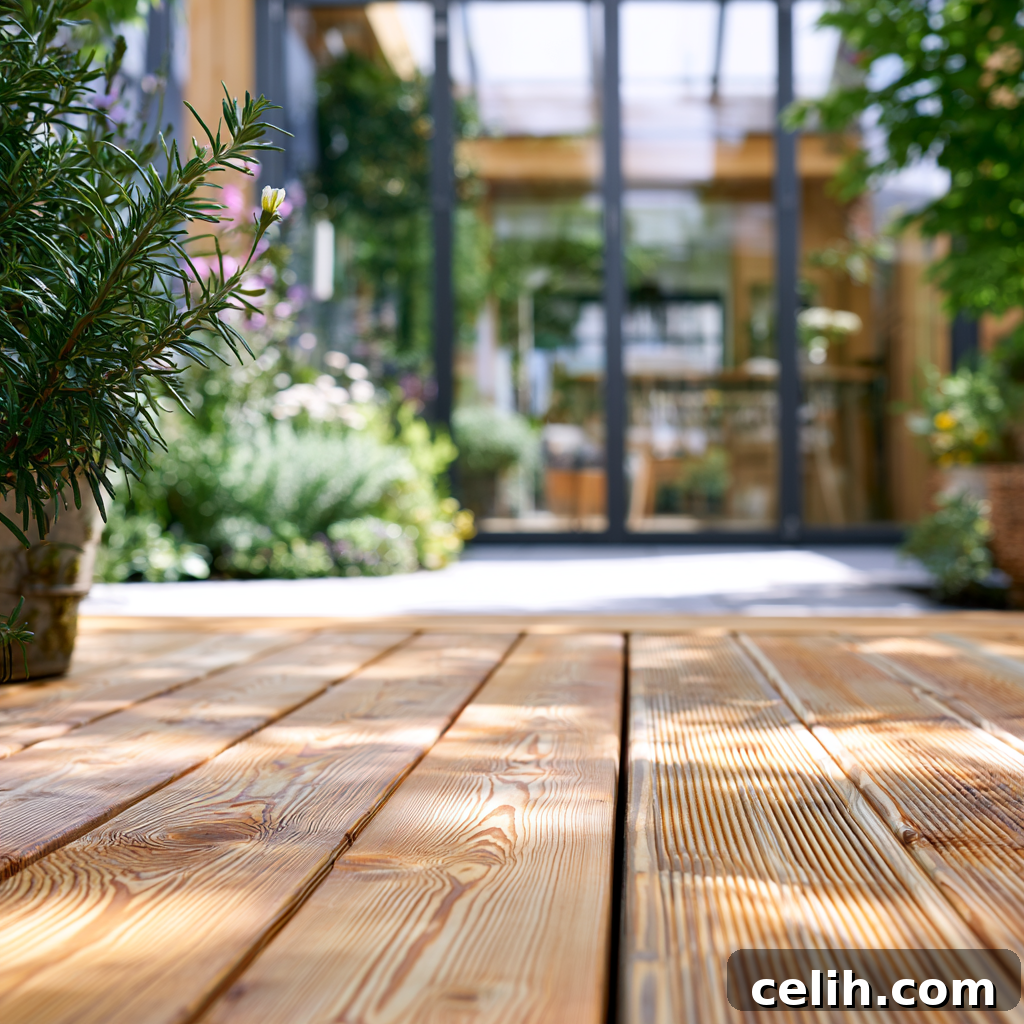
For decking, pay careful attention to board orientation, fall and drainage. Deck boards should run away from the building so water sheds cleanly, with a sensible slope across the deck surface and gaps between boards to allow drainage without trapping debris. Sealing end grain at all cut ends is a low-cost best practice that substantially reduces moisture uptake and the end-checking that leads to premature decay at vulnerable points.
In short, investing slightly more in durable species, thoughtful details and correct installation yields a garden room that looks better for longer and costs less to maintain over its lifetime. When you specify with durability and build detail in mind, the result is a more enjoyable, low-maintenance outdoor space that delivers lasting value.