
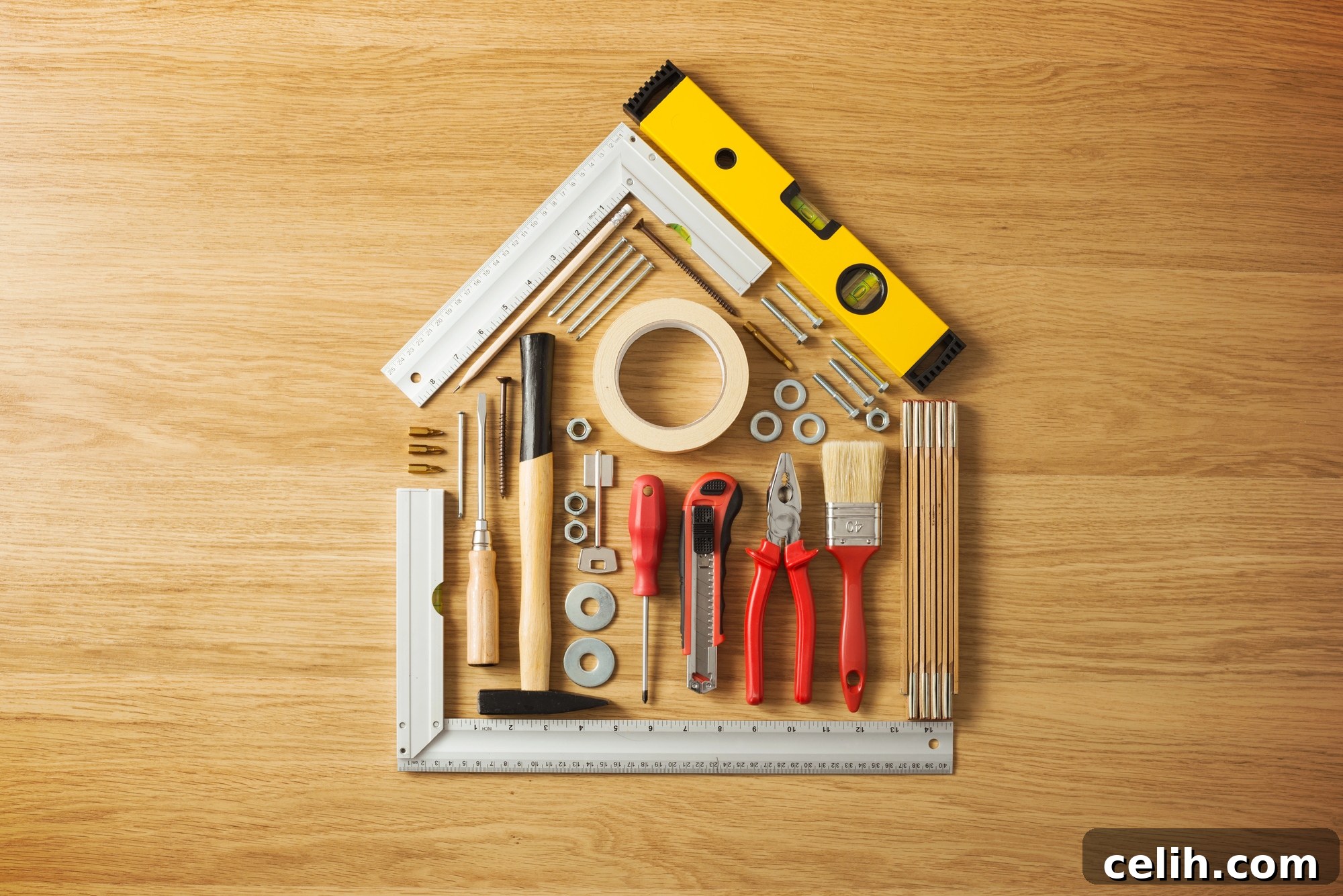
Embarking on a do-it-yourself (DIY) journey for your home is an incredibly rewarding endeavor. It’s not merely about saving money, though the financial benefits are substantial; it’s about the profound satisfaction of transforming your living space with your own hands. Imagine the pride of completing a project that not only enhances your home’s aesthetic or functionality but also reflects your personal touch and effort. Much like finding an excellent cargo van rental to facilitate a cost-effective move or transport bulky items, successfully tackling a DIY task can provide immense gratification and empower you with new skills.
Whether your goal is to breathe new life into an outdated room, mend a broken fixture, or undertake a full-scale renovation, embracing DIY projects can drastically cut expenses and instill a tremendous sense of accomplishment. Beyond the immediate savings, you gain valuable knowledge, improve your problem-solving abilities, and even boost your home’s value. From minor repairs to significant structural enhancements, many home improvement tasks are well within the grasp of an enthusiastic DIYer, provided you approach them with the right mindset, a comprehensive toolkit, and a solid understanding of the task at hand. This guide offers essential practical tips to help you navigate your DIY adventures confidently and successfully, ensuring your projects are both enjoyable and achieve professional-level results.
1. Master the Art of Planning and Realistic Budgeting for DIY Success
Before you even consider reaching for a hammer or roller, the absolute first step in any successful DIY home improvement project is meticulous planning. A well-thought-out plan acts as your roadmap, guiding you through every stage and helping you visualize the finished product. Begin by clearly outlining what you aim to achieve. What is the desired outcome? What style are you aiming for? Research different techniques, materials, and design inspirations to ensure your vision is both beautiful and practical. Create a detailed list of all materials you anticipate needing, from the largest lumber pieces to the smallest screws and paint brushes. This comprehensive list will form the foundation of your budget.
Establishing a realistic budget is equally critical. Knowing precisely how much you are willing and able to spend is vital for preventing overspending and avoiding costly mid-project mistakes. Allocate funds for each category: materials, tools (if you need to purchase new ones), safety gear, and any unexpected expenses. It’s always a prudent strategy to incorporate a contingency fund, typically 10-15% of your total budget, to cover unforeseen issues or material cost fluctuations. Tracking your expenses throughout the project will help you stay on target and make informed decisions if adjustments are needed. Thorough planning, including creating a detailed timeline with achievable milestones, will make the entire DIY process smoother, less stressful, and ultimately more enjoyable. It allows you to track your progress, manage your schedule, and set realistic expectations for completion, such as dedicating specific weekends to a particular phase of your renovation.
2. Prioritize Safety: The Golden Rule of Every DIY Home Project
When it comes to undertaking any DIY home improvement project, safety should unequivocally be your paramount concern. Overlooking safety precautions can lead to serious injuries, costly setbacks, and can quickly derail even the most meticulously planned project. Therefore, cultivating a safety-first mindset is non-negotiable. Always equip yourself with the appropriate protective gear tailored to the task at hand. This includes safety goggles to shield your eyes from debris and chemicals, sturdy gloves to protect your hands, ear protection when operating loud power tools, and a dust mask or respirator, especially when cutting wood, sanding, or working with potentially harmful fumes.
Understanding how to safely operate your tools is just as important as having them. Always read the manuals for any power tools before use, familiarizing yourself with their functions, safety features, and emergency shut-off procedures. Never rush through tasks, as haste often leads to accidents. Maintain a clean and organized workspace, free from clutter, to prevent trips and falls. If your project involves electrical repairs or modifications, the golden rule is to always turn off the power at the breaker box and verify that circuits are dead using a reliable voltage tester before commencing work. For wiring tasks, utilizing a dependable electrical connector kit can significantly enhance efficiency and ensure secure, safer connections. Similarly, when working with paints, solvents, or other chemical products, ensure your workspace is thoroughly ventilated to prevent the inhalation of noxious fumes. Furthermore, having a readily accessible first-aid kit is a smart precaution. By consistently adhering to these safety protocols, you not only protect yourself but also ensure the smooth and successful completion of your DIY endeavors.
3. Invest Wisely in Quality Tools and Durable Materials
While the allure of cost savings is a major driver for DIY projects, compromising on the quality of your tools and materials is a false economy that often leads to frustration, substandard results, and even further expenses down the line. Investing in good quality tools provides a multitude of benefits: they are more durable, more precise, safer to use, and ultimately make your work more efficient and enjoyable. A basic, yet robust, toolkit should be the foundation of every DIY enthusiast’s arsenal. This essential collection typically includes a versatile claw hammer, a set of screwdrivers (Phillips and flathead), a reliable tape measure, a sharp utility knife, a power drill/driver with various bits, a level for accurate installations, pliers, wrenches, and a stud finder for locating wall supports.
As you delve into more complex projects, expanding your power tool collection becomes invaluable. Consider adding a circular saw for straight cuts, a jigsaw for intricate shapes, an orbital sander for smooth finishes, and a nail gun for rapid fastening. When it comes to materials – be it paint, flooring, cabinetry, or fasteners – resist the temptation to opt for the cheapest available option. High-quality materials often boast superior durability, better aesthetics, easier installation, and require less maintenance over time, leading to greater longevity and a more professional finish. For instance, investing in premium paint can offer better coverage and a more durable, washable finish, while good quality lumber will be straighter and less prone to warping. Sourcing materials from reputable suppliers, comparing product specifications, and reading reviews can guide you towards choices that not only meet your budget but also ensure the long-term success and beauty of your DIY home improvement projects.
4. Start Small and Systematically Build Your DIY Expertise and Confidence
If you’re relatively new to the world of DIY home improvement, the most effective strategy is to begin with smaller, more manageable projects. This approach serves a dual purpose: it allows you to gradually build your confidence as you master new skills, and it provides immediate, tangible results that fuel your motivation. Tackling complex tasks right from the start can be overwhelming and discouraging if things don’t go as planned. Instead, ease into DIY by choosing projects that offer a high impact without requiring extensive specialized knowledge or tools.
Excellent starting points include cosmetic updates that dramatically transform a space. A fresh coat of paint, for example, is a relatively simple task that can completely revitalize a room’s appearance, offering a significant visual payoff for your effort. Similarly, updating outdated hardware such as cabinet knobs, drawer pulls, or light fixtures can instantly modernize your home’s aesthetic without requiring a hefty investment or advanced skills. Other beginner-friendly projects might include installing floating shelves, assembling flat-pack furniture, refreshing old furniture with a new stain or paint, or even minor plumbing fixes like replacing a leaky faucet washer. Each successfully completed small project teaches you valuable, transferable skills such as accurate measuring, precise cutting, secure fastening, and meticulous finishing. These ‘quick wins’ not only bolster your confidence but also equip you with the practical experience and problem-solving abilities necessary to confidently approach more ambitious and complex home renovation tasks in the future. Embrace the learning process, be patient with yourself, and celebrate every small victory along the way.
5. Maximize Your Learning with Online Tutorials and DIY Resources
In the digital age, one of the greatest advantages for any DIY enthusiast is the unparalleled abundance of free and accessible resources available online. The internet has democratized learning, making it possible for anyone to acquire new skills and master complex techniques from the comfort of their home. Before embarking on any project, dedicate time to thorough research using these invaluable online tools. YouTube, for instance, is a treasure trove of visual learning, hosting countless step-by-step video tutorials for virtually every DIY task imaginable. Seek out reputable DIY channels that provide clear, detailed instructions, often demonstrating techniques in real-time. Watching a project unfold visually can often clarify steps that might be confusing in written instructions.
Beyond videos, a wealth of knowledge resides in home improvement blogs, websites, and online guides. Many professional contractors and experienced DIYers share their insights, tips, before-and-after photos, and comprehensive material lists for various projects. Subscribing to these blogs or bookmarking key resources can keep you updated on the latest trends, tools, and efficient methods. Furthermore, manufacturer websites often offer detailed installation instructions, troubleshooting guides, and product specifications that can be crucial for ensuring correct usage and optimal performance of materials and tools. Engaging with online community forums, such as those found on Reddit or dedicated home improvement sites, is also highly recommended. These platforms allow you to ask specific questions, share your progress, and receive valuable advice and encouragement from a global network of experienced DIYers. When you encounter a challenge or an unexpected problem, the collective wisdom of these communities can provide solutions or alternative approaches, preventing frustration and costly mistakes. By actively leveraging these vast online resources, you’ll continuously expand your knowledge base, refine your skills, and ensure your DIY adventures are consistently successful and stress-free.
Embracing the DIY ethos for your home renovation and maintenance projects is more than just a hobby; it’s a lifestyle choice that fosters self-reliance, creativity, and financial prudence. By meticulously planning your projects, prioritizing safety above all else, investing in quality tools and materials, starting with achievable tasks to build your confidence, and continuously expanding your knowledge through online resources, you’re setting yourself up for resounding success. Each completed project will not only improve your living space but also enrich your life with newfound skills and an immense sense of accomplishment. Dive in, learn, create, and transform your home into a testament to your personal ingenuity and dedication.