
As the year draws to a close, and our daily lives become increasingly intertwined with the spaces we inhabit, the importance of our home environment for mental and physical wellbeing has never been more apparent. With evenings growing darker and pre-holiday to-do lists expanding, many of us find ourselves spending extended periods indoors – working, studying, and seeking solace from the external rush. In navigating the unique psychological demands of the colder, “hibernation” months, the atmosphere and design of our living spaces play a critical role in shaping our emotional states and cognitive function.
A burgeoning body of evidence supports the idea that beyond mere aesthetics, integrating natural materials and elements into our homes can significantly enhance feelings of calm, groundedness, and focus. This profound connection between nature and human wellbeing, known as biophilia, is not a fleeting trend but a foundational principle gaining mainstream recognition. As we look ahead to 2026, features such as wood wall panelling, authentic stone surfaces, and a vibrant array of lush house plants are poised to redefine how we conceptualize and craft our interior environments, prioritizing our health and happiness.
Cultivating Calm: How Your Home Shapes Mood and Focus
The role of our home has undergone a transformative shift in recent years. What was once predominantly a haven for rest and relaxation, a clear escape from the demands of the outside world, has increasingly evolved into a multifunctional hub. For many, it now serves as a daily office environment, a creative studio, and, for families, often a dynamic classroom. This blurring of traditional boundaries can inadvertently erode our capacity to maintain distinct states of focus and proper rest. Recognizing this challenge, designers, architects, and psychologists alike are increasingly advocating for biophilic design – an innovative approach that posits humans feel and perform optimally when their immediate surroundings mirror the patterns, textures, and elements found in the natural world.
Extensive research underscores the profound impact of biophilic principles on human physiology and psychology. Studies have consistently demonstrated that rooms thoughtfully designed with ample natural textures, organic forms, and generous daylight exposure can significantly lower stress levels, stabilize heart rates, and even enhance cognitive performance and creativity. This foundational principle explains the almost instantaneous sense of ease and relaxation one experiences in a café adorned with warm wood and thriving plants, contrasting sharply with the often sterile and anxiety-inducing atmosphere of a stark, white office. As the darker, busier months of winter descend upon us, embracing this “restorative design” becomes not merely an aesthetic preference but a vital investment in our personal wellbeing and home harmony.
The Science of Serenity: Biophilic Benefits Explained
While the intuitive comfort derived from nature is almost universally acknowledged, the scientific community continues to uncover the intricate mechanisms behind this connection. Our inherent affinity for natural environments is deeply embedded in our evolutionary history, making us biologically “wired” to respond positively to elements like wood, stone, and plant life. A compelling 2025 study, for instance, revealed that interiors featuring higher concentrations of exposed wood had a measurable positive effect on stress recovery rates and contributed to greater humidity stability – both crucial factors in maintaining comfort and sustained concentration. Furthermore, separate research highlighted that the simple act of introducing a few green plants into a classroom or home office notably improved perceived concentration and uplifted mood among occupants.
These findings collectively reinforce a powerful truth: when nature is thoughtfully integrated into our indoor environments, our bodies and minds subtly attune to its rhythm. This means that natural elements don’t just make a space *appear* calm; they actively facilitate a physiological and psychological state of calm, fostering an environment conducive to both productivity and deep relaxation. It’s a holistic approach to design that recognizes and nurtures our innate need for connection with the natural world.
Optimizing Your Workspace: WFH with Wellbeing in Mind
Regardless of personal preference, most modern professionals now navigate some form of home workspace. This setup can range from a dedicated, fully equipped office to a designated corner within a kitchen or living area. A fundamental challenge in this new reality is maintaining focus and productivity in the same environment where we seek rest, enjoy meals, and engage in leisure. The critical question for contemporary interior design becomes: How can we optimize our workspace for maximum efficiency without compromising the essential comfort and restorative qualities of our home?
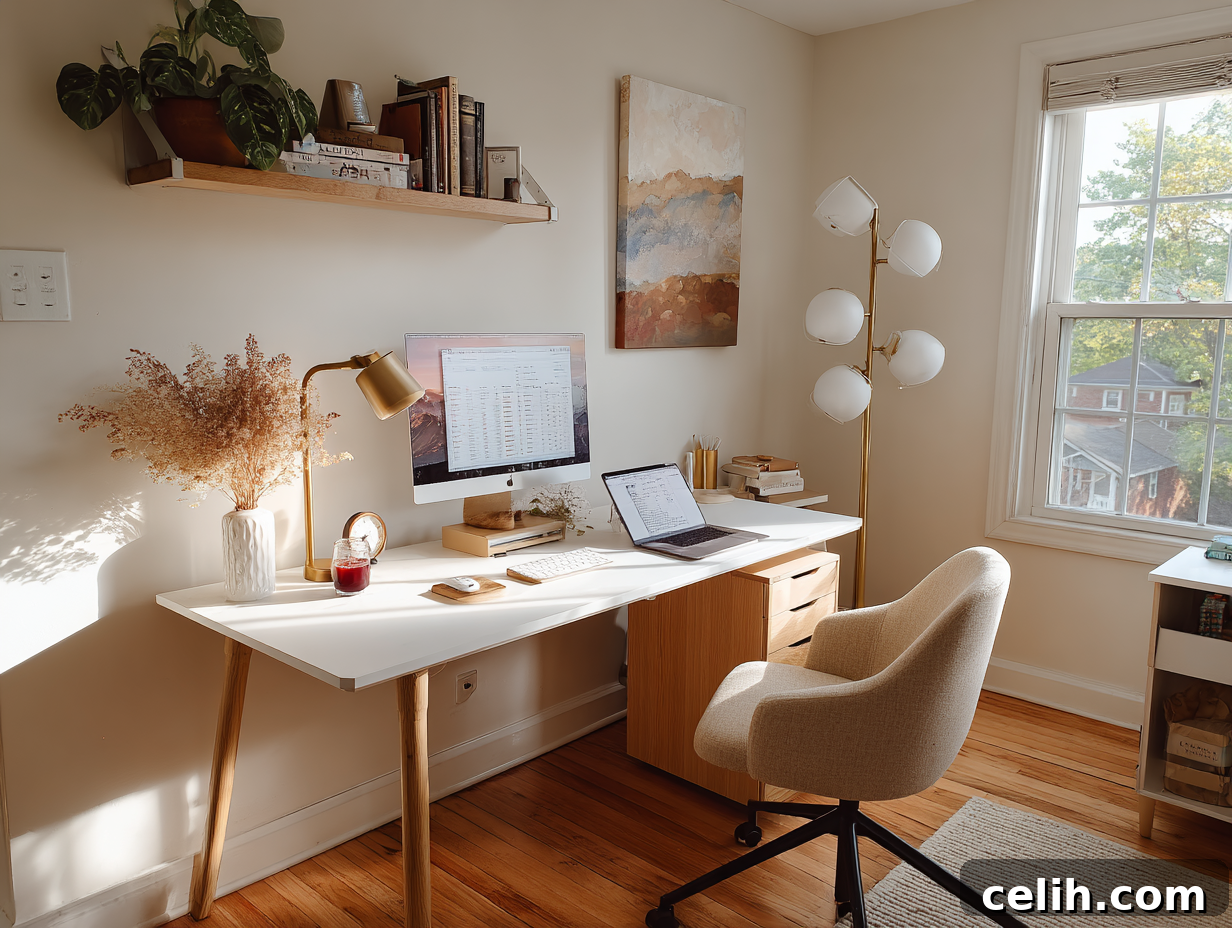
An effective starting point for this optimization lies in engaging our senses deliberately. Begin by positioning your desk or primary work area as close to natural light as feasible. Abundant natural light not only boosts mood but also regulates circadian rhythms, improving alertness during the day and promoting better sleep at night. Next, introduce tactile elements that feel inherently “alive” and organic, diverging from sterile, synthetic materials. Consider a wooden desktop or accessories, a soft cork noticeboard, or a linen lampshade. These natural textures offer a calming visual and tactile experience that can significantly enhance the perceived quality of your workspace.
Even the smallest living element can profoundly transform a space. Adding a single small plant, whether a resilient snake plant or a delicate fern, can instantly soften the room’s aesthetic, improve air quality, and provide a grounding visual anchor. While these adjustments are undeniably aesthetic, they also function as powerful psychological nudges, subtly signaling to your brain that “this is a dedicated space for clear thought and effective work.” Moving forward, interior design trends in 2026 will increasingly lean into this delicate balance, championing the creation of versatile spaces designed to seamlessly flex between periods of intense productivity and moments of serene peace, ensuring our homes support our dynamic lives.
Mindfulness in Design: Crafting Sensory-Rich Homes for 2026
Mindfulness is often associated with introspective practices like meditation apps and deep breathing exercises, yet its essence extends far beyond these techniques to encompass our physical surroundings. The objects we see, touch, hear, and even smell every day serve as constant, gentle reminders to remain present and engaged in the moment. When our environment is thoughtfully curated to stimulate our senses in a positive way, it inherently fosters a more mindful existence.
It logically follows that 2026 is poised to be the year when sensory design truly ascends as a dominant force in interiors. Expect homes to be shaped not merely by how they look, but by how they *feel* to the touch, the ambient sounds they carry, and even their subtle aromas. The forthcoming year will prioritize grounding, warmth, authenticity, and a deep connection to the earth. The era of sterile greys and cold, early minimalism is gracefully giving way to an embrace of organic textures, rich earthy tones, and natural, handcrafted finishes that resonate with personal history and promise lasting beauty. Think hand-thrown pottery, woven textiles, unvarnished wood, and the subtle scent of natural materials.
Of course, this paradigm shift in design is not solely about visual appeal. The widespread adoption of hybrid working models and a heightened, ongoing societal focus on mental health mean that individuals are increasingly seeking homes that actively support both optimal function and essential recovery. Sustainability also plays a crucial role in this evolution, guiding our choices towards materials that are not only durable and age gracefully but also carry a story, reflecting responsible sourcing and a commitment to environmental stewardship. This holistic approach ensures our homes are not just aesthetically pleasing, but deeply supportive of our overall wellbeing and values.
Embracing Nature to Counter the Winter Blues
The winter season, with its shorter days and increased demands, often creates a perfect storm of stress for many individuals. The combination of darker mornings, overflowing diaries, and that pervasive end-of-year fatigue can take a significant toll on our mental and emotional reserves. Fortunately, the design of your personal space holds more power to mitigate these challenges than you might initially realize, offering a tangible buffer against seasonal stressors.
Given the limited daylight during this time of year, maximizing every ray of natural light becomes paramount. Keep windows unobstructed, consider sheer curtains over heavy drapes, and use mirrors strategically to amplify light throughout your home. As evenings draw in, transition your lighting from bright, task-oriented fixtures to softer, warmer glows. Incorporate ambient lighting, lamps with dimmers, and even candles (safely) to create a cozy, inviting atmosphere. Surround yourself with rich, warm textures – think chunky knit throws, plush rugs, and velvety cushions – to signal to your body and mind that it’s time to unwind and find comfort.
A simple splash of green can go an incredibly long way in combating feelings of confinement and boosting mood. Whether it’s a vibrant indoor plant, a fresh bouquet of flowers, or artwork depicting natural landscapes, these small sensory anchors provide vital connection to the outdoor world, helping you stay grounded and refreshed amidst the chaos and demands of the colder months. These subtle but impactful design choices actively nurture resilience and promote a sense of inner peace.
Design That Elevates: Beyond Mere Aesthetics
For too long, the concept of “good design” has been predominantly confined to the visual realm – focusing on how spaces look. However, 2026 heralds a pivotal shift in this perception, reminding us that true beauty and genuine wellbeing are not disparate ideas but are deeply and intrinsically intertwined. The most impactful design goes beyond surface-level appeal; it nourishes the soul and supports the mind.
Natural materials possess an inherent ability to evoke profound sensory and emotional responses within us. They offer a tangible, grounding reconnection with the world beyond our digital screens, endless deadlines, and the confines of indoor living. As we anticipate spending yet another winter largely indoors, fostering that vital connection with nature becomes more crucial than ever for our mental fortitude and overall happiness. Thoughtful integration of biophilic elements, from the texture of a wooden floor to the subtle scent of a houseplant, transforms a house into a home that nurtures its occupants.
Investing in small yet impactful details that can subtly shift the emotional temperature of a room is not just about current comfort; it’s about future-proofing your design choices. By prioritizing materials and layouts that inherently promote calmness, enhance focus, and inspire a more mindful way of living, you are creating spaces that will continue to serve your wellbeing for years to come. This approach ensures your home is not just a place to reside, but a personal sanctuary designed to support a richer, more balanced life.