
Unlock Peak Productivity: Designing Your Ultimate Home Office Setup for Success
The global shift towards remote work, significantly accelerated by the Covid-19 pandemic, has transformed the way millions approach their careers. What was once a niche work style has become a mainstream reality, making the concept of an “effective home office” more crucial than ever before. While it might seem straightforward – just a desk and a comfortable chair – crafting a truly productive and ergonomic workspace at home involves a deeper consideration of various elements. This comprehensive guide will delve into the essential strategies and upgrades that can elevate your home office from a mere workstation to a sanctuary of efficiency, ensuring you consistently deliver exceptional results and maintain your well-being.
Tailoring Your Workspace: The Role-Specific Home Office
The foundation of an outstanding home office begins with understanding the specific demands of your job role. Your professional responsibilities should directly dictate the equipment, technology, and overall design of your workspace. For instance, an individual in an admin-based role might find a reliable internet connection, a standard computer, and adequate storage sufficient for daily tasks like document management, scheduling, and communication. Their primary need might be organizational tools and efficient access to shared files.
However, the modern professional landscape features a myriad of roles that demand significantly more advanced technological infrastructure. Consider, for example, professionals involved in digital content creation, video editing, software development, data analysis, or the rapidly evolving world of cryptocurrency and NFTs. These roles require robust computing power, ample memory, high-speed processing, and often specialized peripherals.
Take the example of trading digital assets like NFTs. This burgeoning industry, now more accessible than ever through platforms like https://www.okx.com/web3/nft/featured which showcase popular NFTs and facilitate trading, necessitates quick decision-making and secure storage solutions. A trader needs an exceptionally fast and stable internet connection to ensure real-time data access and swift transaction execution, avoiding costly delays. Furthermore, significant local storage or robust cloud solutions are vital for managing digital portfolios and associated files. Therefore, before investing in any equipment, conduct a thorough assessment of your role’s technical requirements to build a home office that not only supports but actively enhances your professional performance.
The Cornerstone of Comfort: Ergonomic Seating and Desks
Beyond the technical specifications, your physical comfort is paramount for sustained productivity and long-term health. An ergonomic office chair is not a luxury but an essential investment. Look for features like adjustable lumbar support, seat height and depth, armrests, and recline functions. A chair that properly supports your spine and posture can prevent back pain, neck strain, and fatigue, allowing you to focus on your work for longer periods without discomfort. Similarly, an ergonomic desk plays a vital role. While a standard desk may suffice, consider options like standing desks, which allow you to alternate between sitting and standing throughout the day. This dynamic posture change improves circulation, reduces sedentary behavior, and can boost energy levels, significantly contributing to overall well-being and productivity. A well-designed desk also offers ample surface area for your equipment, reducing clutter and creating a more organized workspace.
Crystal Clear Communication: The Power of Quality Headphones
In the era of remote collaboration, effective communication is non-negotiable, and quality headphones are a game-changer. There’s a wide array of headphone options available, covering various budgets and preferences, from simple earbuds to sophisticated over-ear noise-canceling models. Investing in a good pair can dramatically enhance your productivity and the quality of your virtual interactions.
Beyond simply hearing others, high-quality headphones, especially those with an integrated microphone, ensure that you are heard clearly during video calls, webinars, and online meetings. This vastly improves the professionalism of your virtual presence and reduces misunderstandings. Furthermore, noise-canceling headphones are invaluable for minimizing distractions in a home environment, whether it’s household noises, pets, or outdoor sounds. By creating a personal sound bubble, they allow you to maintain focus and immerse yourself in your work, leading to better concentration and higher output. They are an indispensable tool for anyone seeking to optimize their remote work experience.
Optimal Viewing: Elevating Your Monitor for Ergonomic Health
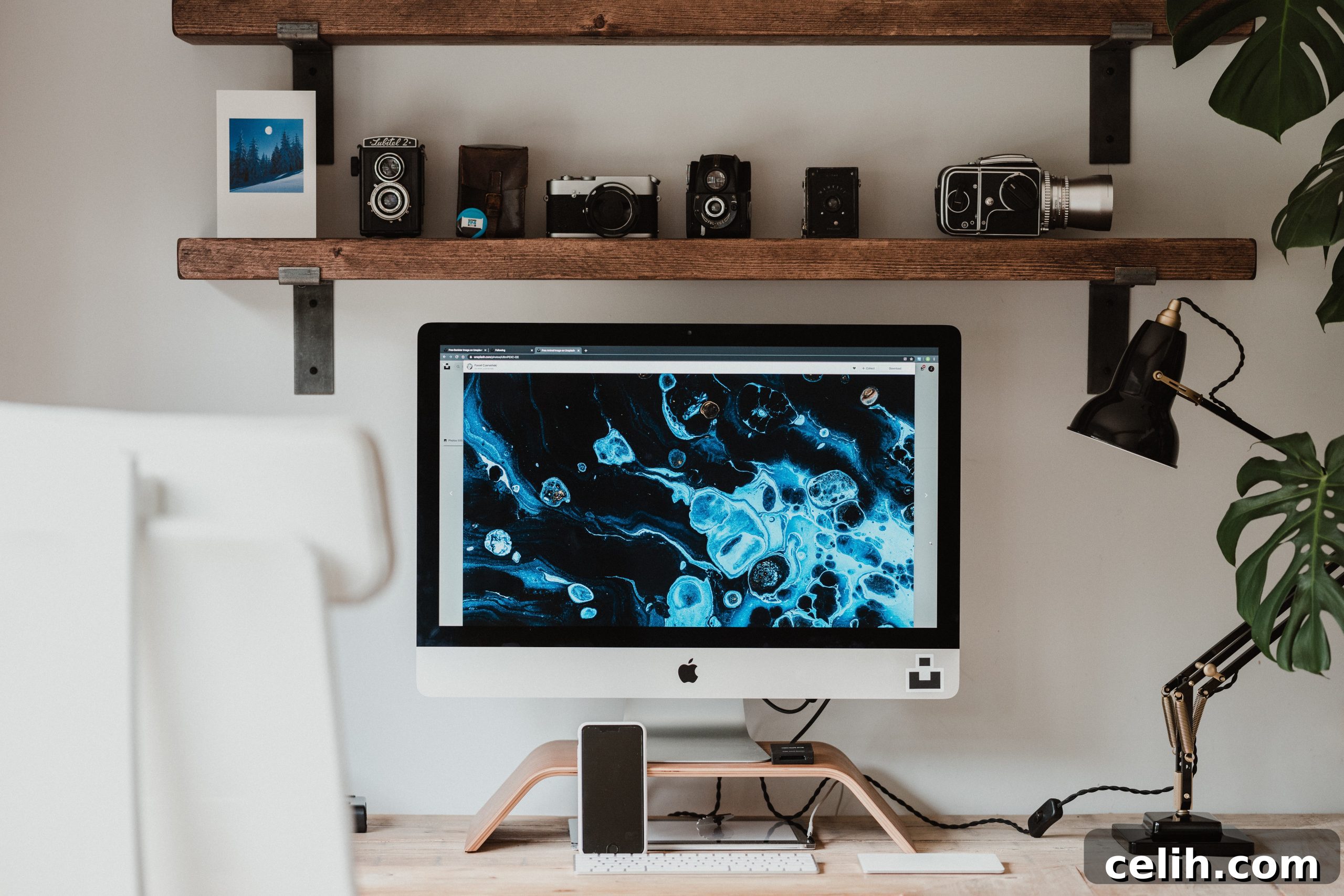
A simple yet profoundly impactful adjustment you can make to your home office is ensuring your monitor is at the correct height. This isn’t merely about comfort; it’s a critical ergonomic consideration that directly affects your posture, reduces strain, and enhances your overall productivity. The ideal setup dictates that your eyes should be approximately level with the top third of your screen. Many people often position their monitors too low, forcing them to hunch over or crane their necks downwards. This poor posture can lead to significant discomfort, including neck and shoulder pain, tension headaches, and in the long run, chronic back problems or repetitive strain injuries.
If you primarily use a laptop, investing in a good laptop stand is essential. This elevates your screen to an ergonomic height, and pairing it with an external keyboard and mouse completes an ideal setup that mimics a desktop workstation. For desktop monitors, you can use a monitor riser, a stack of sturdy books, or preferably, a monitor arm. Monitor arms offer greater flexibility, allowing you to adjust height, tilt, and swivel with ease. For those requiring more screen real estate, a multi-monitor setup can significantly boost efficiency, but remember to apply the same ergonomic principles to all screens to prevent uneven strain. Prioritizing correct monitor height is a small change with monumental benefits for your physical health and ability to sustain focus throughout your workday.
Illuminating Success: Strategic Lighting for Your Workspace
Lighting is often an overlooked aspect of home office design, yet it profoundly impacts eye health, mood, and productivity. Natural light is always preferable, so position your desk near a window if possible, but avoid direct glare on your screen. Supplement natural light with well-chosen artificial lighting. Overhead ambient lighting should be soft and evenly distributed, preventing harsh shadows. Crucially, incorporate task lighting, such as an adjustable desk lamp, to illuminate your immediate work area without causing glare on your screen or in your eyes. This is especially important for reading documents or writing. Proper lighting reduces eye strain, prevents fatigue, and helps maintain alertness, creating a more comfortable and visually appealing work environment.
The Unseen Backbone: Robust Internet Connectivity
In the digital age, a reliable and fast internet connection is arguably the most critical component of any remote worker’s toolkit. Without it, even the most ergonomically perfect setup is rendered useless. Ensure your internet service provider (ISP) offers speeds that can comfortably handle your daily tasks, including video conferencing, large file transfers, cloud-based applications, and streaming. Consider upgrading your plan if you frequently experience lag or drops. Furthermore, invest in a quality router and place it optimally to ensure strong Wi-Fi coverage throughout your workspace. For critical tasks, a wired Ethernet connection is always superior in terms of stability and speed. For ultimate peace of mind, having a backup plan, such as a mobile hotspot, can be a lifesaver during unexpected outages, ensuring uninterrupted productivity.
Declutter Your Space, Declutter Your Mind: The Power of Organization
A cluttered workspace inevitably leads to a cluttered mind. An organized home office promotes focus, reduces stress, and saves valuable time otherwise spent searching for items. Implement effective storage solutions such as shelving, drawers, file cabinets, or even simple desk organizers to keep your workspace tidy. Digital organization is equally important: regularly clean up your computer’s desktop, organize files into logical folders, and utilize cloud storage effectively. A minimalist approach, where only essential items are within reach, can significantly enhance concentration and create a sense of calm. By fostering an environment of order, you create a clear pathway for your thoughts and creative energy.
Injecting Personality: Personalization for Inspiration and Well-being
Unlike a corporate office cubicle, your home office offers the unique opportunity for personalization. Infusing your space with elements that inspire and comfort you can significantly boost your mood and creativity. This could include adding plants, which are known to improve air quality and reduce stress; displaying personal photos or artwork; choosing a color scheme that energizes or calms you; or incorporating elements like diffusers with essential oils. While maintaining professionalism, don’t shy away from making your space feel distinctly yours. A visually appealing and personally resonant environment fosters a sense of ownership and can transform your office from a utilitarian space into a source of daily inspiration, making work more enjoyable and less like a chore.
Beyond the Setup: Cultivating Productive Remote Work Habits
Even the most perfectly designed home office won’t guarantee success without the right work habits. Establish a consistent daily routine, mimicking your commute by starting and ending your workday at set times. Take regular short breaks to stretch, walk around, or briefly step away from your screen to prevent mental fatigue and physical stiffness. Consider implementing the Pomodoro Technique or similar time management strategies to maintain focus. Minimize distractions by setting boundaries with household members, turning off non-essential notifications, and avoiding personal tasks during work hours. Dedicate your home office space solely to work to create a psychological separation between work and home life, helping you to “switch off” mentally at the end of the day. Cultivating these habits alongside an optimized physical space creates a holistic approach to remote work success.
Conclusion: Crafting Your Productive Home Office Sanctuary
The journey to creating an ideal home office is an ongoing process of refinement and adaptation. As remote work continues to evolve, so too should your workspace. From meticulously selecting equipment that aligns with your specific job role to prioritizing ergonomic comfort with quality chairs and properly elevated monitors, every detail contributes to your overall well-being and productivity. Embracing crystal-clear communication with good headphones, optimizing lighting for eye health, ensuring robust internet connectivity, and maintaining an organized environment are all fundamental steps. Furthermore, personalizing your space and adopting healthy remote work habits are equally vital. By integrating these strategies, you’re not just setting up an office; you’re investing in a sanctuary that fosters sustained focus, professional growth, and personal comfort, ultimately empowering you to thrive in the dynamic landscape of remote work.