
Mastering the Art of Interior Design: Decoding Modern vs. Contemporary Styles
In the vibrant world of interior design, two terms frequently surface and often cause confusion: “modern” and “contemporary.” While colloquially used interchangeably to describe anything current, fresh, or “of the moment,” for seasoned designers and discerning homeowners, these labels carry distinct and profound meanings. Misunderstanding these differences can lead to stylistic clashes, missed aesthetic opportunities, and ultimately, a home that doesn’t quite capture the desired essence. This guide aims to demystify these popular styles, providing a comprehensive breakdown to help you articulate your design vision with precision and confidence.
For interior designers, these aren’t just synonyms; they represent two entirely separate design philosophies, each rooted in different historical periods and evolving independently. Modern design harks back to a specific era, characterized by a clear set of principles, while contemporary design is a dynamic, ever-changing reflection of current trends and innovations. While there’s often a degree of crossover, particularly in today’s design landscape where minimalist aesthetics and natural materials are broadly popular, it’s crucial to appreciate their unique foundations.
Modern design is deeply influenced by the early to mid-20th century, particularly the forms and materials that gained prominence during the 1920s through the 1960s. Think of movements like Bauhaus and, most notably, Mid-Century Modern (MCM). This era championed a departure from traditional, ornate styles, embracing functionality, clean lines, and a connection to nature. On the other hand, contemporary design, by its very nature, is fluid and responsive. It encapsulates what is fashionable *right now*, continuously adapting with new technologies, social shifts, and emerging artistic expressions. This means that today’s contemporary design might incorporate elements of modernism, but it’s not bound by its historical constraints.
The beauty of understanding this distinction lies in your ability to craft spaces that are truly intentional and cohesive. Whether you’re planning a full home renovation or simply updating a single room, knowing the nuances between modern and contemporary will empower you to make informed decisions about everything from furniture and finishes to color palettes and decorative accents. Let’s delve deeper into these two captivating styles, using kitchen design as our primary example to illustrate their unique characteristics.
Understanding the Core Differences: Modern vs. Contemporary
Before we dive into specific design elements, let’s firmly establish the foundational differences. Modern design is a historical movement; it refers to an aesthetic that emerged from the modern art movement of the early 20th century, peaking with Mid-Century Modern. It’s a defined style with specific characteristics. Contemporary design, however, is not tied to a particular period. It is, quite literally, “of the moment” – a reflection of current trends, popular aesthetics, and what’s cutting-edge in design today. This means contemporary style is constantly evolving, borrowing elements from various historical periods (including modernism) while always pushing forward.
The Enduring Appeal of Modern Design
Modern design, particularly Mid-Century Modern, celebrates simplicity, functionality, and craftsmanship. It was a reaction against the decorative excesses of the Victorian era, emphasizing natural materials, earthy tones, and understated elegance. Key figures and schools like Frank Lloyd Wright, Charles and Ray Eames, and the Bauhaus school championed principles of “form follows function,” where the purpose of an object dictates its design, stripping away unnecessary ornamentation. This results in furniture and spaces that are streamlined, practical, and aesthetically pleasing in their unembellished form.
The Dynamic Nature of Contemporary Design
Contemporary design has no fixed rules or historical period. It is a chameleon, reflecting the prevailing tastes and innovations of the present day. This fluidity means that what is considered contemporary today might be different tomorrow. Currently, contemporary design often leans towards minimalism, open-concept spaces, smart home integration, and a sophisticated blend of textures and materials. It’s about creating a living environment that is current, adaptable, and reflects a forward-thinking lifestyle. While it can draw inspiration from modernism, it also incorporates industrial, minimalist, traditional, and even global influences, filtered through a contemporary lens.
Applying the Styles to Your Kitchen: A Practical Guide
The kitchen, often considered the heart of the home, provides an excellent canvas to explore the distinct characteristics of modern and contemporary design. Whether you aim for the timeless appeal of a modern kitchen or the cutting-edge look of a contemporary space, understanding these specifics will guide your choices.
Design Principles: Structure and Flow
Modern: In modern kitchen design, there’s a playful yet disciplined approach. The underlying structure emphasizes clean, unfussy lines for cabinetry, flooring, and windows, creating a sense of order and calm. These formulaic grids, however, can be artfully disrupted by organic, ergonomic shapes found in dining tables and chairs, adding a touch of softness and human comfort. To truly capture that mid-century chic, balance the highly ordered aspects of your kitchen with quirky atomic-inspired lighting fixtures or the understated elegance of an ercol dining set. Functionality remains paramount, with intuitive layouts and ample storage seamlessly integrated, reflecting the modern ideal of efficient living without sacrificing aesthetic appeal. Natural light is also a key player, often maximized through large, uncluttered windows, further enhancing the spacious and airy feel characteristic of the style.
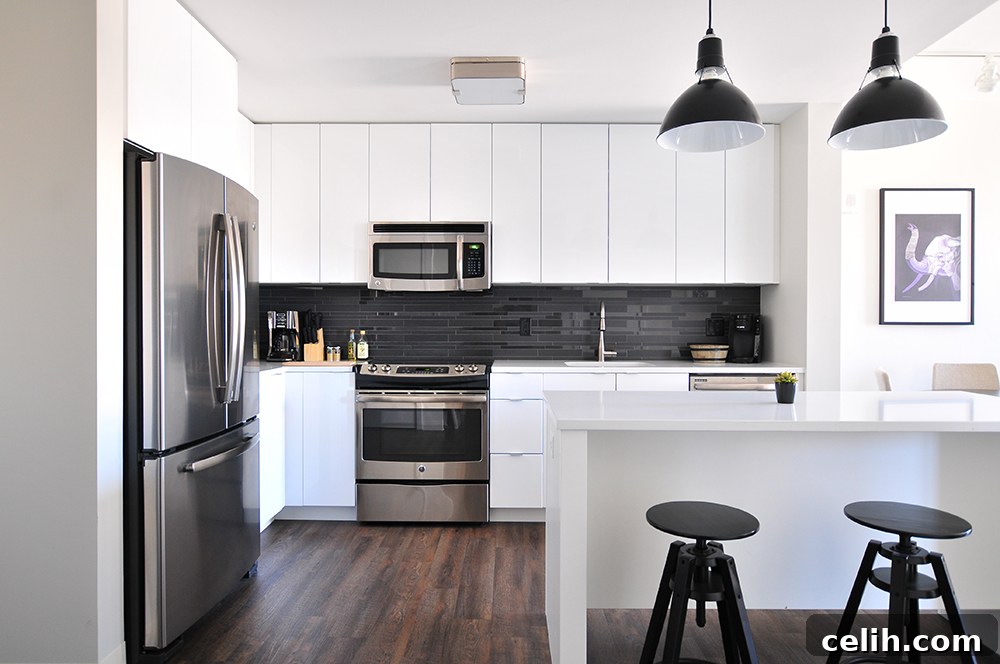
Contemporary: The contemporary kitchen, in contrast, leaves little room for such playfulness; it demands unforgivingly crisp lines and sharp angles to forge its distinctive vision. Here, precision is king. Floor patterns, wall tiles, and floating shelves should be satisfyingly regimented, creating a streamlined, almost architectural feel. The preference for handle-less storage wherever possible reinforces this seamless aesthetic, contributing to a sleek and uncluttered appearance. Just as you might begin to perceive a pervasive squareness, you can strategically introduce a single, impactful circular element. An unusual, sculptural extractor fan or a gracefully curved dining table can provide an unmistakable flair, acting as a focal point that breaks the rigidity without compromising the sophisticated linearity, essential for creating the ultimate contemporary kitchen space. Think of an open-plan layout that flows effortlessly into living areas, designed for both aesthetic impact and modern entertaining.
Materials: Texture and Composition
Modern: In a modern kitchen, the material palette is all about celebrating and complementing swathes of natural wood with strategic pops of plain-colored man-made materials. This aesthetic can be beautifully integrated by pairing rich wooden cabinetry with durable, neutral quartz countertops, or by reversing the scheme with pale birch counters over simple, light-colored cupboards. Materials like teak, walnut, and oak are quintessential to modernism, valued for their warmth and inherent beauty. For breakfast bars, slimline metal stools with subtle leather cushioning add a touch of industrial chic and comfort, enhancing the overall functionality and visual interest without overwhelming the space. The emphasis is on quality, durability, and a tactile connection to natural elements, ensuring longevity and timeless appeal.
Contemporary: While natural materials are also enjoying a significant comeback in current contemporary design, the focus shifts to variety and striking juxtaposition. Here, you’re encouraged to mix raw, exposed masonry with innovative combination counters that blend wood and marble, creating dynamic textural contrasts. These are often set against seamless planes of industrial materials like polished concrete and sleek glass, producing a sophisticated and sometimes edgy aesthetic. To counteract what might otherwise be a cold or overtly masculine feel, your finishing touches become crucial. Introduce warmth through a thoughtful combination of warm copper or brass fixtures, and soft textiles like throws and rugs made from luxurious wool, sheepskin, or linen. This strategic layering of diverse materials creates a rich, multi-dimensional contemporary space that is both visually captivating and inviting. The latest engineered materials, known for their durability and low maintenance, also feature prominently.
Colors: Palettes and Accents
Modern: Achieving a modern look in your kitchen involves a refined interplay of light and warm neutral surfaces, serving as a tranquil backdrop for accessories in fun, retro-inspired shades. Think mustard yellow, coral, or turquoise – hues that evoke a sense of nostalgic cheerfulness. The key is moderation: stick to one or two vibrant accent shades, strategically applying them to light fittings, rugs, or, for the particularly bold, on cabinet doors. The overall palette remains grounded in whites, creams, muted greys, and natural wood tones, ensuring the space feels inviting and timeless. These pops of color are carefully curated to add personality and visual interest without overwhelming the serene, understated aesthetic that defines modernism.
Contemporary: Currently, contemporary design dictates that monochrome is king. This doesn’t necessarily mean just black and white; it encompasses combining various tones and shades of a single color, such as sophisticated greys, elegant creams, or even deep blues, throughout the space. These subtle tonal variations create depth and interest. Anchor this monochromatic scheme with a dramatic worktop in a contrasting material like black slate or dark walnut, providing a strong visual foundation. A general rule of thumb is to feature contrasting floors and cabinets, then layer in a braver, more saturated shade – like claret, emerald green, or deep indigo – but use these sparingly. Reserve these bolder hues for impactful but limited elements such as stylish barstools, framed prints, or carefully chosen art pieces, ensuring they enhance rather than detract from the overall sleek and unified aesthetic.
Furniture & Fixtures: Form and Function
Modern: Modern kitchen furniture and fixtures are characterized by their clean lines, functional purpose, and often iconic designs. Think of simple, unadorned cabinetry with flat fronts and subtle hardware, or even integrated handles that disappear into the design. Seating often features ergonomic shapes and natural materials, such as dining chairs by Eames or Saarinen, known for their sculptural forms and comfortable utility. Lighting fixtures are typically understated but stylish, often featuring geometric shapes or frosted glass. Every piece serves a purpose, contributing to the overall sense of order and efficiency without sacrificing style. Stainless steel appliances are common, chosen for their durability and sleek appearance, blending seamlessly with the minimalist aesthetic.
Contemporary: Contemporary kitchens often incorporate cutting-edge furniture and fixtures that prioritize both innovative design and smart functionality. Integrated appliances that hide behind seamless cabinet panels are a hallmark, as are smart home technologies that control lighting, temperature, and even cooking. Seating might feature unconventional materials like clear acrylic or sleek, polished chrome, often with unexpected forms. Fixtures can be statement pieces themselves, perhaps an architectural faucet or a unique pendant light that doubles as art. Floating shelves, minimalist open storage, and handle-less drawers are prevalent, all contributing to an unblemished, hyper-organized look. The focus is on embracing current innovation and creating a high-tech yet aesthetically pleasing environment.
Details: Accents and Ambience
Modern: Ditch the kitsch and embrace the subtleties, because modern minimalism is all about refined details. Instead of cluttered counters filled with garish tchotchkes or bold pop-art posters, adorn your kitchen with understated yet iconic pieces. Consider displaying Arne Jacobsen flatware, known for its timeless design, or some thoughtfully selected Bauhaus-inspired vases. The key is to avoid visual clutter. Instead of scattering decorative pieces across your countertops, consolidate them. Keep decorative items together on one or two dedicated, well-placed shelves, allowing each piece to stand out without overwhelming the serene expanse of your workspace. Artwork, when present, should be abstract or minimalist, enhancing the sophisticated simplicity.
Contemporary: In a contemporary kitchen, the goal is to enhance the aggressively clean lines and architectural brilliance rather than detracting from them with unnecessary frills. Instead, leverage the power of light to emphasize the striking features of your space. Carefully hidden LED lighting strips, installed under cabinets or along toe kicks, create a dramatic glow, while strategically placed downlighters highlight specific zones or textures. If the idea of an entirely empty surface feels too stark, choose one powerful statement piece to anchor the space. A statement plant with architectural foliage, placed strategically on your kitchen island, can become the undisputed center of attention, introducing a touch of organic life without compromising the minimalist integrity. Think bespoke, custom-made elements that reinforce the unique and forward-thinking nature of the design.
Conclusion: Crafting Your Vision with Confidence
Navigating the nuances between modern and contemporary interior design can initially seem daunting, but armed with this detailed breakdown, you’re now better equipped to approach your next home revamp project with clarity and confidence. Understanding that modern is a specific, historical style while contemporary is an ever-evolving reflection of the present moment is the first crucial step. Each style offers unique opportunities to create a space that is not only beautiful but also deeply resonant with your personal aesthetic and functional needs.
Whether you’re drawn to the timeless elegance and functional simplicity of modern design or the dynamic, cutting-edge appeal of contemporary aesthetics, knowing the distinctions will enable you to make informed choices across design principles, materials, colors, furniture, and intricate details. By applying these insights, you can articulate your vision more effectively, collaborate seamlessly with your interior designer, and ultimately craft a home that truly reflects your desired style. At the very least, you’ll undoubtedly delight your designer with your newfound understanding!
(Images courtesy of Pixabay and Unsplash)