
The past few years have undeniably transformed our relationship with our homes and outdoor spaces. With more time spent indoors, many homeowners across the UK and beyond embraced the challenge of DIY projects, turning their attention to garden makeovers and home improvements. As professional landscapers often face extensive backlogs, and with a growing desire for sustainable and cost-effective solutions, the trend of upcycling and creatively enhancing green spaces without professional intervention has soared. If you’re envisioning a charming back garden transformation, you might be astonished by what you can achieve with one of the most unassuming yet versatile materials available: humble pallet wood. This reclaimed timber offers an incredible foundation for a multitude of projects, from functional structures to decorative accents, allowing you to infuse your outdoor living area with character and unique charm, all while being kind to your wallet and the planet.
Transform Your Garden with Pallet Decking
One of the most ambitious yet rewarding projects you can undertake with repurposed wooden pallets is constructing a beautiful and functional deck for your garden. Contrary to popular belief, building a basic ground-level deck doesn’t require professional expertise, and it can be a surprisingly straightforward task to accomplish with a friend or family member. Pallets are exceptionally well-suited for this purpose due to their uniform construction of evenly aligned slats or planks, which can be easily disassembled or used as structural components.
Before you begin, careful planning is paramount. Start by measuring the intended area for your deck. Consider the size, shape, and desired height, keeping in mind that ground-level decks are generally easier for DIY enthusiasts. When sourcing pallets, prioritize heat-treated (marked with ‘HT’) pallets over chemically treated ones (marked with ‘MB’ for Methyl Bromide) to ensure safety and longevity, especially for outdoor use. Inspect each pallet for sturdiness, rot, or excessive damage. You’ll need a sufficient quantity, whether you plan to use full pallets as modules or disassemble them for individual boards and joists.
The construction process typically begins with ground preparation. Clear the area of any vegetation, debris, and ensure it’s relatively level. A weed barrier fabric laid across the entire footprint will prevent future growth, and a layer of compacted gravel or sand can provide a stable, well-draining foundation. For maximum precision and a perfectly level surface, investing in or borrowing a green laser level is highly recommended. This tool will be invaluable for accurate levelling and alignment of your subframe and deck boards, ensuring a professional finish.
There are a couple of approaches to building the deck structure. You can create a foundational grid using larger timbers or carefully selected pallet frames, ensuring they are properly supported and level. Alternatively, if your design allows, you can use full pallets laid directly onto the prepared ground, interlinking them to form a sturdy base. Once the foundation is solid, individual pallet planks (or new timber if you prefer a more refined look for the surface) are then securely attached to the joists using weather-resistant screws. After construction, a thorough sanding will smooth out any rough edges or splinters, making the deck safe and comfortable for bare feet. Finally, protect your new decking with a suitable exterior wood stain or sealer. This not only enhances its appearance but also guards against moisture, UV damage, and rot, significantly extending its lifespan. A pallet deck offers a wonderfully inviting space for relaxation, entertaining, or simply enjoying your garden, all crafted with your own hands and a sustainable ethos.
Craft Unique Furniture with Pallets for Outdoor Living
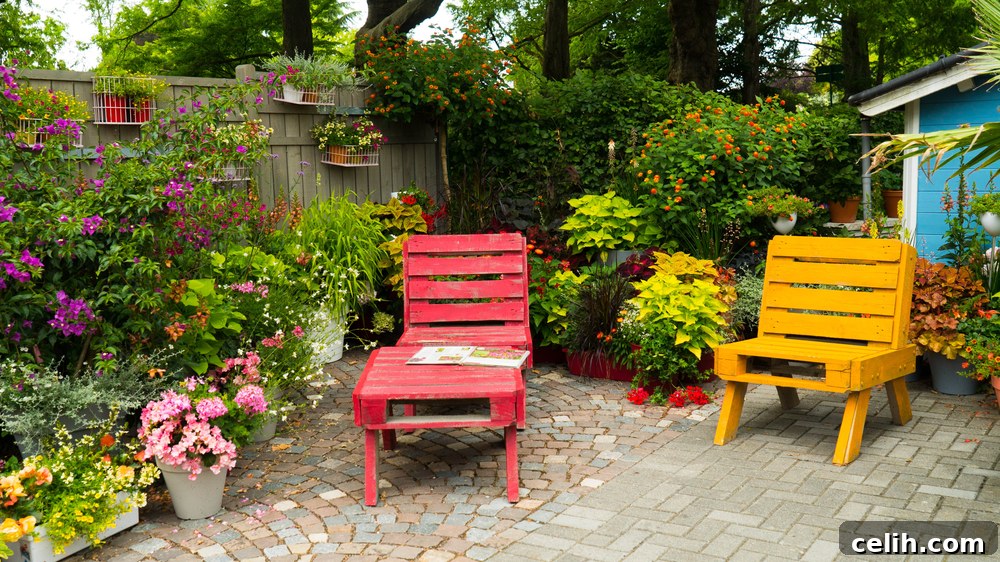
Beyond decking, the true creative potential of pallets shines in the realm of bespoke garden furniture. Pallets, typically crafted from durable woods like oak or pine, possess highly absorbent qualities, making them excellent candidates for soaking up paint, stains, and protective finishes. Their relatively malleable nature means they can be easily sawn, drilled, and manipulated to form a myriad of designs. In this respect, pallets serve as exceptional and economical building materials for a wide array of DIY garden furniture pieces, including comfortable two-seater benches, spacious picnic tables, versatile footrests, and even stylish outdoor sofas.
One significant advantage of pallet wood furniture, particularly in climates like the UK with its famously unpredictable weather, is its relatively lightweight nature. This makes pieces easier to move, allowing you to reconfigure your outdoor space as needed, or bring items under cover during inclement weather. Imagine quickly transforming a sunny corner into a shaded retreat, or tidily storing your furniture away for the winter months without excessive effort.
To embark on creating your own unique pallet wood furniture, you’ll need a few essential tools and materials. Gather your chosen pallets, ensuring they are clean and free from serious damage. For finishing, select a high-quality, protective garden furniture paint or stain in your preferred colour, along with appropriate brushes or rollers and a paint tray. An electric drill with a variety of bits is crucial for pre-drilling holes and securely fastening components with weather-resistant screws. Don’t forget sandpaper or an electric sander to smooth rough surfaces, preventing splinters and preparing the wood for a beautiful finish. Lastly, complete your creations with comfortable cushions and complementary furnishings to truly elevate your outdoor lounge area.
Consider the popular project of building a two-seater outdoor sofa. This can often be achieved with as few as three sturdy pallets. One pallet can form the base, another the backrest, and the third can be cut and adapted for armrests or additional structural support. When constructing any pallet furniture, a key tip for durability and stability is to always drill screws into the middle of the pallet’s wooden blocks – this is the densest section of wood, providing a much stronger hold compared to screwing into the narrower slats, which are more prone to splitting. Remember to use appropriate outdoor-grade screws that resist rust and corrosion.
For more elaborate pieces like dining tables or large sectional sofas, you might need to carefully disassemble pallets to utilize individual planks. This process requires a pry bar and a hammer, and a little patience to avoid damaging the wood. Once disassembled, you have greater flexibility to cut, sand, and reassemble the planks into custom designs. Finishing touches like adding caster wheels to coffee tables for easy mobility, or incorporating hidden storage compartments into benches, can further enhance the functionality and appeal of your pallet creations. With a bit of vision and effort, your garden can be adorned with practical, attractive, and eco-friendly furniture that reflects your personal style.
Design Aesthetic Embellishments and Functional Displays
Beyond larger functional fixtures and furniture, pallets offer an unparalleled medium for crafting a diverse range of aesthetic embellishments and practical storage solutions for your garden, porch area, or even exterior windowsills. The inherent structure of pallet wood, with its spaced slats and robust frames, lends itself beautifully to creating a multitude of versatile household and outdoor pieces.
Imagine the possibilities: from charming spice racks for your outdoor kitchen or BBQ area to miniature herb gardens that bring fresh flavours right to your fingertips. You can easily construct multi-tiered hanging flower boxes to adorn fences or walls, adding vibrant splashes of colour and texture. Decorative shelving units, either standalone or mounted, provide perfect spots for showcasing potted plants, garden ornaments, or lighting. Elegant display cases can highlight unique garden art or house seasonal decorations, making your outdoor space feel like an extension of your home’s interior.
For those who love to entertain, pallets can be transformed into ingenious mini-bars or drinks cabinets, perfectly complementing a BBQ area or patio. These can be designed with shelves for glasses, hooks for utensils, and even a small counter space for mixing cocktails. Beyond entertainment, consider practical additions like bespoke compost bins, robust tool organizers for your shed, or even attractive pathway edging that defines your garden beds.
If you’re fortunate enough to own a garden shed, shed, or garage, this structure presents an excellent canvas for attaching your pallet creations. A vertical garden wall made from pallets can turn a plain shed side into a living work of art, growing everything from strawberries to succulents. Pallet wood can also be used to create custom storage for gardening tools, hoses, or other equipment, keeping your shed tidy and organized.
When it comes to finishing your pallet pieces, the possibilities are endless. You could choose to paint the wood in earthy tones or muted greens to help your pallet creations blend seamlessly with existing features and natural elements of the garden. Alternatively, be bold with vibrant colours – think sunny yellows, oceanic blues, or fiery reds – to create striking contrasts and focal points that inject energy and personality into your outdoor space. Weather-resistant outdoor paints are crucial for longevity, and you might even consider distressing techniques for a rustic, reclaimed look, or adding stenciled designs for a personalized touch. Incorporating solar-powered string lights or small lanterns into your pallet displays can further enhance the ambiance, turning your garden into a magical retreat during the evening hours. With pallets, your imagination is truly the only limit to creating a unique and inviting outdoor sanctuary.