
Embracing Raw Elegance: The Ultimate Guide to Industrial Coffee Tables for Your Living Room
Industrial design has surged in popularity, transforming living spaces with its unique blend of utilitarianism and sophisticated ruggedness. Drawing inspiration from factories, warehouses, and urban lofts, this aesthetic champions raw materials, exposed structures, and a no-frills approach to décor. At the heart of any well-designed living room lies the coffee table – a functional centerpiece that can define the room’s character. In an industrial setting, the coffee table isn’t just a place for your drinks; it’s a statement piece, often showcasing robust materials and distinctive design.
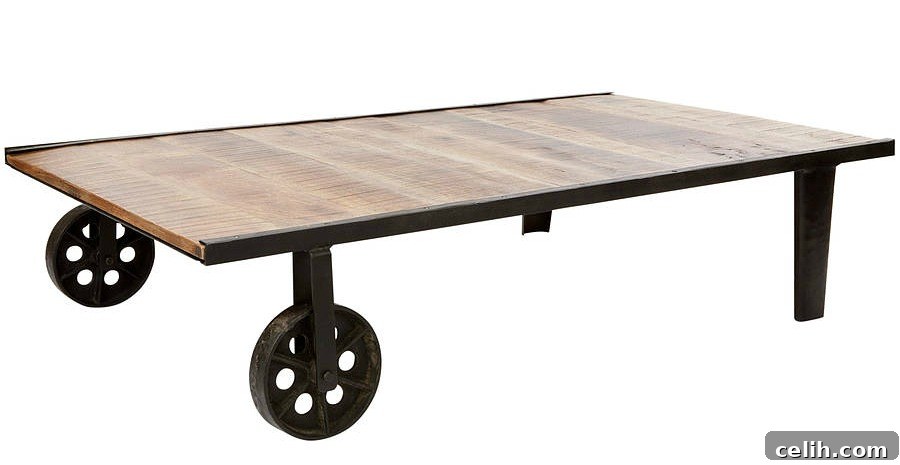
While countless styles of industrial coffee tables exist, one particular design stands out for its unique blend of charm, history, and practicality: the industrial trolley or wheelbarrow coffee table. These tables, often featuring prominent wheels and crafted from sturdy materials like metal and reclaimed wood, bring an authentic, rustic industrial flair directly into your home. They evoke a sense of history, utility, and timeless appeal, making them much more than just a surface – they become a conversation starter.
Understanding the Industrial Aesthetic: More Than Just a Trend
To truly appreciate the industrial coffee table, it’s essential to understand the essence of industrial style itself. This design movement emerged in the early 20th century, particularly gaining traction in the latter half as abandoned factories and warehouses were converted into residential lofts. Designers began to celebrate the inherent beauty of these structures, embracing exposed brick, concrete floors, visible ductwork, and steel beams rather than concealing them. The style is characterized by a minimalist approach, focusing on function, durability, and a somewhat unfinished or ‘deconstructed’ look, celebrating the beauty in imperfection.
Key elements of industrial style include a strong preference for raw and honest materials. Think natural wood with visible grain and texture, distressed metals like iron, steel, and brass, concrete, and rugged leather. The color palette typically leans towards neutrals – various shades of gray, black, white, and deep browns – often punctuated by deeper earth tones or the occasional pop of industrial-inspired colors like a rich rust red or a deep forest green. Lighting often features bare bulbs, metal cages, or factory-style pendants, highlighting the utilitarian origins. Furniture pieces are generally sturdy, functional, and often appear repurposed or salvaged, embodying a rich history and story within their design.
The Coffee Table: An Anchor in Your Industrial Living Room
In an industrial living room, the coffee table serves multiple purposes. It acts as an essential anchor for the seating arrangement, provides a convenient surface for everyday items, and significantly contributes to the room’s overall aesthetic. Unlike delicate or purely decorative tables, industrial coffee tables are built to last, often boasting substantial weight and a commanding presence. Their robust nature makes them ideal for high-traffic areas and busy households, offering both unparalleled style and impressive resilience. They are pieces designed to withstand the test of time, both aesthetically and structurally.
Beyond the classic trolley design, industrial coffee tables come in various forms. Some feature solid, chunky wood slabs atop sleek metal bases, others are made entirely of metal with riveted details reminiscent of old machinery, and some incorporate innovative elements like glass or even polished concrete surfaces. What unites them all is their unwavering commitment to raw materials and a functional design ethos. However, the trolley coffee table holds a particularly special place, embodying mobility, a sense of history, and a striking visual appeal that perfectly captures the heart of the industrial spirit.
The Allure of the Industrial Trolley Coffee Table
The industrial trolley or wheelbarrow coffee table is a quintessential example of form meeting function in industrial design. Its defining feature – prominent, often large, wheels – harks back to its origins as factory carts, trolleys, or railway platforms, originally designed for moving heavy goods across industrial spaces. This rich history imbues each piece with a unique story, adding unparalleled character and depth to your living space. The presence of functional wheels also offers practical benefits, allowing for easy repositioning of the table, whether for cleaning, reconfiguring your furniture layout, or creating more open space for social gatherings.
These tables are typically constructed from a blend of exceptionally hardy and visually interesting materials. Salvaged industrial steel, robust cast iron, and other durable metals form the framework, often displaying a natural patina, visible welding marks, or deliberate distressing that speaks volumes about their industrial heritage. The tabletops are frequently crafted from reclaimed wooden planks – timber salvaged from old barns, factories, ships, or other venerable structures. This reclaimed wood not only adds a rich texture, warmth, and organic feel but also carries its own unique history, with imperfections and variations telling a silent tale of its past life. The compelling combination of cold, sturdy metal and warm, textured wood creates a powerful visual contrast that is a hallmark of truly authentic industrial style.
The Jodin Barro Table: A Masterpiece of Industrial Craftsmanship
A stellar example that perfectly embodies the industrial trolley coffee table aesthetic is the Jodin Barro table. This piece isn’t merely manufactured; it’s a testament to artisanal craftsmanship, hand-built with meticulous attention to detail and a profound respect for its materials. Its construction from salvaged industrial steel gives it an undeniable strength and a unique, timeworn character that cannot be replicated. The steel frame, often showcasing the beautiful imperfections and ruggedness that come with repurposed materials, forms a solid and visually striking base.
Complementing the robust steel are genuine iron castors, which are not just decorative accents but fully functional, reinforcing the table’s utilitarian roots and providing smooth, easy mobility. The top is fashioned from carefully selected reclaimed wooden planks, each piece carrying its own distinct grain, natural knots, and perhaps even the subtle marks of its previous life. This deliberate choice of reclaimed wood not only makes each Jodin Barro table unique but also underscores a vital commitment to sustainability, transforming forgotten materials into something beautiful, functional, and enduring for generations.
The versatility of the Jodin Barro table extends far beyond its primary role as a coffee table. Its generous surface area and sturdy construction make it an excellent display unit for cherished books, unique art objects, or lush greenery, allowing you to personalize your space while maintaining the industrial aesthetic. Furthermore, its potential to double up as useful shelving beneath the main surface offers practical storage solutions, making it a highly functional and adaptable addition to any modern industrial living room. Such a piece truly transcends mere furniture, becoming a focal point that enriches the entire room with its heritage, practicality, and unique design narrative.
Integrating Your Industrial Coffee Table into Your Decor
Incorporating an industrial coffee table, especially a distinctive trolley style, into your living room requires a thoughtful approach to ensure cohesion and balance within your existing decor. While it undoubtedly makes a powerful statement, it should harmonize gracefully with other elements of your room. Here are some key considerations:
- Seating Choices: Pair your robust industrial coffee table with seating that complements its rugged elegance. Leather sofas, particularly those with a distressed or aged finish, are a classic and highly complementary choice, mirroring the table’s texture and durability. Alternatively, deep-buttoned Chesterfield sofas can introduce a touch of vintage luxury that contrasts beautifully with the industrial raw edge. For a softer, more inviting look, consider sofas upholstered in natural fabrics like linen, heavy canvas, or textured cotton in neutral tones.
- Rugs and Flooring: To soften the inherently hard lines of metal and wood, introduce a plush or textured rug. Jute, sisal, or wool rugs in geometric patterns, subtle stripes, or solid, muted colors can add significant warmth, define the seating area, and introduce textural contrast. Concrete floors are perfect for an authentic industrial backdrop, but wide-plank hardwood floors, polished concrete-effect tiles, or even large format porcelain tiles also work exceptionally well, providing a solid and stylish foundation for your industrial pieces.
- Strategic Lighting: Industrial lighting is absolutely key to completing the aesthetic. Think about pendant lights with exposed Edison bulbs, caged wall sconces, or adjustable task lamps crafted from metal or featuring articulated arms. These not only illuminate your space effectively but also reinforce the factory-inspired aesthetic, drawing the eye towards your stunning coffee table.
- Thoughtful Accessories: Accessorize your coffee table and surrounding areas with items that complement the industrial theme without overwhelming it. Vintage clocks, old hardcover books, minimalist metal sculptures, architectural salvage pieces, and potted succulents or industrial-style terrariums can add layers of interest and personality. Avoid overly ornate, delicate, or overtly modern items, opting instead for pieces with clean lines, robust materials, and a sense of history or utility.
Don’t be afraid to mix and match styles. An industrial coffee table can act as a grounding, statement-making element in a more eclectic space, blending seamlessly with minimalist, modern, or even bohemian elements. The deliberate contrast can create a dynamic, visually stimulating, and highly personal environment, preventing the room from feeling too thematic or sterile.
The Enduring Appeal of Reclaimed and Salvaged Materials
A significant aspect of the industrial aesthetic, beautifully exemplified by items like the Jodin Barro table, is the conscientious use of reclaimed and salvaged materials. This practice is not just about aesthetics; it’s deeply rooted in principles of sustainability and an profound appreciation for history and craftsmanship. Reclaimed wood, for instance, often comes from old buildings, factories, barns, railway sleepers, or even decommissioned ships, carrying with it a unique patina, character, and an undeniable story that newly harvested wood simply cannot replicate. Each scratch, knot, grain pattern, and discolored patch tells a silent tale, adding unparalleled depth and authenticity to a piece of furniture.
Similarly, salvaged metals – be it steel, iron, brass, or copper – bring an authentic, rugged appeal that evolves over time. These materials often display natural wear and tear, superficial rust, or original paint marks that are carefully preserved, celebrating their previous life rather than hiding it. This thoughtful approach to materials not only contributes to the distinctive and coveted industrial look but also promotes eco-conscious design choices, significantly reducing waste and giving new purpose to discarded elements. Investing in furniture made from such materials means bringing a piece of history, environmental responsibility, and unique character into your home.
DIY Industrial Coffee Tables: A Creative Endeavor
For the ambitious DIY enthusiast, creating an industrial coffee table can be an incredibly rewarding and personal project. With readily available materials like various gauges of piping, metal sheets, old wooden pallets, and robust caster wheels, it’s entirely possible to craft a truly unique piece that perfectly fits your specific space, style preferences, and budget. Many online tutorials, inspirational blogs, and community forums exist, offering comprehensive guides for building custom industrial furniture, allowing for endless creativity and personalization. This hands-on approach allows you to truly understand the materials and construction principles that define industrial design, making your coffee table even more special.
Finding Your Perfect Industrial Coffee Table
When searching for your ideal industrial coffee table, especially a distinctive trolley style, several avenues are available to explore. Specialty industrial furniture stores, both physical showrooms and online retailers, often curate extensive collections that align perfectly with the aesthetic, offering high-quality, pre-designed pieces. Online marketplaces and artisanal platforms, such as Notonthehighstreet.com (where you might find handcrafted pieces from ‘Reason Season Time’ as mentioned previously), are excellent sources for unique, handcrafted, and often custom-made industrial items from independent makers.
Don’t overlook vintage shops, bustling antique markets, flea markets, or architectural salvage yards. These places can be veritable treasure troves for authentic industrial pieces or individual components that can be skillfully repurposed into a coffee table. While a true vintage factory trolley might require some restoration, it offers unparalleled authenticity, a rich history, and character that mass-produced items simply cannot match. Always consider the dimensions, the specific materials used, and the overall condition to ensure it fits seamlessly and safely into your living space and meets your functional requirements.
Caring for Your Industrial Coffee Table
Industrial furniture, by its very nature, is designed to be exceptionally durable and hard-wearing, but proper care and maintenance will ensure its longevity and help preserve its unique aesthetic appeal for years to come. For metal components, a simple wipe down with a damp cloth followed by a dry cloth is usually sufficient for regular cleaning. Avoid harsh abrasive cleaners or chemicals that can strip patinas, protective finishes, or cause discoloration. If superficial rust begins to appear, specialized metal cleaners or rust removers can be used, often followed by a protective wax or sealant to prevent recurrence. Wooden surfaces, especially those made from reclaimed or distressed wood, benefit from occasional waxing or oiling to nourish the timber, protect against spills, and maintain their rich texture. Always use coasters to prevent unsightly water rings and protect against heat damage. Regular dusting and prompt cleaning of any spills will keep your industrial coffee table looking its absolute best.
Conclusion: The Enduring Charm of Industrial Design
The industrial style, with its celebration of raw materials, functional design, and rich historical context, offers a truly unique and compelling aesthetic for modern homes. The industrial coffee table, particularly the captivating trolley or wheelbarrow design, serves as a powerful and emblematic piece of this style. It combines robust construction with practical mobility and a captivating visual narrative, transforming a simple piece of furniture into a centerpiece of design, utility, and endless conversation.
Whether you opt for a handcrafted masterpiece like the Jodin Barro table or embark on a fulfilling DIY project to create your own, choosing an industrial coffee table allows you to infuse your living room with unparalleled character, a commitment to sustainability, and an undeniable sense of timeless cool. Embrace the raw elegance, the story in every scratch, and the strength in every joint, and let your industrial coffee table become the sturdy, stylish anchor of your uniquely designed home.