
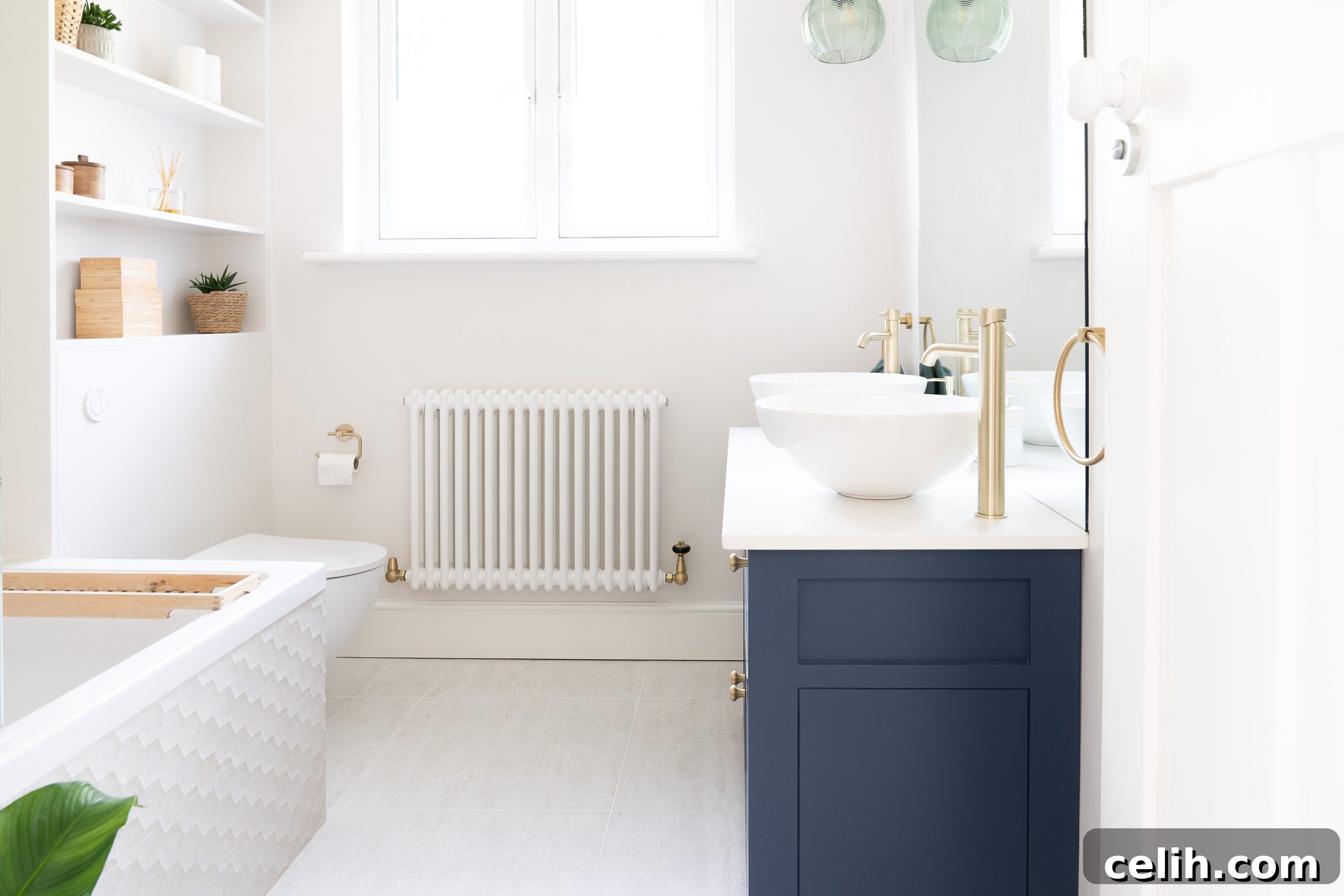
Embarking on a bathroom renovation or simply looking to refresh your space often brings a crucial decision: selecting the right vanity unit. Among the myriad options available, the choice between a sleek wall-mounted unit and a robust floor standing vanity unit with sink is paramount. This comprehensive guide will navigate you through the world of floor standing vanity units, exploring their defining characteristics, diverse styles, myriad advantages, potential drawbacks, and the array of materials they are crafted from. If you’re seeking to make an informed decision for your bathroom’s future, you’ve come to the right place.
A floor standing vanity unit with sink, often referred to as a freestanding vanity, is a self-contained piece of bathroom furniture designed to rest directly on the floor. Unlike its wall-mounted counterpart, it does not require attachment to the wall for support, although some installations may include minor anchoring for enhanced stability. Typically, it integrates a basin, a countertop surrounding it, and significant storage space beneath, usually in the form of cabinets, drawers, or open shelving. This all-in-one design makes it a functional centerpiece in any bathroom, marrying practicality with aesthetic appeal.
Freestanding vanity units are renowned for their incredible versatility, offering a vast spectrum of designs to complement any bathroom decor. Their popularity stems from their ability to cater to diverse spatial requirements and stylistic preferences. The variety available ensures that whether your home exudes a classic charm or a minimalist modern vibe, there’s a floor standing vanity unit perfectly suited for your needs. Some prominent types and styles include:
- Single Sink Vanity Units: Ideal for compact bathrooms or individual use, these units maximize functionality within a smaller footprint. They are perfect for guest bathrooms or en-suites where a single user will typically be using the space.
- Double Sink Vanity Units: A luxurious choice for larger bathrooms and busy households, double sink units provide ample space for two users simultaneously, making morning routines smoother and more efficient. They are a popular feature in master bathrooms.
- Corner Floor Standing Vanity Units: Specifically designed to utilize often-wasted corner space, these units are ingenious solutions for optimizing layout in smaller or unusually shaped bathrooms, offering practical storage without encroaching on central floor area.
- Worktop Vanities: These units feature an expansive countertop surface surrounding the basin, offering generous space for toiletries, decorative items, and everyday essentials. They often provide a more luxurious and integrated look.
- Modern Floor Standing Vanity Units: Characterized by sleek lines, minimalist designs, and often handleless drawers or doors, modern units embrace contemporary aesthetics, frequently featuring materials like glossy lacquers, dark wood finishes, or innovative composites.
- Traditional Floor Standing Vanity Units: Evoking classic charm, these units often feature intricate detailing, paneling, ornate handles, and finishes such as natural wood, antique white, or classic grey. They seamlessly blend into period homes or traditionally styled bathrooms.
- Small & Compact Units: Catering to cloakrooms or very small bathrooms, these scaled-down versions still offer essential storage and a basin, proving that freestanding units aren’t exclusively for large spaces.
- Large Statement Units: For grand bathrooms, oversized floor standing vanities can become a magnificent focal point, offering expansive storage and a commanding presence.
The Advantages of Installing a Floor Standing Vanity Unit with Sink
The enduring popularity of floor standing vanity units is largely attributable to their practical benefits and design flexibility. Compared to wall-mounted alternatives, their inherent structure offers distinct advantages that can significantly enhance your bathroom’s functionality and aesthetic. Here are some of the key advantages that make freestanding vanity units a compelling choice for many homeowners:
- Unrivalled Storage Capacity: One of the most significant benefits of floor standing vanity units is the generous amount of storage they provide. Extending fully to the floor, these units offer maximum cabinet and drawer space, often encompassing the entire depth and width beneath the sink. This makes them invaluable for organizing a multitude of bathroom essentials, from towels, toiletries, and cleaning supplies to hair dryers and styling tools. For families, individuals with extensive beauty routines, or anyone seeking to minimize clutter and maintain a tidy bathroom, this ample storage is a game-changer. It far surpasses the storage capabilities of most wall-mounted units, which are often limited in depth and volume.
- Exceptional Design Versatility: Floor standing vanity units come in an astounding array of designs, colors, finishes, and sizes, offering unparalleled versatility to match any bathroom decor. Whether your aesthetic leans towards the rustic charm of a farmhouse, the clean lines of minimalism, the opulent feel of traditional design, or the cutting-edge appeal of modernism, there’s a freestanding vanity unit to complement it. This vast selection empowers homeowners to truly personalize their space, allowing the vanity to serve not just as a functional item but also as a significant design statement and focal point within the bathroom.
- Simplified and Cost-Effective Installation: The installation process for floor standing vanity units is generally much simpler and less labor-intensive compared to wall-mounted units. As they are self-supporting, there’s no need for complex wall reinforcements or precise stud finding. Typically, installation involves positioning the unit, connecting the plumbing (water supply and drainage), and ensuring it’s level. This ease of installation often translates into lower installation costs, and for the savvy DIY enthusiast, it can even be a manageable project to tackle personally, saving on professional labor fees. This straightforward setup is a major draw for many homeowners.
- Enhanced Stability and Durability: While not anchored to the wall for primary support, floor standing units, by virtue of their full-floor contact and often substantial construction, inherently offer a sense of solidity and stability. Their robust build quality means they are less susceptible to movement or damage from everyday use. Many are crafted from durable materials designed to withstand the humid bathroom environment, promising longevity and consistent performance over years of use. For households where stability is a priority, these units offer peace of mind.
- Aesthetic Flexibility and Room to Grow: While generally considered less “moveable” once plumbed in, the absence of complex wall mounting gives floor standing units a degree of flexibility. Should you decide to reconfigure your bathroom layout in the future, removing and reinstalling a freestanding unit can be less disruptive than dealing with wall-mounted fixtures. Moreover, their solid presence can create a grounded, established feel in a bathroom, making them a cornerstone of the design that can evolve with other elements over time.
Potential Drawbacks of a Floor Standing Vanity Unit with Sink
While floor standing vanity units offer numerous benefits, it’s equally important to consider their potential disadvantages to ensure they align perfectly with your specific bathroom requirements and lifestyle. Most of these considerations revolve around spatial dynamics and maintenance. Understanding these cons will enable you to make a balanced and informed decision.
- Occupies More Floor Space: This is arguably the most significant drawback of floor standing vanity units. By their very nature, these units sit directly on the floor and occupy a dedicated footprint, making them less ideal for small bathrooms, compact en-suites, or narrow layouts. In spaces where every inch counts, a large freestanding unit can make the room feel cramped, impede traffic flow, and visually reduce the sense of openness. Wall-mounted vanity units, which free up floor space beneath them, often hold a distinct advantage in smaller settings by creating an illusion of greater roominess.
- Potential for Water Damage at the Base: Given that floor standing units rest directly on the bathroom floor, their base is more susceptible to water damage from spills, splashes, or even minor leaks from the shower or bath. Materials like wood or MDF, if not properly sealed or treated, can warp, swell, or discolour over time when exposed to standing water. This necessitates diligent cleaning and quick attention to any water accumulation around the unit’s base to preserve its integrity and appearance. Selecting water-resistant materials or units with raised legs can mitigate this risk.
- Heavier and Less Flexible for Rearrangement: While conceptually “freestanding,” these units are often quite heavy, especially when constructed from solid wood or materials like marble and granite. Once plumbed in, they are not easily moved for deep cleaning beneath or for frequent reconfigurations of the bathroom layout. This lack of practical mobility means that while installation is easy, true “rearrangement” of the unit itself is a substantial undertaking, potentially requiring professional assistance and replumbing.
- Can Be Perceived as Less Modern by Some: Although there are many contemporary designs, the traditional archetype of a floor standing vanity unit can sometimes be perceived as less modern or cutting-edge compared to the sleek, floating aesthetic of wall-mounted units. If your primary design goal is to achieve an ultra-minimalist, airy, and truly futuristic bathroom, a substantial floor standing unit, even a modern one, might not fully align with that vision. The open space beneath a wall-mounted unit often contributes more effectively to a minimalist design.
- Cleaning the Floor Around the Unit Can Be Challenging: While the surfaces of the vanity itself are typically easy to clean, accessing the floor directly beneath and behind a heavy, fixed-in-place floor standing unit can be cumbersome. Dust, hair, and moisture can accumulate in these hard-to-reach areas, requiring more effort and specialized tools to maintain pristine cleanliness compared to the open floor space offered by a wall-mounted unit.
- Initial Cost Can Be Higher: Due to the greater amount of material and often more intricate craftsmanship required for self-supporting structures, floor standing vanity units can sometimes carry a higher initial purchase price than comparable wall-mounted models. The cost will fluctuate significantly based on materials, brand, size, and additional features, but generally, the robust nature of freestanding units contributes to their price point. However, as noted, this can often be offset by lower installation costs.
What Materials are Floor Standing Vanity Units Made Of?
The material composition of a floor standing vanity unit significantly influences its durability, aesthetics, and maintenance requirements. Understanding the characteristics of common materials will help you select a unit that not only looks great but also performs well in the humid environment of a bathroom. Here are some of the materials commonly used for both the cabinetry and countertops of freestanding vanity units:
- Solid Wood: Prized for its natural beauty, warmth, and classic appeal, solid wood (such as oak, maple, cherry, or teak) offers exceptional durability and a luxurious feel. It can be stained or painted to achieve various finishes. However, wood requires proper sealing and treatment to resist moisture and prevent warping or cracking in humid conditions. It often represents a higher-end option.
- MDF (Medium-Density Fibreboard): A popular and cost-effective alternative to solid wood, MDF is engineered wood made from wood fibres pressed together with resin. It offers a smooth surface that’s excellent for painting or applying laminates and veneers. MDF is less prone to warping than solid wood but is highly susceptible to water damage if its protective coating is compromised. High-quality MDF with waterproof finishes is crucial for bathroom use.
- Plywood: Another engineered wood product, plywood consists of thin layers of wood veneer glued together. It’s generally stronger and more water-resistant than MDF, especially marine-grade plywood. It offers good structural integrity and can be a durable option for vanity cabinetry, often used as a core for veneers or laminates.
- Ceramic: Primarily used for integrated basins or sometimes for countertops, ceramic is renowned for its smooth, non-porous, and easy-to-clean surface. It’s highly durable, resistant to scratches and stains, and maintains its pristine appearance for years, making it an excellent choice for high-traffic areas.
- Laminate: Laminate is a synthetic material applied over a core of MDF or particleboard. It comes in an incredible array of colours, patterns, and textures, mimicking wood, stone, or abstract designs. Laminate is highly affordable, easy to clean, and reasonably durable against scratches and moisture, provided the edges are well-sealed. It’s a versatile choice for budget-conscious homeowners.
- Marble: A natural stone, marble offers unparalleled elegance and a luxurious, timeless aesthetic with its distinctive veining patterns. Often used for countertops and integrated sinks, marble is heat-resistant and durable. However, it is porous and susceptible to staining from acidic liquids, requiring regular sealing and careful maintenance to preserve its beauty.
- Granite: Another natural stone, granite is exceptionally durable, highly resistant to scratches, heat, and stains, making it an excellent choice for high-use vanity countertops. It comes in a vast range of colours and speckled patterns, offering a robust and sophisticated finish. Like marble, it benefits from periodic sealing to enhance its stain resistance.
- Quartz: An engineered stone, quartz combines natural quartz crystals with resins and pigments, resulting in a non-porous surface that is extremely hard, durable, and highly resistant to stains, scratches, and bacteria. It requires virtually no maintenance or sealing and offers a consistent appearance. Quartz is a premium, high-performance option for vanity countertops.
- Glass: Increasingly popular for modern and minimalist vanity tops or even entire basins, glass offers a sleek, contemporary look that can make a bathroom feel more open and airy. Tempered glass is strong and heat-resistant, but it can show fingerprints and water spots more readily and may be prone to chipping if subjected to heavy impact.
- Solid Surface (e.g., Corian): These engineered materials are composed of acrylic or polyester resins, minerals, and pigments. Solid surface is non-porous, highly durable, seamlessly moldable (allowing for integrated sinks without visible seams), and easily repairable if scratched. It offers a smooth, uniform appearance and is highly hygienic, available in numerous colours.
Choosing the perfect floor standing vanity unit with a sink is a pivotal decision that impacts both the functionality and aesthetics of your bathroom. By carefully weighing the distinct advantages against the potential drawbacks, and considering the wide array of materials and styles available, you can select a unit that not only meets your practical needs but also beautifully complements your home’s interior design. Remember to consider your bathroom’s size, your storage requirements, personal style preferences, and overall budget to ensure your chosen vanity unit integrates effortlessly and enhances your daily routine for years to come. Make an informed choice, and transform your bathroom into a space of comfort and style.