
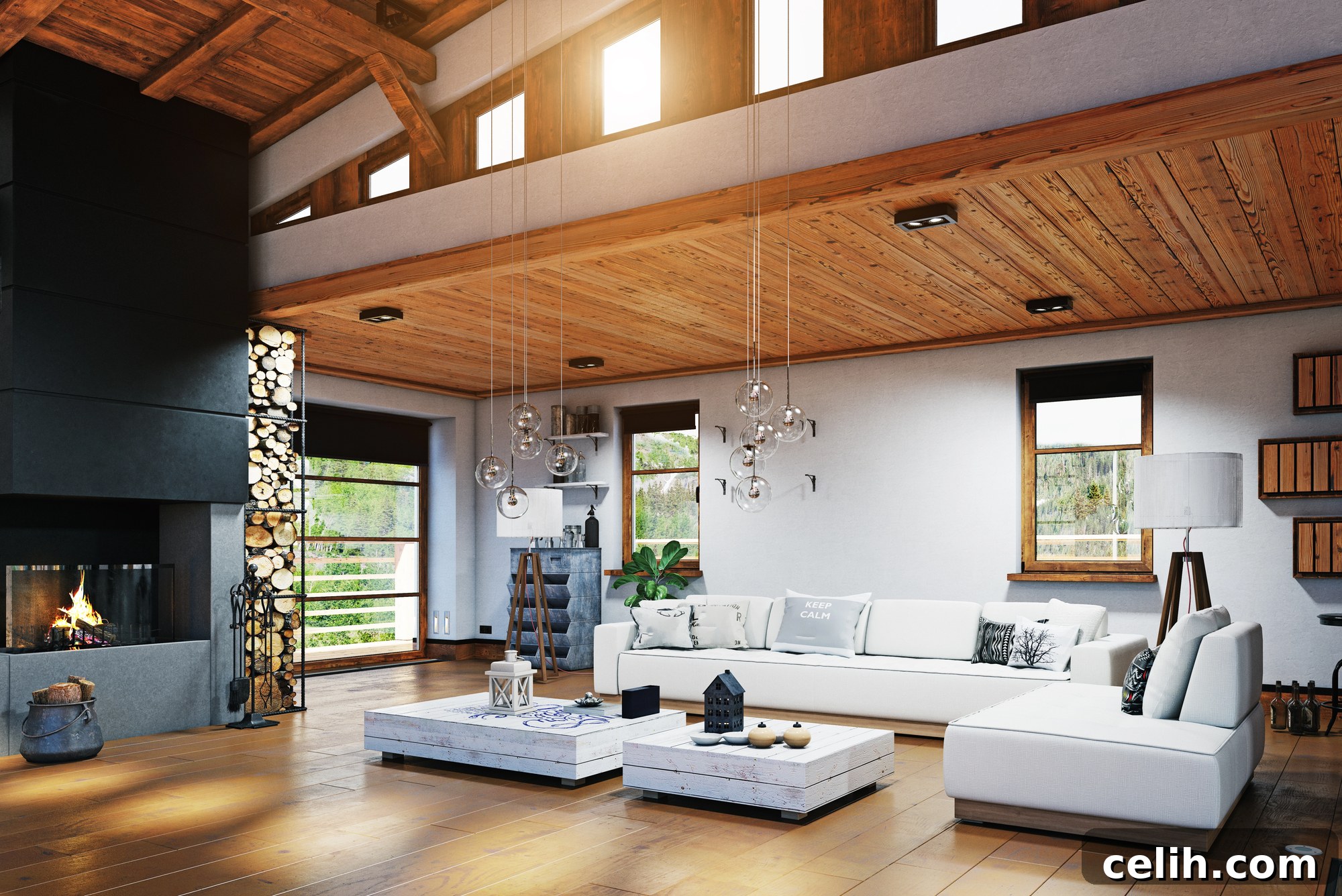
Log homes exude a unique, undeniable architectural charm, captivating homeowners with their raw beauty and connection to nature. Yet, designing their interiors presents a distinct set of challenges. The inherent warmth and density of wood mean that timber naturally absorbs light, and without a deliberate, thoughtful design strategy, all that magnificent timber can easily make a room feel dark, heavy, and visually overwhelming.
The art of log home interior design lies in achieving a perfect harmony—a delicate balance between the rustic authenticity that defines these structures and the modern comfort and functionality expected in contemporary living spaces. It’s about honoring the natural materials while injecting style, brightness, and a sense of inviting spaciousness. Crafting such an environment requires more than just decorating; it demands an understanding of how light, color, texture, and contrasting elements interact within a predominantly wooden shell.
From maximizing natural illumination to strategically introducing diverse materials, every design choice plays a crucial role in transforming a potentially dark timber box into a bright, airy, and sophisticated sanctuary. Here, we explore key design principles and practical ideas to help you create a log home interior that feels both authentically rustic and refreshingly modern, ensuring every corner reflects your personal style while enhancing the intrinsic beauty of the wood.
1. Embrace Earth Tones for a Harmonious Log Cabin Interior
One of the most intuitive and effective ways to craft an inviting and cohesive interior for your log cabin is to draw color inspiration directly from its surrounding landscape. This approach naturally complements the organic essence of the timber, creating a palette that feels both grounded and serene. Imagine the rich, deep greens of a forest canopy, the calming blues of a serene lake, the warm, sun-baked terracotta of natural clay, or the soft, creamy neutrals found in river stones and dry grasses. These hues work in exquisite concert to highlight the diverse, natural undertones present in pine, cedar, or darker oak logs.
Log homes inherently feature an abundance of exposed wood, which, if not carefully balanced, can quickly lead to a visually monochromatic and heavy interior. Introducing a diverse spectrum of earth tones acts as a powerful antidote to this visual monotony. By grounding the space with these natural shades, you break up the expansive timber surfaces while perfectly complementing the rustic charm of heavy logs. This design strategy not only enhances the aesthetic appeal but also fosters a sense of tranquility and connection to the outdoors, echoing the principles of biophilic design.
Consider weaving these organic shades throughout your living spaces through thoughtfully chosen elements. Plush upholstery in forest green or deep blue can become a focal point, drawing the eye and adding depth. Oversized area rugs in various textures and neutral tones can define zones and provide a soft counterpoint to hard wooden floors. Even heavy knit throw blankets draped over sofas or chairs, or carefully selected wall art and decorative accents, can infuse the room with warmth and soften the rigid architectural lines of the wood, making the space feel instantly more welcoming and liveable. This ensures your log home interior remains visually rich and balanced without becoming overwhelming.
2. Maximize Natural Light to Brighten Log Home Interiors
The inherent characteristic of wood to absorb light means that log homes, while beautiful, can easily develop dark or shadow-filled corners, making rooms feel smaller and less inviting. The most effective way to address this design challenge is to aggressively maximize the influx of natural sunshine, transforming your interior into a bright, airy sanctuary. Strategic placement and generous sizing of windows are paramount, allowing daylight to flood every possible space and beautifully illuminate the unique textures of the log walls.
Whenever possible, consider leaving large windows completely uncovered to ensure an unobstructed flow of natural light. This design choice not only brightens the room but also creates a seamless visual connection with the surrounding environment, enhancing the log home’s connection to nature. In areas where privacy is a necessary consideration, opt for sheer, lightweight curtains or blinds that gently filter the sunlight rather than blocking it entirely. Materials like linen or thin cotton in light, neutral colors are excellent choices, as they diffuse light beautifully while maintaining a bright and open feel. Avoid heavy, dark drapes that can absorb light and make the space feel closed off.
Beyond windows, consider incorporating reflective surfaces to amplify light. Strategically placed mirrors can bounce natural light deeper into rooms, visually expanding the space and brightening shadowy areas. Light-colored ceilings, often painted in shades of white or cream, can reflect a significant amount of light downwards, preventing the “cave-like” effect that can sometimes occur in all-wood interiors. Similarly, lighter flooring options or large, light-colored area rugs can contribute to a brighter overall ambiance. Finally, complement natural light with a well-planned artificial lighting scheme, layering ambient, task, and accent lighting to ensure every corner of your log home feels illuminated and welcoming, regardless of the time of day.
3. Layer Cozy Textures in Your Log Home Decor for Ultimate Comfort
To truly soften the robust, sometimes imposing presence of heavy timber in a log home, it is essential to introduce an abundance of plush, inviting textiles and varied textures. This approach injects crucial warmth, comfort, and visual interest into the space, counteracting the natural rigidity and hard lines of the log walls. Imagine chunky knit throws casually draped over a comfortable sofa, their tactile appeal begging to be touched. Picture sumptuous faux fur rugs layered strategically on the floor, providing a luxurious underfoot experience, or heavily woven pillows that add a critical layer of cozy, livable comfort to seating arrangements.
The naturally rigid, horizontal lines and solid surfaces of log walls demand a visual counterbalance. Adding a variety of tactile, touchable elements—from smooth to rough, soft to coarse—is the perfect way to break up those hard edges and create a more dynamic, inviting environment. Consider materials like wool, linen, cotton, velvet, and even leather, each offering a distinct texture that contributes to the overall sensory experience of the room. This layering creates depth and dimension, preventing the interior from feeling flat or monolithic.
Beyond just looking beautiful, heavy textiles and layered elements serve a highly practical purpose: sound dampening. In rooms with extensive bare wood surfaces, sound waves can easily bounce, leading to echoes and a somewhat hollow acoustic. Generously layering thick area rugs, plush blankets, and even textile-based wall hangings helps absorb these sound waves, instantly making your log cabin feel much more intimate, quiet, and serene. When layering thick area rugs, you aren’t hiding your beautiful wooden floors; rather, you’re breaking up the expansive sea of timber, defining different zones, adding color and pattern, and providing both protection for the wood and soft comfort for your feet. This thoughtful integration of textures transforms a visually appealing space into a truly functional and comfortable sanctuary.
4. Mix Rustic Interior Design with Modern Metal Accents
One of the most effective strategies for revitalizing a log home interior and preventing it from feeling like a time capsule is to introduce contrasting materials, particularly modern metal accents. Bringing in sleek elements like wrought iron fixtures, brushed brass hardware, or matte black finishes is a brilliant way to break up an endless expanse of timber. These industrial or contemporary touches, whether in the form of updated cabinet pulls, statement light fixtures, a minimalist metal stair railing, or even modern furniture pieces with metallic bases, inject a fresh, current aesthetic that beautifully complements the rugged, natural logs.
This approach is about creating a dynamic dialogue between the raw, organic beauty of wood and the refined, often angular lines of modern design. The juxtaposition of natural, rustic elements with clean, industrial materials like metal, glass, or even polished concrete elevates the entire aesthetic, proving that you don’t have to sacrifice modern sophistication to enjoy the warmth and character of cabin life. It allows for a design that feels both deeply rooted in tradition and effortlessly contemporary, appealing to a wide range of tastes.
Achieving this delicate balance between old and new often starts with the very foundation of the home. Nida Log Houses, a Lithuanian manufacturer with over 20 years of experience in crafting log homes, exemplifies this philosophy. They seamlessly blend traditional, generational craftsmanship with the sleek standards of contemporary living. By utilizing certified timber from responsibly managed Scandinavian and Baltic forests, they ensure each home is built with honest, sustainable materials, reflecting a commitment to both quality and environmental stewardship.
Their craftsmen understand that true quality often lies in restraint, avoiding over-engineering the design. Instead, they meticulously shape natural timber into clean, perfectly fitted walls that serve as the ideal backdrop for sleek, contemporary accents. This approach emphasizes the innate beauty of the wood itself, allowing modern elements to stand out without competing. As they articulate their philosophy: “Simplicity takes more skill than complexity. Anyone can add. Discipline is knowing what to leave out.” This sentiment perfectly encapsulates the essence of modern rustic design—a thoughtful curation of elements that highlights the best of both worlds.
Ultimately, a beautifully designed room thrives on contrast and thoughtful integration. Pairing the rugged, robust nature of natural logs with the clean, sophisticated lines of metal accents instantly elevates the entire log home aesthetic. This fusion creates an interior that is not only visually striking but also supremely functional and timeless, bridging the gap between rustic charm and contemporary elegance. It allows log homes to be appreciated for their historical character while fully embracing the comforts and styles of the 21st century.
Bringing Your Modern Log Home Decor to Life
Creating an exceptional log home interior is an exciting journey that culminates in a space uniquely yours. The fundamental key lies in striking a harmonious balance between the inherent natural beauty of the timber and your own contemporary style preferences. It’s about celebrating the rustic foundation while carefully curating modern elements that enhance, rather than detract from, its authentic charm. This delicate dance transforms a simple log structure into a sophisticated yet inviting haven.
Every design decision, from the choice of earth-toned palettes and the strategic maximization of natural light to the thoughtful layering of cozy textures and the integration of sleek metal accents, contributes to this balance. By applying these principles, you can transform your log home into a sanctuary that feels both timeless and refreshingly modern. Ultimately, the most breathtaking log cabin designs are those that respectfully acknowledge the rich history and rugged character of the timber, while simultaneously introducing all the soft, contemporary comforts and functional elegance needed for everyday living. This thoughtful approach ensures your log home isn’t just a dwelling, but a personalized retreat that perfectly marries tradition with modern sophistication.