
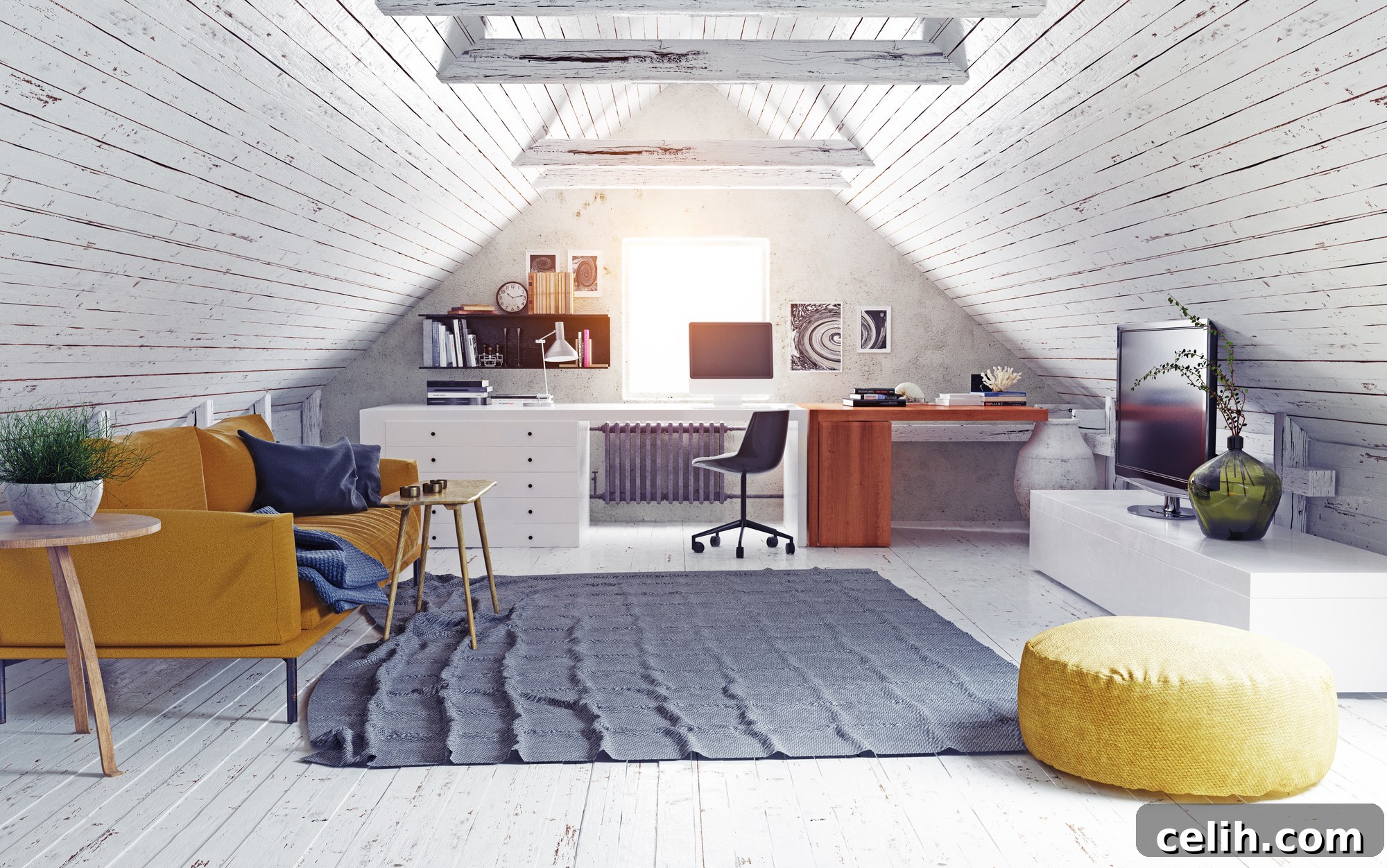
Working remotely has become a cornerstone of modern professional life, offering unparalleled flexibility and autonomy. However, finding a dedicated and inspiring workspace within your home can be a challenge, especially when living spaces are already optimized for family life and relaxation. If you’ve been searching for the perfect spot to boost your productivity and creativity, look no further than above your head. Your often-overlooked attic, currently serving as a storage graveyard, holds immense potential as a fully functional, serene, and uniquely personal home office.
Transforming an attic into a professional sanctuary is more than just moving a desk upstairs; it’s a strategic renovation that can significantly enhance your work-life balance and even increase your property’s value. Imagine a quiet retreat, bathed in natural light, far from the daily distractions of your household, designed precisely to fuel your professional endeavors. This guide will walk you through the essential steps and considerations for converting your dusty attic into the ideal work-from-home haven you’ve always dreamed of, ensuring it’s not only functional but also a source of inspiration.
Embarking on this exciting venture requires thoughtful planning and an understanding of key design and structural elements. To help you navigate the process, here are five comprehensive tips for converting your attic into your dream home office, ensuring every detail from structural integrity to personalized decor is perfectly aligned with your vision.
Professional Evaluation: Laying the Foundation for Success in Your Attic Home Office
Before you even begin to envision desk placements or paint colors, the very first and most crucial step is to ascertain the structural integrity and suitability of your attic space. Rushing into an attic renovation without a professional assessment can lead to costly repairs, safety hazards, and ultimately, profound disappointment. Engaging qualified experts will ensure your future office is not just beautiful, but fundamentally safe and compliant with local building codes, making your attic home office a secure space.
Start by hiring a licensed structural engineer or an experienced general contractor specializing in attic conversions. These professionals possess the expertise to evaluate whether your attic’s existing framework—including joists, rafters, and support beams—can adequately bear the increased load of furniture, equipment, and regular human activity. Unlike storage, which places intermittent and often static weight, a functional office demands continuous support for dynamic loads. They will meticulously inspect for signs of mold, water damage, pest infestations, and existing insulation deficiencies that could compromise your new workspace and impact the overall attic conversion.
A key area of focus for the structural assessment will be the flooring. Most attics are built with joists designed only to support the ceiling below and light storage loads. To transform it into a habitable room, a robust new floor structure is often required. This typically involves reinforcing existing joists or installing entirely new, stronger ones. You’ll likely need to install a subfloor for stability, followed by a top floor that provides both durability and aesthetic appeal. Your professional will guide you on the necessary modifications to create a solid, stable foundation, ensuring you’re not walking on beams and insulation.
When selecting your final flooring material, consider options that can withstand temperature fluctuations common in attics and comfortably support your office furniture and foot traffic. High-quality engineered wood, robust laminate, sustainable bamboo, or sound-absorbing cork are excellent choices, offering a blend of durability, ease of maintenance, and visual warmth. Carpet tiles can also be a practical option, offering insulation and sound absorption benefits, particularly useful in a multi-use home. Ensuring a solid floor is paramount for a comfortable and stable attic office environment.
Beyond structural checks, these experts will also assess current insulation, ventilation needs, and potential fire safety requirements, ensuring your attic conversion meets all necessary building regulations and offers a comfortable, secure environment for years to come. Investing in this initial professional evaluation is an investment in the long-term success and safety of your new remote workspace.
Functional Furniture: Maximizing Space and Comfort in Your Attic Office
Once the structural integrity of your attic is confirmed, the exciting process of furnishing your new home office design begins. Attic spaces often present unique challenges due to their sloped ceilings, irregular walls, and potentially smaller footprints. However, with intelligent planning and the right furniture choices, even the most compact attic can be transformed into an incredibly efficient and comfortable work-from-home office.
The cardinal rule for attic office furniture is “functional first.” Every piece should serve a purpose and be proportionate to the space. Begin by meticulously measuring your attic, paying close attention to ceiling heights, wall angles, and potential obstructions. This detailed blueprint will guide your furniture selection, preventing common pitfalls like purchasing an oversized desk or a chair that clashes with a sloped wall. Consider creating a scaled floor plan to experiment with different layouts before making any purchases, essential for effective attic office ideas.
Ergonomics must be a top priority. A comfortable and supportive desk and chair are non-negotiable for long working hours. Look for adjustable standing desks that allow you to vary your posture, promoting better health and focus. Pair this with an ergonomic office chair that provides lumbar support and adjustability. Given the unique access often associated with attics, plan the logistics of moving furniture in and out carefully. Modular or flat-pack furniture can be a practical solution, making transportation and assembly much easier, and is a smart choice for any attic conversion.
To prevent overcrowding and maintain a clean, focused environment, embrace multi-functional furniture. Think beyond traditional office pieces. A modular sofa or a daybed can offer a flexible seating area for breaks or impromptu brainstorming sessions without consuming excessive space. Wall-mounted desks or folding tables can be tucked away when not in use, instantly expanding your floor area. The goal is to maximize utility while preserving precious square footage and promoting an uncluttered atmosphere, which directly correlates with enhanced productivity and reduced stress.
Storage is paramount in any small space, and an attic office is no exception. Instead of bulky freestanding units, opt for built-in or custom storage solutions that integrate seamlessly with the unique architectural features of your attic. Low-profile shelving can be installed along kneewalls or under sloped ceilings, utilizing often-unused corners. Vertical storage, such as tall, slim bookcases or wall-mounted cabinets, draws the eye upwards, creating an illusion of height and efficiently using vertical space. Consider installing drawers or cubbies under window seats or along eaves to stash away documents, supplies, and personal items, keeping your workspace tidy and focused solely on work.
Technological Necessities: Powering Your Attic Home Office Productivity Hub
In today’s digital age, a home office is only as effective as its technological infrastructure. Your attic office needs to be a fully connected and powered hub, seamlessly supporting all your modern-day work requirements. Overlooking these critical components can lead to constant frustration, interruptions, and a significant dip in productivity. From reliable internet to ample power outlets, every technological detail needs meticulous planning and execution for your remote work space.
First and foremost, address your electrical needs. Standard attics typically have minimal electrical wiring, often just a single light fixture. Converting this space into a functional office demands a robust electrical system. You’ll need to install dedicated circuits to prevent overloading, ensuring there are plenty of outlets strategically placed near your desk, for charging devices, and for any auxiliary equipment. Consider outlets with built-in USB ports for added convenience. All wiring must be professionally installed, safely concealed, and compliant with current electrical codes to prevent fire hazards and ensure long-term reliability. Don’t forget to plan for potential smart lighting systems or climate control units that will also require power.
Next, tackle internet connectivity – arguably the most vital element for any remote worker. An attic’s elevated position and structural materials can sometimes interfere with WiFi signals from your main router. Invest in solutions to guarantee a fast, stable, and efficient internet connection. Options include installing a WiFi extender or a mesh WiFi system to broaden your network’s reach, or for the most reliable connection, consider running an Ethernet cable directly to your attic. This hardwired connection offers superior speed and stability, essential for video conferences, large file transfers, and uninterrupted workflow. Test your signal strength thoroughly before and after installation to confirm optimal performance.
Beyond power and internet, think about other crucial technological elements that are home office must-haves. A reliable printer/scanner is often a necessity, so plan for its power and data connections. If you frequently participate in video calls, consider installing a dedicated webcam and microphone for superior audio and video quality. Proper cable management is also key to maintaining a clutter-free and professional environment. Utilize cable ties, cable sleeves, and desk grommets to keep wires organized and out of sight, reducing visual noise and potential tripping hazards. Future-proofing your space by installing extra conduits or empty wall boxes can also be a wise decision, allowing for easier upgrades or additions down the line.
By prioritizing a strong technological foundation, you ensure your attic office is a powerhouse of productivity, ready to handle any task without technical hiccups or frustrating delays. This foresight will allow you to focus entirely on your work, knowing your essential tools are always functioning optimally.
Lighting and Temperature: Cultivating an Optimal Work Environment in Your Attic
An ideal home office is not just about a desk and a computer; it’s about creating an environment that actively supports your well-being, focus, and productivity. In an attic, two critical factors heavily influence this: lighting and temperature. Attics are notorious for being too hot in summer and too cold in winter, and often lacking adequate natural light. Addressing these challenges is paramount to creating a comfortable and efficient workspace as part of your attic renovation.
Temperature control begins with proper insulation. Because hot air rises and attics are directly beneath the roof, they are highly susceptible to extreme temperature swings. Installing high-quality insulation is crucial. Options include batt insulation (fiberglass or mineral wool), spray foam insulation for superior sealing and R-value, or rigid foam boards. Proper insulation not only keeps your office comfortable year-round but also significantly improves energy efficiency, reducing heating and cooling costs. Pair this with insulating curtains or blinds for any windows to further regulate temperature and block harsh sunlight when needed.
Ventilation is equally important to prevent stuffiness, control humidity, and ensure a constant supply of fresh air. If your attic lacks existing air conditioning vents, consider installing a mini-split HVAC system, which provides efficient heating and cooling specifically for the room. Portable AC units or high-quality fans can offer temporary solutions, but integrated systems provide superior, consistent comfort. Ensure adequate airflow through roof vents or gable vents, and consider an exhaust fan to circulate air, especially if you anticipate extended periods in the office. Good airflow helps to maintain air quality and prevent the build-up of stale air, contributing to alertness and focus.
Effective lighting is non-negotiable for eye health and cognitive performance. Natural light is always the gold standard; it boosts mood, regulates circadian rhythms, and enhances concentration. If your attic has existing windows, maximize their potential by keeping them unobstructed. For attics with limited natural light, consider adding skylights or dormer windows. While these are more significant renovations, they dramatically transform the space, flooding it with daylight and making it feel more expansive and inviting. Professional installation is highly recommended for these additions to ensure structural integrity and weatherproofing.
Supplement natural light with a layered artificial lighting strategy. Start with ambient lighting from overhead fixtures, such as recessed LED lights or flush mounts, to illuminate the general area. Then, add task lighting, like an adjustable desk lamp, to provide focused illumination for reading and detailed work, preventing eye strain. Finally, incorporate accent lighting, such as warm LED strips under shelves or decorative lamps, to add character and depth to the room. Opt for lights with adjustable brightness and color temperature to customize the ambiance according to the time of day and your specific tasks. Warm light promotes relaxation, while cooler light enhances alertness, making smart lighting solutions particularly beneficial in an office setting for your productive and inspiring home office.
Personalize with Decor: Crafting an Inspiring Attic Home Office
Once the foundational elements and technological infrastructure are in place, it’s time for the most enjoyable part: personalizing your attic office. This stage is where you infuse the space with your personality, preferences, and elements that genuinely inspire productivity, comfort, and peace. A well-decorated office isn’t just aesthetically pleasing; it’s a powerful tool that can significantly impact your mood, motivation, and overall job satisfaction, turning your attic into a true remote work space.
Begin with your color palette. Neutral paint colors—such as soft greys, calming blues, or warm off-whites—are excellent choices for walls as they help to expand the visual perception of the space and create a serene backdrop. These hues also reduce visual fatigue and promote a sense of focus. To prevent the room from feeling monotonous, introduce pops of vibrant color through decor elements like throw pillows, artwork, office accessories, or a striking area rug. These strategic bursts of color can energize the room and stimulate creativity without being overly distracting.
Integrate elements that connect you to nature, a concept known as biophilic design. Incorporating office plants not only adds a touch of freshness and beauty but also helps to purify the air and has been shown to reduce stress levels and improve concentration. Choose low-maintenance varieties that thrive in indoor conditions, or consider hanging plants to save desk space. Natural materials, such as wooden desks, woven baskets for storage, or a stone coaster, further enhance this connection, promoting a calming and grounded atmosphere.
Don’t shy away from incorporating personal touches that make the space uniquely yours and prevent feelings of isolation. Displaying family photos, meaningful artwork, souvenirs from travels, or objects that spark joy can create a comforting and inspiring environment. If space allows, consider a cozy reading nook with a comfortable armchair or even bean bags – a good choice for working from home, offering a perfect spot for breaks, brainstorming, or a moment of relaxation. Integrating a designated comfortable space for a pet to join you can also add a layer of warmth and companionship, especially beneficial for those working solo.
Finally, consider how textures and soft furnishings can enhance comfort and reduce echo, a common issue in attic spaces. A plush area rug can anchor your workspace, add warmth, and absorb sound. Cushioned seating, decorative pillows, and even acoustic wall panels (if soundproofing is a concern) can contribute to a quieter, more inviting environment. Remember, your attic office is an extension of yourself and your professional identity. By carefully curating its decor, you transform it into a productive haven that truly inspires and supports your best work.
Transforming your attic into a dedicated home office is a strategic investment in your professional future and personal well-being. By thoughtfully addressing structural considerations, optimizing for functionality, ensuring technological readiness, creating a comfortable climate, and personalizing the decor, you can turn an underutilized space into a powerhouse of productivity and inspiration. Embrace the unique character of your attic, and design a workspace that not only meets your professional needs but also brings you joy every day. Your ideal remote work environment is just an attic renovation away!