
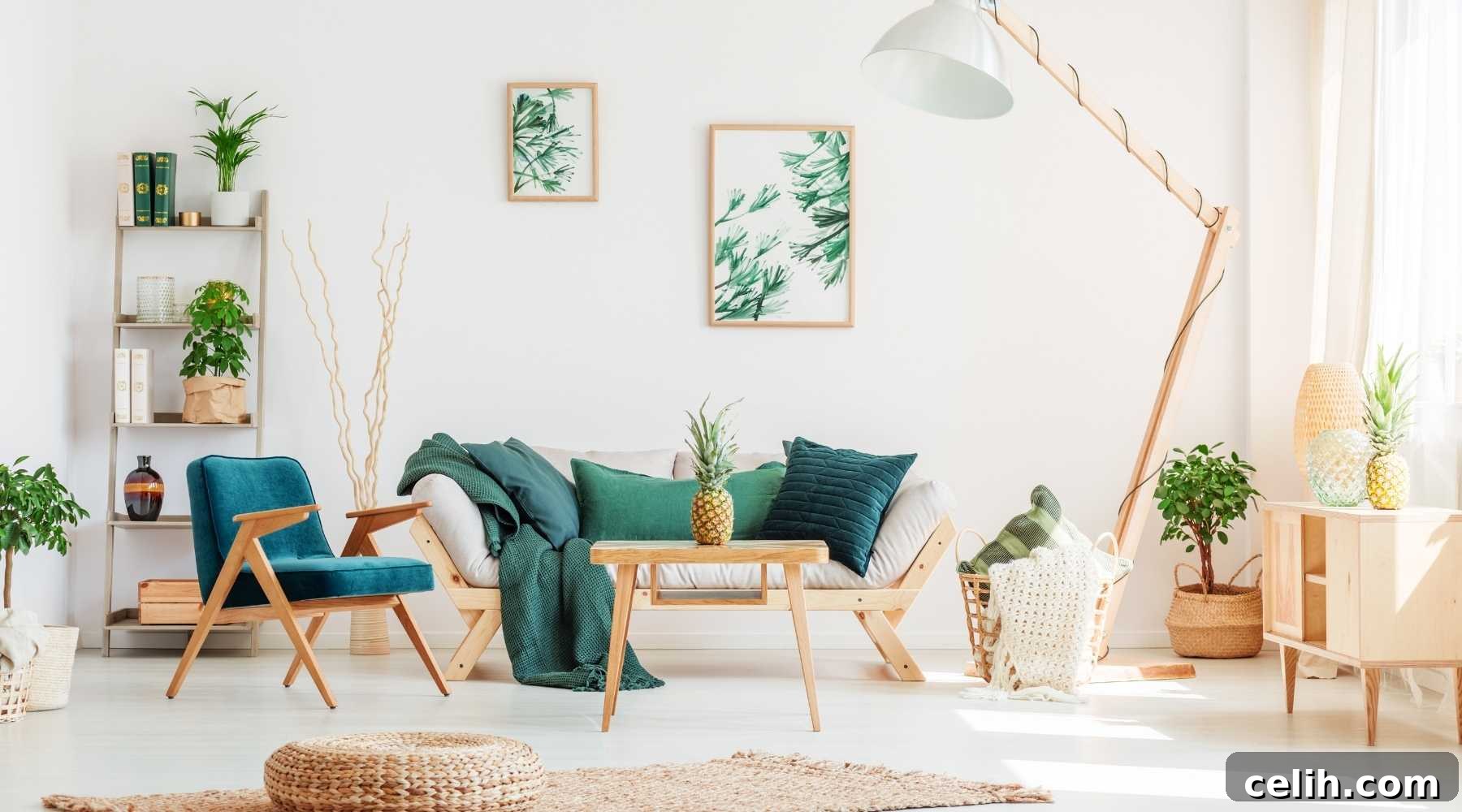
Crafting a living space that truly feels like a sanctuary – a place where you can relax, entertain, and simply be – is an art form. It demands thoughtful consideration, a touch of personal passion, and a dash of patience. While attention often gravitates towards statement furniture, intricate lighting, or captivating art pieces, one element frequently overlooked, yet profoundly impactful, is the presence of nature itself: lush greenery.
The living room, by its very definition, is a space dedicated to life. Therefore, it’s essential to infuse vitality into these central areas by seamlessly bringing the outside world in. Integrating houseplants into your interior design does more than just fill a corner; it transforms the entire ambiance and functionality of your home.
A well-chosen living room plant can offer a myriad of benefits, from deepening relaxation and purifying the air to accelerating healing times, sharpening focus, sparking creativity, and even significantly boosting your mood. Beyond their therapeutic qualities, plants introduce an unparalleled visual layer to any decor scheme – after all, no one crafts beauty quite like Mother Nature.
No matter the size of your living room, your preferred aesthetic, or your specific needs, embarking on a journey into the world of indoor plants promises to revitalize your space. With invaluable insights from our expert plant partners at BloomBox Club UK, we’ve meticulously curated a selection of the best plants suitable for living rooms of every style and challenge. So, delve into this guide and discover your perfect green companion; a thriving, beautiful partnership awaits.
The Transformative Power of Living Room Plants
Before we explore individual plant recommendations, let’s delve deeper into why incorporating plants into your living room is a design decision you won’t regret. Beyond their aesthetic appeal, living room plants offer a wealth of advantages:
- Enhanced Air Quality: Many plants are natural air purifiers, absorbing toxins like formaldehyde, benzene, and trichloroethylene, and releasing fresh oxygen. This creates a healthier environment for you and your family.
- Reduced Stress and Improved Mood: Studies have shown that interacting with nature, even indoors, can lower stress levels, reduce anxiety, and promote feelings of calmness and well-being. The simple act of caring for a plant can be incredibly therapeutic.
- Increased Productivity and Focus: For those who work from home or use their living room for reading and creative pursuits, plants can boost concentration and cognitive function.
- Natural Humidity Regulation: Plants release water vapor into the air through transpiration, helping to increase humidity levels, which can be beneficial for respiratory health and dry skin, especially in arid climates or heated homes.
- Aesthetic Appeal and Design Versatility: Plants add texture, color, and life to any room. They can soften harsh lines, fill empty spaces, and act as stunning focal points. With countless varieties, there’s a plant to complement every interior design style, from minimalist to bohemian.
- Connection to Nature: In an increasingly urbanized world, plants offer a vital connection to the natural world, fostering a sense of peace and grounding.
Choosing Your Perfect Green Companion: Key Considerations
Selecting the ideal plant for your living room involves more than just picking what looks appealing. Consider these factors to ensure a harmonious and thriving green addition:
- Light Conditions: This is arguably the most critical factor. Assess how much natural light your living room receives throughout the day. Is it bright and direct, bright and indirect, moderate, or low? Match the plant’s light requirements to your space.
- Space Availability: Consider the plant’s mature size. Do you have room for a towering Areca Palm, or is a compact ZZ Plant more appropriate for a small corner or tabletop?
- Lifestyle and Maintenance Level: Are you a dedicated plant parent with time for regular watering and pruning, or do you prefer low-maintenance, “thrives on neglect” options?
- Pet and Child Safety: Many popular houseplants can be toxic if ingested. If you have curious pets or young children, research non-toxic alternatives or place plants out of reach.
- Aesthetic and Vibe: Think about the overall feel you want to achieve. Do you want a bold statement piece, a delicate trailing plant, a pop of color, or something unique?
The Best Plants for Living Rooms
Now, let’s explore our handpicked selection of top living room plants, categorized to help you find your perfect match.
1) Best for Beginners – Snake Plant (Sansevieria trifasciata)
The venerable Snake Plant, also known as Mother-in-Law’s Tongue, is a true superstar in the world of indoor gardening. It’s almost guaranteed to appear in any discussion about resilient houseplants, and for good reason: these bad boys practically thrive on neglect. Snake Plants are incredibly hardy, visually striking, and notoriously difficult to kill, making them the ultimate living room addition for new plant parents or anyone with a busy schedule.
One of the most appealing aspects of the Snake Plant is its signature upright, sword-like leaves, which come in a remarkable variety of shapes, lengths, and shades. You can find them with cylinder-like foliage for a sculptural look, broad and variegated leaves that scream elegance, or untamed, dark green varieties perfect for rewilding a cozy corner. Their architectural form adds a modern, clean aesthetic to any living room, complementing diverse decor styles from minimalist to eclectic. Beyond their beauty, Snake Plants are exceptional air purifiers, diligently working to remove toxins like formaldehyde and benzene from your indoor environment, even at night.
Care Tip: Snake Plants are incredibly adaptable. While they prefer moderate to bright indirect light, they will impressively tolerate and even thrive in low-light conditions. The key to their longevity is mindful watering: always allow the soil to dry out completely between waterings to prevent root rot, which is their primary weakness. Err on the side of underwatering rather than overwatering. In winter, reduce watering frequency significantly.
2) Best for Natural Light – Areca Palm (Dypsis lutescens)
For those fortunate enough to have a living space bathed in abundant natural light, the Areca Palm is undoubtedly one of the best plants for living rooms. This majestic plant exudes a tropical elegance that can transform any room into an exotic oasis. With its striking, wild-looking fronds and vibrant green hue, the Areca Palm is truly the king of statement-making living room indoor plants.
Known for its feathery, arching leaves that grow in dense clumps, the Areca Palm brings an instant sense of grandeur and airiness to your home. With proper care and the right light conditions, this bold beauty can grow impressively tall, often reaching up to 6 feet or more indoors, creating a dramatic focal point. Its lush foliage also acts as an excellent natural humidifier and air purifier, efficiently filtering common household toxins while adding a refreshing, natural element to your brightly lit space.
Care Tip: Areca Palms thrive in bright, indirect light. Direct sunlight can scorch their delicate fronds and cause them to turn yellow or brown, so position them a few feet away from south or west-facing windows. Maintain consistently moist but not soggy soil during warmer months, allowing the top inch or two to dry out slightly before rewatering. Reduce watering significantly in winter. They also appreciate higher humidity, so consider misting regularly or placing them near a humidifier if your home is dry.
3) Best for Low Light – ZZ Plant (Zamioculcas zamiifolia)
On the opposite end of the lighting spectrum, not every living room is blessed with soaring windows and a continuous stream of sunlight. Fear not, for that’s precisely where the indomitable ZZ Plant shines. This remarkable plant proves that low-light living room indoor plants can be just as impactful and beautiful as their sun-loving counterparts, if not more so due to their incredible resilience.
With its distinctive shiny, waxy leaves that emerge from thick, water-storing rhizomes, the ZZ Plant adds a mighty punch of sophistication and life to even the darkest corners of your home. Its elegant, upright growth habit and deep green color make it a striking sculptural element that can instantly elevate an otherwise dull space. Beyond its aesthetic appeal, the ZZ Plant is also excellent at filtering pollutants from the air, making it not only one of the hardiest but also one of the most beneficial living room indoor plants around. It’s practically indestructible, perfect for those who might forget to water their plants frequently.
Care Tip: Place your ZZ Plant in indirect light conditions – it can tolerate very low light, but growth will be slower. Absolutely avoid direct sunlight, as its leaves will scorch and turn yellow. Water sparingly; this plant is highly drought-tolerant thanks to its rhizomes. Allow the soil to dry out almost completely between waterings, typically every 2-4 weeks, and even less frequently in winter. Overwatering is the quickest way to kill a ZZ Plant.
4) Best for the Coffee Table – Cacti (Cactaceae family)
The coffee table is a crucial element in your living room’s interior decor, serving both an aesthetic and largely functional purpose. This central piece of furniture calls for a plant that is captivating without being overwhelming, easy to maintain, and compact enough not to impede its primary function. Enter the humble yet endlessly fascinating Cactus.
These spiky, resilient little plants are renowned for their incredible hardiness and minimal care requirements, making them the best plants for living room coffee tables, side tables, or windowsills. Cacti come in an astonishing array of shapes, sizes, and textures – from classic barrel cacti and quirky, sculptural varieties to tall, towering specimens (for larger surfaces). Whether you’re seeking a subtle addition or a miniature statement-maker, there’s a cactus perfectly suited to your taste and space, guaranteed to add a unique desert charm.
Care Tip: Cacti are native to arid desert environments, meaning they absolutely adore bright light. Place them in the sunniest spot available, such as a south-facing window, or supplement with artificial grow lights if natural light is insufficient. Water thoroughly only when the soil is completely dry to the touch, which might be every 1-3 weeks depending on light and temperature. Always ensure excellent drainage to prevent root rot. Reduce watering significantly during their dormant winter period.
5) Best for Bookshelves – Golden Pothos (Epipremnum aureum)
Searching for the perfect way to elevate your bookshelf or mantelpiece from merely functional to an artistic display? Look no further than a draping plant. Trust us, nothing conveys interior elegance quite like a collection of books peeking through a delicate, cascading vine of vibrant greenery. This is precisely where the charming Golden Pothos comes into its own.
With its large, heart-shaped leaves often variegated with splashes of yellow or cream, Pothos plants look absolutely fabulous when their long, pliable vines are allowed to trail gracefully down your bookshelf, over the edge of a mantelpiece, or from a hanging pot. Their lush foliage creates a sense of natural abundance and softness, adding a dynamic vertical element to your decor. Golden Pothos plants are not only beautiful but also incredibly resilient and adaptable, making them excellent living room indoor plants to effortlessly transform any elevated surface into a verdant display. They are also known for their air-purifying qualities.
Care Tip: Golden Pothos plants thrive in moderate to bright indirect light but are remarkably tolerant of lower light conditions, though their variegation might become less pronounced. Direct sunlight will scorch their leaves. Allow the top few inches of soil to dry out between waterings. They are quite forgiving if you forget to water occasionally, but consistently soggy soil will lead to root rot. Pothos plants are excellent communicators; their leaves will begin to droop slightly when they are thirsty.
6) Best for a Subtle Pop of Colour – Chinese Evergreen (Aglaonema)
While the lush simplicity of an all-green plant collection is undeniably beautiful, a carefully placed pop of color can add an unexpected layer of interest and vibrancy to your living room. Allow us to introduce the captivating Chinese Evergreen, a plant family known for its stunning foliage variations.
While many Chinese Evergreen varieties are, as their name suggests, wonderfully green, cultivars like the ‘Crete’ Chinese Evergreen offer a delightful twist. This particular variety boasts shapely green leaves beautifully tinted with deep shades of red, pink, or purple around the edges and sometimes splashed across the centers. It provides that effortless, gentle burst of color you’ve been looking for, without being overly flamboyant. Its rich, varied foliage makes it an exquisite choice for adding warmth and sophisticated charm, enhancing your decor with its natural artistry. Chinese Evergreens are also celebrated for their air-purifying capabilities and their ability to thrive in less-than-ideal light conditions.
Care Tip: Chinese Evergreens are famously low-maintenance, making them ideal for many living room settings. They prefer moderate to low-light conditions; direct sun can burn their leaves, especially those with lighter variegation. Keep the soil consistently moist but never soggy, allowing the top inch to dry out slightly between waterings. They appreciate high humidity, so occasional misting or grouping them with other plants can be beneficial. Avoid cold drafts.
7) Best for a Quirky Vibe – String of Pearls (Senecio rowleyanus)
For those who love to break away from conventional decor norms, a quirky, eye-catching living room indoor plant offers an uncomplicated yet highly creative way to express your unique style. If you’re looking for something truly unconventional and playful, look no further than the delightful String of Pearls.
Nothing quite says whimsical and distinctive like this gloriously goofy plant, native to the arid regions of southwest Africa. The String of Pearls is instantly recognizable by its cascading strands of pea-sized, bead-like leaves, which resemble a delicate string of green pearls. This unique growth habit makes it absolutely perfect for drooping dramatically from mantlepieces, trailing playfully down bookshelves, or showcasing its charm in a hanging pot where its distinctive foliage can truly shine. It’s a fantastic conversation starter and an artistic addition to any living room seeking an offbeat, charming touch.
Care Tip: String of Pearls plants crave bright light and can even tolerate a few hours of direct morning or late afternoon sun. Too little light will cause the “pearls” to shrink and the strands to thin. The most crucial care aspect is watering: these succulents are highly susceptible to overwatering. Allow the soil to nearly dry out fully, or even completely, between waterings. When you do water, soak the soil thoroughly but ensure excellent drainage. For households with curious children or pets, please be aware that the String of Pearls plant is considered toxic if ingested.
8) Best for Making a Statement – Shark Fin (Sansevieria masoniana)
Are you eager to design a living space that leaves a lasting impression on every guest? It’s time to elevate your interior with a plant that truly makes a bold, unforgettable statement. Our top suggestion for achieving this striking effect? The aptly named Shark Fin plant, also known as Whale Fin Snake Plant.
A daring name for a truly daring plant, the Shark Fin is guaranteed to capture any guest’s eye and leave an indelible mark. This magnificent plant typically features one, or sometimes a few, exceptionally large, broad, dark green leaves that are exquisitely shaped, resembling a massive shark’s fin emerging from the pot. Its sculptural, minimalist form makes it a perfect choice for modern and contemporary living rooms, especially for enthusiasts who appreciate clean lines and impactful design with minimal fuss. It’s a living work of art that can drop jaws (pun absolutely intended!) and become the undisputed focal point of your decor.
Care Tip: Like its Snake Plant relatives, the Shark Fin is incredibly tolerant and low-maintenance. It can resist a wide range of light conditions, from low to bright, but will exhibit its most robust growth and vibrant color in bright, indirect light. Water slowly and deeply, allowing at least half, or even more, of the soil to dry out between waterings. This plant is drought-tolerant, so infrequent watering is generally better than overwatering. Ensure it’s in a well-draining potting mix to prevent root issues.
9) Best for an Offbeat Look – Rubber Plant (Ficus elastica)
For those whose aesthetic leans towards “moody” vibes, perhaps favoring monochrome themes, dark academia, or a love for all things grunge and sophisticated, a brightly variegated, leafy green plant might feel a little out of place. This is precisely where the elegant and commanding Rubber Plant steps in to complete your desired look.
The sleek, large, and often dramatically dark leaves of a Rubber Plant exude a mysterious and sophisticated aura, making it the perfect living room indoor plant to capture that sulky, refined vibe. Varieties like ‘Burgundy’ or ‘Black Knight’ boast leaves so dark they appear almost black, providing a stunning contrast against lighter walls or complementing deeper color palettes. Its bold structure and rich, often glossy foliage make it an instant statement piece that adds depth and character. Imagine it nestled in a dark stone planter against a crisp white wall, or complementing industrial-chic decor – simply stunning, and you can thank us later for the aesthetic perfection.
Care Tip: Different types of Rubber Plants can have slightly varying light preferences, so it’s always best to read the specific care instructions for your chosen cultivar. Generally, they thrive in bright, indirect light, which encourages vibrant foliage and robust growth. However, they can tolerate moderate light conditions. Keep the soil consistently slightly damp; do not allow it to dry out completely, but also avoid waterlogging. Check soil moisture levels weekly by feeling the top few inches. Reduce watering in winter. Wipe the leaves occasionally to keep them dust-free and glossy, which also helps with photosynthesis.
Mastering Basic Houseplant Care: Tips for Thriving Greenery
Regardless of which specific plant you choose, a few universal care principles will help all your living room plants thrive:
- Watering Wisely: The most common mistake is overwatering. Always check the soil moisture before watering. Stick your finger an inch or two into the soil; if it feels dry, it’s time to water. Use pots with drainage holes to prevent root rot.
- Provide Adequate Light: Understand your plant’s specific light needs and place it accordingly. Rotate plants occasionally to ensure even growth.
- Humidity Matters: Many indoor plants, especially tropical ones, appreciate higher humidity. Grouping plants, using pebble trays, or a humidifier can help.
- Fertilize Seasonally: Feed your plants during their active growing season (typically spring and summer) with a balanced liquid fertilizer, diluted to half strength. Avoid fertilizing in fall and winter when growth slows.
- Pest Watch: Regularly inspect your plants for signs of pests like spider mites, mealybugs, or aphids. Early detection makes treatment easier. Use neem oil or insecticidal soap if needed.
- Clean Leaves: Dust can accumulate on leaves, hindering photosynthesis. Gently wipe leaves with a damp cloth every few weeks.
- Repot When Necessary: When a plant becomes root-bound (roots are circling the pot), it’s time to repot into a slightly larger pot with fresh potting mix.
In a Nutshell: Bringing Life into Your Living Room
So there you have it – a comprehensive guide to the best plants for living rooms of all kinds, tailored to diverse needs, lighting conditions, and aesthetic preferences. While the specific type of plant you ultimately choose will depend on your unique circumstances, one truth remains constant: bringing the outside in is always the right answer when it comes to creating a vibrant and healthy home environment.
Whether you’re seeking a small, sophisticated botanical accent to enhance the moody sophistication of your living room, a robust, air-purifying companion to brighten a low-light corner, or a leafy green vine to rewild and soften your space, finding the right plant is a crucial step in transforming your living area into a true sanctuary. The living room, after all, is often one of the indoor spaces where we spend the most significant amount of our time, making its atmosphere paramount.
The optimal plants for your living room will naturally vary based on available space, their intended purpose (e.g., air purification, aesthetic focal point), and your personal preference for maintenance and style. While every component of your interior decor contributes to making your living space uniquely yours, we sincerely hope this handy guide empowers you to confidently and joyfully integrate the revitalizing power of greenery into your home. Embrace the botanical journey and watch your living room flourish!