
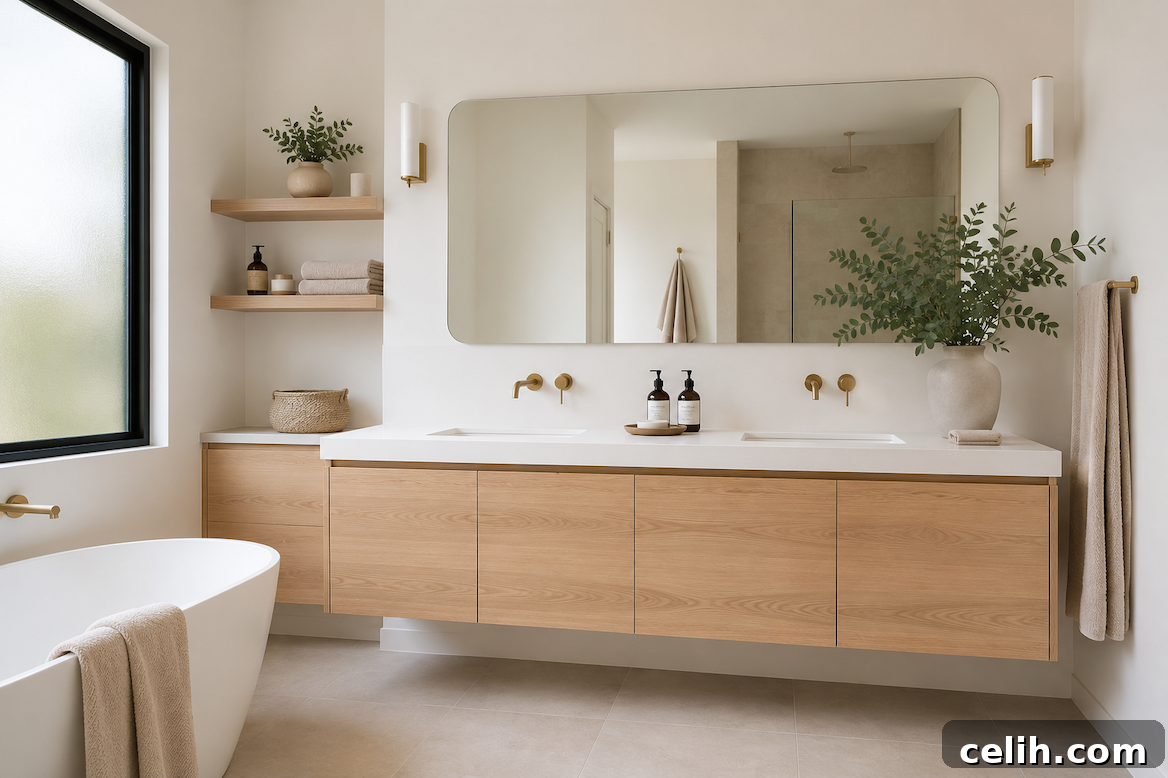
Light wood bathroom vanities are a defining element of modern bathroom design. Whether made from white oak, ash, maple or pale walnut, these natural timber finishes add warmth, texture and an organic quality that painted cabinetry rarely matches.
Their rise in popularity reflects broader design preferences: homeowners increasingly choose natural materials and timeless colour palettes over short-lived trends. Industry reports show wood-faced vanities now outpace painted options, and most designers expect light neutral colours to dominate bathroom schemes alongside soft greens like sage and olive.
Solid wood and wood-effect finishes are also favoured for their durability and ease of maintenance, making light timber a practical choice as well as an aesthetic one.
Light wood is exceptionally versatile, working equally well in Scandinavian-inspired homes, spa-like retreats, coastal interiors and modern farmhouse designs. The key question for many renovators is: which colours best complement light wood?
Why Light Wood Works So Well
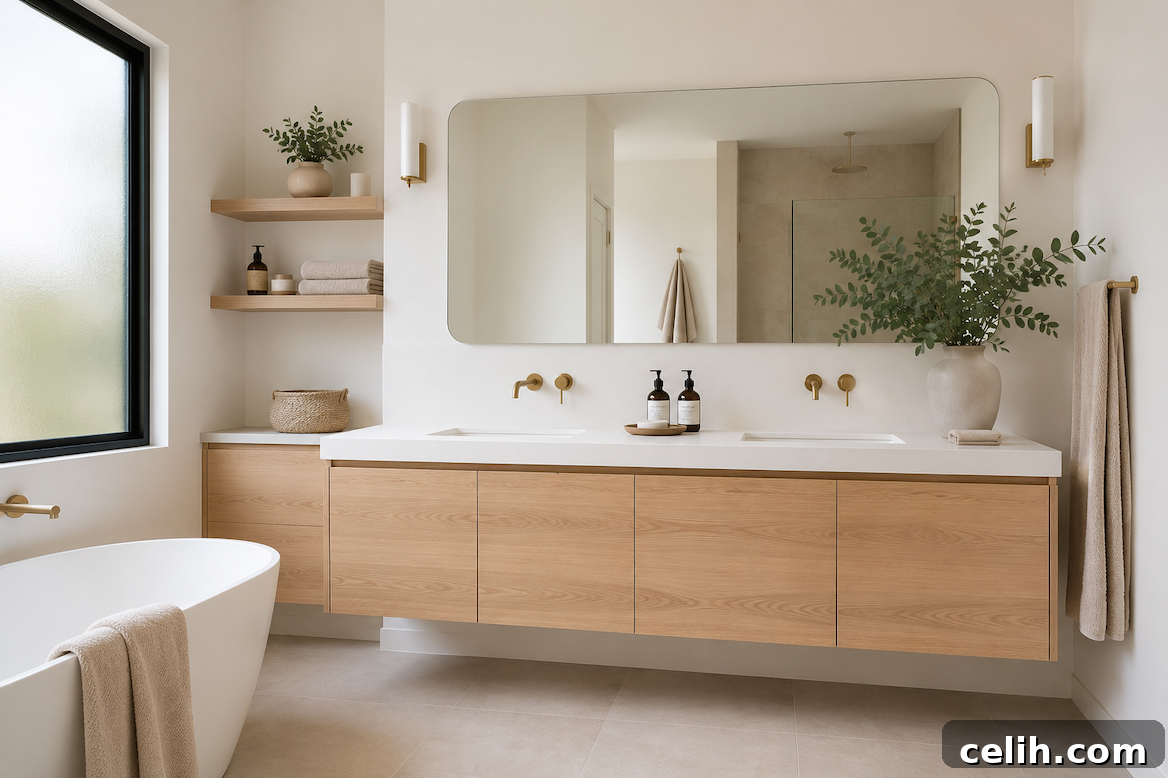
Bathrooms contain many hard finishes—porcelain, ceramic, stone, glass, chrome and mirrors. Light timber softens those materials, creating a warmer, more inviting atmosphere. Unlike darker woods, pale oak and ash don’t dominate the space; they add subtle texture while allowing wall colours, tiles and fittings to stand out. Because they reflect more natural light, light woods can make small bathrooms feel brighter and more spacious.
Warm White
Warm white is a timeless partner for light wood. Instead of stark white, choose whites with creamy or ivory undertones—Soft Ivory, Linen White, Swiss Coffee, Warm Cotton or Antique White. These shades create a calm, airy space that never feels cold and pair beautifully with white quartz worktops, oak floating vanities, brushed brass taps and large mirrors for an elevated but understated look.
Greige
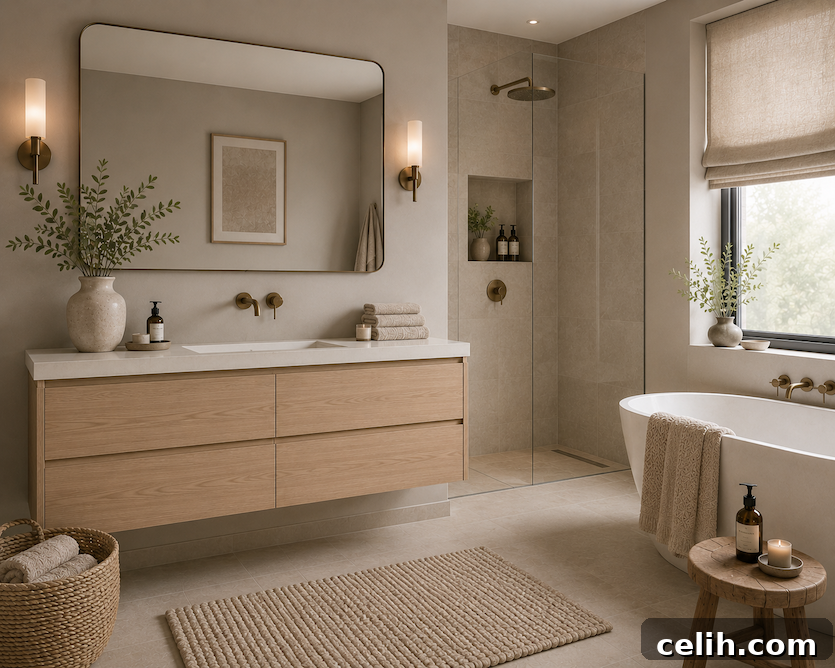
Greige, a balanced blend of grey and beige, adds depth while remaining subtle. Its warm undertones harmonise with light timber, making it ideal for contemporary, luxury hotel-inspired or minimalist bathrooms. Layer in textured towels, woven baskets and linen blinds to enhance the look.
Soft Beige
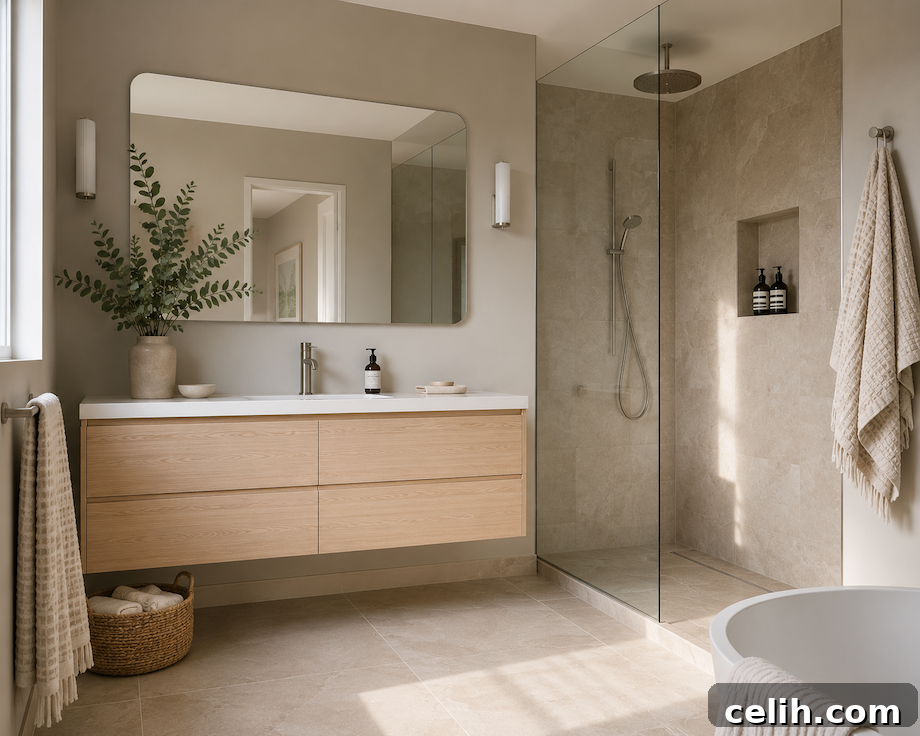
Beige has returned in updated, sandy tones rather than the yellow-heavy versions of the past. Shades like Mushroom, Sand, Almond, Oatmeal and Stone create a spa-like, inviting atmosphere that lets the timber grain become a subtle focal point.
Sage Green
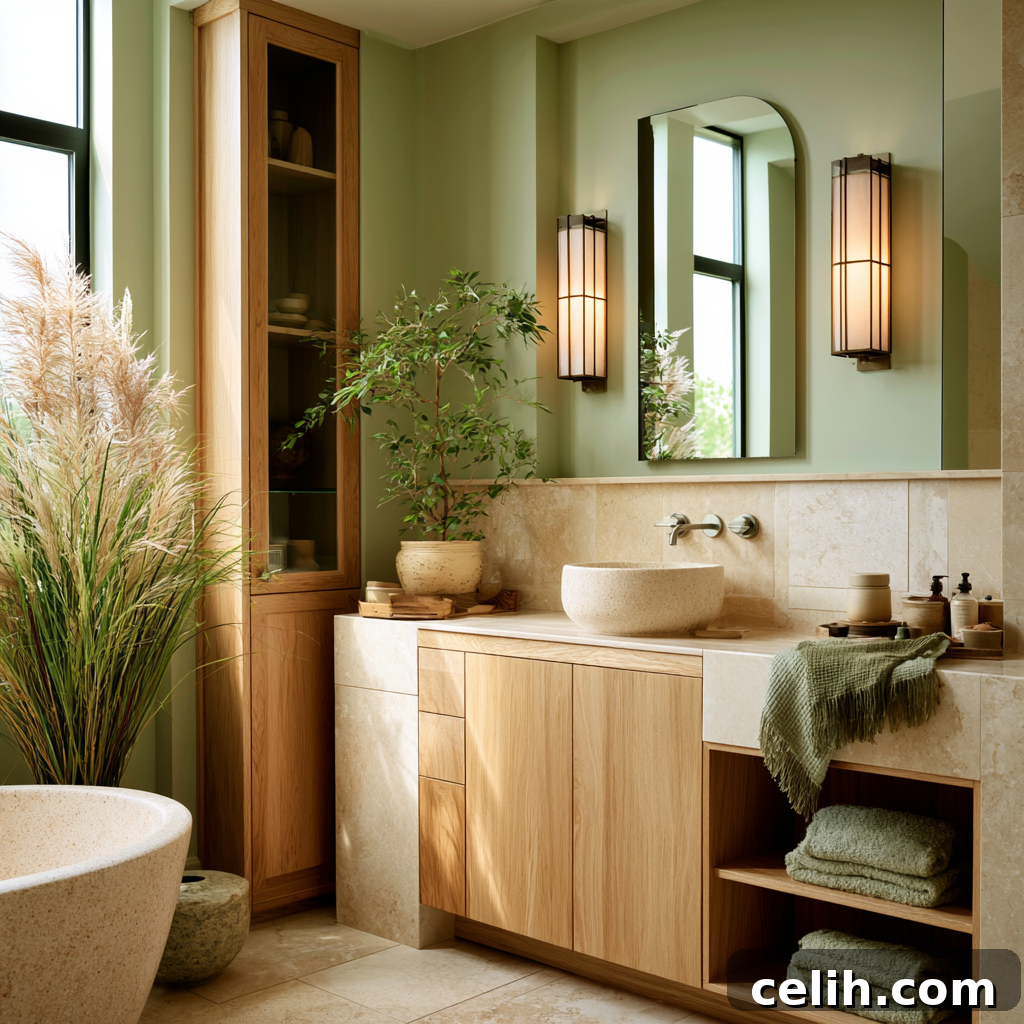
Muted sage green frequently appears in bathroom trend forecasts. Its grey-green tone mirrors colours in nature, which makes it a peaceful companion for timber. Pair sage walls with a white oak vanity, white marble countertop, brushed brass hardware and simple subway tiles for a restorative, timeless space.
Olive Green
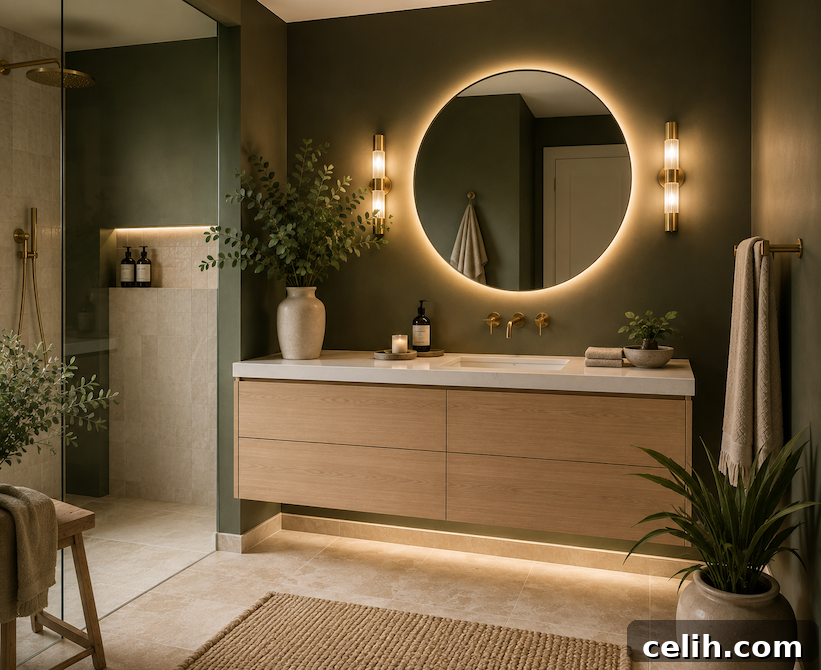
Olive green introduces greater depth and works well with natural stone, travertine, limestone, textured ceramics and handmade tiles. It offers a grounded, organic palette that complements light timber without overwhelming it.
Soft Taupe
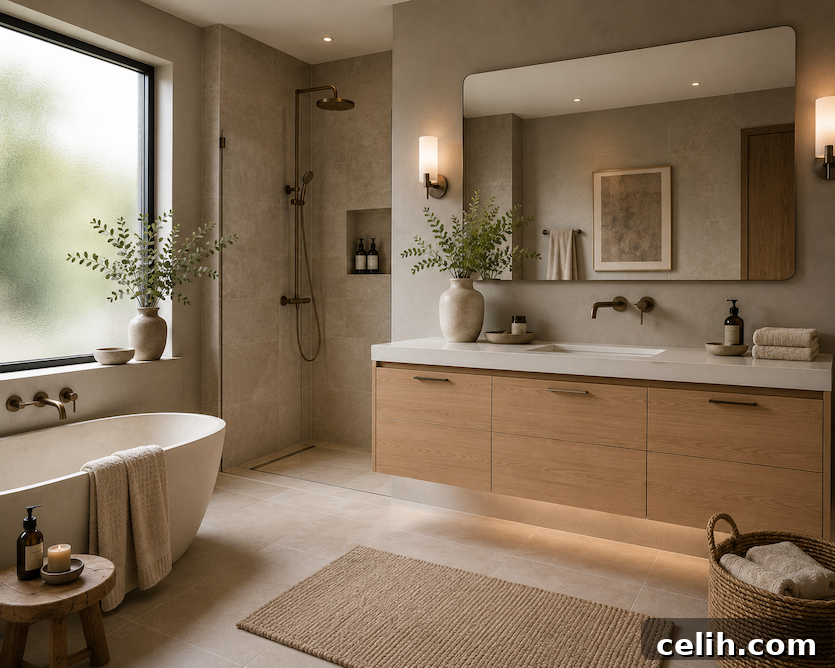
Taupe sits between brown, grey and beige and complements almost every timber tone. Paired with light wood, it delivers subtle contrast and a sophisticated, mature feel. Add bronze accessories, natural stone, large-format porcelain tiles and textured bath mats for extra warmth and depth.
Dusty Blue
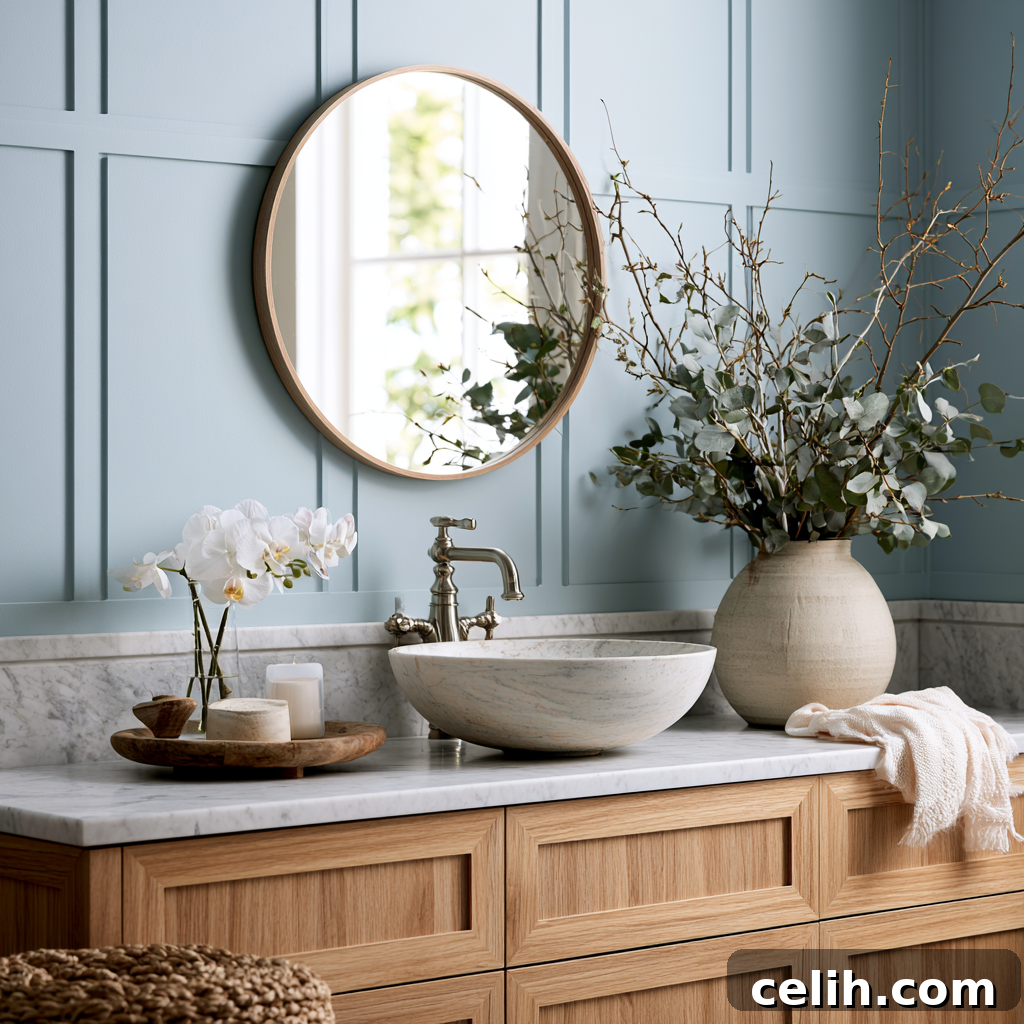
Modern dusty blues—Mist Blue, Blue-Grey, Mineral Blue and Coastal Blue—are softer alternatives to navy. These tones balance timber warmth with a fresh, clean atmosphere and suit coastal, Hamptons and Scandinavian-inspired bathrooms. Pair with chrome or brushed nickel for a crisp contemporary finish.
Charcoal Accents
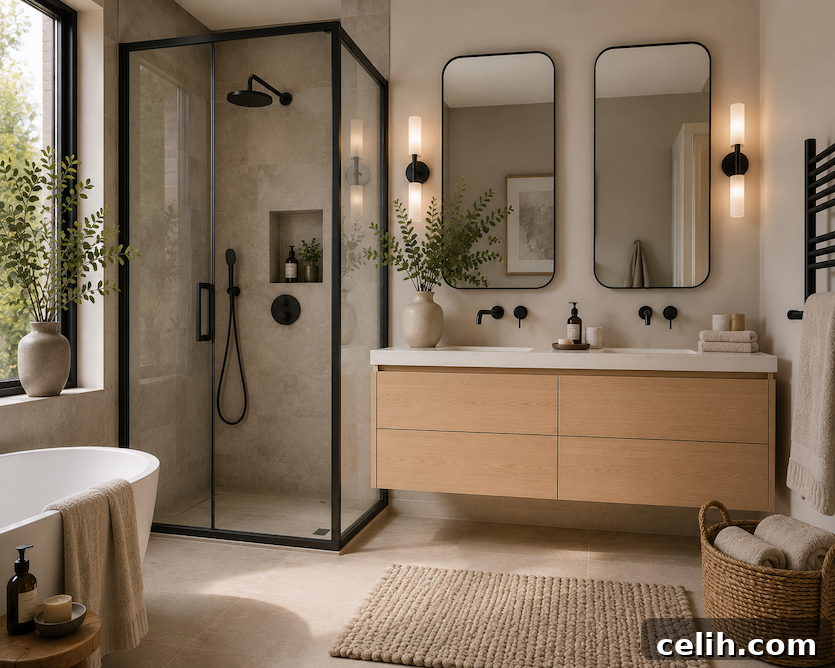
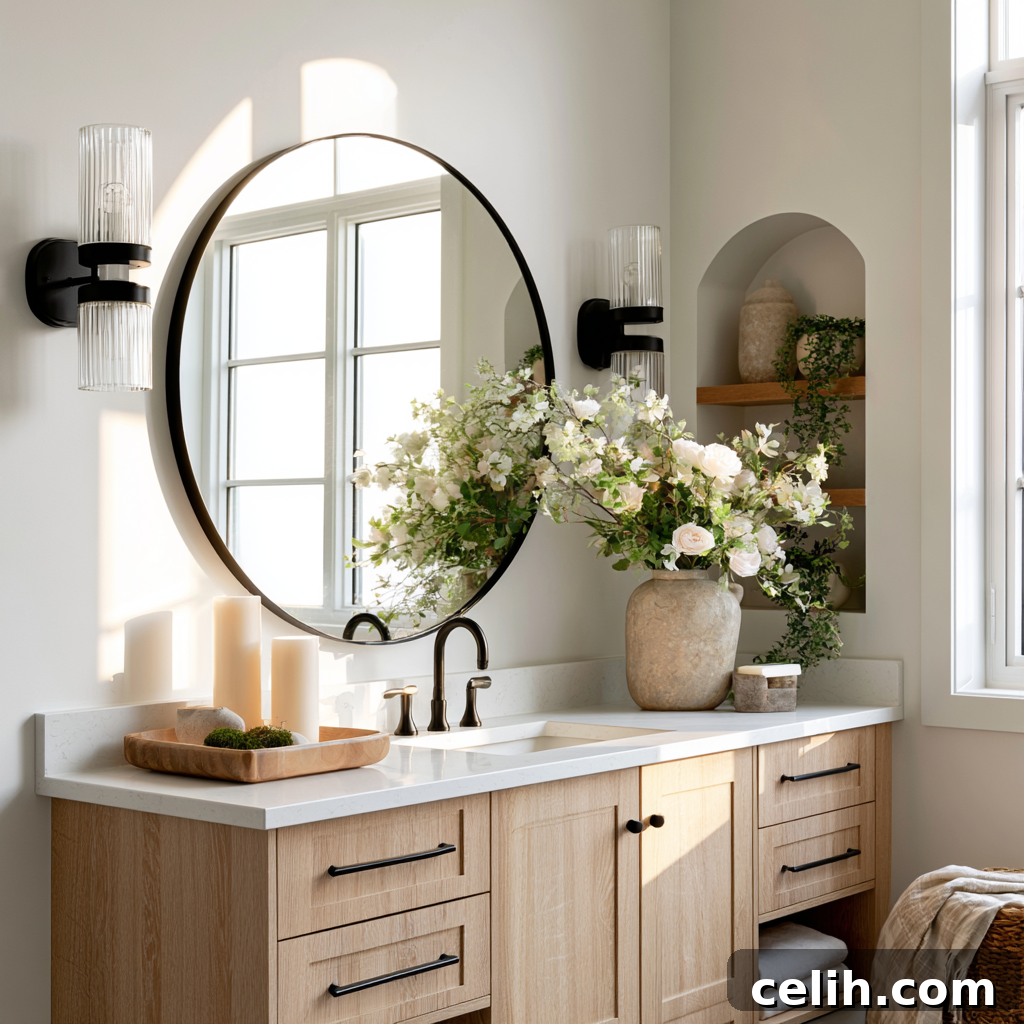
Charcoal or matte black works best as an accent rather than a primary wall colour. Use it for mirrors, shower frames, towel rails or taps to create contrast and definition that makes pale timber stand out. Many contemporary bathrooms combine light oak cabinetry with black-framed shower screens for this reason.
Terracotta and Soft Blush
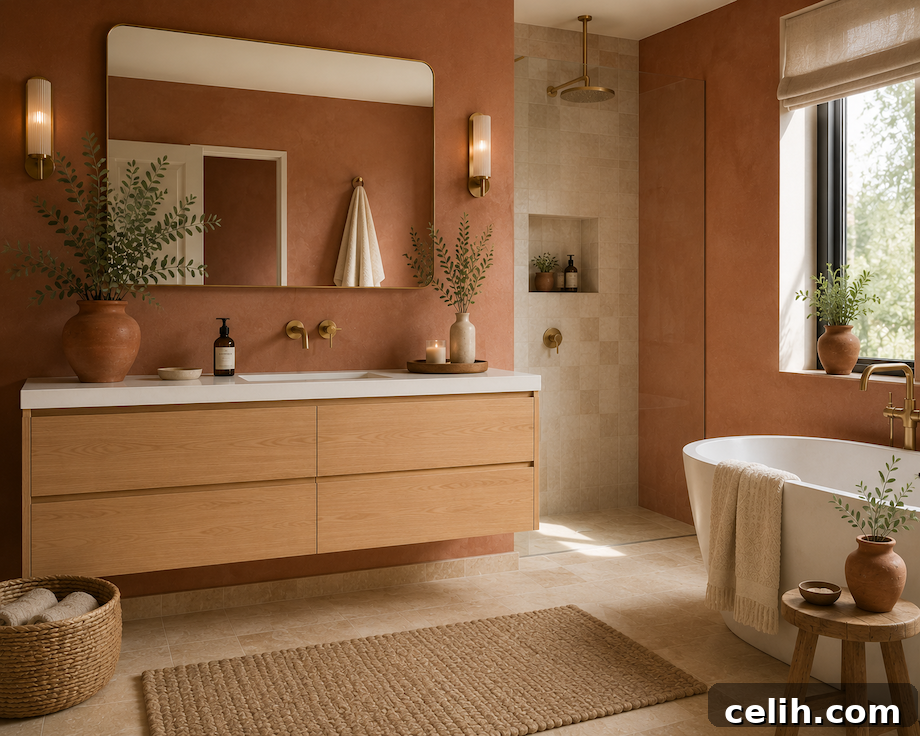
Warm terracotta hues and muted blush pinks introduce Mediterranean warmth and a soft glow that flatters both natural and artificial light. These colours pair naturally with pale oak, cream tiles, linen textiles and brass fittings to create an inviting, organic feel.
Natural Stone Colours
Many designers begin with stone choices—limestone, travertine or marble—and build the palette around them. Warm cream, Bone, Putty, Pebble, Fossil and Clay harmonise with timber and allow natural textures to take centre stage.
Choosing Hardware Colours
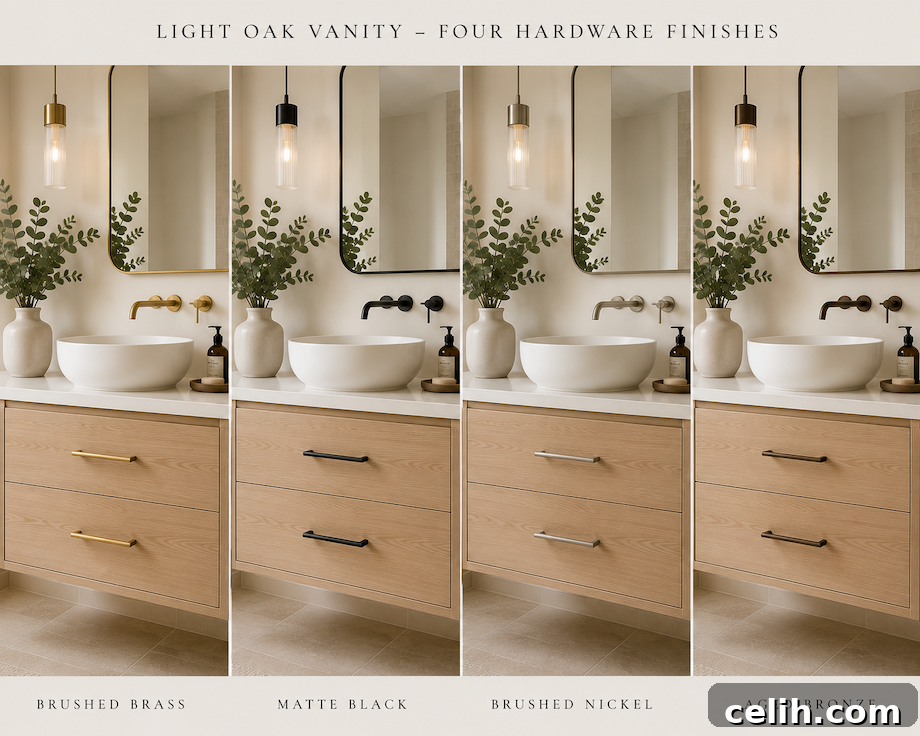
Hardware alters the final appearance of a light wood vanity. Brushed brass enhances warm undertones and creates a boutique-hotel aesthetic. Matte black offers crisp contemporary contrast. Brushed nickel suits cooler paints like blue and sage, while bronze enriches rustic and traditional schemes. Matte and brushed finishes are currently preferred over high-polish fittings.
Countertop Colours That Work Best
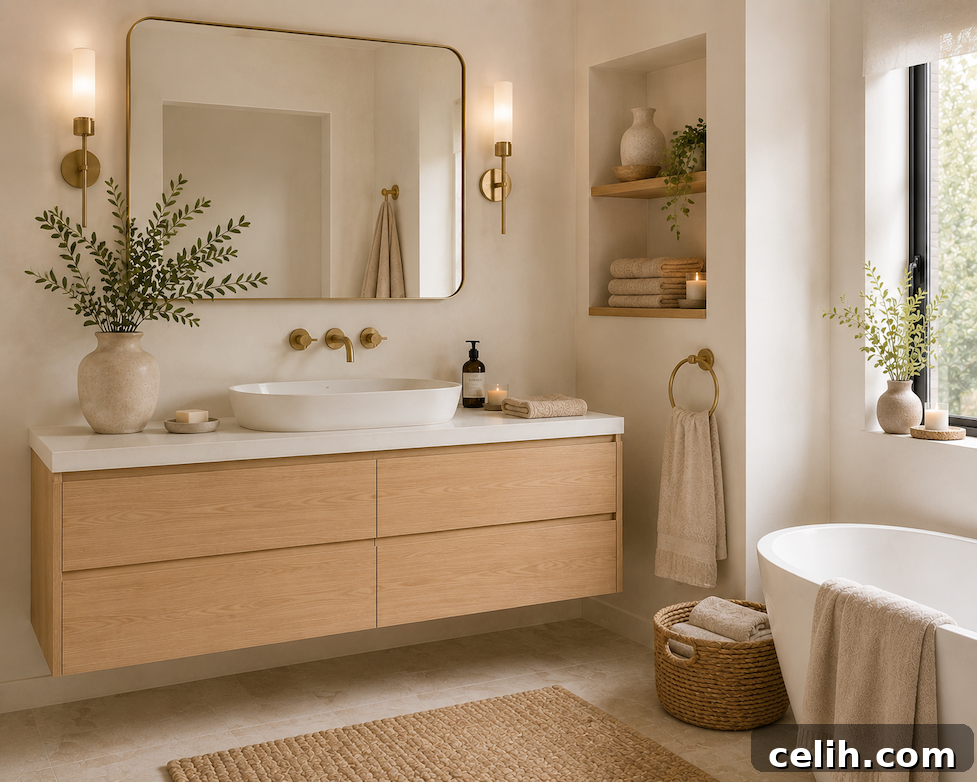
Countertops should complement the vanity, not compete with it. White quartz, soft ivory quartz, marble-effect porcelain, honed limestone, travertine and pale terrazzo are excellent choices. White remains a popular, practical option, and engineered quartz leads for durability and low maintenance.
Colours to Approach Carefully
Some colours can clash with the natural warmth of timber: very cool blue-whites, cold silver greys, bright primaries, neon accents and heavy purples. If you prefer cooler shades, introduce warmth through lighting, brass fixtures or natural textiles to maintain balance.
Matching Different Wood Species
Different light wood species have distinct undertones. Warmer woods like white oak and maple pair best with warm neutrals and earthy greens, while cooler-toned woods such as ash work well with soft greys and muted blues.
| Light Wood Species | Best Colour Pairings | Overall Style |
|---|---|---|
| White Oak | Sage green, warm white, taupe, greige, olive green | Warm, contemporary, Scandinavian, spa-inspired |
| Ash | Soft grey, blue-grey, white, charcoal accents | Modern, minimalist, cool contemporary |
| Maple | Cream, beige, soft green, pale blue | Bright, welcoming, timeless, family-friendly |
| Birch | Sand, mushroom, ivory, light taupe | Soft, natural, understated, calming |
Creating a Balanced Colour Palette
Think in layers rather than isolated colours. A balanced bathroom palette might include warm white walls, a light oak vanity, a white quartz worktop, sage towels, brass taps, woven baskets and indoor greenery. When materials support each other, the room feels considered and cohesive.
The Enduring Appeal of Light Wood For Bathroom Vanities
Natural timber endures because it creates calming, timeless interiors built around neutral colours and organic textures. The secret to successful pairing is not choosing the boldest shade but selecting hues that enhance the wood’s natural beauty. Warm whites, greige, sage, taupe, olive, soft beige and muted blues all allow the timber to remain the focal point while producing an elegant, welcoming bathroom that will stand the test of time.
Whether renovating a compact cloakroom or designing a family bathroom, a light wood vanity provides a versatile foundation that suits almost every classic and contemporary colour palette.