
Transform Your Garden with Ground Cover Plants: A Comprehensive Guide to Low-Maintenance Beauty
In the world of gardening, ground cover plants are often unsung heroes, sometimes overlooked by those who prefer more conventional landscaping. However, we believe they are an indispensable asset for any garden enthusiast, offering a multitude of benefits from aesthetic enhancement to practical solutions. Far from being a mere filler, these versatile plants can revolutionize your outdoor space, providing lush carpets of foliage and vibrant blooms while significantly reducing maintenance efforts.
What Exactly Are Ground Cover Plants?
As their name suggests, ground cover plants are low-growing varieties designed to spread horizontally, effectively blanketing the soil. They typically feature a dense growth habit, forming an attractive, carpet-like effect that can transform bare patches into vibrant tapestries. What makes them truly appealing for modern gardeners is their generally low-maintenance nature – a significant advantage in today’s busy world. Many ground covers are evergreen, ensuring year-round interest and continuous protection for your soil. Beyond their beauty, they create a natural habitat and safe haven for local wildlife, such as hedgehogs and toads, fostering a healthier ecosystem in your backyard.
These adaptable plants are perfect for filling in the “leggy” or bare areas around taller shrubs and trees, such as the bases of roses, providing visual fullness and cohesion to your beds. They are also ideal for challenging spots where traditional lawns might struggle, like steep slopes prone to erosion, or hard-to-reach corners that are difficult to mow. By choosing the right ground cover, you can solve numerous gardening dilemmas with elegance and ease.
The Undeniable Benefits of Incorporating Ground Cover into Your Landscape
Beyond their visual appeal, ground cover plants offer a host of practical advantages that make them a smart choice for any garden design:
- Superior Weed Suppression: One of the most significant benefits is their ability to naturally suppress weeds. By forming a dense canopy, ground covers block sunlight from reaching weed seeds, dramatically reducing their germination and growth. This means less time spent weeding and more time enjoying your garden.
- Effective Erosion Control: On slopes or areas with loose soil, ground cover plants are invaluable. Their spreading root systems bind the soil together, preventing erosion caused by rain and wind. This helps maintain soil structure and prevents the loss of valuable topsoil.
- Moisture Retention: A dense mat of ground cover acts as a living mulch, helping to insulate the soil and reduce water evaporation. This keeps the soil cooler in summer and warmer in winter, and significantly lowers your watering needs, especially during dry spells.
- Enhanced Soil Health: Ground covers contribute organic matter to the soil as their leaves and stems decompose, improving soil structure, fertility, and microbial activity over time.
- Visual Appeal and Texture: They add layers of texture, color, and interest to garden beds. From fine-leaved mosses to broad-leaved sedums, the variety of forms and foliage types can create stunning visual contrasts and unify disparate planting schemes.
- Wildlife Support: Many ground covers provide shelter, nesting sites, and food sources for beneficial insects, birds, and small animals, contributing to a biodiverse garden environment.
- Low Maintenance Solution: Once established, most ground cover plants require minimal care. They often tolerate a range of conditions, are resistant to pests and diseases, and rarely need extensive pruning or feeding.
Selecting the Perfect Ground Cover for Your Garden
With such a vast array of ground cover options available, choosing the right one depends on several factors specific to your garden’s conditions and your personal preferences:
- Sunlight Exposure: Assess how much sun your chosen area receives. Some ground covers thrive in full sun, while others prefer partial or deep shade.
- Soil Type and Moisture: Consider your soil’s composition (clay, sand, loam) and its drainage capabilities. Some plants prefer moist, well-drained soil, while others are remarkably drought-tolerant.
- Climate and Hardiness Zone: Ensure the plant is suited to your local climate and can withstand winter temperatures.
- Growth Habit and Spread: Think about how quickly and widely you want the plant to spread. Some are vigorous spreaders that can quickly fill large areas, while others are more contained.
- Desired Aesthetic: Do you prefer evergreen foliage, seasonal blooms, specific leaf textures, or a particular color palette?
- Foot Traffic Tolerance: If the area will experience light foot traffic, opt for resilient varieties like creeping thyme or chamomile.
Popular Ground Cover Plants for Every Garden
Here are some of our top picks, offering diverse characteristics to suit various garden needs:
Periwinkle (Vinca)
Periwinkle, specifically varieties like Vinca minor (Dwarf Periwinkle) and Vinca major (Bigleaf Periwinkle), is a quintessential ground cover that truly earns its reputation for resilience and beauty. This robust plant thrives in a wide range of conditions, from full shade to partial sun, and tolerates various soil types, making it incredibly versatile. Its evergreen, glossy leaves, typically dark green but sometimes variegated with creamy edges, provide year-round interest. In spring and often continuing into summer, it adorns itself with an abundance of delicate purple, pink, or pale blue, five-petaled flowers that create a stunning floral display over a lush green carpet.
One of Periwinkle’s greatest assets is its minimal maintenance requirement. Apart from an occasional trim to manage its vigorous spread, it demands little attention, making it perfect for busy gardeners. It’s an excellent choice for planting under trees where other plants struggle with dry shade, or on slopes where erosion is a concern. The way it forms a dense, interwoven mat of foliage and flowers is truly captivating, bringing a sense of established beauty to any garden space.
Culinary Ground Covers: Herbs
While often thought of as vertical garden additions, several herb varieties excel as fragrant and functional ground covers. Their low-growing habits and spreading nature make them ideal for creating aromatic carpets, especially in sunny locations.
Thyme (Thymus serpyllum, Creeping Thyme) is particularly well-suited. It forms a dense, evergreen mat of tiny, aromatic leaves that can withstand light foot traffic. In late spring and summer, it bursts into a profusion of small, often purple or pink flowers, attracting pollinators and adding a splash of color. Beyond its ornamental value, creeping thyme releases a delightful scent when walked upon and its leaves are, of course, excellent for culinary use. It thrives in full sun and well-drained soil, making it perfect for rock gardens, path edges, or filling gaps between stepping stones.
Chamomile (Chamaemelum nobile, Roman Chamomile) is another fantastic choice, particularly for creating unique “chamomile lawns.” It prefers a sunny spot and well-drained soil, forming a soft, feathery carpet of bright green foliage. In summer, it produces charming little white daisy-like flowers with yellow centers. While not evergreen in colder climates, it offers a distinct aesthetic and a soothing apple-like scent when disturbed. It’s less tolerant of heavy foot traffic than thyme but is wonderful for contemplative spaces. Other herbs like oregano (Origanum vulgare) and some mint varieties (though mint can be aggressively invasive and should be contained) can also serve as effective ground covers, adding both beauty and utility to your garden.
Mexican Daisies (Erigeron karvinskianus)
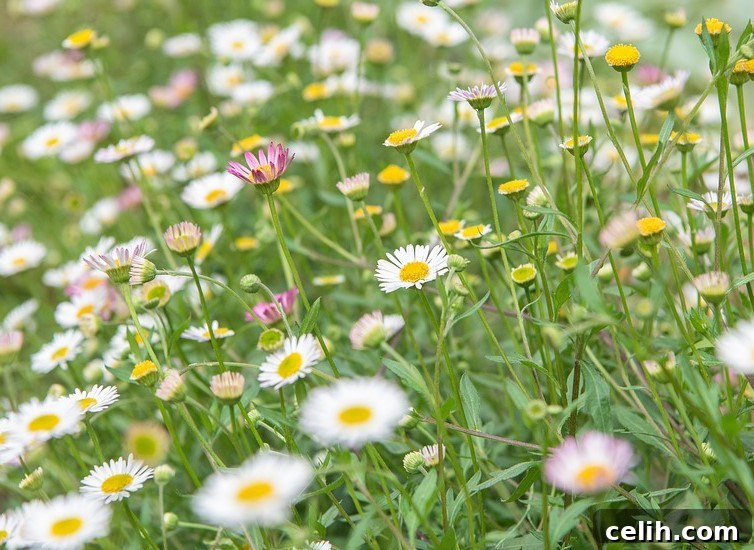
Known by its more formal name, Erigeron karvinskianus, the Mexican Daisy is a delightful and highly adaptable ground cover that brings a cheerful, informal charm to any garden. Though it resembles the common daisies found in lawns, this plant boasts a more refined appearance, with flowers often borne on slightly longer stalks and a bushier, more substantial habit. Its delicate, feathery leaves form a pleasing mound, from which an abundance of small, daisy-like flowers emerge.
What makes Mexican Daisies truly exceptional is their prolonged flowering season, often blooming from late spring through to the first frosts. The flowers open white, then gradually deepen to a lovely pink as they age, meaning a single plant can simultaneously display a charming mix of white and pink blossoms. This resilient plant is incredibly low-maintenance, thriving in full sun to partial shade and tolerating dry conditions once established. It’s particularly adept at naturalizing in challenging spots, happily rooting itself into the cracks of old walls, between paving stones, or cascading over rockeries. However, it also performs beautifully when planted more conventionally in borders, adding a soft, romantic touch and attracting beneficial pollinators.
Ferns and Bracken: Architectural Interest for Shady Spots
For those challenging, shady garden beds where many flowering plants struggle, ferns and bracken emerge as perfect contenders for ground cover. These ancient plants offer an incredible diversity of shapes, sizes, and textures, creating a stunning visual display with their intricate fronds. From the bold, structural presence of larger varieties like Ostrich Fern (Matteuccia struthiopteris) or certain bracken species, to the delicate, lacy elegance of Maidenhair Fern (Adiantum pedatum) or Japanese Painted Fern (Athyrium niponicum ‘Pictum’), there’s a fern to suit every aesthetic.
Ferns generally prefer a consistently damp, well-drained environment and partial to deep shade, mimicking their natural woodland habitats. They are remarkably low-maintenance once established, requiring little more than a yearly tidying. While many deciduous varieties will die back gracefully in the winter, their unfurling fiddleheads in spring offer a fascinating spectacle of new growth. Some evergreen ferns, like Christmas Fern (Polystichum acrostichoides), provide year-round greenery, adding structure and life to the winter garden. When planting multiple varieties, consider their mature height; taller ferns are best positioned at the back of the bed to create layers of lush, verdant texture.
Lamium (Dead Nettle)
If you’re looking for an incredibly robust and forgiving ground cover, especially for those “problem” flower beds where nothing else seems to thrive, then Lamium, or Dead Nettle, is an excellent choice. Don’t let the somewhat alarming common name deter you; this plant is far from dead and certainly doesn’t sting like its namesake. Lamium offers charming low-growing foliage and a vibrant display of flowers, making it a highly decorative and functional ground cover.
One of its standout features is its attractive foliage, which comes in a variety of shades, from solid green to striking variegated patterns with silvery or golden markings. This provides visual interest even when the plant isn’t in bloom. Throughout spring and often into summer, Lamium produces small, hooded flowers in shades of white, pink, purple, or yellow, which are particularly attractive to pollinators. Its vigorous, spreading habit means it quickly covers ground, effectively suppressing weeds and creating a lush carpet. While it prefers partial to full shade, many varieties will tolerate some sun, especially if the soil remains consistently moist. Its rapid growth does mean you might need to occasionally cut it back to control its spread, but this is a small price to pay for such a reliable and beautiful performer. Lamium is a fantastic solution for shady, neglected areas, bringing life and color with minimal effort.
Planting and Caring for Your Ground Cover Paradise
Establishing ground cover plants is relatively straightforward, and with a little initial effort, you’ll enjoy years of low-maintenance beauty:
- Site Preparation: Clear the area of all existing weeds and debris. Improve soil quality by incorporating compost or other organic matter.
- Spacing: Plant ground covers at the recommended spacing to allow for their natural spread. Planting too far apart can leave gaps for weeds, while planting too close can lead to overcrowding.
- Watering: Water thoroughly after planting and keep the soil consistently moist during the establishment period (typically the first growing season). Once established, most ground covers are quite drought-tolerant.
- Mulching: Apply a thin layer of organic mulch around new plantings to help retain moisture, suppress weeds, and regulate soil temperature.
- Maintenance: Most ground covers require minimal pruning, perhaps just an annual trim to maintain their shape or control their spread. Fertilize sparingly, if at all, as many thrive in leaner conditions. Monitor for pests or diseases, though ground covers are generally quite resilient.
By embracing ground cover plants, you’re not just planting; you’re investing in a smarter, more sustainable, and infinitely more beautiful garden. They offer an elegant solution to common landscaping challenges, allowing you to create stunning, vibrant spaces with less effort and more enjoyment. So, bid farewell to tedious weeding and embrace the effortless charm of ground cover plants – your garden will thank you.
Get more tips for creating a low maintenance garden.
All images (c) Pixabay 2021