
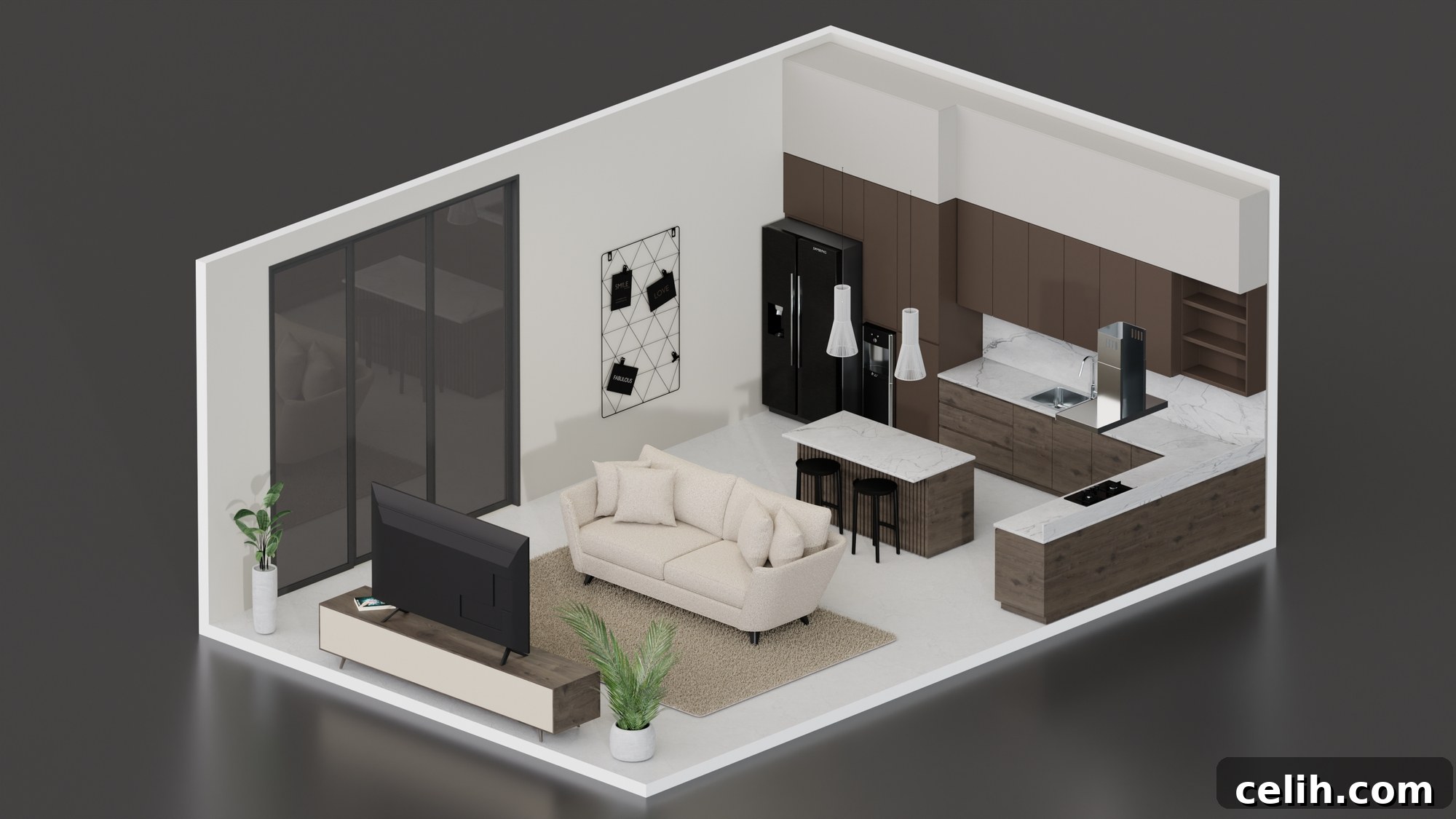
In an era defined by escalating environmental challenges, embracing sustainability is no longer merely an option but an urgent imperative. As the pervasive impacts of climate change intensify and global concerns about its future trajectory grow, industries across the spectrum are undergoing profound transformations. Leaders are actively seeking and implementing innovative strategies to drastically reduce, or even completely eliminate, the environmental footprint of their operations. This commitment extends to every stage of development, with meticulous consideration given to minimizing ecological impact when conceiving and constructing new projects.
Within this broader movement, interior design plays a critical and often underestimated role. Designers in this field are increasingly tasked with a complex yet vital objective: achieving low-impact interior design. While the process of identifying appropriate eco-friendly materials and integrating energy-efficient solutions can be straightforward, the real challenge lies in harmonizing these elements into a cohesive, functional, and aesthetically captivating space. This delicate balance between environmental responsibility and visual appeal is precisely where advanced tools become indispensable. For forward-thinking, eco-conscious designers, SketchUp for interior design emerges as a powerful ally, bridging the gap between sustainable principles and stunning visual execution.
Why Sustainability Is Paramount for Modern Interior Design
The interior design industry, often perceived as solely focused on aesthetics, carries a significant environmental burden. From the extraction and manufacturing of materials to the energy consumption of buildings and the eventual disposal of furniture and finishes, traditional design practices contribute substantially to greenhouse gas emissions, particularly carbon dioxide – a primary driver of global warming. Recognizing this impact, embracing sustainable interior design is no longer just a trend, but a fundamental responsibility and an imperative for the health of our planet and its inhabitants.
Practicing sustainable interior design goes far beyond simply choosing “green” products. It involves a holistic approach that considers the entire lifecycle of materials, optimizes energy usage, enhances indoor air quality, and minimizes waste. By designing spaces with a conscious effort to reduce carbon output, we not only mitigate environmental damage but also create healthier, more comfortable, and economically viable environments for the building’s occupants. This includes reducing exposure to volatile organic compounds (VOCs) found in many conventional materials, improving natural ventilation, and maximizing daylighting – all factors that contribute to improved well-being, productivity, and a higher quality of life. Furthermore, integrating sustainable practices can lead to significant long-term operational savings for homeowners and businesses through reduced energy and maintenance costs, aligning environmental stewardship with financial prudence.
Navigating the Challenges of Eco-Conscious Design
While the benefits of sustainable interior design are undeniable, the journey towards its widespread adoption is not without its complexities. As previously highlighted, one of the foremost challenges lies in striking a delicate balance between environmental efficiency and captivating aesthetics. Clients and end-users may not immediately perceive or appreciate the climate-friendly aspects of a design, but they will invariably notice and react to poor aesthetics, an uninspired theme, or a lack of visual cohesion. Therefore, the ability to visualize and present a harmonious combination of striking appearance and robust environmental practicality is absolutely crucial. This capability is key to impressing visitors, securing client approvals, and, perhaps most importantly, inspiring others to consider and adopt eco-friendly design principles in their own spaces.
Beyond the aesthetic-sustainability dichotomy, designers face other hurdles. The availability and cost of genuinely sustainable materials can sometimes be prohibitive, requiring extensive research to source certified, ethically produced, and recycled content options. Budget constraints often force compromises, making it challenging to invest in higher-quality, longer-lasting, and environmentally superior products. Additionally, integrating diverse sustainable strategies – from energy management and water conservation to waste reduction and material reuse – demands specialized knowledge and a comprehensive understanding of various interconnected systems. Educating clients on the long-term value of these investments, both for their finances and the planet, is an ongoing task that requires clear communication and compelling visual arguments. Overcoming these challenges requires sophisticated tools and methodologies that can simplify complex decision-making and effectively communicate design intent.
How SketchUp Revolutionizes and Optimizes the Sustainable Design Workflow
3D rendering software, particularly intuitive and powerful platforms like SketchUp, is transforming the landscape of interior design. It makes the entire design process significantly easier, more collaborative, and remarkably efficient. This heightened efficiency is precisely what makes SketchUp an unparalleled asset when the core objective is designing with eco-friendliness and sustainability at the forefront. By streamlining various stages of design and enabling better decision-making, SketchUp empowers designers to integrate sustainable practices more effectively and less frustratingly.
The utility of SketchUp stems from its ability to alleviate common pain points in traditional design workflows, making typically frustrating and time-consuming tasks more productive and insightful. It acts as a digital sandbox where designers can experiment, iterate, and refine their concepts without incurring real-world costs or waste. This capability is not just about creating pretty pictures; it’s about fostering intelligent design choices that lead to genuinely sustainable outcomes from the earliest stages of a project. Let’s delve into specific ways SketchUp enhances and streamlines the sustainable interior design process:
Transforming Client Visualization and Communication
Gone are the days of laborious, small-scale physical models that were expensive to produce, difficult to modify, and cumbersome to transport. SketchUp liberates designers by enabling them to create easily transportable, dynamic 3D digital representations of room designs and floor plans. These interactive models can be presented to clients or employers with unprecedented clarity and immersion. Clients can “walk through” their future space, view it from every angle, and even experience changes in lighting and materials in real-time. This level of visualization is invaluable for conveying complex sustainable concepts, such as optimized airflow patterns, the tactile quality of recycled finishes, or the impact of natural light throughout the day. By bringing designs to life digitally, SketchUp fosters a deeper understanding and emotional connection, leading to faster approvals and a more collaborative design process, ensuring everyone is aligned with the sustainable vision.
Unlocking Significant Economic and Resource Benefits
The transition from physical prototyping to digital modeling offers substantial advantages, extending beyond mere convenience. A major benefit is the direct monetary savings. Eliminating the need to construct physical models or prototypes means designers save significant capital that would otherwise be spent on purchasing materials, labor, and transportation for these mock-ups. This economic efficiency directly impacts project budgets, allowing resources to be reallocated to higher-quality sustainable materials or other essential project components. Furthermore, the absence of physical prototyping translates into a dramatic reduction in material usage and waste. Every discarded physical model contributes to landfills and consumes new resources. By conducting iterations and refinements digitally, designers drastically minimize their ecological footprint, making the design process itself inherently more sustainable and responsible. This digital approach also reduces the environmental impact associated with transporting physical samples and models, further contributing to a lower carbon footprint for the entire project lifecycle.
Enhanced Material Selection and Optimization for Sustainability
Interior design involves an intricate process of sifting through an expansive selection of materials, each with unique properties, aesthetics, and environmental implications. Designing within a powerful software environment like SketchUp provides designers with unparalleled access to a vast digital material library, often supplemented by the extensive 3D Warehouse and various plugins. This digital toolkit allows them to quickly and cheaply test a multitude of different materials, textures, and finishes within their 3D models. Designers can instantly swap out flooring options, wall coverings, and furniture materials to assess their visual impact and how they interact with lighting, without committing to any physical purchases. More importantly, this capability extends to sustainable material selection. Designers can explore options with recycled content, low VOC emissions, or locally sourced attributes, making informed decisions that align with eco-conscious goals.
Beyond aesthetics, SketchUp facilitates more accurate quantity estimations. By working with precise 3D models, designers can get a much better idea of the exact amount of material needed for a real room, significantly reducing waste from over-ordering. This precision also enables quick cost estimations, allowing for real-time adjustments to stay within budget while prioritizing sustainable choices. With the right extensions, designers can even track the embodied energy or carbon footprint associated with different material choices, elevating the optimization process from purely visual and financial to deeply environmental.
Precision in Assessing Energy Goals and Enhancing Comfort
One of the most impactful ways SketchUp contributes to sustainable design is through its advanced capabilities for assessing and optimizing energy performance, particularly regarding natural light. Through sophisticated natural light simulations, designers can accurately predict how sunlight will interact with the interior space throughout different times of the day and year. This enables them to strategically optimize the placement, size, and type of windows, skylights, and other openings. The goal is to maximize natural light penetration, thereby reducing the reliance on artificial lighting during daylight hours. This optimization directly translates into lower energy costs in the finished product, significantly decreasing the building’s operational carbon footprint. Beyond cost savings, ample natural light enhances occupant comfort, mood, and productivity, creating more desirable and biophilically-connected spaces.
Furthermore, these simulations can help identify potential issues like glare or excessive solar heat gain, allowing designers to incorporate shading devices or select appropriate glass types early in the design phase. With the addition of various plugins and extensions, SketchUp can also aid in analyzing other energy-related factors, such as passive ventilation strategies, thermal mass considerations, and insulation requirements. This comprehensive approach ensures that energy efficiency is baked into the design from the ground up, leading to buildings that are not only aesthetically pleasing but also perform optimally from an environmental standpoint, providing long-term benefits for both the planet and its occupants.
The Indispensable Role of SketchUp in a Greener Future
In conclusion, 3D software like SketchUp has emerged as an invaluable asset for designers committed to creating spaces that are both visually captivating and environmentally responsible. Its robust features enable designers to move beyond superficial greenwashing, allowing for deep integration of sustainable principles from concept to completion. By facilitating comprehensive visualization, optimizing material selection, and precisely assessing energy performance, SketchUp empowers professionals to design rooms and buildings with an optimal blend of aesthetic appeal, functional efficiency, and minimal environmental impact.
The widespread adoption of such digital tools is a critical step towards fostering greener industries globally. As companies increasingly prioritize ecological practices and demand verifiable sustainability in their projects, prototyping and planning within a digital program like SketchUp offers a practical and powerful solution. It allows for exhaustive experimentation and refinement with significantly lower environmental impact compared to traditional methods. Utilizing SketchUp can accelerate the transition to more sustainable construction and interior design practices, ultimately benefiting both the delicate ecosystems of our planet and the well-being of those who live and work within these thoughtfully designed spaces. SketchUp isn’t just a design tool; it’s a catalyst for a more sustainable future in the built environment.