
In a world increasingly dominated by screens and indoor activities, the quest for enriching outdoor play experiences has never been more vital for children’s development. Enter the mud kitchen – a captivating and wonderfully messy solution that is quickly becoming the must-have outdoor equipment for gardens and play spaces worldwide. More than just a simple toy, a mud kitchen is a gateway to boundless imagination, sensory exploration, and essential skill development, all while ensuring the most creative (and often messiest) play stays conveniently outside.
Modern research paints a concerning picture: the average child now spends a significant portion of their day glued to digital screens, often clocking in just minutes outdoors. This stark contrast means many children fall short of the recommended 60 minutes of vigorous physical activity daily, as advised by health organizations like the NHS. Beyond the physical health implications, this screen-centric lifestyle deprives children of the invaluable benefits of engaging with nature, such as enhanced focus, improved cognitive function, the cultivation of responsibility, and reduced stress levels. Mud kitchens offer a delightful antidote, drawing children outdoors and immersing them in an environment ripe for discovery and growth. Let’s delve deeper into why this simple yet profound play item is an essential addition to any backyard.
What Exactly Is a Mud Kitchen? Unveiling the Magic
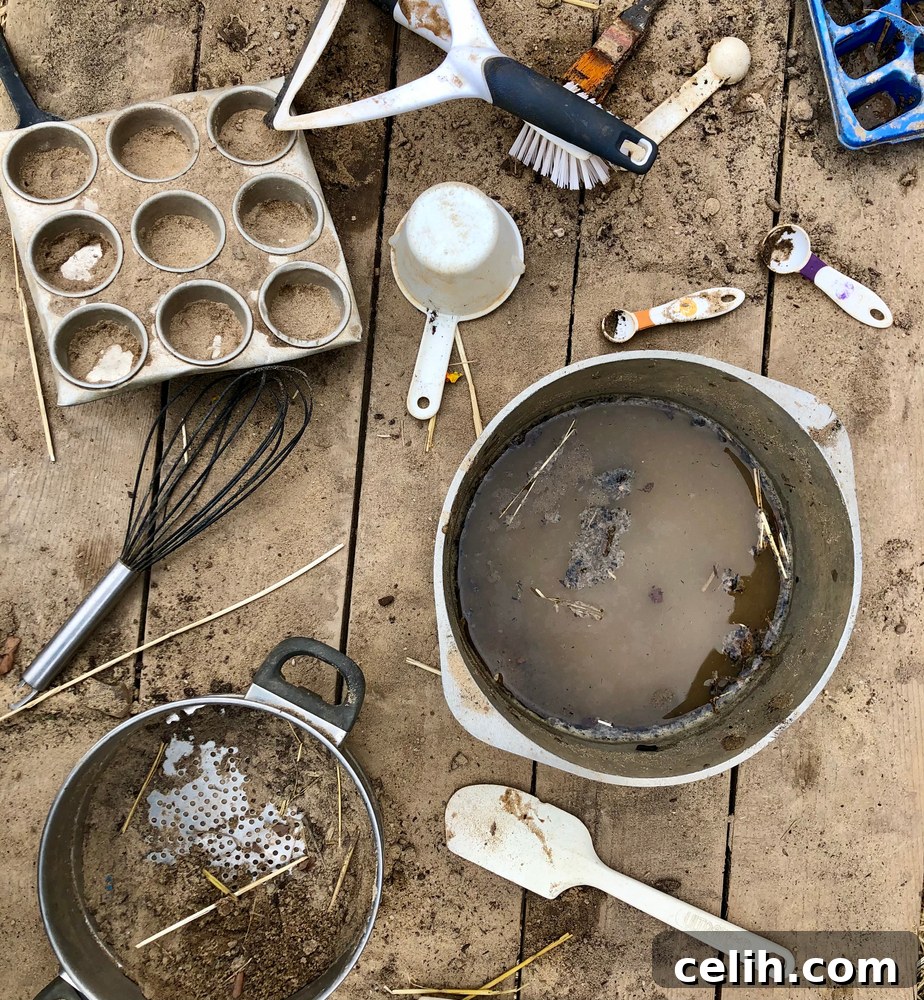
At its core, a mud kitchen is an outdoor play station designed to mimic a real kitchen, but with a wonderfully wild twist. Instead of polished countertops and gleaming appliances, children are invited to create culinary masterpieces using nature’s ingredients: mud, sand, water, leaves, pebbles, twigs, and whatever else their garden adventures unearth. While some smaller versions can be adapted for indoor use, the true spirit of a mud kitchen thrives outdoors, where uninhibited, messy, and imaginative play can flourish without constraint.
Typically, a well-appointed mud kitchen will feature several key elements. You’ll often find one or more “washing up” tubs, perfect for mixing concoctions, washing “dishes,” or simply enjoying the tactile sensation of water and mud. Vertical spaces with hooks provide ideal storage for hanging play utensils, pots, and pans, while shelves and racks offer ample room for storing “ingredients” or displaying finished “dishes.” A designated “preparation space,” resembling a countertop, allows children to chop, stir, and knead their natural components. Many designs also incorporate play versions of kitchen features like stovetop hobs, ovens, or even faux washing machines, amplifying the role-play possibilities. The beauty of a mud kitchen lies in its simplicity and adaptability; children can augment their setup with endless accessories, from old kitchenware to natural found objects, transforming their outdoor space into a dynamic hub of culinary creativity.
Why a Mud Kitchen is the Ultimate Outdoor Play Investment
Mud kitchens aren’t just trendy; they are profoundly beneficial for child development. They transform your garden into an engaging outdoor classroom and a vibrant hub for imaginative adventures. If you’re still contemplating whether this unique piece of equipment is right for your home, consider the myriad of advantages it offers, making it one of the most impactful choices for enriching your child’s outdoor experience.
Fostering Boundless Imaginative and Creative Play
The mud kitchen is a champion of imaginative play. Here, children aren’t just playing; they are world-builders, storytellers, and culinary innovators. A handful of mud can become a gourmet cake, a pile of leaves transforms into a vibrant salad, and water from the hosepipe is instantly the secret ingredient for a magical potion. This type of open-ended play encourages children to create narratives, assign roles (chef, baker, scientist, explorer), and engage in rich, dramatic scenarios that are crucial for cognitive and language development. They learn to think symbolically, develop abstract reasoning, and explore countless possibilities without predefined rules, fostering a deep sense of creativity that extends far beyond the kitchen.
Unlocking Sensory Exploration and Engagement
Few play activities engage as many senses as a mud kitchen. Children immerse themselves in a rich sensory landscape: the earthy scent of damp soil, the squishy feel of mud between their fingers, the crunch of leaves, the visual palette of natural colors, and the sounds of splashing water and clanking utensils. This multi-sensory engagement is incredibly beneficial for brain development, helping children to process information from their environment, integrate sensory inputs, and build a stronger connection with the natural world. It’s a grounding, calming, and deeply satisfying experience that appeals to children’s innate curiosity about their surroundings.
Developing Essential Motor Skills
Playing in a mud kitchen is a fantastic workout for both fine and gross motor skills. Fine motor skills are honed through precise actions like stirring thick mud with a spoon, carefully pouring water from a small jug, pinching leaves for garnish, or manipulating small natural objects. These actions strengthen the small muscles in the hands and wrists, which are essential for tasks like writing, drawing, and dressing themselves. Simultaneously, gross motor skills get a vigorous workout as children crouch to gather ingredients, reach for accessories, carry heavy buckets of water, and move around the play space. This comprehensive physical engagement contributes to improved coordination, balance, and overall physical strength.
Cultivating Problem-Solving and Critical Thinking
Every “dish” created in a mud kitchen is a mini-experiment. Children learn through trial and error: “What happens if I add more water to this mud? It’s too runny! How can I thicken it?” They learn about cause and effect, basic physics (liquids, solids, pouring), and even early chemistry as they mix different natural elements. This hands-on, experiential learning fosters critical thinking, problem-solving abilities, and an understanding of textures and consistencies. They develop resilience as they adapt their ideas and find solutions to their self-imposed challenges.
Nurturing Social and Emotional Growth
Mud kitchens are wonderful catalysts for social interaction. When multiple children play together, they learn invaluable social skills such as sharing tools and “ingredients,” negotiating roles, collaborating on a shared “meal,” and communicating their ideas. This interaction builds empathy, cooperation, and conflict resolution skills. For children playing alone, the mud kitchen provides a safe space for independent exploration, fostering self-reliance, boosting confidence, and offering a calming outlet for self-expression. The freedom to get messy and create without strict rules also serves as a fantastic stress reliever, allowing children to unwind and express themselves freely.
Year-Round Outdoor Engagement
One of the mud kitchen’s most practical benefits is its versatility across all seasons and weather conditions. Unlike many outdoor toys that are fair-weather dependent, a mud kitchen thrives in every season. Rain creates perfect muddy conditions; sunshine allows for drying mud pies; autumn brings a bounty of colorful leaves and seeds; and even a light snowfall can transform it into a “snow kitchen.” This all-weather adaptability ensures that your children can consistently benefit from outdoor play throughout the entire year, building resilience and an appreciation for nature’s changing cycles.
A Cost-Effective and Sustainable Play Solution
Compared to many commercially produced toys, mud kitchens are remarkably cost-effective. They often utilize natural, free “ingredients” found in the garden, and many accessories can be repurposed from old kitchenware or thrift store finds. This approach not only saves money but also promotes a sustainable mindset, encouraging children to value natural resources and reuse materials. It’s a play investment that truly gives back, both to your child’s development and to a more eco-conscious lifestyle.
“Let nature be your teacher.” – William Wordsworth
Embracing a mud kitchen in your garden is an endorsement of Wordsworth’s timeless wisdom. It’s an invitation for children to learn directly from the natural world, to experiment, to create, and to grow in profound ways. When considering this fantastic addition, prioritize quality. Investing in a well-constructed, durable mud kitchen ensures it can withstand countless hours of enthusiastic play, diverse weather conditions, and the test of time. Look for sturdy materials, safe designs, and craftsmanship that promises longevity. A high-quality mud kitchen is not just a toy; it’s a foundational piece of equipment that will enrich your child’s childhood, fostering a love for the outdoors, creativity, and hands-on learning for years to come.
So, clear a space in your backyard, gather some old pots and pans, and prepare to witness the incredible transformation of your children into chefs, scientists, artists, and explorers – all thanks to the humble yet powerful magic of the mud kitchen. It’s an investment in joy, development, and a childhood filled with authentic, unforgettable outdoor adventures.