
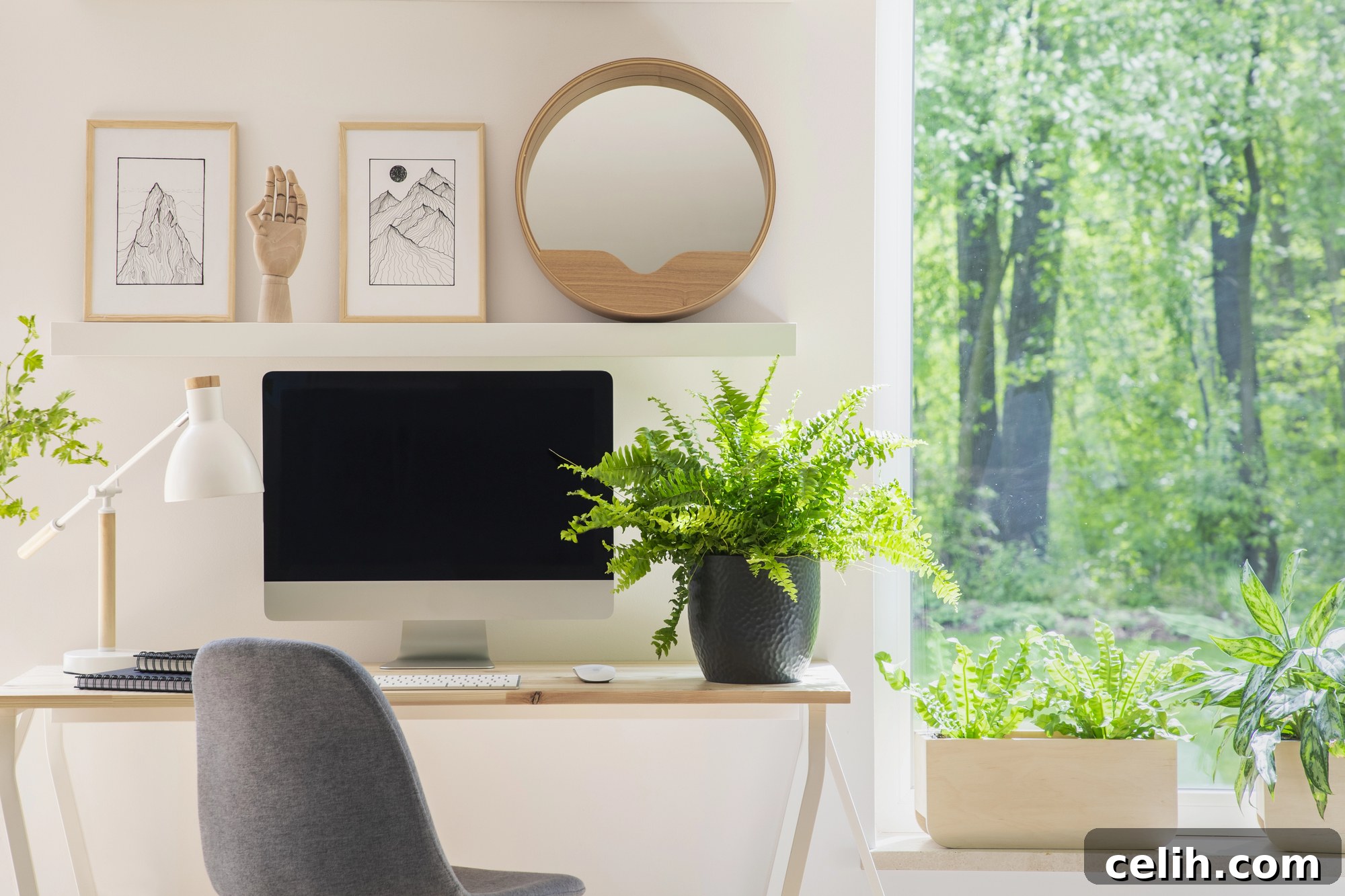
The concept of the home office has undergone a profound transformation, moving beyond mere aesthetics and immediate productivity to encompass a crucial, long-term commitment to environmental stewardship. As individuals and businesses increasingly embrace greener practices, the materials and design principles governing home office fit-outs are under greater scrutiny than ever before. The encouraging news is that pursuing sustainability no longer necessitates a compromise on quality, style, or functionality. Indeed, with thoughtful planning and informed material selections, a modern home office can stand as a testament to energy efficiency, innovative use of recycled materials, and smart, human-centric design, all while fostering a comfortable and highly productive environment where creativity and work can flourish.
Crafting an eco-conscious workspace is about making deliberate choices that benefit both the individual and the planet. It’s about building a space that not only meets immediate needs but also respects finite resources and minimizes its ecological footprint throughout its entire lifecycle. This comprehensive guide explores key strategies and material selections that can help you create a truly sustainable home office, a space designed for the future.
Selecting Materials for a Lower Environmental Footprint
At the heart of any sustainable home office fit-out lies intelligent material selection. Prioritizing products with inherently low embodied energy, significant recycled content, and credible third-party certifications can dramatically reduce your environmental impact. These certifications, such as GECA (Good Environmental Choice Australia), FSC (Forest Stewardship Council), or Cradle to Cradle, provide assurance that materials meet stringent environmental and social standards, from sourcing to manufacturing and end-of-life.
For joinery, cabinetry, and furniture, sustainably harvested timber is an excellent choice. Opt for wood products certified by organizations like FSC, which ensures that the timber comes from responsibly managed forests. Engineered wood, often composed of wood fibers and binders, can also be a sustainable option when manufactured with low-emission adhesives, as it utilizes wood resources more efficiently and can incorporate recycled content. Bamboo stands out as a remarkable rapidly renewable resource; its astonishing growth rate and exceptional durability make it an increasingly popular material for flooring, furniture, and decorative accents. Available in various tones and finishes, bamboo offers a stylish and resilient alternative to traditional hardwoods.
When it comes to flooring, consider carpet tiles crafted from recycled synthetic fibers, often sourced from post-consumer PET bottles or reclaimed fishing nets. These not only divert waste from landfills but also provide excellent acoustic insulation and thermal benefits. Natural fiber alternatives like sisal, jute, or cork are biodegradable, renewable, and contribute to healthier indoor air quality. Even concrete, a seemingly conventional material, can be part of a greener build when sourced responsibly. This includes using supplementary cementitious materials (SCMs) like fly ash or slag to reduce cement content, opting for local suppliers to minimize transportation emissions, and exploring permeable concrete options for outdoor adjacent spaces to manage stormwater runoff.
Beyond structural elements, don’t overlook finishes. Low-VOC (volatile organic compound) paints, stains, sealants, and adhesives are critical for maintaining healthy indoor air quality, preventing the release of harmful chemicals that can impact health and comfort. Choosing natural finishes, such as waxes or oils for timber, further enhances the eco-credentials of your home office design, creating a truly healthy and sustainable workspace.
The Enduring Value of Metals in Eco-Friendly Design
While often not the first materials that come to mind for sustainable interiors, many metals offer exceptional longevity, durability, and, crucially, infinite recyclability. These characteristics position them as key players in circular economy principles. Aluminium, in particular, embodies many of these sustainable advantages. It is remarkably lightweight yet strong, highly corrosion-resistant, and can be endlessly recycled without any degradation in quality. This makes aluminium a true star in the realm of sustainable materials, closing the loop on material use and significantly reducing the need for virgin resources.
In a home office application, aluminium’s versatility shines through. It is commonly found in lightweight framing systems for partitions, sleek ceiling panels, adjustable workstation components, and modern decorative elements. Its clean aesthetic and high performance make it a favored choice for contemporary designs. One increasingly popular and practical application is the use of aluminium checker plates. This rugged, textured surface is often employed for flooring in utility areas, stair treads, or as robust wall protection in high-traffic zones of a home office. Beyond its industrial-chic appeal, checker plate is incredibly durable, resistant to wear and tear, and remarkably easy to clean – qualities that contribute to the longevity and low maintenance of the space. Its inherent recyclability further solidifies its position as a practical and environmentally conscious addition to eco-friendly interiors, offering long-term value without the environmental cost of more disposable alternatives.
Beyond aluminium, other metals contribute significantly to sustainable design. Steel, for instance, boasts a high recycled content and is also infinitely recyclable, making it an excellent choice for structural components, furniture frames, and even decorative screens. Copper, renowned for its timeless aesthetic and antimicrobial properties, is also highly durable and can be recycled repeatedly. When specifying metals, prioritizing responsible suppliers who adhere to ethical sourcing and manufacturing practices is paramount. Such suppliers ensure that the materials contribute positively to both the environment and the supply chain, reinforcing the overall sustainability goals of your home office.
Embracing Modular and Reconfigurable Design Principles
A truly sustainable home office isn’t just defined by its initial construction; it’s also about its longevity and inherent adaptability. Modular and reconfigurable design principles are foundational to this approach, allowing spaces to evolve and adapt as needs change, thereby drastically reducing the waste and resource consumption typically associated with traditional demolition and reinstallation during renovations.
This forward-thinking approach is realized through components like movable walls, which can redefine space without permanent construction; demountable joinery systems that can be easily installed, disassembled, and relocated; and freestanding, adaptable workstations that offer unparalleled flexibility. By consciously reducing the reliance on fixed, built-in infrastructure, you imbue the space with an intrinsic flexibility. This makes it effortless to scale up your workspace as your business grows, reconfigure layouts to suit new workflows, or even relocate components entirely should your home office move. This inherent flexibility not only serves practical business needs but also stands as a pillar of environmental responsibility.
The core benefit of modular design extends directly to waste minimization. When components can be easily detached, moved, and reinstalled, they are not discarded after a single use. Instead, these modular elements can often be reused in different configurations or even transferred to another location, significantly extending their useful life. This greatly reduces the volume of construction waste heading to landfills and diminishes the need for new material production, thereby conserving valuable resources and lowering embodied energy. Furthermore, manufacturers who design for modularity often prioritize durable materials and standardized parts, which further facilitates repair, maintenance, and future repurposing, embedding circular economy principles directly into your home office fit-out.
Harmonizing with Natural Light, Air, and Biophilic Design
While often overlooked in discussions centered solely on materials, the strategic incorporation of natural light and robust ventilation systems is a cornerstone of sustainable home office planning. Maximizing the use of daylight naturally translates to fewer hours of artificial lighting, directly leading to lower energy consumption and reduced utility bills. Beyond energy savings, abundant natural light has well-documented benefits for occupant well-being, improving mood, reducing eye strain, and boosting productivity. Thoughtful design includes optimizing window placement, considering light shelves to bounce daylight deeper into the space, and using reflective surfaces to amplify ambient light.
Equally vital is ensuring superior indoor air quality. Low-VOC (volatile organic compound) paints, sealants, adhesives, and furniture finishes are essential for preventing the off-gassing of harmful chemicals into the workspace. Coupled with effective ventilation strategies, such as natural cross-ventilation or high-efficiency mechanical systems with advanced filtration, these measures create a healthy breathing environment. Materials chosen for the fit-out should also support this openness and air purity. Glass partitions, for instance, allow natural light to permeate deeper into the space while maintaining crucial acoustic separation. Natural materials like timber and stone surfaces add warmth, texture, and grounding elements without contributing to poor air quality or the heat island effect that synthetic materials can sometimes create.
Biophilic design takes this connection to nature a step further by integrating natural elements and patterns into the built environment to foster human well-being. This approach involves more than just adding a few potted plants. It encompasses using natural materials like exposed timber beams, authentic stone finishes, and cork walls; incorporating living green walls or ample indoor plants for air purification and visual calm; and designing layouts that provide views of nature or mimic natural environments. The benefits of biophilic design are profound, including reduced stress levels, enhanced cognitive function, and increased creativity – all while aligning perfectly with sustainable goals by promoting natural aesthetics and a respect for the environment.
Integrating Smart Technology and Energy Efficiency
No contemporary home office fit-out is complete without a sophisticated integration of technology, but in a sustainable context, this technology must be smart not just in function but also in its environmental awareness. The smart office leverages automation to significantly reduce power consumption and optimize resource use. Automated systems that intelligently control lighting based on occupancy and daylight availability, regulate temperature and ventilation, and manage motorized blinds or shades can dramatically slash energy waste. Occupancy sensors, for example, ensure that lights are only on when a space is occupied, preventing energy drain in empty rooms.
Beyond automated systems, the choice of individual appliances and lighting fixtures plays a crucial role. Integrating power-efficient lighting solutions, such as LED (Light Emitting Diode) bulbs, is a fundamental step. LEDs consume a fraction of the energy of traditional incandescent or fluorescent lights, last significantly longer, and produce less heat, further reducing cooling loads. Furthermore, selecting Energy Star-rated appliances for monitors, printers, and any small kitchen appliances in your office ensures that these devices meet strict energy efficiency guidelines. Even the configuration of your desk setup can contribute to energy savings: opting for USB-C charging hubs, low-power monitors, and docked laptops typically outperforms bulky, power-hungry desktop systems in terms of daily energy consumption.
Furthermore, smart power strips can help combat “phantom load” – the energy consumed by electronics when they are turned off but still plugged in. These strips can automatically cut power to devices not in use, adding another layer of energy efficiency. For those looking to take sustainability even further, integrating renewable energy sources, such as rooftop solar panels, can turn your home office into a net-zero energy consumer, marking the pinnacle of energy-efficient design and operation.
Embracing Reusability and Lifecycle Thinking
True sustainability extends far beyond the initial installation of a home office; it embraces a holistic lifecycle thinking approach. This methodology considers the entire journey of each component, from its raw material extraction and manufacturing to its installation, use, and critically, what happens to it when the office is eventually renovated, downsized, or decommissioned. Materials and products that are designed for disassembly, can be easily reused, or are part of a manufacturer’s take-back program embody this crucial circular mindset, moving away from a linear “take-make-dispose” model.
Choosing manufacturers who actively offer take-back schemes is a powerful statement of commitment to the circular economy. These programs ensure that products, once their useful life in your office is over, are returned to the manufacturer for recycling, refurbishment, or safe disposal, preventing them from ending up in landfills. Similarly, prioritizing furniture made with standardized parts or modular components significantly enhances its repairability and maintainability. When a component breaks or wears out, it can be easily replaced, extending the overall lifespan of the furniture and reducing the need for complete replacements.
In this arena, metals once again stand out as exemplary materials. Their ability to be melted down and reformed into new products repeatedly, often without any degradation of their inherent properties, makes them incredibly valuable within a circular economy framework. When designing a home office with lifecycle thinking in mind, the focus shifts to durability, quality, and the potential for a product’s rebirth. This means investing in high-quality items that are built to last, choosing materials that are inherently recyclable or compostable, and asking critical questions about a product’s end-of-life plan. By making these informed choices, your home office not only functions beautifully today but also contributes responsibly to the resource economy of tomorrow.
Conclusion: Building a Future-Ready Sustainable Home Office
Creating a truly sustainable home office is not an endeavor to be undertaken overnight, nor does it demand an all-or-nothing approach. Instead, it represents a conscious and incremental journey of making smarter, more informed choices across every aspect of the workspace – from the foundational materials and the reliability of suppliers to the inherent flexibility and future adaptability of the design. When approached with thoughtfulness and a genuine commitment to environmental responsibility, a sustainable fit-out transcends mere aesthetic appeal, profoundly benefiting both the health of the planet and the well-being of the individuals who utilize the space day in and day out.
Every decision, no matter how seemingly small, contributes to the larger goal. From the selection of reclaimed wood for warmth and character to the innovative application of highly recyclable aluminium checker plates for durability and modern style, each component plays a vital role in shaping a workplace that is not only built to last but also designed for optimal comfort, heightened productivity, and an unwavering readiness for whatever challenges and opportunities the future may hold. By investing in a sustainable home office, you are not just furnishing a space; you are investing in a healthier planet and a more inspiring, resilient, and future-proof environment for your work.