
The Enduring Allure of the Penguin Donkey Bookcase: A Design Icon Revisited
In the realm of modern furniture design, few pieces manage to capture the imagination quite like the Penguin Donkey bookcase. Its name alone is an intriguing paradox, sparking curiosity and hinting at a rich backstory. Far from being a mere storage unit, this exceptional piece stands as a testament to innovative design, functional elegance, and a unique place in the history of British modernism. Crafted from beautiful birch plywood, it continues to be as relevant and striking in contemporary homes today as it was when first conceived over eight decades ago.
The Penguin Donkey bookcase transcends its practical purpose, evolving into a cherished symbol of thoughtful design that seamlessly blends form and function. It speaks to a heritage of creativity and an uncompromising commitment to quality, making it a highly sought-after item for design enthusiasts and collectors alike.
Unpacking the Intriguing Name: Why “Penguin Donkey”?
The moniker “Penguin Donkey” might initially conjure images of an unlikely zoological pairing, a playful oxymoron that begs for an explanation. The simplicity of its origin, however, is as charming as the design itself. This distinctive bookcase was created with a specific purpose in mind: to house and celebrate the burgeoning collection of paperback books published by Penguin Books. These affordable, well-designed paperbacks democratized literature, making it accessible to a wider audience, and needed a storage solution that was equally innovative and stylish.
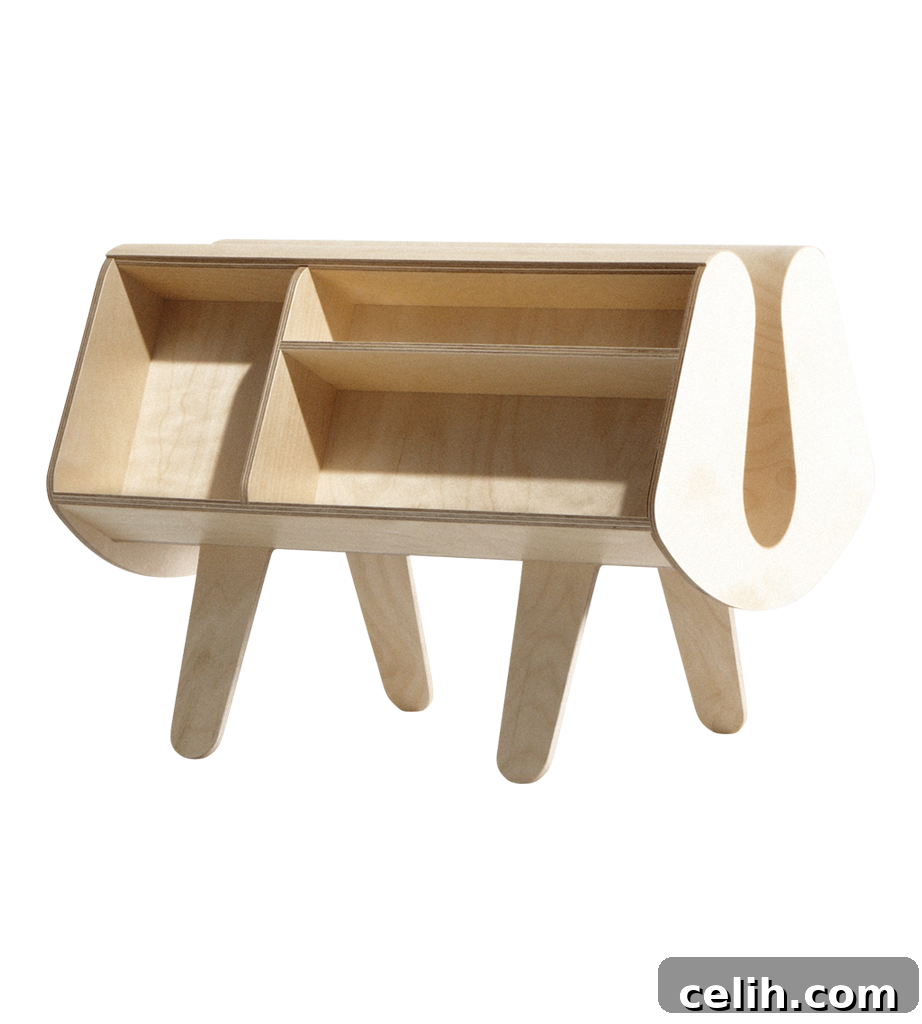
The “donkey” aspect refers to its unmistakable shape. With its low-slung body, two distinct compartments resembling saddlebags, and a sturdy, grounded presence, the bookcase evokes the silhouette of a patient pack animal. This form is not arbitrary; it’s ingeniously designed to hold a significant number of books while remaining compact and easily integrated into various living spaces. The combination of these two elements – the iconic publisher and the distinctive shape – perfectly encapsulates the bookcase’s identity and legacy. It’s a delightful example of how a functional object can acquire a memorable and meaningful name through thoughtful association.
A Legacy Forged in 1939: Egon Riss and Isokon Plus
The story of the Penguin Donkey bookcase begins in a pivotal year for design: 1939. It was then that the Austrian émigré designer, Egon Riss, conceptualized this groundbreaking piece. Riss, known for his modernist sensibilities, brought a fresh perspective to furniture design, emphasizing clean lines, functionality, and the innovative use of materials. His vision for the Penguin Donkey was to create an elegant yet practical solution for displaying paperback books, reflecting the modernist ideal of accessible and well-designed objects for everyday life.
The production of this remarkable bookcase was undertaken by Isokon Plus, a company synonymous with pioneering modern architecture and furniture in London. Isokon played a crucial role in introducing Bauhaus principles and radical design to Britain. Founded by Jack Pritchard, Isokon embraced the potential of plywood, a material central to the modernist movement due to its strength, versatility, and sleek appearance. Many influential designers, including Walter Gropius and Marcel Breuer, collaborated with Isokon, cementing its reputation as a hub of innovation. The Penguin Donkey, produced during this vibrant period, perfectly embodies Isokon’s commitment to cutting-edge design and superior craftsmanship. Its creation marked a significant moment, showcasing how utility could be beautifully intertwined with artistic expression, even as the shadow of World War II loomed.
The Art of Plywood: Materiality and Design Philosophy
At the heart of the Penguin Donkey bookcase’s design lies its primary material: birch plywood. This choice was not merely aesthetic; it was a deliberate embrace of modernist principles that championed industrial materials and streamlined production. Plywood offered several distinct advantages:
- Strength and Durability: Despite its slender profile, plywood is incredibly strong and resistant to warping, ensuring the bookcase’s longevity.
- Versatility: It can be molded and shaped into elegant curves and precise angles, allowing for the Donkey’s distinctive form.
- Sustainable Appeal: Even in 1939, the efficiency of plywood production and its natural origins made it an appealing choice. Today, its sustainability is an added benefit for environmentally conscious consumers.
- Minimalist Aesthetic: The smooth, grain-rich surface of birch plywood contributes to the bookcase’s clean, uncluttered look, aligning perfectly with modernist and minimalist decor styles.
Egon Riss’s design philosophy for the Penguin Donkey was rooted in functionalism. Every curve, every compartment, serves a purpose. The two main “saddlebag” sections are perfectly sized to cradle paperbacks, holding them upright and easily accessible. The central flat surface can serve as a small display area for a decorative object, a cup of tea, or simply as an additional surface, enhancing its versatility. Its low profile makes it ideal for placement beside an armchair, beneath a window, or as a subtle room divider, optimizing space without overwhelming it. This thoughtful integration of material and purpose is what elevates the Penguin Donkey from a simple piece of furniture to an iconic work of art.
Timeless Appeal: Integrating the Penguin Donkey into Modern Interiors
Despite being designed over 80 years ago, the Penguin Donkey bookcase possesses an uncanny ability to complement and enhance virtually any contemporary living space. Its timeless aesthetic ensures it never looks dated; instead, it offers a touch of classic sophistication and historical depth.
Here’s why it remains so appealing for modern homes:
- Versatile Styling: Whether your home embraces mid-century modern, minimalist, Scandinavian, industrial, or even an eclectic bohemian vibe, the Penguin Donkey fits right in. Its understated elegance allows it to blend seamlessly while still making a subtle statement.
- Perfect for Small Spaces: In an era of shrinking living spaces, the Donkey’s compact footprint yet generous storage capacity is invaluable. It provides essential book storage without occupying extensive floor area, making it ideal for apartments, reading nooks, or home offices.
- Beyond Books: While originally designed for Penguin Books, its utility extends far beyond. It can neatly store magazines, vinyl records, remote controls, children’s books, or even serve as a stylish display for small decorative items. Its flat top surface can double as a compact side table.
- A Conversation Starter: Its unique name and distinctive form inevitably spark interest and conversation, adding character and a story to your home decor. It’s more than just furniture; it’s a piece of design history.
- Investment in Design: Owning a Penguin Donkey bookcase is an investment in a piece of authentic design heritage. It’s built to last, both structurally and aesthetically, ensuring it can be cherished for generations.
The combination of its practical utility, striking yet restrained aesthetics, and rich historical context makes the Penguin Donkey a standout choice for anyone looking to infuse their home with classic design that continues to resonate today.
Acquiring a Design Classic: Availability and Value
For those eager to bring this piece of design history into their home, the Penguin Donkey bookcase is still produced by Isokon Plus to its original specifications, ensuring fidelity to Egon Riss’s vision. It is available from various reputable retailers specializing in high-quality modern furniture. For instance, The Conran Shop, a renowned purveyor of contemporary design, proudly offers this iconic piece, typically retailing for around £650. This price reflects not only the superior craftsmanship and the quality of the birch plywood but also the enduring legacy and collectibility of an authentic Isokon design.
Investing in a Penguin Donkey is more than just buying a piece of furniture; it’s acquiring a slice of design history, a functional work of art that holds its value and continues to inspire. While new versions are readily available, vintage editions can also be found through specialized dealers and auction houses, often commanding higher prices depending on their condition and provenance. These vintage pieces tell an even deeper story, bearing the subtle marks of time and previous homes, yet retaining their inherent charm and robust functionality.
The Lasting Legacy of Isokon Plus and British Modernism
The Penguin Donkey bookcase is more than just a product; it’s a living embodiment of the legacy of Isokon Plus and its profound impact on British modernism. Isokon was not just a furniture manufacturer; it was a cultural force, fostering an environment where radical ideas in architecture and design could flourish. Its collaborations with émigré architects and designers from the Bauhaus, like Marcel Breuer and Walter Gropius, brought an international perspective to British design, challenging traditional aesthetics and embracing a future-forward vision.
The company’s commitment to innovative materials like plywood, combined with a strong emphasis on functionalism and clean lines, set new standards for furniture design. The Penguin Donkey perfectly encapsulates this ethos, demonstrating how simple materials could be transformed into objects of beauty and utility. Today, Isokon Plus continues to produce these classic designs, ensuring that the original vision and craftsmanship are preserved. By maintaining the integrity of these iconic pieces, Isokon Plus ensures that future generations can appreciate and integrate these masterpieces of modern design into their lives, celebrating a legacy that began in a small London workshop over eight decades ago.
Conclusion: A Timeless Testament to Design Brilliance
The Penguin Donkey bookcase, with its captivating name and distinctive form, remains a truly exceptional piece of furniture. From its thoughtful design by Egon Riss in 1939 to its meticulous production by Isokon Plus, every aspect of this bookcase speaks to a heritage of innovation and enduring quality. It’s a design that effortlessly bridges eras, proving that true elegance and functionality are indeed timeless. Whether used to house cherished books, display meaningful objects, or simply admired for its sculptural qualities, the Penguin Donkey is more than just a storage solution; it is a statement piece, a conversation starter, and a beloved icon of modern design. Its ability to adapt to diverse interiors while retaining its unique character ensures its place as a cherished item for many years to come, a lasting testament to the brilliance of its original conception.