
Managing household expenses can be a significant challenge, and among the many recurring costs, water bills often stand out. In the UK, for instance, the average household water bill hovers around £385 annually, a substantial sum that prompts many homeowners to actively seek strategies for reduction. It’s a common misconception that one is already doing everything possible to conserve water, or that any additional effort would yield negligible savings. However, this couldn’t be further from the truth. There exists a wealth of actionable steps you can take to significantly rein in your water consumption and, consequently, your monthly expenditure. The key lies in identifying areas of potential waste and implementing effective corrections. This comprehensive guide will explore various methods you can employ to lower your water bills, transforming them from a financial drain into a manageable utility cost.
Professional Plumbing Checks and Leak Detection
One of the most impactful and often overlooked ways to reduce your water expenses is to ensure the integrity of your plumbing system. A silent leak, hidden within your walls, under your floors, or even underground, could be steadily adding hundreds of pounds to your monthly bill without your knowledge. These leaks can range from a persistent drip to a more significant, yet concealed, escape of water, each contributing to considerable waste over time. Therefore, having your plumbing thoroughly checked by a professional is a highly efficient strategy to identify and rectify such issues, cutting down on unnecessary costs.
Specialist companies, like Pinpoint, offer invaluable expertise in this domain. With over five decades of experience in detecting and repairing leaks, they possess the advanced tools and techniques to pinpoint the exact source of a problem without causing extensive, unnecessary damage to your property. Their leak detection methods are completely non-invasive, employing technology such as acoustic sensors, thermal imaging, and gas trace detection. This ensures that your home remains largely undisturbed while the issue is being identified. Furthermore, their commitment to rapid response means they can typically attend to your property within 24 hours. Once the leak is located, they are also equipped to provide comprehensive repair services at a transparent and reasonable fee, ensuring there are no hidden costs. Beyond professional services, you can also perform basic DIY checks. Monitor your water meter before and after a period of no water use (e.g., overnight). If the meter reading changes, it strongly indicates a leak somewhere in your system. Regularly check for damp spots, mold growth, or unusually low water pressure, which can all be tell-tale signs of a hidden leak. Addressing these issues promptly not only saves money but also prevents potential structural damage to your home.
Exploring the Benefits of a Metered Water Scheme
When it comes to how you’re billed for water, households typically have two options: a flat fee based on your property’s rateable value or a metered scheme where you pay for the exact amount of water you use. For many, switching to a metered scheme could represent significant savings, especially if your household’s water consumption is lower than what you’re currently paying under a flat rate. The first step in determining if a meter is right for you is to estimate your current water usage.
The Consumer Council for Water provides an excellent online calculator designed to help you do just that. This tool asks a series of pertinent questions about your household dynamics and water habits, such as the number of occupants, how frequently you use appliances like washing machines and dishwashers, and even how often you flush the toilet. By inputting this information, the calculator can provide a rough but reliable estimate of your potential savings or increased costs under a metered system. This insight is crucial for making an informed decision about switching.
It’s also important to note that water companies are legally obligated to provide and install a water meter free of charge upon your request, provided it is practical to do so. If for some reason a meter cannot be installed at your property – perhaps due to complex pipework or technical limitations – the water company must offer an alternative. This typically comes in the form of an “assessed charge.” This charge is calculated using an average fee paid by similar households that do have meters. While there’s no universal formula for how companies calculate this assessed charge, they often consider factors such as the number of occupants, the number of bedrooms, and the property size. Understanding these options empowers you to choose the most cost-effective billing method for your household. Furthermore, having a meter can encourage more conscious water use, as you directly see the financial impact of your consumption habits.
Mindful Water Usage in the Bathroom: Baths and Showers
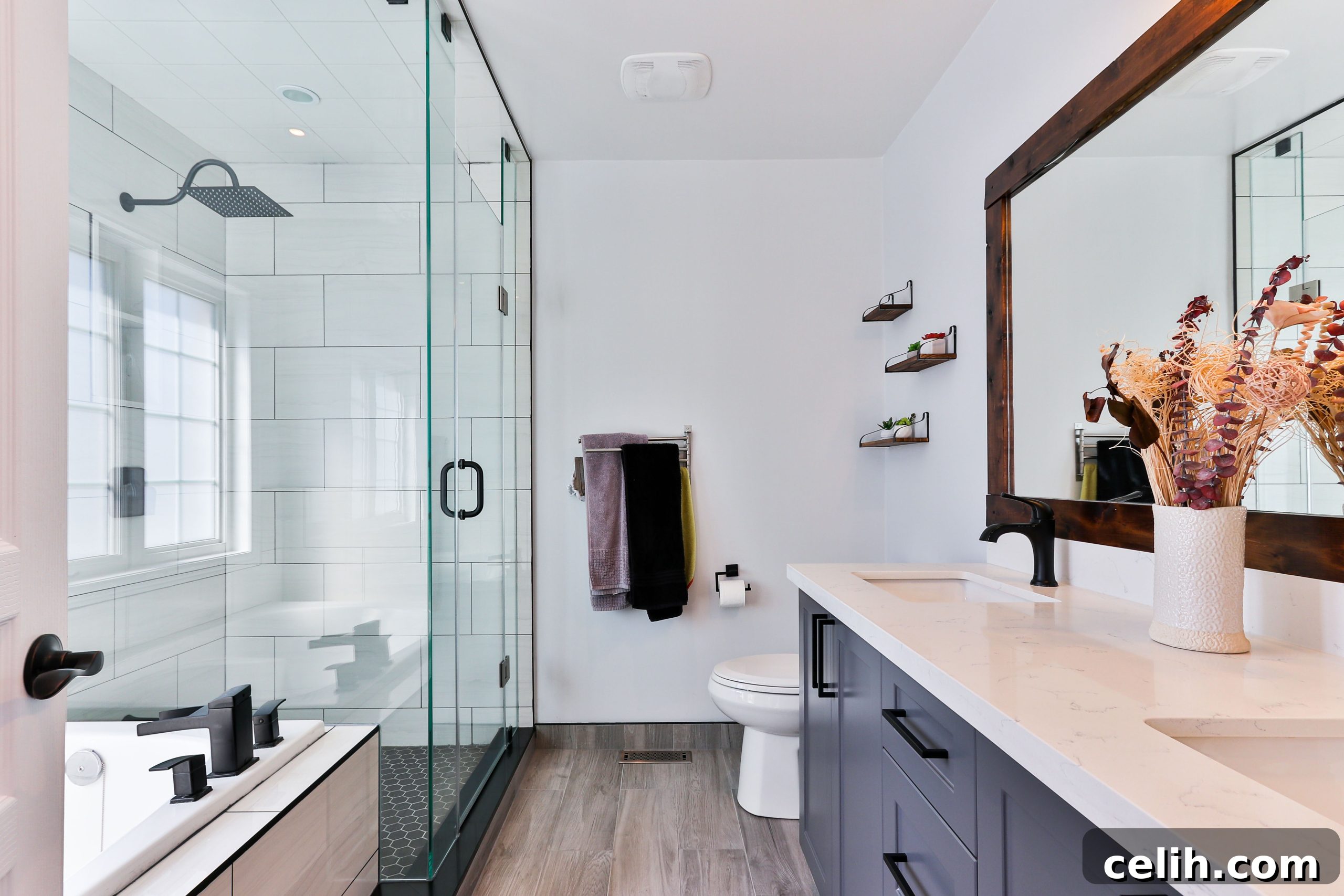
The bathroom is often the biggest water consumer in any home, and making small adjustments here can lead to significant savings. When it comes to taking baths, there’s rarely a genuine need to fill your bathtub to the brim. A typical bath can use anywhere from 80 to 200 litres of water, depending on its size and how full it is. Simply filling your bathtub halfway, for example, uses a substantial amount, so reducing that to just one-third can make a dramatic difference to your annual water consumption without necessarily compromising the quality or enjoyment of your bath. This simple habit change, if adopted consistently, adds up to considerable savings over the course of a year.
Alternatively, consider switching from baths to showers more frequently. Showers generally use less water than baths, assuming they are not excessively long. A standard shower head uses about 9.5 litres of water per minute. This consumption can be further reduced by installing low-flow showerheads, which can bring usage down to as little as 6 litres per minute without sacrificing pressure. Such an upgrade is a one-time investment that yields continuous savings. While you don’t have to swear off baths entirely, perhaps relegate them to a weekly treat rather than a daily ritual. However, the savings from showering only materialise if you are mindful of the duration. Spending 15 to 20 minutes under a running shower can quickly negate any potential water savings compared to a bath. Aim for shorter showers, perhaps five to seven minutes, and consider adopting the “navy shower” technique: get wet, turn off the water to lather, then turn it back on to rinse. Additionally, ensure your toilet is not leaking; a simple dye tablet test can reveal if water is silently escaping from the tank into the bowl. Upgrading to a dual-flush toilet can also significantly reduce water used per flush, especially for liquid waste.
Conscious Tap Usage: Don’t Let Water Run Unnecessarily
Leaving the tap running for no legitimate reason is a remarkably common bad habit that, if corrected, can lead to substantial reductions in water consumption. Whether you’re brushing your teeth, shaving, or washing dishes, the temptation to let the water flow continuously out of convenience can be strong. However, this seemingly minor oversight results in a significant waste of water, far more than most people realise. A tap running at full flow can release several litres of water per minute. Multiply that by several minutes, multiple times a day, and by the total number of people in your household, and the cumulative waste becomes staggering.
To combat this, adopt the simple practice of only using water when you actively need it. When brushing your teeth, turn the tap off after wetting your brush and only turn it back on for rinsing. Similarly, while shaving, fill the basin with a small amount of water for rinsing your razor instead of letting the tap run. In the kitchen, when cleaning dishes, it’s far more water-efficient to scrub and soap your dishes in a basin of water (or with the tap off) and then rinse them all at once. Even better, consider using a full dishwasher, which is often more water-efficient than handwashing if operated with a full load. Beyond your own habits, it’s crucial to educate all members of your household, particularly children, about the importance of water conservation. Youngsters are often less sensitive to the concept of waste and the financial and environmental implications, so instilling these habits early on is vital for long-term savings and responsible resource management. Installing aerators on your kitchen and bathroom taps can also help; these devices mix air with water, reducing flow without a noticeable drop in pressure.
Water-Saving Strategies Beyond the Bathroom and Kitchen
While the bathroom and kitchen are prime areas for water conservation, there are many other opportunities around the home to reduce your consumption and further lower your bills. In the laundry room, ensure your washing machine is always running with a full load. Partial loads waste both water and energy. If you’re in the market for a new appliance, invest in a water-efficient model, often indicated by an A+ energy rating, which can significantly reduce water usage per cycle. For outdoor water use, particularly in gardening, timing is everything. Water your plants in the early morning or late evening to minimise evaporation, ensuring more water reaches the roots. Consider collecting rainwater in a butt for watering plants, reducing your reliance on treated tap water. Landscaping with drought-resistant plants, and using mulch around plants, can also drastically cut down on irrigation needs.
When washing your car, opt for a bucket and sponge instead of a continuously running hose, or consider using commercial car washes that often recycle their water. Furthermore, regularly check for and fix dripping outdoor faucets or leaky garden hoses. These small, constant leaks can add up to significant water loss over time, just like indoor leaks. Even small lifestyle changes, such as keeping a jug of cold water in the fridge instead of running the tap until the water gets cold, can contribute to overall savings. Finally, consider more advanced solutions for the future, like smart home water monitoring systems that can track your usage in real-time and alert you to unusual consumption patterns, potentially indicating a hidden leak. Implementing these diverse strategies across all aspects of your daily routine can collectively lead to substantial reductions in your monthly water bills. These are all simple yet effective tips that you can start using today. Make sure to involve your entire family, fostering a collective commitment to water conservation for both financial and environmental benefits.