
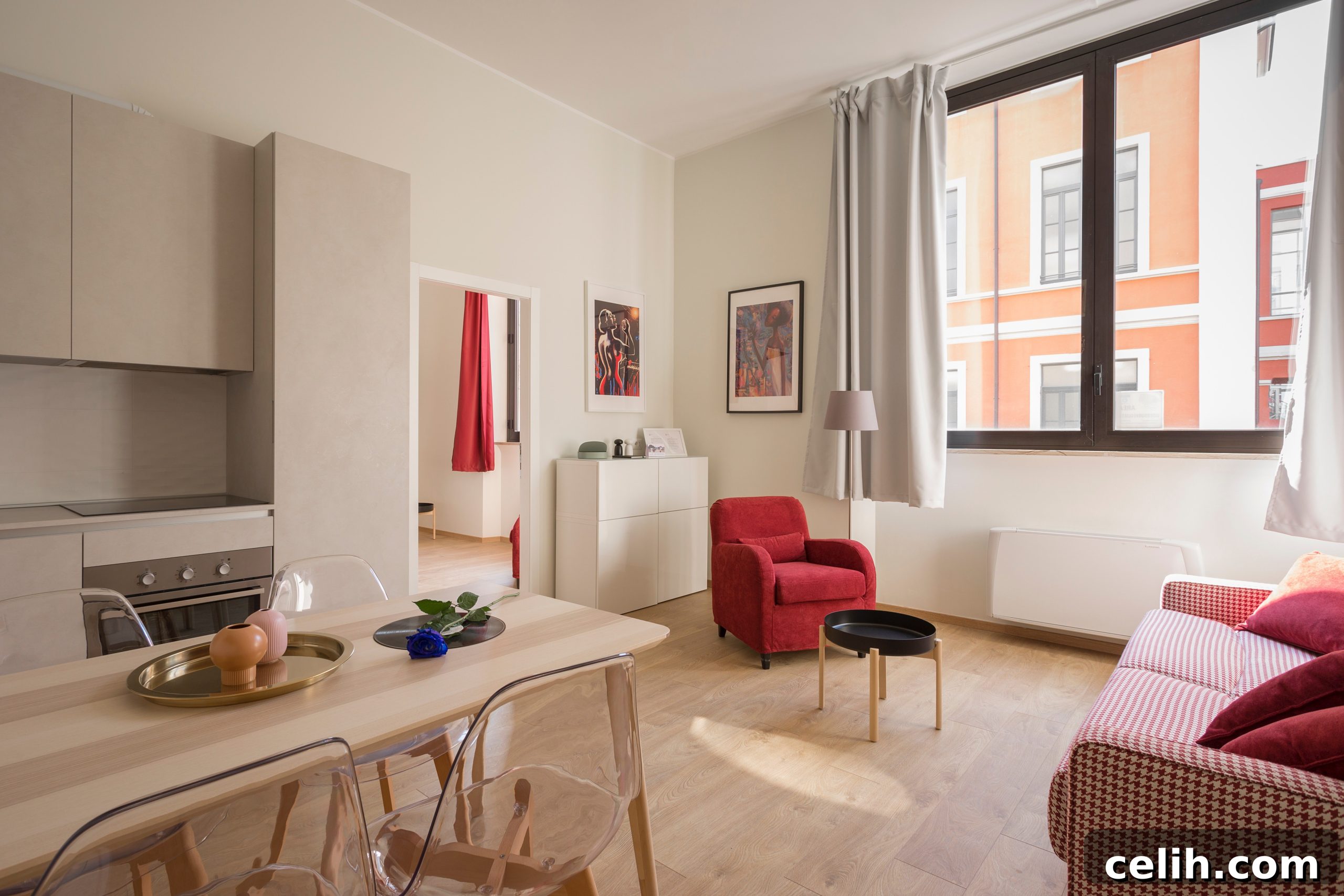
Living in a small home offers a unique blend of coziness, efficiency, and a mindful approach to consumerism. Every item, every design choice, holds significant importance in creating a functional and aesthetically pleasing environment. Far from being a limitation, compact living encourages creativity and smart design solutions that can transform confined areas into open, inviting spaces. One often underestimated element in this design puzzle is the humble curtain.
Curtains, when chosen and installed strategically, possess the remarkable ability to manipulate perceptions of space, light, and height. They are not merely decorative fabrics; they are powerful tools for interior design, capable of making a small room feel significantly larger and more expansive. This article delves into how careful selection of curtain dimensions, fabrics, styles, and mounting techniques can unlock the full potential of your small living space, ensuring that every window treatment contributes to a feeling of spaciousness and serenity.
Maximizing Space: The Art of Curtain Selection for Small Homes
The goal in designing smaller interiors is often to create an illusion of greater square footage, and curtains are excellent accomplices in this endeavor. By understanding a few key principles, you can transform your windows from mere openings into focal points that enhance your room’s perceived size and airiness. Let’s explore the essential strategies to employ when choosing curtains for your small sanctuary.
1. The Illusion of Grandeur: Mastering Curtain Dimensions
When it comes to curtain dimensions, a common misconception is that smaller windows in smaller rooms demand smaller curtains. However, the opposite is true. To create a sense of expansiveness, it is almost always better to choose curtains that are generously sized. Ideally, your curtains should extend all the way from the ceiling down to the floor, and be wider than the window frame itself. Companies like Woodyatt Curtains often offer options that can accommodate these expansive dimensions, providing a luxurious, custom-fit feel.
This design trick works on several levels. Firstly, hanging curtains high and wide draws the eye upwards and across, making the walls appear taller and the window seem grander than it is. The continuous vertical line from ceiling to floor eliminates visual breaks, creating an uninterrupted flow that stretches the perceived height of the room. Secondly, when curtains extend beyond the window frame, they allow the entire window glass to be exposed when the curtains are open. This maximizes natural light entry, a crucial element for making any small space feel more open and airy. By allowing the full expanse of the window to be seen, you avoid creating “dead spaces” and instead cultivate an optical illusion of a larger, more capacious room. This thoughtful dimensioning ensures your window treatments actively contribute to an open and inviting atmosphere, rather than merely covering a window.
2. The Whispering Drape: Choosing Light and Airy Fabrics
The texture and weight of your chosen curtain fabric play a pivotal role in how spacious a room feels. While thicker, heavier fabrics like velvet can add a sense of opulence and coziness to larger rooms, they can unfortunately overwhelm smaller spaces, making them feel more confined and visually weighty. The dense material absorbs light, further shrinking the perceived dimensions of the room and contributing to a sense of heaviness.
For smaller interiors, the strategy is to embrace lightness. Opt for thinner, more ethereal fabrics such as linen, cotton, or even sheer options like voile curtains. These materials are inherently light-filtering, allowing a soft, diffused glow to permeate the room while still offering a degree of privacy. Linen, with its natural texture and relaxed drape, brings an organic, breathable feel that contributes to an airy aesthetic. Cotton offers versatility, available in various weaves that can range from crisp to soft. Voile and sheer curtains are perhaps the ultimate choice for maximizing light; they invite sunlight deep into the room, blurring the lines between indoor and outdoor spaces and creating an expansive, dreamlike quality. These lightweight fabrics ensure that your curtains remain a harmonious part of the room’s design, enhancing spaciousness without compromising on light control or the much-needed privacy.
3. Embracing Simplicity: The Power of Minimalist Curtain Design
The philosophy of minimalism is a powerful ally in the design of small spaces. It advocates for clean lines, uncluttered surfaces, and a focus on functionality and essential beauty. When applied to curtain selection, minimalism translates into choosing options that are relatively simple and understated. The goal is to avoid anything that adds visual bulk or creates unnecessary distraction, which can quickly overwhelm a compact room.
This means steering clear of busy patterns, large motifs, or excessive embellishments like tassels, heavy fringes, or elaborate valances. Such design elements, while beautiful in their own right, tend to visually “compress” a room, making it feel smaller and more chaotic. Instead, opt for solid colors, subtle textures, or very delicate, tone-on-tone patterns that recede into the background rather than jumping out. The hardware — the curtain rods and finials — should also align with this minimalist approach. Choose sleek, thin rods in finishes that complement your room’s palette, and select basic, unobtrusive finials or even recessed tracks. The idea is for the curtains to seamlessly integrate into the room’s overall aesthetic, providing softness and function without adding visual noise. A minimalist curtain design ensures your windows contribute to a calm, expansive atmosphere, rather than competing for attention.
4. Elevating Perspectives: Smart Curtain Mounting Techniques
Beyond the choice of fabric and style, how you mount your curtains is equally crucial in influencing the perception of space in a small room. Strategic mounting can dramatically alter the perceived height and width of your windows and, by extension, the entire room. The primary goal is to draw the eye upwards and outwards, creating an optical illusion of greater dimensions.
Firstly, always hang your curtain rods significantly higher than the top of the window frame, ideally as close to the ceiling as possible. This simple trick elongates the vertical lines of the wall, making the ceiling appear higher and the room feel more stately and spacious. Secondly, extend the curtain rod several inches (6-12 inches) beyond the width of the window frame on both sides. This allows the curtains to be drawn fully open, stacking neatly against the wall rather than covering any part of the window glass. When the curtains are open, the entire window is revealed, maximizing natural light and offering an uninterrupted view, which instantly expands the room visually. Finally, consider how far your curtains protrude into the room. For small spaces, aim for a sleek, low-profile rod and brackets that keep the curtains as close to the wall as possible. Avoid bulky hardware or deep pleats that consume valuable visual and physical space. Recessed curtain tracks or slender rods with minimalist finials are excellent choices. By employing these clever mounting techniques, you actively manipulate perspective, transforming a modest window into a grand focal point that enhances the overall spaciousness of your home.
5. Brightening Horizons: The Impact of Light Colors
The psychology of color in interior design is undeniable, and one of its most fundamental principles is that lighter colors tend to make spaces feel more expansive, while darker hues create a sense of intimacy and coziness, often making rooms appear smaller. This principle is incredibly significant when selecting curtains for small homes, as the wrong color choice can undo all other efforts to create an open feel.
Using lighter color curtains can dramatically brighten and open up a room. Light colors reflect natural and artificial light, helping to distribute illumination evenly throughout the space. This reflection prevents corners from feeling dark and closed off, contributing to an overall sense of airiness. White is a classic choice, offering maximum reflectivity and a clean, crisp aesthetic that can make any room feel fresh and vast. However, if pure white feels too stark, consider a spectrum of soft pastels: gentle blues, mint greens, blush pinks, or pale yellows. These shades introduce a hint of color without sacrificing the light-enhancing qualities. Creams, off-whites, and light grays are also excellent neutral alternatives that provide warmth and sophistication while maintaining an expansive feel. Furthermore, opting for curtains that are a similar color to your walls can create a seamless, cohesive look, making the walls appear continuous and unbroken, further enhancing the illusion of space. You can discover more fabulous curtain suggestions, including various color palettes, at resources like Maisondubeau.com. By thoughtfully integrating light-colored curtains, you infuse your small home with brightness and an inviting sense of openness.
6. Beyond the Basics: Advanced Tips for Small Space Curtains
While dimensions, fabric, style, and color form the foundation, a few more nuanced strategies can further enhance your curtain choices for small spaces:
a. Layering for Versatility:
Don’t dismiss layering entirely in small rooms. Instead, think smart. Pairing sheer or voile curtains with a lighter, solid-colored main drape offers both functionality and depth without visual bulk. The sheers provide privacy and diffuse light during the day, while the drapes offer additional privacy and light control at night. When the drapes are open, they can be stacked wide to reveal the entire window and the sheer layer, maintaining an airy feel. Choose lightweight fabrics for both layers and ensure they are well-matched in tone to avoid visual clutter.
b. Smart Hardware Choices:
The curtain rod itself can impact the perception of space. Opt for thin, minimalist rods rather than chunky, ornate ones. Consider recessed tracks mounted directly to the ceiling for an ultra-sleek look that makes the curtains appear to float from above. If using finials, choose simple, small designs or forgo them entirely for end caps that blend in. The less visual interruption at the top of the window, the cleaner and taller the lines will appear.
c. Subtle Pattern Play (with caution):
While busy patterns are generally a no-go, a very subtle, vertical stripe can actually aid in making a room feel taller. The trick is to keep the stripes narrow, tone-on-tone, or in a very soft, muted color palette that doesn’t create harsh contrasts. This allows the pattern to gently guide the eye upwards without overwhelming the space. Always sample such patterns in your room before committing to ensure they enhance, rather than detract from, the feeling of openness.
7. The Final Touch: Seamless Integration and Personal Style
Ultimately, the goal is for your curtains to seamlessly integrate into your small home’s overall design, becoming an extension of your personal style while simultaneously enhancing the sense of space. They should not feel like an afterthought, but a deliberate and harmonious component of your interior scheme. Consider how the curtains interact with your existing furniture, wall colors, and decor. A cohesive look, where elements complement each other rather than compete, is crucial in making a small room feel polished and expansive. Consistency in design choices, such as using similar fabric types or color tones throughout your home, can also create a unified flow, preventing any single area from feeling cramped or disconnected.
The simple yet effective tricks outlined above are invaluable for anyone seeking to create a sense of spaciousness, even within the most compact of homes. By carefully considering the dimensions, fabric, style, mounting, and color of your curtains, you can dramatically influence the perception of your living environment. Remember to prioritize light, airiness, and a streamlined aesthetic. Avoid the pitfalls of dark colors and heavy, bulky materials, and embrace the power of vertical lines and abundant light reflection. With these strategies, you’re not just hanging curtains; you’re crafting an optical illusion that transforms your small home into a comfortable, stylish, and remarkably expansive haven.