
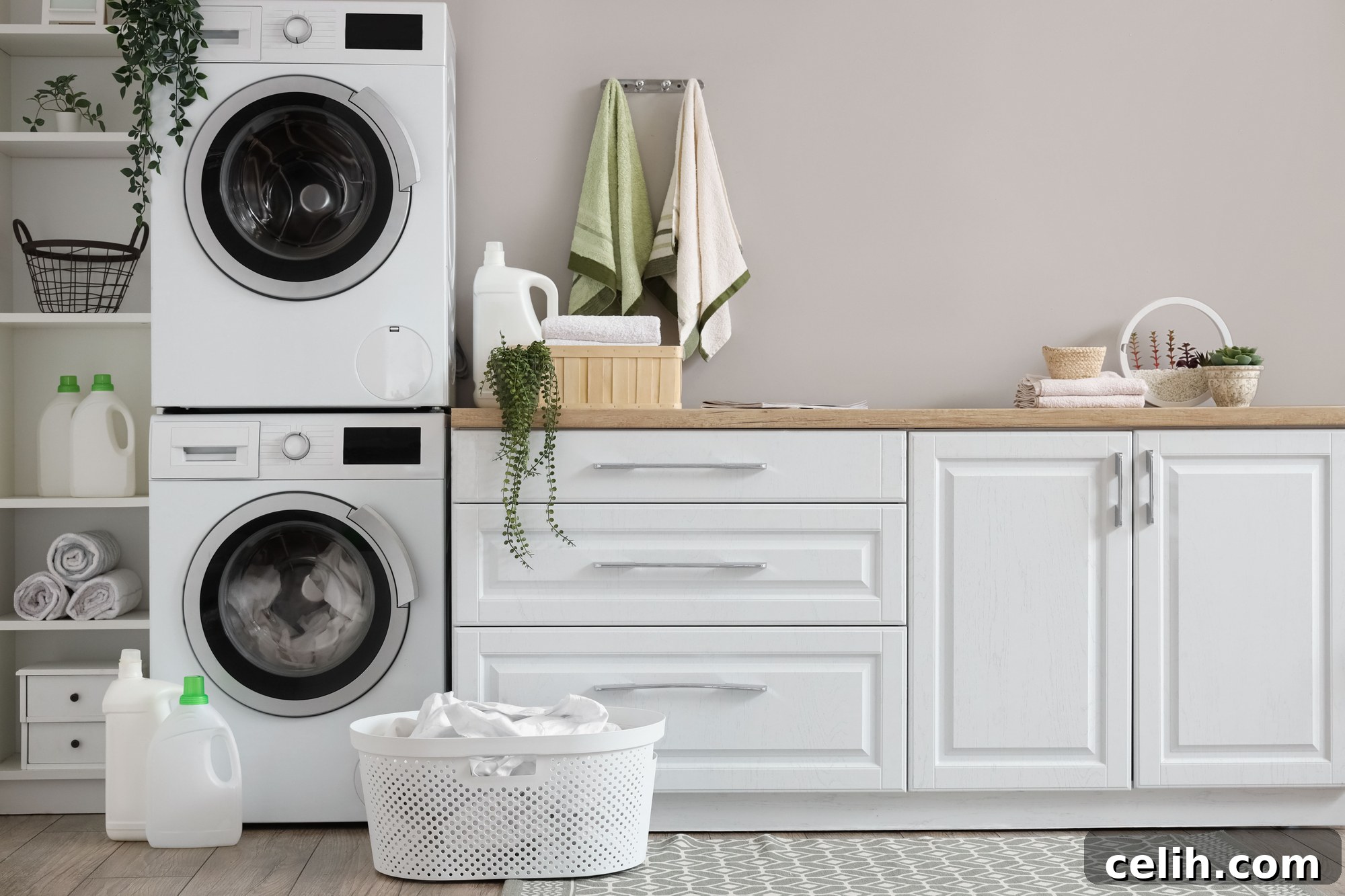
The laundry room, often relegated to an afterthought in home design, is arguably one of the most hardworking spaces in any household. Unlike kitchens or living rooms that often receive meticulous design attention, laundry areas are frequently squeezed into leftover corners, equipped with appliances, and left to function with minimal thought beyond basic utility. Yet, for most families, this dedicated zone is utilized several times a week, sometimes even daily. When a space endures such frequent use, even seemingly minor design choices can yield surprisingly significant improvements in efficiency, comfort, and overall domestic flow.
A truly well-designed laundry room transcends mere luxury; it embodies efficiency, clarity, and comfort. When this essential utility space functions seamlessly, laundry tasks feel less burdensome, and daily routines become easier to maintain. Conversely, a poorly designed or disorganized laundry room can transform even simple chores into frustrating experiences, adding unnecessary stress to an already busy schedule.
Elevating the Laundry Room: Why Intentional Design Matters
Laundry is inherently a task of repetition. From sorting clothes by color and fabric type, checking care labels, loading and unloading machines, to folding, ironing, and finally storing items, each step follows a familiar, often monotonous pattern. It is precisely in these repetitive processes that intelligent design truly excels, transforming a chore into a more manageable and even pleasant activity.
In a thoughtfully designed laundry space, when items are logically stored and easy to access, instructions are clear, and surfaces are consistently organized, the mental and physical effort required to complete tasks significantly diminishes. This reduction in friction is particularly valuable in busy households where laundry often takes place amidst work calls, school runs, or late evening routines. Instead of battling a cluttered or inefficient space, a well-planned laundry room becomes a supportive ally, making the daily grind feel less demanding.
Designing your laundry room with intention elevates it from a purely functional area into a calm, efficient, and surprisingly supportive part of your home. It’s about creating an environment that respects your time and energy, turning a necessary chore into a more streamlined process.
The Blueprint for Efficiency: Prioritizing Layout Over Aesthetics
Before any decorative touches are considered, the fundamental layout of a laundry room demands paramount attention. An optimal laundry room design should facilitate a logical and ergonomic flow of tasks from start to finish. This streamlined workflow is the cornerstone of efficiency and user comfort.
Ideally, there should be a clear, sequential path: dirty clothes arrive, are sorted into appropriate bins, proceed to the washing machine, then to the dryer, followed by a dedicated folding surface, and finally to storage or immediate removal. When the room’s layout thoughtfully respects this natural order, movement within the space feels fluid and instinctive, rather than awkward or circuitous. Consider the “laundry triangle” concept, similar to a kitchen’s work triangle, connecting the washer, dryer, and folding station.
Simple yet impactful changes, such as strategically placing a spacious folding counter immediately adjacent to the dryer, or ensuring detergent and other frequently used supplies are within easy arm’s reach of the washing machine, can dramatically reduce unnecessary steps and bending. Even in compact laundry areas, thoughtful placement and clever use of vertical space can create a highly efficient zone. Think about clearance around appliances, swing of cabinet doors, and ergonomic heights for countertops to minimize strain during prolonged use. An L-shaped or galley layout can be particularly effective in optimizing flow in smaller or narrower spaces, ensuring every inch serves a purpose.
Intelligent Storage Solutions: Tailored to Real-Life Habits
Storage in laundry rooms often falls short, not due to a lack of space or insufficient units, but because it fails to genuinely reflect how people actually interact with and use the space. Effective storage is intuitive and adaptable, designed to support real habits rather than imposing idealized behaviors.
For items accessed frequently, such as laundry detergents, fabric softeners, stain removers, and empty baskets, open shelving or clear containers on countertops work exceptionally well, providing immediate visibility and easy access. Conversely, closed cabinets are ideal for stowing away less aesthetically pleasing supplies, seasonal items, or cleaning products that need to be kept securely away from children and pets. Consider pull-out hampers or tilt-out laundry bins that can be integrated into cabinetry, allowing for pre-sorting of whites, darks, and delicates discreetly. This simple addition can drastically cut down on sorting time before each wash cycle.
Vertical storage solutions are a game-changer for maximizing space. Wall-mounted hooks and rails are perfect for hanging ironing boards, collapsible drying racks, or brooms and mops, freeing up valuable floor space. Adjustable shelving allows you to customize shelf heights to accommodate various container sizes, preventing wasted vertical space. A dedicated utility sink is also an invaluable addition for hand-washing delicates, pre-soaking stained garments, or even washing dirty sports equipment, ensuring messy tasks are contained. The true secret to successful laundry room storage lies in an honest assessment of your family’s actual routines and needs, creating a system that naturally supports them rather than fights against them.
Clarity Through Design: Visual Cues for Seamless Operation
Laundry rooms benefit immensely from clear visual guidance. This doesn’t imply cluttering walls with excessive decoration, but rather strategically introducing subtle, supportive cues that streamline tasks and reduce mental load. These visual aids act as silent helpers, making the laundry process more intuitive for everyone using the space.
Consider placing readily visible care symbols for different fabrics, concise sorting reminders, or simple step-by-step instructions for operating specific appliances right where decisions are made. For instance, a small chart explaining common stain removal techniques or a dosage guide for detergents can be placed above the washing machine. These thoughtful cues minimize hesitation, prevent common mistakes, and foster independence, especially in shared households or for younger family members learning to do laundry.
The aesthetic integration of these visuals is crucial. By utilizing clean typography, neutral color palettes, or framing them simply, these helpful guides can blend seamlessly into the room’s design rather than standing out aggressively. When executed thoughtfully, they feel like an organic part of the space, enhancing functionality without detracting from the overall aesthetic. Integrating technology, accessible design tools like the Adobe Express printable poster maker empower homeowners to create custom, professional-looking instructions or reminders tailored precisely to their appliances, specific routines, and even the unique needs of their family, all without requiring professional design skills. This personalization ensures the visual cues are truly effective and relevant.
Illumination for Precision: The Role of Effective Lighting
Lighting is a fundamental, yet frequently overlooked, element in laundry room design. Its role extends far beyond basic visibility; it critically impacts accuracy and comfort. Inadequate or poor-quality lighting makes essential tasks like reading intricate care labels, meticulously spotting stubborn stains, or accurately matching socks significantly more challenging and frustrating.
The ideal laundry room should be bathed in bright, even, and shadow-free illumination. This type of lighting reduces eye strain, minimizes errors, and enhances overall productivity. A layered lighting approach is highly effective: general overhead ambient lighting (such as flush mounts or recessed lights) provides overall brightness, while targeted task lighting (like under-cabinet strip lights or adjustable wall sconces) illuminates work surfaces where detail matters most, such as folding areas or above the utility sink. The color temperature of the light is also important; aim for a neutral white light (around 4000K-5000K) which closely mimics natural daylight, ensuring colors are rendered accurately and stains are easily discernible.
Maximizing natural light, whenever possible, is always a superior choice. A window or even a strategically placed skylight can transform a confined utility space, making it feel more open, airy, and inviting, significantly reducing the sense of being enclosed. Natural light not only improves mood but also offers the most accurate perception of colors and stains, an invaluable asset in a laundry environment. If natural light is limited, ensure your artificial lighting choices compensate by providing ample, high-CRI (Color Rendering Index) illumination.
Built to Last: Selecting Durable Materials for Longevity
The laundry room is an environment inherently exposed to moisture, fluctuating temperatures, vibration from appliances, and frequent movement. Therefore, the selection of materials should prioritize durability, water resistance, and ease of maintenance above all else. Investing in robust materials is a key factor in ensuring the longevity and continued efficiency of your laundry space.
For flooring, opt for water-resistant and easy-to-clean options such as ceramic or porcelain tiles, luxury vinyl plank (LVP), or sealed concrete. These materials can withstand spills, resist mold and mildew, and are resilient against the wear and tear of heavy foot traffic and potential appliance leaks. On wall surfaces, washable paints with a satin or semi-gloss finish are ideal, allowing for easy wipe-downs of splashes or dust. For countertops, choose sturdy, non-porous materials like quartz, laminate, or solid surface materials that can endure constant moisture, chemical exposure from detergents, and the impact of heavy laundry baskets without staining or deteriorating. Stainless steel utility sinks are another excellent choice for their durability and resistance to rust and stains.
While these material choices may not always be the most visually exciting, their practical benefits are profound. They age gracefully, require minimal maintenance, and provide peace of mind, contributing significantly to the long-term comfort and functional ease of the space. Design that thoughtfully considers the rigors of daily use ultimately feels more robust and reliable, rather than fragile or high-maintenance, proving that smart material choices are a crucial component of an efficient laundry room.
Maximizing Potential: Smart Design for Small Laundry Spaces
Not every home is blessed with the luxury of a sprawling, dedicated laundry room. Many households must contend with compact corners, integrated laundry closets, or shared utility areas. In these scenarios, innovative and strategic design becomes not just beneficial, but absolutely critical to creating a functional and pleasant space.
When square footage is at a premium, vertical storage solutions are paramount. Stackable washer and dryer units are an obvious space-saving choice, freeing up floor space for other essentials. Above or beside stacked units, slim, tall cabinets or open shelving can hold detergents, fabric softeners, and other supplies without encroaching on the limited footprint. Wall-mounted drying racks that fold flat when not in use, retractable clotheslines, or even an ironing board that can be tucked away behind a cabinet door are ingenious ways to provide necessary functionality only when needed.
Clear organization is vital in small spaces, as it minimizes visual clutter, which can make tiny areas feel even more cramped and chaotic. Utilizing uniform containers, baskets, and bins creates a cohesive look and helps maintain order. Even a single, often overlooked wall can be transformed into a highly functional laundry zone when elements like shelves, hooks, and a small folding surface are arranged with meticulous intention. Consider pocket doors or bifold doors for laundry closets, as they don’t require swing space. The goal is to maximize every available inch, creating a calm and efficient environment where laundry tasks can be completed without feeling overwhelmed by the limitations of the space.
Final Thoughts: The Enduring Value of Thoughtful Laundry Design
A laundry room will likely never claim the title of the most glamorous or aesthetically captivating space in your home, and frankly, it doesn’t need to. Its true value lies not in luxurious finishes or elaborate decorations, but in the power of thoughtful intention behind its design. When a room is utilized as frequently and repetitively as the laundry room, even seemingly modest design choices possess the profound ability to significantly improve the user experience and enhance the overall rhythm of home life.
By consciously focusing on fundamental principles—an optimized layout that respects the natural workflow, storage solutions meticulously tailored to real-life habits, clear and intuitive visual cues, abundant and accurate lighting, and durable materials built to withstand daily wear—the laundry room transcends its basic function. It transforms into a calmer, more efficient, and inherently supportive environment. It ceases to be a source of frustration and instead becomes an unsung hero, quietly underpinning your household routines.
The ultimate goal here is not an elusive ideal of perfection or a Pinterest-worthy aesthetic. Rather, it is about cultivating a space that quietly and competently performs its essential duties, systematically reducing minor frustrations, and making the everyday task of laundry feel genuinely manageable. When intentional design thoughtfully meets the practical realities of daily living in this manner, even something as ordinary and ubiquitous as doing the laundry can integrate more smoothly and harmoniously into the demanding, yet rewarding, cadence of home life.