
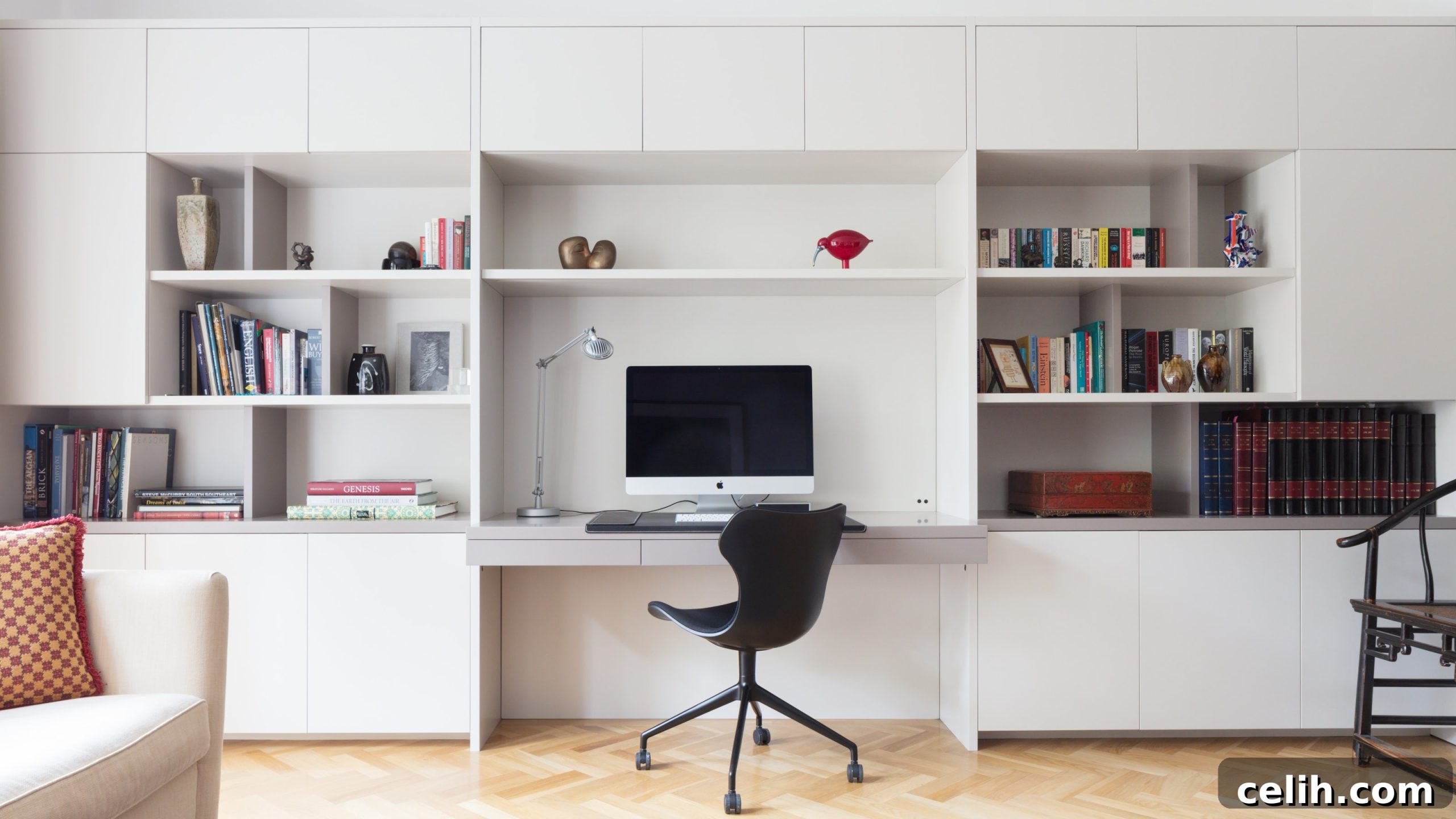
Working from home has become the new normal for countless professionals, transforming spare rooms, quiet corners, and even dining tables into impromptu office spaces. While the flexibility is a huge perk, it often comes with a significant challenge: managing clutter. A dedicated home office, whether it’s an entire room or a carefully demarcated zone, quickly accumulates files, supplies, technology, and personal items, leading to disorganization that can stifle productivity and peace of mind. Without proper storage solutions, your serene workspace can rapidly devolve into a chaotic environment, impacting your focus and overall well-being.
The insidious creep of clutter is a universal experience. One day you have a clean desk, the next it’s buried under documents, pens, charging cables, and various office essentials. This isn’t just about aesthetics; a disorganized space can increase stress, waste valuable time searching for items, and diminish your professional image, even in a home setting. Establishing smart, effective storage in your home office isn’t merely an option; it’s a necessity for maintaining an efficient, productive, and comfortable workspace. It’s about taking control of your environment to empower your work.
Fortunately, creating an intelligently organized home office doesn’t have to be a daunting task. With a strategic approach and a few clever solutions, you can transform even the most cramped or chaotic area into a functional and inspiring workspace. This comprehensive guide explores innovative and practical ways to maximize storage in your home office, ensuring everything has its place and contributing to a more focused and enjoyable work experience. Let’s delve into effective strategies for decluttering and optimizing your home office storage.
Harness Vertical Space: Maximize Wall Storage for a Clutter-Free Office
One of the most overlooked and impactful strategies for creating substantial storage in any home office, especially those with limited floor space, is to utilize your walls. Walls aren’t just for art; they offer invaluable vertical real estate that can be transformed into highly efficient storage zones. Adding shelves is a straightforward yet incredibly effective way to elevate your organization game, freeing up precious desk space and making your office feel larger and more open.
From sleek floating shelves that seamlessly blend into your decor to robust, multi-tiered units that can hold heavy files and equipment, the options are vast. You have complete control over the number of shelves, their height, and their configuration, allowing you to customize your storage to perfectly fit your specific needs and the unique dimensions of your workspace. Consider installing shelves above your desk to keep frequently used items within arm’s reach without encroaching on your primary work surface. Higher shelves can be perfect for storing less frequently accessed documents, decorative items, or even plants to add a touch of greenery.
Beyond traditional shelves, explore other wall-mounted solutions like pegboards, which offer incredible versatility for hanging tools, stationery, and small bins. Wall-mounted file holders can keep important documents neatly categorized and easily visible, preventing piles from accumulating on your desk. For a more integrated look, consider built-in shelving units or modular systems that extend from floor to ceiling, providing maximum storage capacity while maintaining a polished aesthetic. This type of vertical storage is a lifesaver, whether you’re working in a dedicated office room or carving out a productive niche in a multi-purpose area of your home.
Types of Wall Shelving for Your Home Office:
- Floating Shelves: Minimalist design, ideal for displaying items or holding lighter office supplies. They create an illusion of space and don’t require visible brackets.
- Bracketed Shelves: More robust, capable of holding heavier loads like binders, books, or small printers. Available in various styles to match your office decor.
- Cube Shelves: Offer compartmentalized storage, perfect for organizing items into decorative bins or showcasing individual pieces. They can be stacked or mounted individually.
- Picture Ledges: While primarily for photos, wider ledges can hold small office supplies, planners, or tablets.
- Pegboards: Extremely versatile for customizable storage with hooks, baskets, and small shelves, ideal for craft supplies, tools, or frequently used stationery.
When implementing wall storage, think about both functionality and aesthetics. Choose materials and finishes that complement your existing decor. Organize items logically, using attractive bins or containers to maintain a tidy appearance. By strategically leveraging your wall space, you’ll not only solve your storage dilemmas but also enhance the overall look and feel of your home office, making it a more inspiring place to work.
Integrated Solutions: Desks Designed with Smart Storage
The desk is the central hub of any home office, and its design plays a pivotal role in maintaining organization. For those with a compact office or a designated workspace within a larger room, investing in a desk that offers integrated storage can be an absolute game-changer. These multi-functional desks are engineered to make the most of every inch, providing convenient, out-of-sight solutions for your office essentials and files. The more storage integrated into your desk, the less likely clutter is to accumulate on your main work surface.
Consider desks that feature multiple drawers, cubbies, or even built-in shelving units. A desk with drawers on both sides provides ample space for categorized files, stationery, and personal items, keeping them organized and easily accessible. If your needs are less extensive, a desk with a single set of drawers or a combination of drawers and open shelving can still offer significant benefits. These integrated storage options are designed to keep your workspace efficient and tidy, preventing loose papers and supplies from taking over. By centralizing storage within your primary workstation, you create a valuable organizational area even within the most confined spaces, contributing to a consistently neat and organized home office.
Choosing the Right Storage Desk for Your Needs:
- L-Shaped Desks: Often come with generous built-in storage, including file drawers, shelves, and hutches, making them ideal for larger offices or corners.
- Credenza Desks: Feature a long, shallow design with ample closed storage beneath the tabletop, perfect for concealing bulkier items or sensitive documents.
- Hutch Desks: Integrate overhead shelving or cabinets directly into the desk unit, leveraging vertical space immediately above your work surface.
- Secretary Desks: A classic option that folds up to completely hide your work area and storage, excellent for multi-purpose rooms.
- Desks with Pedestals: These include standalone or integrated drawer units (pedestals) that fit under the desk, offering flexible filing and storage.
When selecting a desk with storage, evaluate your daily workflow. Do you need quick access to specific files? Are you dealing with a lot of paperwork or mostly digital assets? The answers will guide you toward the optimal desk configuration. Look for features like file cabinet drawers (letter or legal size), shallow drawers for pens and supplies, and deeper drawers for larger items or electronics. An organized desk isn’t just aesthetically pleasing; it significantly boosts productivity by reducing visual distractions and the time spent searching for items.
Dynamic Flexibility: Fold-Away Desks and Mobile Storage Solutions
In today’s diverse living spaces, not everyone has the luxury of a dedicated office room. For those working with truly limited space or in multi-functional areas, flexible and mobile storage solutions are invaluable. A conventional desk with multiple drawers is certainly useful, but it’s not the only approach when space is at a premium. Embracing adaptability can transform how you use and organize your home office.
Consider the ingenuity of a fold-away desk. These innovative tables can be set up for work and then neatly folded down and stored away at the end of the workday or on weekends. This is an ideal solution if your “office” doubles as a living room, dining area, or guest bedroom. It allows you to reclaim your personal space and maintain a clear distinction between work and leisure, which is crucial for work-life balance. Wall-mounted fold-down desks are another fantastic option, disappearing almost completely when not in use.
Complementing this flexibility are storage solutions on wheels. Mobile storage shelves, trolleys, and rolling carts are incredibly versatile. They allow you to easily move your files, office supplies, work gear, or even a printer to different areas of your home as needed. Imagine a rolling cart that serves as a temporary filing station next to your fold-away desk during work hours, then neatly tucks into a closet or corner when you’re done. These mobile units are perfect for storing items that don’t need to be permanently on display, or for creating an adaptable workspace that can be reconfigured based on the day’s tasks or the room’s primary function. This dynamic approach ensures your home office is both highly functional and seamlessly integrated into your home environment.
Benefits of Flexible and Mobile Home Office Storage:
- Space Optimization: Ideal for small apartments, studios, or rooms with multiple functions, allowing you to maximize floor space when the office isn’t in use.
- Work-Life Balance: Helps create a clear boundary between work and personal life by making the workspace “disappear” outside of working hours.
- Versatility: Mobile units can serve various purposes and be easily repositioned to suit different tasks or to tidy up quickly.
- Portability: Move your office essentials to the most comfortable or quietest spot in your home for the day.
- Aesthetics: Reduces visual clutter by allowing you to store away office items when entertaining guests or simply relaxing.
When choosing fold-away or mobile solutions, look for sturdy construction and smooth-gliding wheels. Ensure the design complements your home’s aesthetic. These flexible options empower you to create a highly efficient home office that adapts to your lifestyle, rather than dictating it.
Beyond Books: Versatile Bookcases for Comprehensive Storage
While their name suggests a singular purpose, bookcases are incredibly versatile storage units that can significantly enhance the organization and aesthetic of your home office. If your work involves a substantial number of reference books, manuals, or documents, simply piling them on your desk is a recipe for disarray. This not only looks untidy but also consumes valuable surface area that could be used for active work. A well-chosen bookcase offers a dedicated home for your collection, bringing order and professionalism to your workspace.
Modern bookcases go far beyond basic wooden shelves. Many designs incorporate adjustable shelves, integrated drawers, or even cabinet doors, allowing you to customize their functionality. For example, the innovative bookcases by tylko.co offer a variety of styles, finishes, and customizable configurations, ensuring you can find a unit that perfectly fits your space and storage requirements, regardless of the size of your book collection. From sleek, minimalist designs to more robust, traditional units, a bookcase can be a statement piece that also serves a critical organizational function.
But don’t limit your imagination to just books. Bookcases are excellent for storing much more. They can hold archival boxes, decorative bins filled with office supplies, display personal achievements or decor, house a small printer, or even serve as a home for electronic devices when not in use. By consolidating these items onto a vertical storage unit, you free up desk space and maintain a streamlined environment. When choosing a bookcase, consider its dimensions, material, and the aesthetic it brings to your office. A well-organized bookcase not only solves storage problems but also contributes to a calm and inspiring atmosphere in your home office.
Maximizing Bookcase Utility in Your Home Office:
- Categorize and Label: Group similar items together (e.g., project binders, reference books, tech accessories) and use clear labels for easy retrieval.
- Utilize Bins and Baskets: For smaller items or things you want to keep out of sight, decorative bins and baskets on shelves maintain a clean look.
- Combine Open and Closed Storage: A bookcase with both open shelves and closed cabinets or drawers allows you to display attractive items while hiding clutter.
- Vertical File Sorters: Integrate vertical file sorters into shelves for standing files or frequently accessed documents.
- Consider Ladder or Corner Bookcases: These designs are excellent for maximizing storage in unconventional spaces or adding visual interest.
- Decorative Elements: Intersperse books and files with small plants, framed photos, or decorative objects to make the space feel personal and inviting.
Whether you need a tall unit to fill a wall or a compact design for a small corner, a well-chosen bookcase is a fundamental piece of furniture for a truly organized and functional home office. It’s an investment in both productivity and peace of mind.
Beyond Furniture: Essential Home Office Organization Strategies
While the right furniture—shelves, desks with storage, mobile units, and bookcases—forms the backbone of an organized home office, true productivity stems from a holistic approach to decluttering and maintaining order. Achieving and sustaining a neat, organized workspace in your home office requires more than just buying storage units; it demands strategic planning and consistent habits.
Under-Desk Storage Solutions:
The space beneath your desk is often underutilized. Consider incorporating rolling pedestals with drawers for files and supplies, or attachable under-desk drawers that keep essentials within easy reach without cluttering your desktop. Footrests with built-in storage can discreetly house lesser-used items. Cable management solutions, like cable trays or ties, are also crucial here to prevent a tangled mess of wires, which can be both unsightly and a safety hazard.
Drawer Organization Systems:
Once you have drawers, the next step is to organize what goes inside them. Drawer dividers, small trays, and modular organizers are invaluable for categorizing pens, paper clips, sticky notes, and other small office supplies. This prevents items from mixing together and makes it easy to find exactly what you need, when you need it. Clear, labeled containers work wonders for visual organization.
Digital Decluttering:
In the modern home office, organization extends beyond the physical realm. Digital clutter can be just as detrimental to productivity as physical clutter. Regularly organize your computer files into logical folders, delete unnecessary documents, clear your desktop, and manage your email inbox. Cloud storage solutions can help reduce reliance on physical documents, further minimizing the need for extensive paper filing.
Strategic Placement and Workflow:
Evaluate the space you have available and thoughtfully decide where each item should live. Place frequently used items within arm’s reach, while less common items can be stored further away. Design your workspace to support your workflow. For example, if you often refer to certain binders, place them on a shelf near your desk. If you print frequently, ensure your printer is easily accessible and has a dedicated spot, perhaps on a mobile cart or a sturdy shelf.
The Power of Regular Decluttering and Maintenance:
The most effective storage solutions are those that are regularly maintained. Dedicate a few minutes at the end of each workday or week to tidy up your desk, put items back in their designated places, and clear away any accumulating clutter. This consistent habit prevents overwhelming disorganization from creeping back in. A periodic deep declutter (monthly or quarterly) can also help you reassess what you truly need and discard what you don’t.
No matter where you choose to set up your home office—be it a spacious room or a compact nook—ensure it’s in a location that is well-lit, preferably with natural light, and not heavily trafficked by other household members. A calm, well-lit environment, free from constant interruptions, coupled with smart storage, forms the foundation for increased focus, creativity, and overall job satisfaction. By implementing these strategies, you can transform your home office into a highly functional, aesthetically pleasing, and remarkably productive sanctuary.
Ready to Create Your Ideal Home Office?
With the right storage strategies and a proactive approach to organization, your home office can quickly become a model of efficiency and tidiness. Take a critical look at your current setup, assess your storage needs, and identify areas ripe for improvement. Whether it’s integrating wall shelves, upgrading to a desk with built-in drawers, embracing mobile storage, or maximizing the potential of bookcases, every step you take towards organization contributes to a more productive and less stressful work environment. Remember, even small changes can make a significant difference in preventing clutter and enhancing your daily workflow.
For more inspiration and actionable tips on designing and optimizing your home office, delve deeper into our comprehensive series. Discover how to create a workspace that not only meets your professional demands but also inspires creativity and promotes well-being:
- 5 Interior Design Ideas for Your Home Office
- How to Design the Perfect Home Office
- How to Style Your Home Office for Maximum Impact
- How to Set Up Your Home Office for Increased Focus and Productivity