
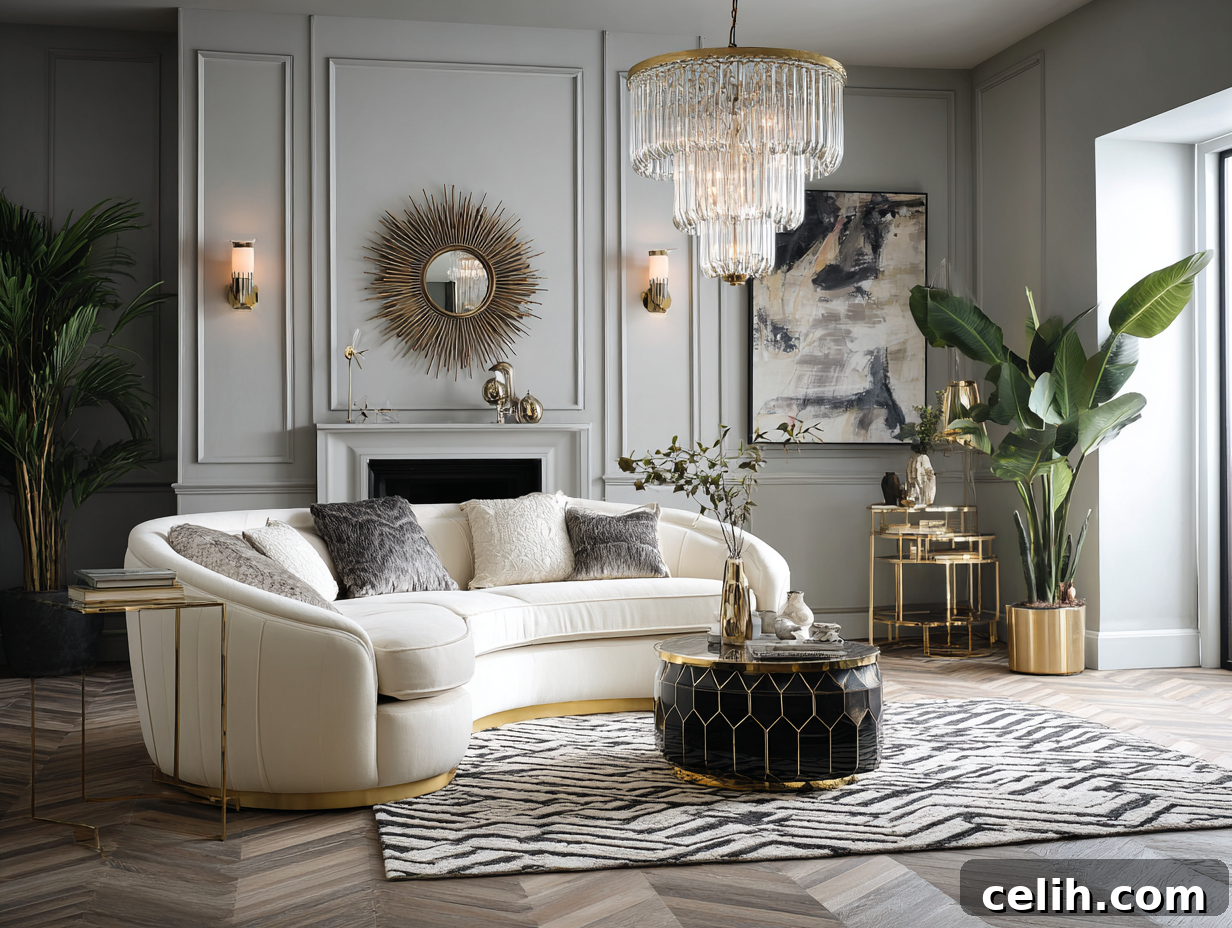
In 1925, the heart of Paris played host to the International Exhibition of Modern Decorative and Industrial Arts, a monumental event that did more than just showcase contemporary style; it formally introduced the world to the glamorous and revolutionary Art Deco movement. This celebratory exhibition highlighted innovations in fashion, architecture, and design, but it was Art Deco, with its distinctive blend of bold geometry, vibrant colors, and luxurious materials, that truly captivated the imagination. As we approach 2025, marking the 100-year anniversary of this pivotal moment, Art Deco remains as relevant and captivating as ever, solidifying its status as a consistently strong and beloved design trend. Once the undisputed epitome of sophisticated glamour, Art Deco continues to inspire modern interior design trends, proving its timeless appeal and adaptability.
Crafted from a harmonious combination of wood, metal, and glass, this stunning frameless mirror exemplifies the elegance and simplicity often found in Art Deco aesthetics. Its distinctive arched design offers a striking focal point, effortlessly enhancing the sophistication of any room it graces. A beautiful addition that speaks volumes about curated style, it is available for £99.95 from Melody Maison.
The Resurgence of Glamour: A Brief History of Art Deco
The genesis of Art Deco is deeply rooted in the socio-economic landscape that followed the devastation of the First World War. Emerging as a vibrant antidote to the preceding years of misery and gloom, Art Deco perfectly encapsulated the celebratory spirit of the Roaring Twenties. This period was characterized by a booming economy, unprecedented industrial growth, and a widespread sense of optimism as nations began to rebuild and recover. The rapid advancements in technology and the increased availability of consumer goods, from automobiles to household appliances, fostered an exciting belief in progress and modernity.
Art Deco was the visual manifestation of this exuberant mood. Originating in France in the early 1920s, the style quickly captivated designers and the public alike, spreading like wildfire across the globe. Its devotees were drawn to its unapologetic sense of opulence, luxury, and sheer fun—qualities that had been notably absent in the somber pre-war years. The style reached its zenith during the 1920s and 1930s, leaving an indelible mark on everything from monumental architecture and high fashion to exquisite furniture and fine art. It became synonymous with modern progress and sophisticated living, with countless iconic buildings worldwide still showcasing its distinctive elements today.
Adding a touch of vintage glamour to any space, this Art Deco glass feather ceiling light from Rockett St George is a true statement piece. Suspended from a sleek, spiraling metal detail, the chandelier cascades downwards in delicate layers of shimmering glass leaves, each facet expertly designed to catch and refract light in the most enchanting and magical way. It’s an elegant blend of geometric precision and organic fluidity. Priced at £265, this captivating light fixture is available from Rockett St George.
Beyond its historical context, Art Deco’s enduring appeal lies in its sophisticated aesthetic that championed clean lines, symmetrical patterns, and a celebration of modern materials. It drew inspiration from a diverse range of sources, including ancient Egyptian and Aztec art, Cubism, and the sleek designs of industrial machinery, resulting in a unique visual language that was both innovative and timeless. While its popularity waned after World War II due to austerity and a shift towards more minimalist styles, Art Deco has continuously experienced revivals, demonstrating its inherent strength and capacity to adapt to contemporary tastes.
The Pablo narrow shelving unit from Swoon makes a bold statement with its distinctive Art Deco-inspired design. Crafted from polished brass and contrasting sandblasted grey mango wood, this compact yet impactful shelving unit is designed to add both functionality and sophisticated style to any living space. Its clean lines and luxurious material combination are perfect for showcasing treasured objects or adding a touch of period charm. Available for £599 from Swoon.
The Art Deco style has, in essence, never truly faded from the design landscape, but its current resurgence is undeniable and particularly vibrant. This renewed interest is partly fueled by its upcoming centenary, but more significantly, by its inherent qualities: warmth, distinct personality, undeniable elegance, and striking visual appeal. Modern consumers are increasingly drawn to the craftsmanship, quality, and enduring luxury that are synonymous with this iconic style. Incorporating Art Deco means embracing sumptuous textures and refined finishes – think plush velvet on upholstery, intricate inlaid marquetry designs adorning furniture, gleaming lacquer finishes, and highly polished metallic detailing that catches the eye and elevates the space.
The Accorto dining set from Furniture and Choice embodies a modern Art Deco revival with its sophisticated design. The elegant oval dining table (pictured above and also in the main image) features a beautiful travertine stone effect top, offering a refined, natural texture. It is perfectly complemented by four Clara chairs, each upholstered in luxurious champagne velvet and supported by sleek black steel frames, creating a striking contrast and a quintessential Art Deco look. This exquisite set, priced at £949, is available from Furniture and Choice.
Decoding the Distinctive Elements of Art Deco Styling
To truly appreciate and integrate Art Deco into contemporary spaces, it’s essential to understand its core design principles. These elements combine to create a style that is both instantly recognizable and enduringly chic:
- Unrivalled Luxury and Glamour: At its heart, Art Deco champions luxury. This is evident in the choice of high-quality, often opulent, materials such as polished glass, gleaming chrome, opulent marble, sumptuous velvet, rich polished wood, and shimmering metals. The combination of these exquisite materials creates an atmosphere of sophistication and refinement. The aim is to evoke an air of understated elegance and sleek solidity rather than being overtly flashy or loud, creating a lasting impression of curated taste and grandeur. Think exotic veneers, intricate inlays of mother-of-pearl or ivory, and highly reflective surfaces that speak of meticulous craftsmanship and timeless allure.
- Bold Geometric Patterns and Dynamic Motifs: A hallmark of Art Deco is its fascination with striking geometric patterns. Drawing inspiration from Cubism, ancient civilizations, and industrial machinery, these motifs adorn everything from wallpaper and textiles to furniture and architectural details. Bold designs like chevrons, zigzags, sunbursts, stepped forms, and fanned patterns were chosen for their profound visual appeal and ability to create a sense of drama and movement. These patterns are not merely decorative; they transform ordinary spaces into extraordinary showcases of design, imbuing them with energy and a sense of dynamic modernity.
- Rich, Evocative Colour Palettes: Art Deco interiors are renowned for their sophisticated and often dramatic use of colour. The palette typically features striking contrasts, pairing sophisticated neutrals like black, white, cream, and beige with dazzling metallics (gold, silver, chrome) and deep, saturated jewel tones. Emerald green, sapphire blue, ruby red, and amethyst purple are frequently employed to create a visual feast for the eyes. These rich hues add depth, warmth, and an undeniable sense of theatricality, enhancing the luxurious feel and making spaces feel both grand and inviting.
- Streamlined Outlines and Modern Forms: In a stark departure from the ornate and organic curves of Art Nouveau, Art Deco embraced sleek, streamlined silhouettes. Furniture and architectural forms were characterized by clean lines, geometric shapes, and a sense of powerful simplicity. Decorative fussiness was replaced by elegant, simplified designs, with interest being added through exquisite inlay work, tasteful metallic trims, or the innovative use of textural materials. This focus on streamlined forms reflected the era’s fascination with speed, efficiency, and the modern machine age, creating an aesthetic that felt progressive and forward-looking.
The Abstract canvas wall art from Click Style offers a contemporary interpretation of Art Deco’s enduring charm. This piece features a striking geometric design, deeply inspired by the classic Art Deco aesthetic, but infused with a refreshing Scandi twist. It masterfully combines bold metallic tones with clean, minimalist lines, creating a sophisticated yet understated visual impact perfect for modern interiors. Available for £65 from late November from Click Style.
Integrating Modern Art Deco into Your Home
While the allure of genuine, vintage Art Deco pieces found in antique shops and at specialized fairs is undeniable, their popularity often comes with a significant price tag. Fortunately, the timeless appeal of Art Deco means that numerous modern brands and contemporary designers are expertly incorporating this iconic style into their collections. They offer a fresh perspective, either by subtly infusing Art Deco elements as a sophisticated twist or by using the style as the foundational basis for entirely new designs.
For those who adore the distinctive look of Art Deco, there are myriad ways to integrate it into a modern living space without undertaking a complete renovation. One effective approach is to mix and match: consider investing in one or two genuine vintage statement pieces, such as a stunning sunburst mirror, an exquisite bar cart, or a beautifully restored side table. These authentic treasures can then be thoughtfully paired with contemporary pieces that feature Art Deco-inspired details. Look for furniture with clean lines, metallic accents, geometric patterns, or luxurious velvet upholstery.
Even smaller touches can make a significant impact. Introduce Art Deco through lighting fixtures with their characteristic stepped designs or frosted glass, decorative accessories like geometrically patterned vases, or sumptuous textiles. The key is to create a harmonious balance between the past and the present, allowing the elegance and glamour of Art Deco to shine through in a way that feels fresh and relevant for today’s homes. By embracing its luxurious materials, bold patterns, and streamlined forms, you can infuse your interior with the enduring charm and sophisticated optimism of this celebrated design era.