
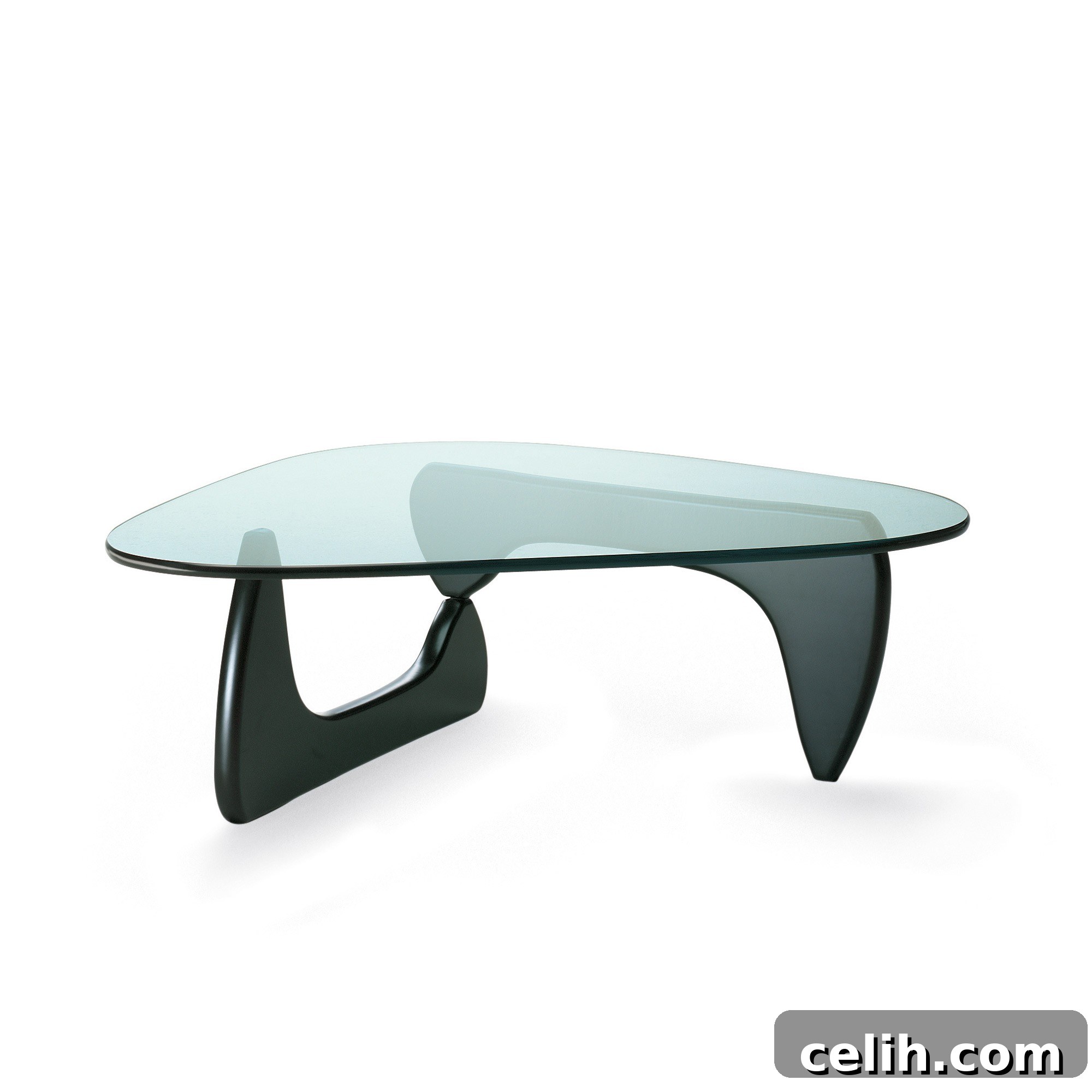
In the expansive and ever-evolving world of design, certain names resonate with an unparalleled authority and timelessness. Vitra is unequivocally one such name. For decades, this Swiss furniture company has not merely manufactured furniture; it has curated a legacy, transforming living spaces and influencing generations of designers and enthusiasts alike. Their commitment to innovation, quality, and collaboration with some of the 20th century’s most brilliant minds has solidified their position as a true titan in the realm of modern design. Vitra pieces are not just functional objects; they are expressions of art, embodying a philosophy that prioritizes form, function, and enduring beauty.
The impact of Vitra’s designs is evident in their sustained popularity and their iconic status within design history. From revolutionary seating solutions to sculptural tables and playful accessories, their portfolio tells a story of relentless pursuit of perfection and a deep understanding of human interaction with space. In this comprehensive exploration, we delve into some of Vitra’s most celebrated furniture designs, shining a spotlight on the masterpieces that continue to define contemporary living and inspire awe. Join us as we uncover the stories and the enduring appeal behind these cherished creations from the Vitra group, offering a glimpse into our absolute favourites.
George Nelson’s Home Desk: Elegance Reimagined for the Modern Workspace
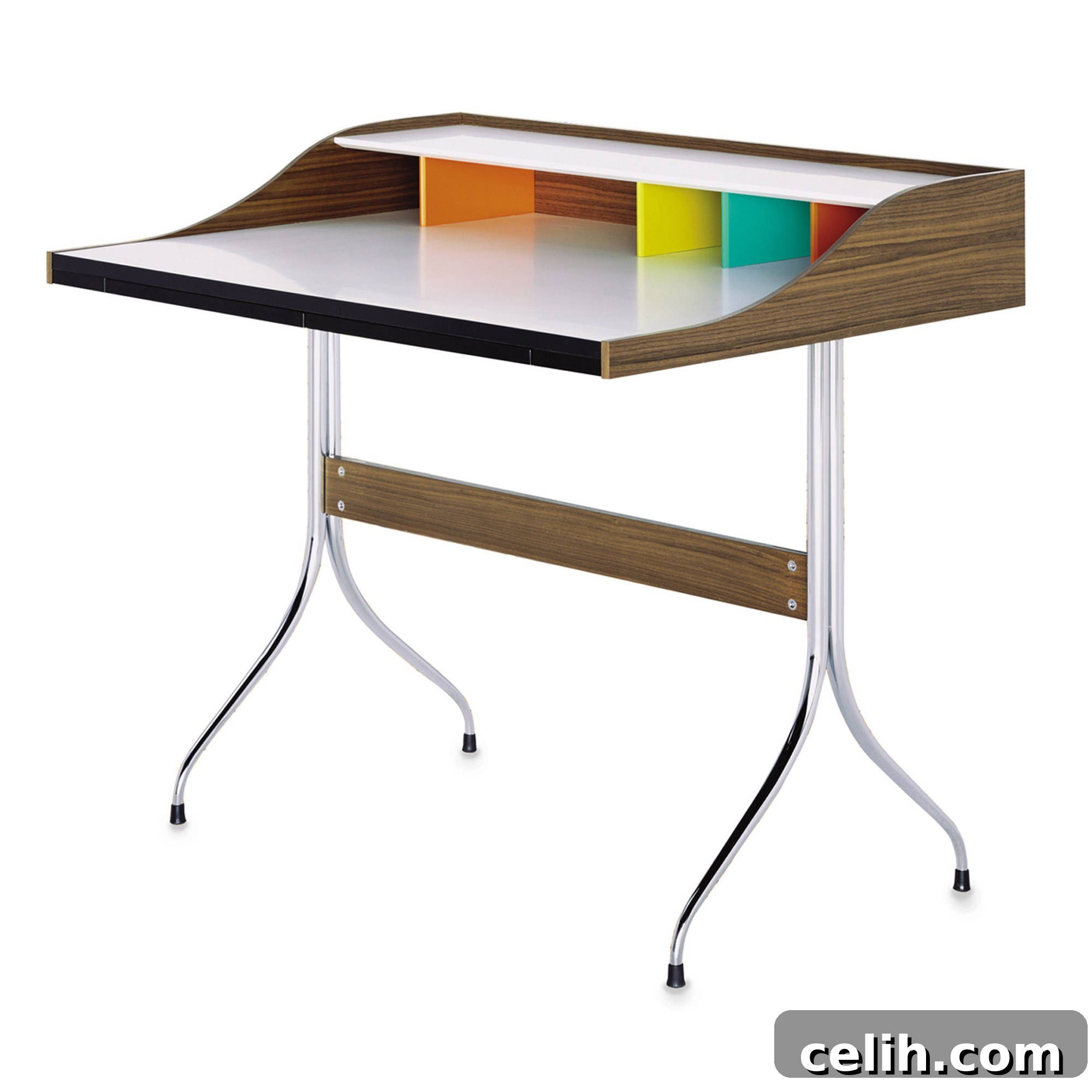
Ah, the beloved Vitra Home Desk! A true testament to mid-century modern design principles, this piece, conceived by the visionary George Nelson in 1958, transcends its original purpose to become a versatile icon. Originally envisioned as a sophisticated ladies’ desk, its delicate proportions and refined aesthetic speak to a time when home offices were beginning to gain prominence, albeit with a more graceful touch. Nelson’s design genius is evident in its thoughtful composition: a pristine white laminate top contrasted by vibrant, colourful dividers that create a playful yet organized storage solution. These pigeonholes, in their nuanced hues, add a touch of personality and charm, making the desk not just a workspace but a delightful feature in any room.
Today, the Home Desk’s elegant structure and compact footprint make it exceptionally suitable for contemporary living, seamlessly integrating into various domestic environments. Whether placed in a dedicated study, a living room corner, or a bedroom nook, it serves as an excellent home workstation, infusing any space with a sense of sophistication and uncluttered efficiency. Its enduring appeal lies in its ability to marry aesthetic beauty with practical functionality, offering a tranquil and inspiring area for work, study, or creative pursuits. Nelson’s Home Desk is a classic example of how thoughtful design can evolve with changing lifestyles while maintaining its intrinsic value and visual allure.
Verner Panton’s Panton Chair: A Monolithic Marvel of Form and Function
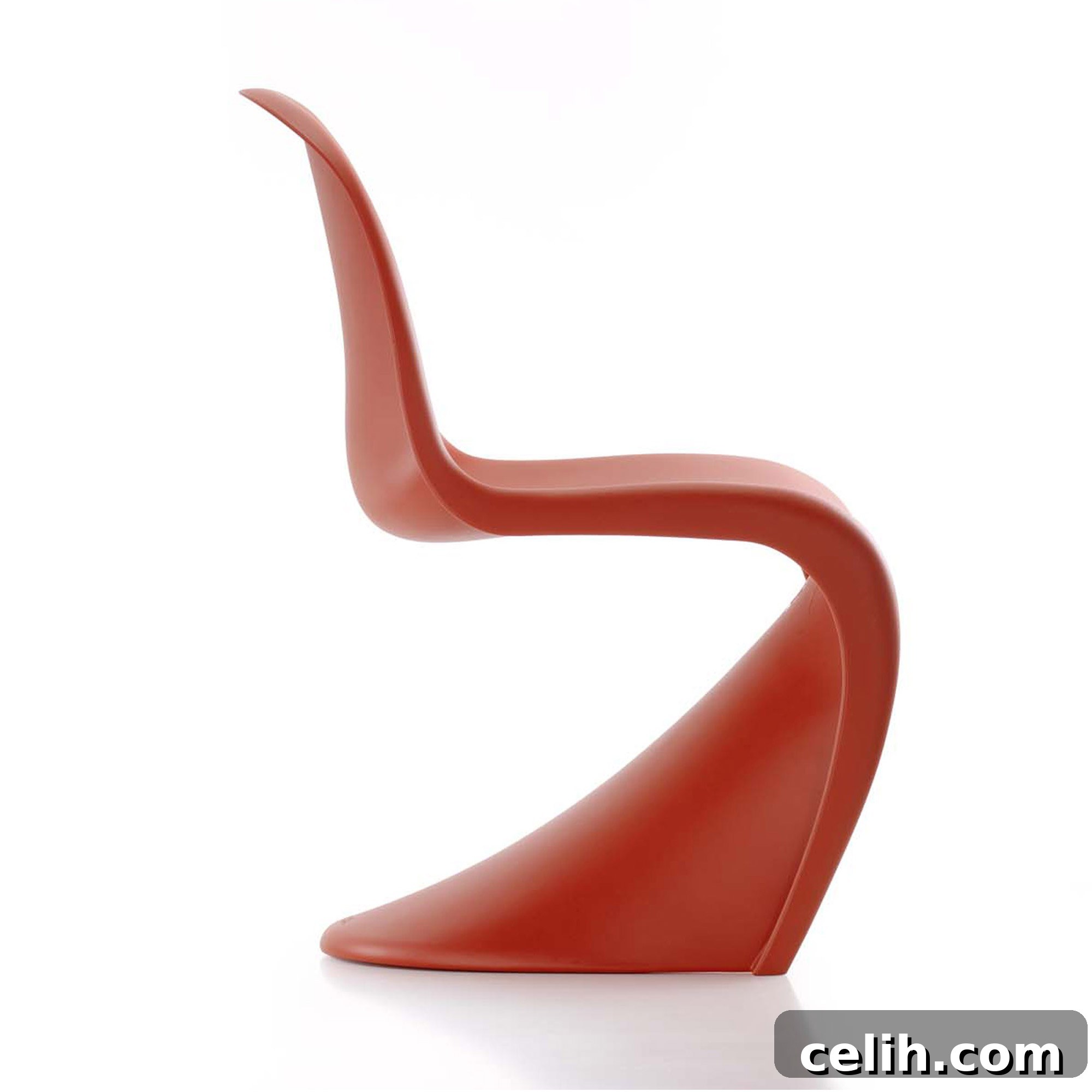
The Panton Chair, designed by the innovative Verner Panton, stands as a monumental achievement in the history of furniture design, forever changing perceptions of what a chair could be. Produced by Vitra in 1967, this distinctive plastic chair was a radical departure from traditional seating. What makes the Panton Chair truly special is its groundbreaking construction: it is moulded from a single, continuous piece of plastic, flowing effortlessly from the base, through the seat, and up to the backrest in a singular, sculptural curve. This seamless, cantilevered form was an extraordinary feat of engineering and manufacturing for its era, pushing the boundaries of material capabilities and production techniques.
Panton’s vision was to create a comfortable, stackable plastic chair that was both affordable and visually striking. The ergonomic shape cradles the body, offering surprising comfort despite its rigid appearance. Beyond its revolutionary form, the chair’s plastic construction makes it remarkably durable and easy to clean, lending itself to both indoor and outdoor use. Its vibrant colours and organic silhouette have made it a favourite in homes, offices, and public spaces around the globe. The Panton Chair is more than just a piece of furniture; it is an enduring symbol of 1960s pop art, a testament to Verner Panton’s futuristic aesthetic, and a timeless icon that continues to influence contemporary design with its bold simplicity and innovative spirit.
Isamu Noguchi’s Noguchi Coffee Table: Sculpture Meets Practicality
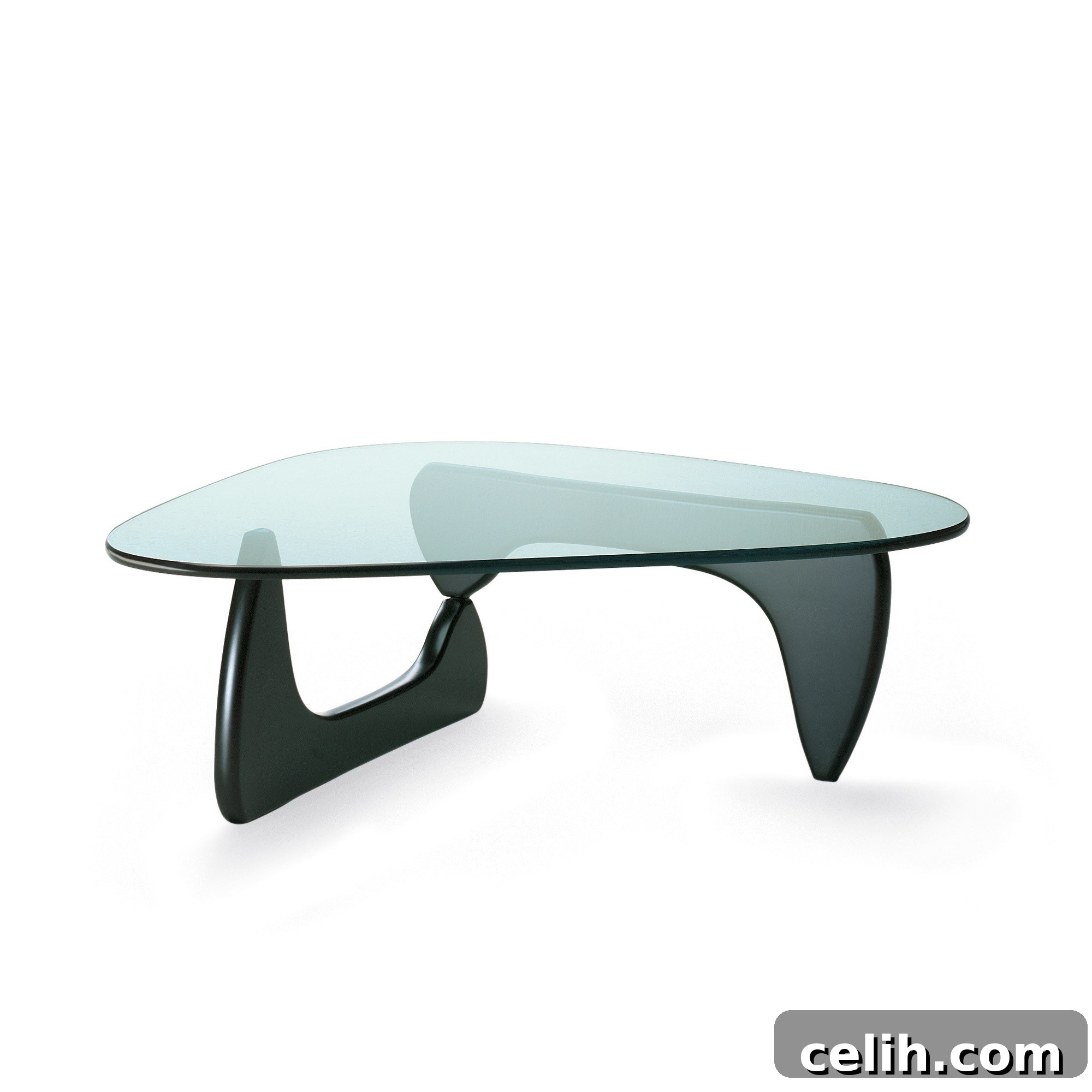
Crafted by the legendary Japanese-American artist and designer Isamu Noguchi, the classic Noguchi Coffee Table is a breathtaking fusion of sculptural artistry and everyday functionality. Introduced in 1944, this design remains a profoundly favoured piece, celebrated for its elegant simplicity and its striking presence. Noguchi, renowned for his abstract and biomorphic sculptures, translated his artistic sensibilities into furniture, creating a table that blurs the lines between art and utility. The table’s design is deceptively simple yet profoundly sophisticated: a thick, weighty glass top rests effortlessly on two interlocking, sculptural wooden legs.
These two curved wooden elements, often crafted from walnut or maple, are angled and positioned to create a dynamic, balanced base that resembles a perfectly carved piece of sculpture. The transparency of the glass top allows the beauty of the base to be fully appreciated, highlighting the organic forms and the masterful craftsmanship. The Noguchi Coffee Table is more than just a surface for drinks or books; it is a focal point, a conversation starter, and a piece of functional art that elevates any interior. Its timeless appeal lies in its harmonious balance of natural materials, fluid lines, and a minimalist aesthetic that continues to captivate designers and homeowners alike, proving that true art can indeed be part of daily life.
Verner Panton’s Amoebe Chair: The Epitome of 70s Lounge Comfort
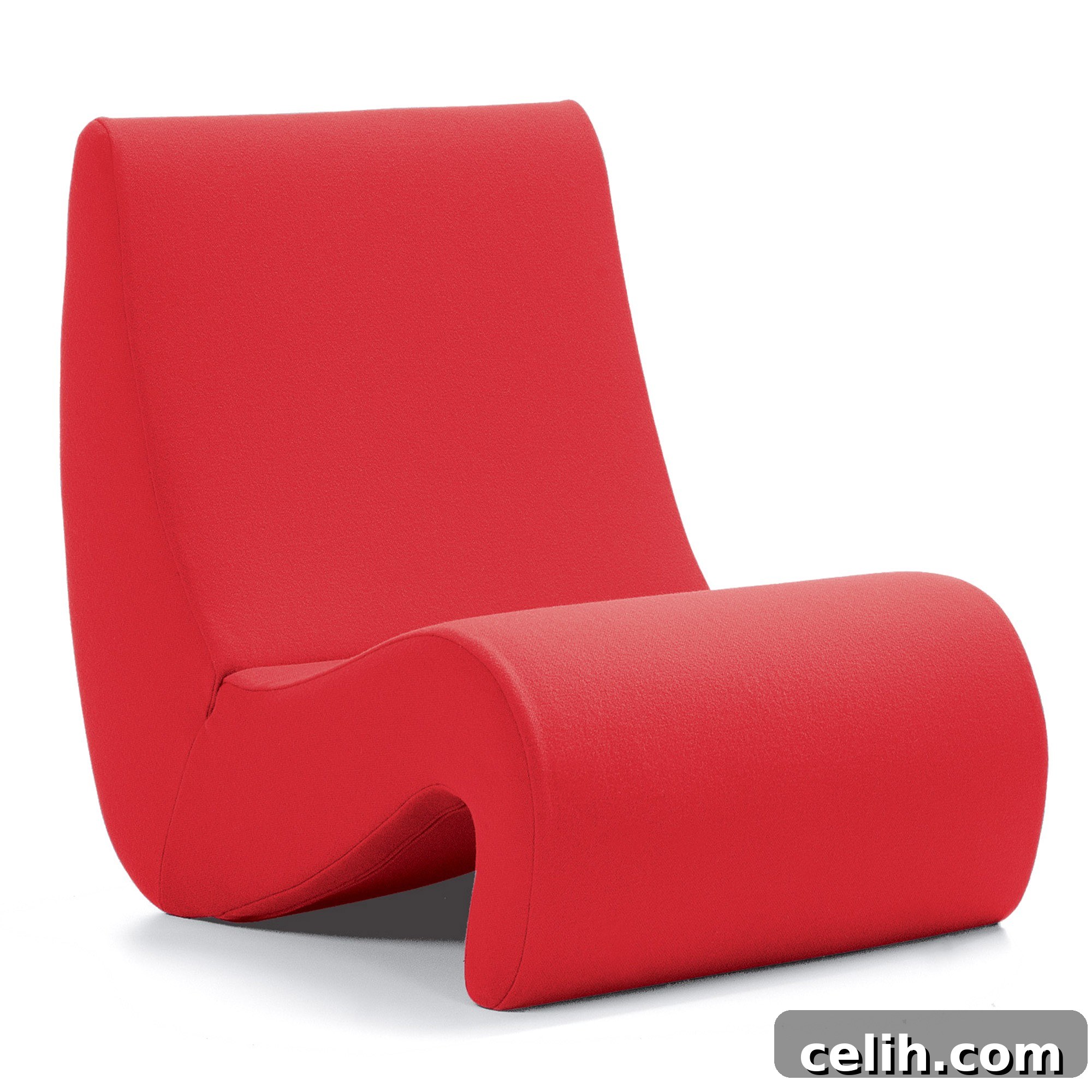
Another seminal piece from the imaginative mind of Verner Panton, the Amoebe Chair embodies the distinctive spirit of the early 1970s lounge furniture. This low-slung, close-to-the-floor design perfectly captures the era’s fascination with unconventional forms, relaxed living, and a rejection of rigid formality. The Amoebe, as its name suggests, takes inspiration from organic, flowing shapes, offering a uniquely comfortable and enveloping experience. It stands as one of the best examples of the low-down lounge aesthetic that became incredibly popular during that period, reflecting a desire for informal and inviting seating arrangements.
What sets the Amoebe Chair apart is its flexible backrest, which adapts to the user’s posture, providing a level of comfort that truly lives up to its designation as a lounge chair. Its soft, upholstered form invites users to sink in and unwind, making it an ideal piece for relaxation and casual conversation. The chair’s distinctive silhouette, characterized by its gentle curves and enveloping shape, adds a sculptural element to any room while offering unparalleled coziness. Vitra continues to produce the Amoebe, ensuring that Panton’s vision of radical comfort and groundbreaking form remains accessible, allowing new generations to experience the laid-back luxury and pioneering design of this iconic 70s masterpiece.
Charles & Ray Eames’ The Eames Elephant: A Playful Icon for All Ages
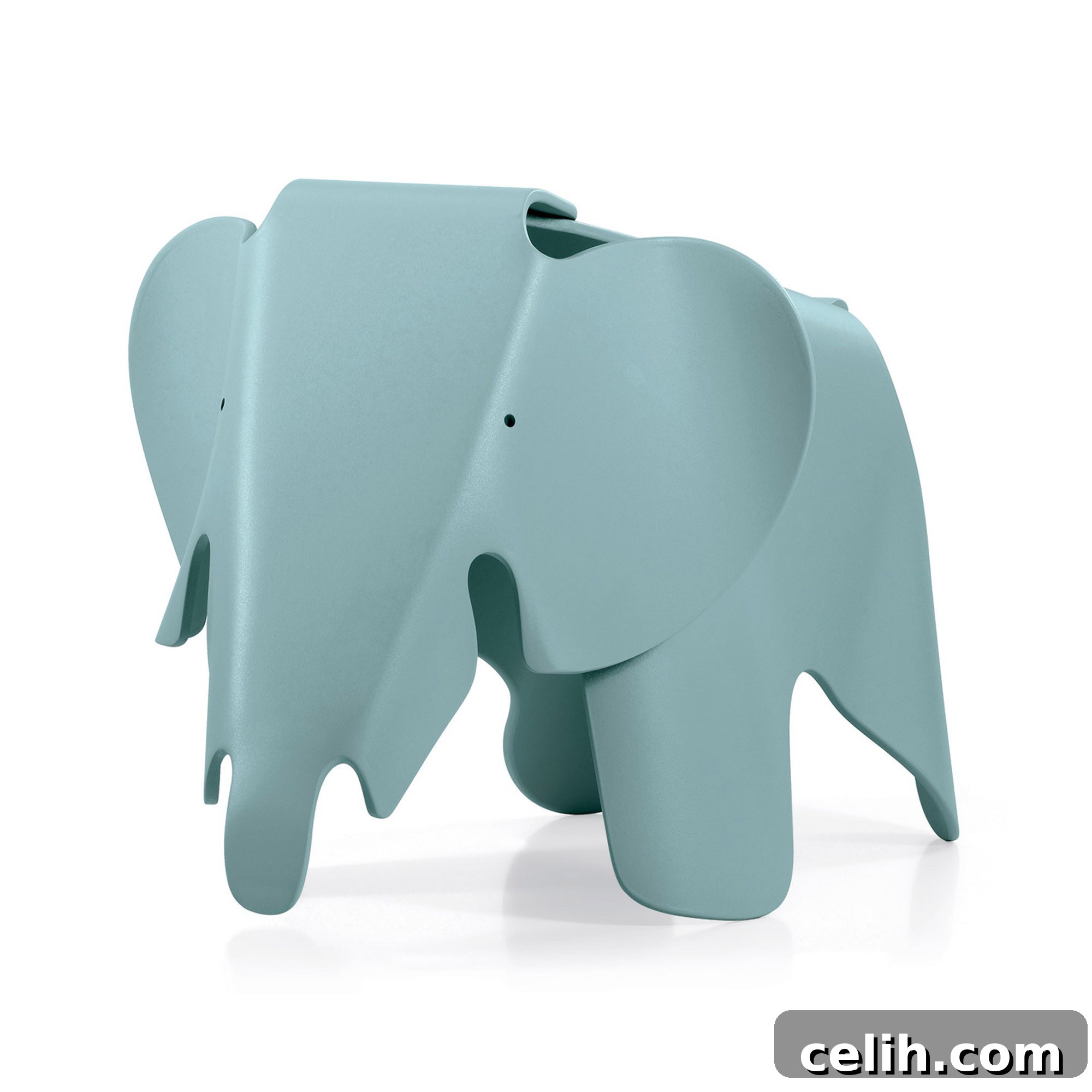
No discussion about Vitra’s illustrious catalog would be complete without paying homage to one of the most beloved and endearing designs from the legendary duo, Charles and Ray Eames: The Eames Elephant. This charming piece, instantly recognizable by its friendly, curvaceous form, perfectly encapsulates the Eameses’ playful approach to design and their dedication to creating objects that bring joy and wonder. It was first conceived in 1945, initially crafted from plywood, a material that Charles and Ray Eames masterfully manipulated to create complex, sculptural forms. While the plywood version never made it into mass production due to the intricate manufacturing challenges of the time, its unique charm was too significant to be forgotten.
Fortunately, Vitra later made this delightful creature available in durable, vibrant plastic, making it more accessible and versatile. The Eames Elephant is far more than just a toy; it is a multi-functional design icon. It serves as a captivating piece for a child’s room, functioning as a delightful seat, an imaginative plaything that sparks creativity, or a whimsical decorative accessory that adds a touch of mid-century modern flair. Its robust construction ensures it can withstand energetic play, while its gentle form makes it a comforting presence. The Eames Elephant symbolizes the enduring power of good design – a piece that transcends generations, appealing to both children with its inviting shape and adults with its profound design heritage and undeniable charm.
Sori Yanagi’s Elephant Stool: A Minimalist Masterpiece of Durability and Versatility
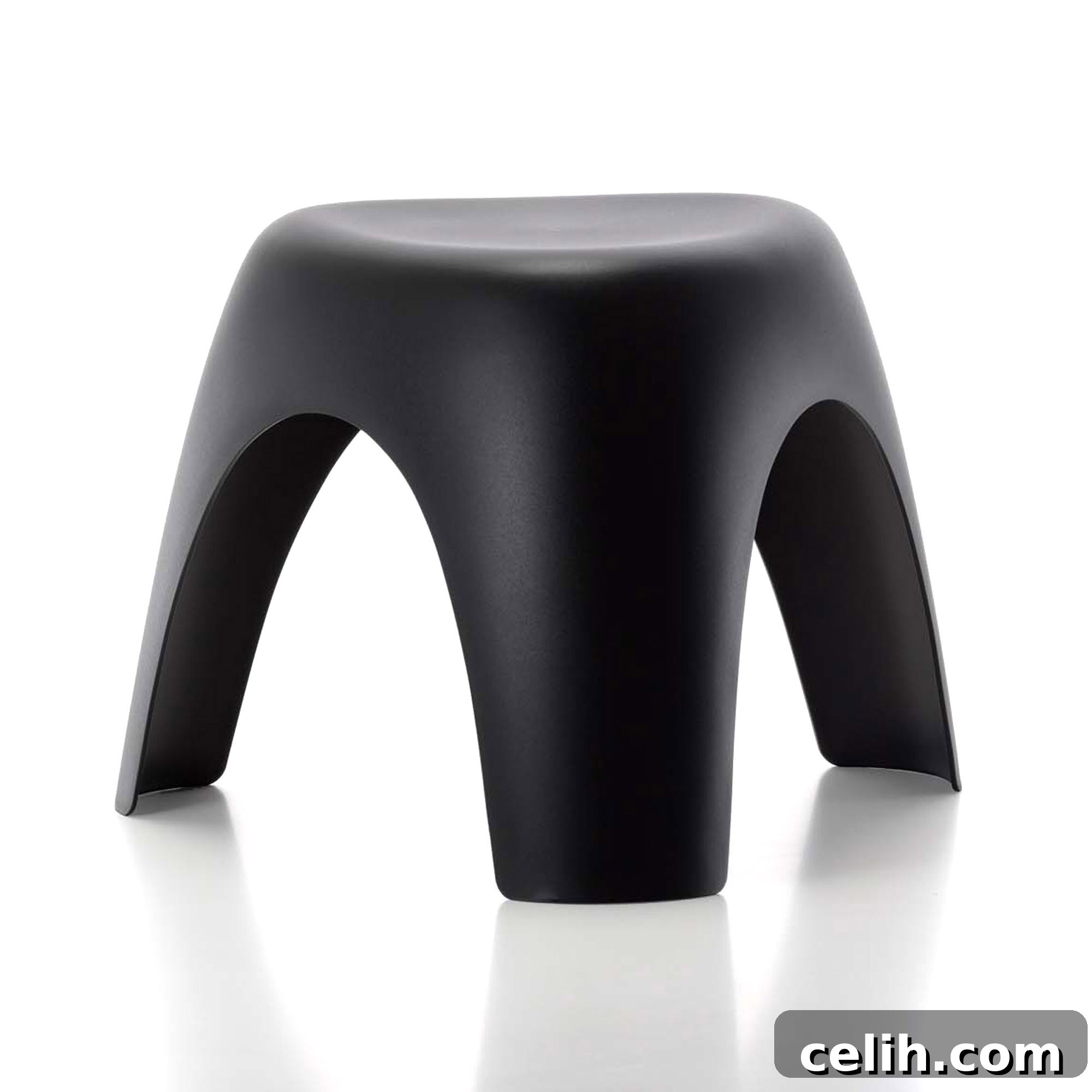
Complementing the Eames Elephant with its own distinctive charm, we absolutely must include the classic Elephant Stool, a brilliant creation by the esteemed Japanese designer Sori Yanagi. Designed in Japan in 1954, this stool quickly became one of Yanagi’s most popular and enduring pieces, reflecting his signature blend of Japanese craftsmanship and modern industrial design. Unlike its Eames counterpart, Yanagi’s Elephant Stool offers a starker, more minimalist aesthetic, yet it shares the same robust and functional qualities that make it an indispensable item in any home.
Crafted from a single piece of moulded plastic, much like the Panton Chair, the Elephant Stool is a triumph of simplicity and structural integrity. Its three broad legs, reminiscent of an elephant’s sturdy stance, provide exceptional stability, making it a reliable piece of furniture for children and adults alike. This stool’s versatility is one of its greatest assets: it functions perfectly as occasional seating indoors, a convenient side table, or even as a cheerful perch for plants. Its lightweight and portable nature makes it ideal for outdoor use, from impromptu garden seating to picnics and barbecues. Yanagi’s Elephant Stool is as relevant in contemporary homes today as it was in the post-war days of 1954, proving that thoughtful, functional design with a touch of character truly stands the test of time. It embodies a philosophy of understated utility and enduring elegance, making it a true classic in every sense.
Beyond these iconic furniture pieces, Vitra’s influence extends far and wide, touching every corner of the design world. They are not merely manufacturers; they are custodians of design history and champions of future innovation. Vitra has enriched our homes and public spaces with far more than just chairs and tables. Their extensive portfolio includes stunning lighting fixtures, meticulously crafted designer clocks, plush cushions, luxurious rugs, and a plethora of decorative accessories, each reflecting the same unwavering commitment to quality and aesthetic excellence. Their collaborations with groundbreaking designers like Charles and Ray Eames, George Nelson, Verner Panton, Isamu Noguchi, and many others have cemented their reputation as strong influencers in the global design community.
The dedication of Vitra to preserving and re-issuing these timeless designs ensures that the brilliance of mid-century modernism and beyond remains accessible to new generations. It is incredibly gratifying to witness so many of these popular designs still being produced with meticulous care and selling exceptionally well today, a testament to their enduring relevance and universal appeal. Their commitment to sustainability and authentic reproduction further enhances the value of each piece, ensuring that every Vitra product is an investment in both style and heritage. The Vitra Design Museum and their architectural campus in Weil am Rhein serve as a vibrant hub for design discourse, education, and inspiration, further solidifying Vitra’s pivotal role in shaping our understanding and appreciation of design.
For those who admire these masterpieces but might find investing in all their favourite full-sized pieces challenging, Vitra offers a delightful alternative: miniature versions of so many top designs. These perfectly scaled-down replicas are not mere toys; they are exquisite collector’s items, perfect for display, offering an accessible way to appreciate the intricate details and design genius of the originals. They serve as charming decorative accents and a tangible connection to the world of iconic furniture design. You can explore a wide selection of these captivating miniatures and other Vitra offerings by checking out retailers like Skandium to see what’s available.
Vitra’s unwavering commitment to innovative design, quality craftsmanship, and timeless aesthetics ensures that their legacy will continue to inspire for centuries to come. Their pieces are more than just furniture; they are cultural artifacts that celebrate the fusion of art and utility. Are you a fan of any of the Vitra classics we’ve highlighted, or perhaps another iconic piece from their extensive collection? We’d love to hear your thoughts. What’s your absolute favourite Vitra design, and what makes it special to you?