
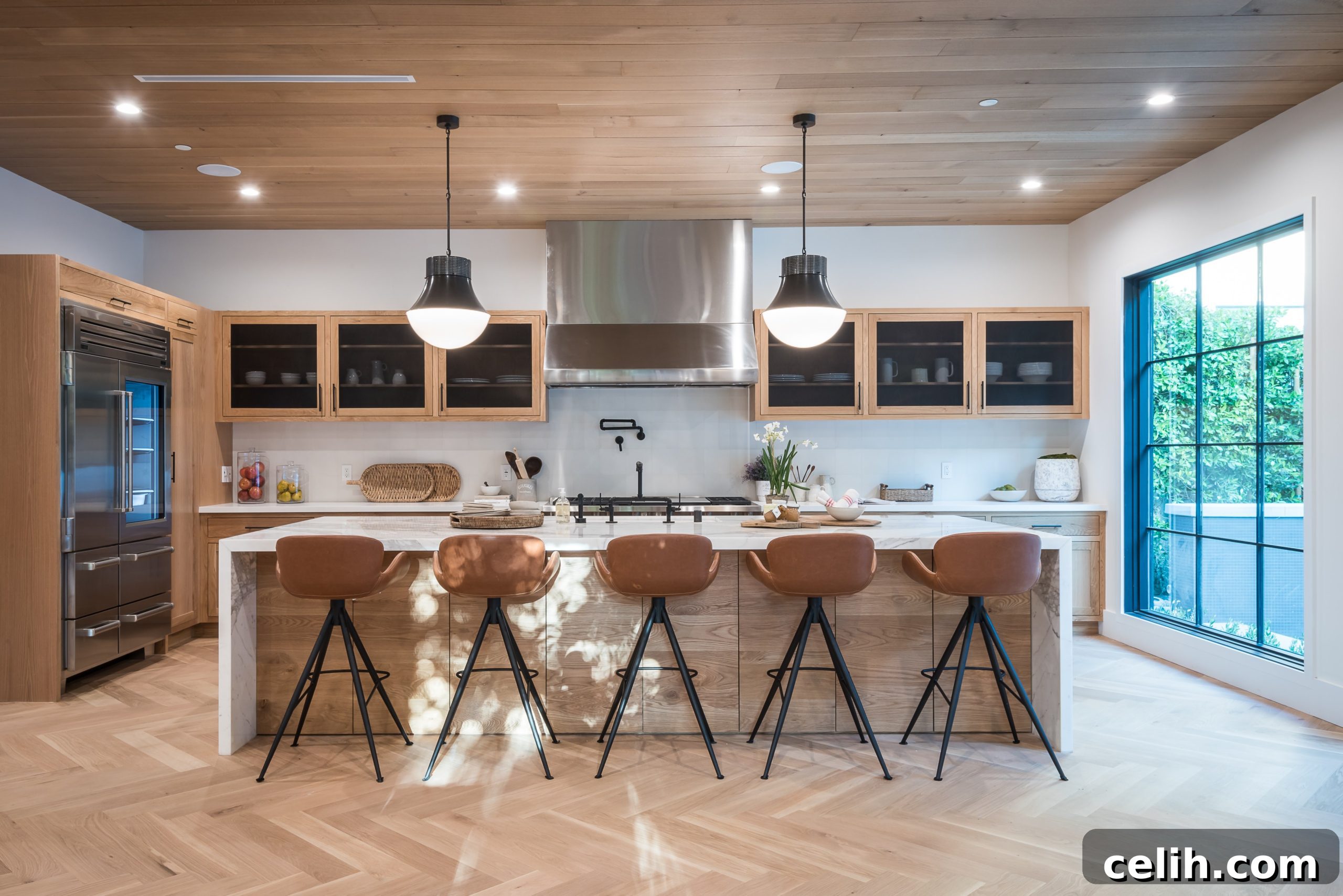
For centuries, homes have featured a particular space designed to impress, to be the focal point where significant attention and resources are poured into its design – a true ‘statement room’. Historically, the grand parlor or the opulent living room often held this esteemed position, serving as the stage for entertaining guests, displaying treasured possessions, and embodying the family’s status and style. While other areas of the home were functional, the living room shone as the jewel in the crown, meticulously curated to create a lasting impression. However, in an exciting shift reflecting evolving lifestyles and architectural trends, the spotlight has decisively moved. Today, it is the kitchen that has emerged as the undisputed heart and soul of the modern home, captivating homeowners and designers alike with its boundless potential and central role in daily life.
This fascinating transformation isn’t arbitrary; it’s a direct response to a confluence of societal and design changes. Understanding these underlying currents reveals why kitchens have not only become trendier but are now indispensable hubs for family life, social gatherings, and personal expression. Let’s delve into the compelling reasons behind the kitchen’s ascent to its current prominent status.
The Ascendancy of the Open-Plan Kitchen
For decades, the kitchen occupied a secluded corner of the home, a purely functional space where meals were prepared behind closed doors, hidden from the main social areas. It was a realm unto itself, with food then transported to a separate, often formal, dining room. Most homes built just a few generations ago strictly adhered to this compartmentalized layout. However, contemporary architectural philosophy has largely embraced the open-plan design concept, fundamentally reshaping the role of the kitchen.
Modern homes frequently integrate the kitchen with the dining and even living areas, creating expansive, fluid spaces where boundaries blur. This transformation has elevated the kitchen from a mere food preparation zone to a vibrant central hub where families gather, socialize, and relax. Imagine the seamless flow from chopping vegetables to conversing with family members seated at a large kitchen island, or guests mingling effortlessly between the cooking and dining zones during a party. The open-plan kitchen fosters connectivity, ensuring that the cook is never isolated and every moment, from meal prep to casual conversation, becomes a shared experience. It’s no longer just about eating; it’s about communal living, making the kitchen the natural epicenter for everyday family life and entertaining friends.
This architectural evolution directly correlates with the waning popularity of the traditional, formal dining room. As modern lifestyles lean towards less formality and greater fluidity, the dedicated dining room often sits unused, replaced by the integrated dining area within the kitchen. Consequently, the attention and investment once allocated to the formal dining room or living area are now channeled into crafting an extraordinary kitchen that can seamlessly accommodate both culinary activities and social interactions. The open-plan kitchen, therefore, isn’t just a design choice; it’s a lifestyle statement, reflecting a desire for connection, openness, and versatile living spaces, making it a pivotal area for modern home interior design.
Limitless Design Possibilities and Personalization
Beyond its enhanced functional role, the modern kitchen has become a centerpiece due to the extraordinary breadth of design possibilities it presents. While living rooms offer aesthetic choices in furniture and decor, the kitchen boasts a far wider spectrum of structural, material, and technological innovations. If you were to observe five different bespoke kitchen designs, you would likely encounter five distinctly unique and captivating environments, each reflecting a different vision and catering to specific needs. The kitchen has truly blossomed into a canvas for creativity, allowing homeowners to express their individuality in myriad ways.
Consider the sheer diversity of design aesthetics available today. From the rustic charm of a farmhouse kitchen with its exposed beams and distressed wood to the sleek, minimalist lines of a contemporary German-engineered kitchen featuring handleless cabinets and integrated appliances, the options are virtually endless. There are industrial styles characterized by raw materials like brick and metal, inviting Scandinavian designs emphasizing natural light and simplicity, and luxurious traditional kitchens with intricate detailing and rich finishes. Hybrid designs often merge elements from different styles, allowing for even greater customization, ensuring every homeowner can find their ideal modern kitchen layout.
Within these broader themes, the possibilities for personalization continue to expand. Homeowners can choose from an extensive array of countertop materials – gleaming quartz, durable granite, elegant marble, warm butcher block, or eco-friendly recycled glass. Cabinetry can range from classic Shaker styles to ultra-modern flat panels, available in an infinite palette of colors and finishes. Innovative storage solutions abound, including intelligent pantry systems, pull-out drawers, corner carousels, and clever hanging storage that maximizes every inch of space. Kitchen islands, once a luxury, are now fundamental components, serving as prep areas, casual dining spots, extra storage, and even integrated workstations. Advanced appliances, smart home technology, and sophisticated lighting schemes (task lighting, ambient lighting, accent lighting) further enhance both functionality and aesthetic appeal, making each kitchen a bespoke masterpiece. This unparalleled diversity and potential for personalization are precisely why the kitchen now commands so much of our design attention and investment, reinforcing its status as the ultimate statement room.
The Evolution of Home Culture: Less Living Room, More Kitchen
While the emergence of open-plan layouts has been a significant driver, the shifting role of the kitchen is also deeply rooted in the broader evolution of home culture. The traditional ideal of “living room culture,” where the entire family would congregate in the lounge to watch television or engage in shared activities, has become increasingly rare in contemporary households. Modern life is often characterized by packed schedules, individual pursuits, and the pervasive presence of personal electronic devices. Children frequently have their own entertainment options in their rooms, and parents are often juggling work, hobbies, and household responsibilities. Consequently, orchestrating a time when everyone can genuinely gather in the living room simultaneously can be a significant challenge.
In stark contrast, the kitchen maintains its status as the most frequently visited and utilized room in the house, day in and day out, by every member of the family. From the first cup of coffee in the morning to the last snack before bed, the kitchen is a constant hive of activity. It is the primary stage for daily rituals: preparing nutritious meals, grabbing a quick breakfast, brewing tea or coffee, packing lunches, and, crucially, serving as the main gathering place for communal mealtimes. This consistent, multi-faceted usage naturally positions the kitchen as the true social and functional core of the home, truly embodying the idea of the “heart of the home.”
This omnipresence means the kitchen is under constant scrutiny and interaction. Unlike a rarely used formal living room or dining area, the aesthetics and functionality of the kitchen directly impact daily life and overall home satisfaction. A beautifully designed, highly efficient kitchen enhances these frequent interactions, making daily chores more enjoyable and communal moments more memorable. Investing in its design ensures that this vital space not only looks fantastic but also functions perfectly, catering to the diverse needs of every household member and maximizing the utility and enjoyment of their time at home. This makes a well-designed kitchen a powerful asset for modern families.
Crafting Your Dream Statement Kitchen: A Design Guide
With the kitchen now firmly established as the paramount statement room, many homeowners are eager to transform their own culinary spaces into inspiring, high-performing hubs. The process of designing a statement kitchen, much like any significant interior design project, requires a thoughtful and systematic approach. It begins with envisioning a cohesive theme and then meticulously fleshing out ideas, always balancing aesthetics with essential functionality.
1. Envisioning Your Theme and Style
Start by identifying the overall aesthetic you wish to achieve for your kitchen design. Do you gravitate towards the timeless elegance of a traditional kitchen, the clean lines of modern minimalism, the warmth of a farmhouse style, or the edgy appeal of industrial design? Your chosen theme will inform major decisions, guiding your selection of color palettes, cabinet styles (e.g., Shaker, flat-panel, glass-front), hardware finishes, and even the type of flooring. Gathering inspiration from magazines, design blogs, and showrooms can help you refine your vision and create a mood board that captures your desired ambiance and defines your dream kitchen.
2. Prioritizing Functionality and Workflow
A beautiful kitchen is only truly successful if it’s also highly functional. Consider the “kitchen triangle” principle (the logical flow between the refrigerator, sink, and stove) to optimize efficiency and workflow. List all the essential appliances your kitchen absolutely needs: refrigerator, freezer, oven, hob, dishwasher, microwave. Think about their placement for ease of use and accessibility. Beyond these basics, factor in practical considerations such as ample counter space for food preparation, a dedicated pantry, and accessible storage for everyday items. Ergonomics also plays a crucial role – ensure cabinet heights, counter depths, and appliance placements are comfortable for your primary users, making daily tasks effortless.
3. Maximizing Storage and Space Utilization
Storage is paramount in any modern kitchen. Focus on intelligent solutions that make the most of every available inch. This might include floor-to-ceiling cabinetry, pull-out spice racks, corner storage systems, deep drawers for pots and pans, and integrated waste and recycling bins. If space allows, a well-designed kitchen island can significantly boost both counter space and storage capacity, often incorporating shelving, drawers, or even a wine cooler. Think vertically with open shelving or decorative storage solutions that add visual interest while keeping items organized. Efficient storage helps maintain a clutter-free environment, which is especially vital in open-plan designs, enhancing both the look and feel of your kitchen.
4. Thoughtful Material Selection and Finishing Touches
The choice of materials significantly impacts both the look and durability of your kitchen. Countertops, backsplashes, flooring, and cabinetry all contribute to the overall aesthetic. Research different materials for their pros, cons, and maintenance requirements, considering factors like longevity and sustainability. Don’t forget the details: light fixtures, faucets, and hardware act as the jewelry of the kitchen, allowing you to add personality and polish. Integrated lighting – including task lighting under cabinets, ambient overhead lighting, and accent lighting for display areas – can dramatically enhance both functionality and atmosphere. Finally, incorporate personal touches through carefully chosen decor, artwork, and even indoor plants to make the space truly your own, a reflection of your unique style.
5. Budgeting and Professional Consultation
Before embarking on your kitchen renovation journey, establish a realistic budget. Kitchen renovations can range significantly in cost, so prioritizing your investments (e.g., high-quality appliances versus custom cabinetry) is essential. While many homeowners enjoy DIY elements, consulting with an experienced kitchen designer can be invaluable. Professionals can offer expert advice on layout optimization, material selection, and navigating complex installations, ensuring your statement kitchen is not only stunning but also perfectly tailored to your lifestyle and adds lasting value to your home. Their expertise can help you avoid costly mistakes and achieve a cohesive, high-end finish.
There you have it: the kitchen has undeniably seized the mantle as the main statement room in your property. The living room enjoyed a long reign, but we are now firmly in the dawn of the kitchen’s era. If your goal is to significantly enhance your home’s appeal, functionality, and overall value, direct your focus and creativity towards crafting the kitchen of your dreams – a space that truly reflects your style, facilitates joyful gatherings, and effortlessly supports the rhythm of modern family life, making it the true heart of your home.