
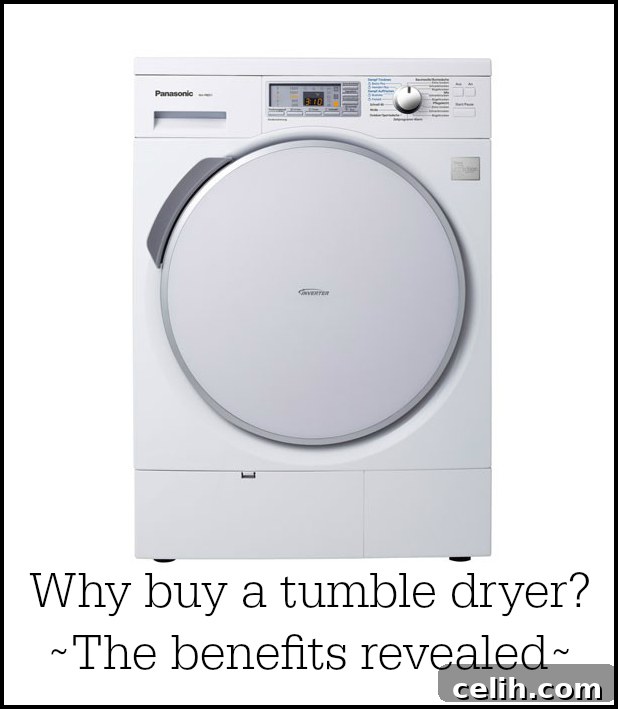
Standalone Tumble Dryer vs. Washer Dryer: The Ultimate Guide to Efficient Laundry Care
In the evolving landscape of home appliances, the choice between a standalone tumble dryer and an integrated washer-dryer is a pivotal one for many homeowners. While the allure of a single, space-saving unit might seem appealing, a closer look reveals a compelling case for the dedicated tumble dryer. This article explores the significant advantages that a specialist drying machine offers over its combined counterpart, providing insights into why opting for a standalone tumble dryer can elevate your laundry routine, save you time, enhance garment care, and prove to be a more efficient long-term investment.
For those seeking optimal performance, superior fabric treatment, and overall greater convenience in their laundry management, understanding the distinctions between these two appliance types is crucial. Let’s delve into the core benefits that make standalone tumble dryers a preferred choice for many modern households.
Unmatched Drying Capacity and Superior Efficiency
One of the most immediate and impactful benefits of a standalone tumble dryer is its specialized design, which translates directly into superior drying capacity and overall efficiency. Unlike washer-dryers, which must compromise their internal structure to accommodate both washing and drying functions, a dedicated tumble dryer is engineered solely for drying. This specialization allows for a significantly larger drum volume, optimized airflow, and dedicated heating elements, all contributing to a more effective drying process.
A common frustration among combined washer-dryer users is the disparity between the washing and drying capacities. Many combined units can wash a substantial load, perhaps 8-9kg, but are only capable of effectively drying half of that amount, often 4-5kg. This means that after a full wash cycle, users are frequently required to remove a portion of their wet laundry before commencing the drying cycle for the remainder. This inefficient process leads to either running two separate drying cycles – doubling energy consumption and time – or resorting to air-drying the leftover items, which negates the convenience promised by an all-in-one appliance.
In contrast, a standalone tumble dryer is typically designed to perfectly match the wash capacity of a standard washing machine. This seamless transfer from washer to dryer eliminates the need for splitting loads, allowing you to dry your entire wash in a single, efficient cycle. The larger drum space also ensures that garments have ample room to tumble freely, preventing creasing, promoting even drying, and significantly reducing overall drying times. This not only saves you precious time but also contributes to lower energy consumption per load, making your laundry routine more streamlined and cost-effective.
Advanced Cooling Systems for Optimal Fabric Protection
The importance of an effective cooling down function in a tumble dryer is often underestimated but plays a vital role in both garment care and user convenience. Premium standalone tumble dryers are engineered with sophisticated cooling cycles that progressively reduce the drum temperature towards the end of the program. This gradual cooling process is critical for several reasons:
- Preventing Creases: Rapid cooling or leaving hot garments to sit can cause deep, set-in creases as the fabric cools in a crumpled state. A controlled cooling phase allows clothes to relax, minimizing wrinkles and often reducing or eliminating the need for ironing.
- Protecting Fabrics: Exposing delicate fabrics to prolonged high temperatures, even after the heating element is off, can lead to thermal shock, shrinkage, fading, and accelerated wear. A gentle cooling ensures fabrics are treated with care.
- User Comfort: When the cycle finishes, your clothes are cool and comfortable to handle immediately, making unloading and folding a much more pleasant experience.
Many combined washer-dryers, due to their multi-functional design, often struggle with this cooling phase. Users frequently report opening the door to find their laundry still excessively hot. While a warm shirt might feel nice on a cold day, it signifies an inadequate cooling system. This can make handling difficult and, more importantly, indicate a less gentle process for your garments over time. A standalone dryer’s dedicated cooling capabilities ensure your clothes emerge in optimal condition, ready to be put away or worn.
Faster Drying Times and Enhanced Garment Longevity
The dedicated design of a standalone tumble dryer translates directly into significantly faster drying times when compared to a combined washer-dryer. This efficiency stems from several factors, including larger drum sizes and specialized airflow systems. With more space for clothes to tumble, air can circulate more freely, leading to quicker moisture extraction and more uniform drying across all items in the load. This speed is not just about convenience; it also plays a crucial role in garment care.
Faster drying reduces the overall exposure time of fabrics to heat, which is beneficial for preserving their integrity, color, and fit. Furthermore, the increased tumbling space minimizes friction and compaction, reducing the likelihood of damage, stretching, or excessive creasing. The result is laundry that is not only dry quicker but also emerges softer, fluffier, and often with significantly fewer wrinkles, thereby reducing your ironing workload – a considerable bonus for any busy household.
Modern standalone tumble dryers also excel in fabric care through advanced sensor drying technology. These intelligent sensors continuously monitor the moisture levels within the drum, automatically adjusting the drying time and temperature to prevent over-drying. Over-drying is a common cause of fabric damage, shrinkage, and energy waste. By precisely controlling the drying process, standalone dryers ensure your clothes are dried perfectly every time, extending their lifespan and maintaining their quality much longer than less sophisticated combined units.
Flexible Space Solutions and Modular Convenience
A common perception is that a combined washer-dryer is the only viable option for homes with limited space. However, this often overlooks the ingenious and practical solutions available for integrating separate laundry appliances, offering flexibility that a single unit cannot match.
The most popular space-saving method for standalone machines is stacking. A tumble dryer can be safely and securely placed on top of a front-loading washing machine using a compatible stacking kit. These kits create a stable, vertical laundry station that occupies the exact same floor footprint as a single appliance. This arrangement is ideal for utility closets, compact laundry rooms, or even discreet corners within a kitchen or bathroom.
Beyond stacking, separate appliances offer greater flexibility in placement. If space within the main living areas is at a premium, a standalone washing machine and tumble dryer can be housed in alternative locations such as a garage, basement, or even a large under-stairs cupboard. Some creative homeowners have even reconfigured bathrooms, replacing baths with showers to free up valuable real estate for a concealed tumble dryer within a built-in cabinet. This modularity allows you to design your laundry area according to your home’s unique layout and your lifestyle needs, without compromising on appliance performance.
Moreover, the modularity extends to maintenance and replacement. If one unit requires servicing or replacement, only that specific appliance needs attention, leaving the other fully functional. In contrast, a fault in a combined washer-dryer can render both washing and drying capabilities inoperable, leading to greater inconvenience and potentially higher repair costs.
Cutting-Edge Technology and Dedicated Performance
The technological prowess of standalone tumble dryers often far surpasses that of combined units. Because a standalone dryer is purpose-built for one function – drying clothes – its engineering, sensors, and programs are entirely optimized for achieving the most efficient, effective, and gentle drying performance possible. This singular focus allows manufacturers to integrate advanced features and innovations that are typically absent or compromised in a multi-functional appliance.
Modern standalone tumble dryers, particularly heat pump models, exemplify this dedication to advanced performance. Heat pump dryers are renowned for their exceptional energy efficiency, recycling hot air to dry clothes at lower temperatures, which is not only gentler on fabrics but also dramatically reduces electricity consumption. Features like precise humidity sensors, anti-crease cycles, steam refreshment functions, and even smart connectivity for remote control and diagnostics are common in high-end standalone dryers, offering unparalleled convenience and meticulous fabric care.
While washer-dryers have certainly seen technological advancements, their dual functionality often necessitates a compromise in the sophistication of the drying system. The internal components must cater to both intensive washing and heat-intensive drying cycles, which can limit the space and complexity of the drying mechanisms. This often results in fewer specialized drying programs, less precise temperature control, and a generally less optimized drying environment compared to a purpose-built machine. The “drying part” of a combined unit, while functional, typically lacks the nuanced capabilities and energy efficiency innovations found in a dedicated tumble dryer.
Long-Term Energy Efficiency and Cost Savings
When evaluating laundry appliances, considering long-term energy consumption and running costs is paramount. While the initial investment for separate washing machine and tumble dryer units might be slightly higher than a single combined washer-dryer, the operational savings of modern standalone tumble dryers can lead to significant financial benefits over their lifespan.
Heat pump tumble dryers, for instance, are revolutionary in their energy efficiency, consuming up to 50% less electricity than conventional condenser dryers. By intelligently recirculating and reheating the air, they minimize heat loss, making them incredibly economical to run. Combined washer-dryers, on the other hand, often utilize a condenser drying system that typically requires a continuous flow of cold water to cool the hot, moist air. This means they consume both electricity and water during every drying cycle, potentially leading to higher utility bills compared to a heat pump tumble dryer.
Furthermore, the ability of a standalone dryer to handle larger loads more efficiently means fewer cycles are required to dry the same volume of laundry, further reducing overall energy usage. Over years of use, these accumulated energy savings can comfortably offset any initial price difference. Coupled with the extended lifespan of garments due to gentler drying methods, a standalone tumble dryer proves to be a more financially prudent choice in the long run.
Enhanced Durability and Simplified Maintenance
The principle of specialization often extends to greater durability and more straightforward maintenance. A standalone tumble dryer is built with components designed exclusively for drying, subjecting them to less multi-functional stress and potentially contributing to a longer operational lifespan. If a problem arises with a standalone dryer, diagnosing and repairing the issue is typically simpler, as technicians are dealing with a single-purpose machine with fewer integrated complexities.
In contrast, the shared components within a combined washer-dryer are subjected to a wider range of stresses, from the vibrations and water exposure of washing cycles to the heat and airflow demands of drying cycles. This dual stress can potentially accelerate wear and tear. Should a crucial component fail in a combined unit, it can render both washing and drying functions inoperable, leading to greater inconvenience and potentially more complex, and therefore costlier, repairs due to the integrated design.
Investing in separate, high-quality appliances means that each machine is optimized for its specific task with maximum resilience, contributing to fewer breakdowns, a more reliable laundry solution, and potentially lower repair costs over its functional lifetime.
The Ultimate Verdict: Specialization Delivers Superior Results
While combined washer-dryers certainly have their niche, offering a compact solution for very small spaces or for individuals with minimal, infrequent laundry needs, their inherent compromises often fall short for the demands of a modern household. For most users, particularly families or those who prioritize efficient, high-quality laundry care, the benefits of a standalone tumble dryer are undeniable and overwhelmingly superior.
From its unmatched drying capacity that effortlessly handles full wash loads, to its advanced cooling mechanisms that protect and preserve fabrics, and its faster drying times that reclaim your valuable hours, a dedicated tumble dryer consistently outperforms its combined counterpart. The practical flexibility in placement options, the cutting-edge technology designed for specialized performance, and the significant long-term energy and cost savings further solidify its position as the premium choice for a truly efficient and effective laundry setup.
When you are in the market for new laundry appliances, it is crucial to weigh these compelling advantages against your specific needs, lifestyle, and laundry volume. While the initial investment for separate, high-quality washing machine and tumble dryer units might be marginally higher, the benefits in terms of superior performance, reduced energy consumption, extended garment longevity, and unparalleled convenience make it a profoundly worthwhile investment. Choose specialization for outstanding results and transform your laundry experience into one of efficiency, care, and satisfaction.