
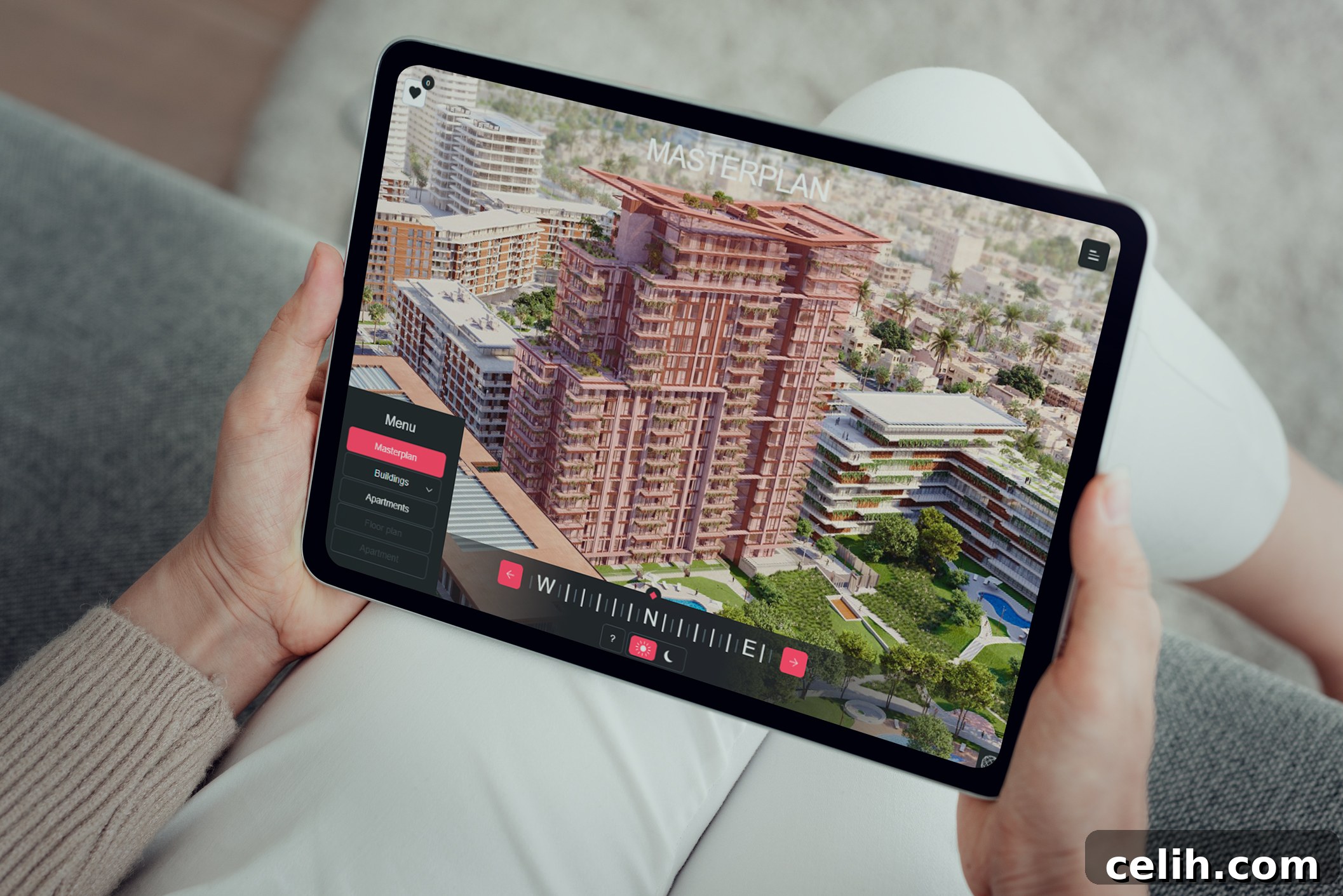
The real estate industry, once considered traditional and slow to adapt, is currently undergoing a profound digital transformation. Driven by relentless technological advancement and groundbreaking innovation, the way we interact with, buy, and sell properties is fundamentally changing. From sophisticated digital contracts that streamline transactions to immersive virtual tours and advanced augmented reality applications for real estate, technology is enhancing every aspect of the property journey. These innovations are creating a more efficient, transparent, and accessible market for all stakeholders: real estate agents, prospective buyers, and property sellers.
This article delves into the transformative impact of new approaches and cutting-edge technologies that are not just improving processes but are actively revolutionizing the global property market, setting new standards for engagement and efficiency.
Immersive Property Experiences: The Rise of Virtual Tours
Virtual tours represent a paradigm shift in how potential homeowners explore properties, offering an unparalleled immersive experience that transcends geographical limitations and traditional viewing constraints. This innovative approach provides a convenient and comprehensive method of exploration, allowing buyers to step inside a property from anywhere in the world.
Drones for Aerial Perspectives and Mapping. The integration of drones has rapidly become an indispensable tool within the real estate industry. These unmanned aerial vehicles capture breathtaking, high-resolution images and videos, providing stunning aerial perspectives that showcase a property’s exterior, landscaping, and surrounding neighborhood in a way traditional photography cannot. Beyond simple visuals, drones are also instrumental in creating accurate 3D maps and topographical data. This advanced mapping capability offers a comprehensive view of real estate properties, extending its utility to crucial applications such as initial site selection, meticulous urban planning, and detailed infrastructure analysis. By delivering precise visual data quickly and efficiently, drones significantly save both time and operational costs for developers, agents, and buyers alike.
Seamless Remote Property Viewing. Virtual tours empower individuals to explore real estate remotely, offering an interactive walk-through experience. Users can navigate through spaces in a highly realistic virtual environment, meticulously evaluating the layout, interior design elements, and overall ambiance without the necessity of a physical presence. This technology is particularly invaluable for international clients, expatriates, or individuals with demanding schedules, effectively expanding an agent’s market reach and attracting a wider demographic of potential buyers from across the globe, thereby fostering a truly international property market.
Optimized Costs and Enhanced Efficiency. The widespread adoption of virtual tours presents an exceptionally effective solution for significantly reducing time and financial expenditures associated with property showings. Instead of committing to numerous in-person visits—which involve travel time, fuel costs, and scheduling complexities—prospective clients can now virtually tour a multitude of homes from the comfort of their current location. This preliminary virtual exploration allows buyers to efficiently narrow down their choices, ensuring that physical visits are reserved only for properties that genuinely pique their interest and meet their specific criteria, thus streamlining the entire viewing process for both parties.
Facilitating Highly Informed Purchasing Decisions. By presenting a holistic and detailed picture of a property, virtual tours enable clients to scrutinize every minute detail, from precise room dimensions and architectural nuances to unique design features and material finishes. This granular level of insight allows buyers to thoroughly assess how a property aligns with their lifestyle aspirations and intended use of space. The result is a purchasing decision that is far more informed, thoughtfully considered, and ultimately leads to increased customer satisfaction, reducing the likelihood of buyer’s remorse.
Promoting Accessibility and Equal Opportunities. Virtual home tours serve as a profoundly valuable tool for individuals facing mobility challenges, physical disabilities, or other constraints that might traditionally hinder their ability to access properties. By eliminating the need for physical presence, virtual tours ensure that everyone, regardless of their physical capabilities, can have equitable access to comprehensive real estate information and actively participate in the property purchase process without encountering physical or logistical barriers. This inclusivity broadens the market and ensures fairness.
Documenting for Insurance and Claims. Beyond sales, virtual tours offer significant advantages for insurance purposes. They provide verifiable, tangible evidence by meticulously documenting the exact condition of a property at a specific point in time. This detailed digital record can prove indispensable as concrete evidence in the event of an insurance claim settlement, offering an objective and unalterable account that supports accurate assessments and fair resolutions.
Augmented Reality (AR): Bridging Digital and Physical. Augmented Reality (AR) represents another frontier in real estate technology, seamlessly blending digital elements with the real-world environment. This innovative technology allows virtual objects and interactive information to be overlaid directly onto a user’s physical surroundings. By simply utilizing a smartphone or tablet, clients can view properties, access intricate details, and gather comprehensive information in real-time while physically present at a location or even from a remote setting looking at a 2D floor plan. AR enhances perception and provides a deeper contextual understanding.
Virtual Furniture Placement for Visionary Spaces. One of AR’s most compelling applications is its ability to facilitate the virtual placement of furniture. Prospective buyers can select pieces from a digital catalog and realistically position them within a given space, whether it’s an empty room or even an outdoor area. This powerful approach allows them to visualize precisely what the home will look like once furnished and decorated according to their taste, providing invaluable insights into scale, spatial functionality, and aesthetic harmony before making any purchase decisions for furniture or the property itself.
Visualizing Decorative Elements and Personal Touches. Extending beyond large furniture items, AR makes it possible to virtually decorate real estate with a myriad of aesthetic elements. Clients can experiment by placing virtual decorations such as paintings, lighting fixtures, curtains, rugs, and even different types of finishes on walls or floors. This dynamic capability to experiment with diverse design options offers customers an incredibly effective and intuitive tool for personalizing a property, helping them envision how a house can truly become their home, tailored to their individual style.
Interactive Repair and Renovation Modeling. In addition to decor, AR can be strategically applied to simulate extensive home renovations and potential improvements. Buyers and investors can evaluate various options, such as experimenting with different flooring materials, wall colors, or even significant structural changes like removing a wall or adding an extension. This advanced visualization helps in understanding the scope, potential cost, and ultimate impact of such projects, enabling more informed decisions regarding a property’s potential for transformation.
Enhanced Interactivity for Deeper Understanding. AR significantly elevates interactive experiences during real estate tours. Through AR, buyers can engage with the space in real time, not just observing but actively interacting with virtual elements that provide a detailed understanding of the layout, precise dimensions, and specific features of the home. This could include tapping on virtual appliances to see specifications, opening virtual cupboards, or even viewing historical data of a particular room, leading to a much richer and more comprehensive property assessment.
The Digital Marketplace: Online Portals & Mobile Applications
In today’s fast-paced digital era, online property portals and specialized mobile applications have unequivocally become the primary and most popular methods for discovering and engaging with real estate opportunities. These centralized digital platforms provide an unparalleled hub for viewing, interacting with, and ultimately purchasing properties, fundamentally revolutionizing the entire home-buying and selling process by placing immense power and information directly into the hands of consumers.
An Expansive and Diverse Property Selection. Property portals and mobile applications offer immediate access to an extensive and continually updated list of available properties, far surpassing the scope of traditional advertising methods. Buyers can effortlessly browse through thousands of listings and refine their search results using a wide array of specified filters, including exact location, desired price range, number of bedrooms, property type, and even specific amenities. This broad choice ensures that every potential buyer can efficiently find properties that perfectly match their unique requirements and preferences.
Advanced Personalization and Real-time Updates. Modern real estate applications go far beyond simple search functions, offering sophisticated personalization features. Users can effortlessly save properties they find interesting, create curated watchlists, and set up highly tailored notifications. These alerts can keep them instantly updated on new listings that match their saved criteria, inform them of price changes on favored properties, or even notify them about open house schedules. This level of personalization ensures buyers remain proactive and never miss out on potential opportunities in a dynamic market.
Comprehensive Information for Informed Choices. Mobile applications and online portals are meticulously designed to provide an exhaustive array of detailed information about each property. Prospective buyers can delve into rich descriptions, examine precise floor plans, experience interactive virtual tours, or marvel at high-quality photorealistic renderings. This wealth of contextual and visual information empowers buyers to significantly narrow down their choices and proceed with confidence, knowing they have a deep understanding of the property before even considering a physical visit, thus leading to more informed and efficient decision-making.
Interactive Mapping and Neighborhood Insights. One of the most powerful features of these digital platforms is their interactive mapping capabilities. Users can explore properties within specific geographical areas, gaining a clear visual representation of each listing’s exact location on a map. More than just location, these maps often integrate layers of contextual data, offering insights into proximity to essential facilities like schools, hospitals, public transport, and shopping centers. Additionally, potential clients can delve deeper into understanding the local area, accessing crucial information such as demographic statistics, local services available, infrastructure developments, and even community reviews, fostering a holistic understanding of their potential new neighborhood.
Streamlined Direct Communication Channels. Online portals and mobile applications fundamentally simplify and accelerate communication between prospective buyers and real estate agents. Integrated messaging features, direct inquiry forms, and in-app scheduling tools allow parties to communicate instantly and efficiently. This direct channel significantly streamlines many purchasing processes, from arranging viewings and asking detailed questions to submitting offers and receiving real-time updates, thereby fostering greater transparency and responsiveness in the transaction cycle.
Empowering Stakeholders: Enhanced Opportunities for Buyers and Sellers
The continuous integration of new technologies into the real estate sector is not merely about convenience; it is fundamentally empowering both buyers and sellers with unprecedented access to information, tools, and strategic advantages that were once out of reach. This empowerment leads to more equitable and efficient market participation.
Accurate Market Analysis and Strategic Insights. Through advanced data analysis tools and artificial intelligence, both buyers and sellers can now gain sophisticated market intelligence. These tools provide real-time insights into current market trends, property valuations, historical pricing data, and supply-demand dynamics. This comprehensive analysis helps sellers to competitively price their properties, identify optimal listing times, and refine their negotiation strategies. Conversely, buyers can leverage this data to make informed offers, understand a property’s true value, and identify undervalued opportunities, leading to smarter, data-driven decisions for all parties involved.
Revolutionizing Effective Marketing Strategies. Technology has dramatically transformed how properties are marketed, offering sellers and agents powerful new avenues to attract a broader audience. The ability to showcase real estate through various sophisticated digital marketing channels, leveraging high-quality visual content like professional photography, videography, 3D virtual tours, and augmented reality, dramatically enhances a property’s appeal. Targeted advertising campaigns on social media and specialized property platforms can reach specific buyer demographics, significantly increasing engagement and the number of potential clients exposed to marketing materials, thereby vastly improving the chances of a swift and successful deal at an optimal price.
Streamlining Transactions: The Efficiency of Digital Contracts
Digital contracts represent a significant leap forward in real estate transactions, offering numerous compelling advantages over traditional paper-based agreements. By embracing digital formats, the entire process from offer to closing becomes remarkably simpler, faster, and more environmentally friendly.
Unparalleled Convenience and Accessibility. Digital contracts effectively eliminate the cumbersome need for printing, physically scanning, and hand-delivering stacks of paper documents. Instead, all necessary agreements and disclosures can be signed electronically with legally recognized e-signatures from virtually any location, using any device with internet access. This makes digital contracts exceptionally convenient for long-distance transactions or situations where buyers and sellers cannot meet in person, breaking down geographical barriers and ensuring business continuity regardless of physical proximity.
Enhanced Legal Binding and Robust Security. Far from being less secure, modern digital contracts are designed with advanced security protocols, making them robustly secure and legally binding in most jurisdictions worldwide. This inherent security significantly increases trust and confidence between all transacting parties. Utilizing sophisticated encryption technologies, digital certificates, and comprehensive authentication processes, a digital contract guarantees the authenticity and integrity of documents while ensuring the undeniable enforceability of all agreements. Audit trails also provide transparent records of all interactions and changes, adding an extra layer of accountability.
Accelerated Transaction Timelines. Perhaps one of the most celebrated advantages of digital contracts is their capacity to dramatically accelerate the entire transaction process. The ability to instantly exchange documents, review terms, and obtain signatures reduces what once took days or even weeks into mere hours or minutes. This expedited workflow streamlines feedback loops, minimizes administrative delays, and ultimately leads to a substantial reduction in overall transaction times, allowing deals to close much faster and more efficiently, which is particularly crucial in fast-moving markets.
Building Trust in the Digital Realm: Security and Protection of Sensitive Data
In an increasingly digital real estate landscape, the security and protection of sensitive data are absolutely paramount. Given that buying and selling properties inherently involves the exchange of highly confidential financial records, personal identification documents, and sensitive contractual information, it is critically important to implement robust security measures, including advanced encryption, secure storage solutions for personal data, and strict adherence to regulatory compliance frameworks.
Implementing Advanced Encryption. Encryption stands as one of the most potent and effective methods for safeguarding digital data. Financial records, legal papers, personal identification documents, and all other sensitive information can be rigorously protected from unauthorized access through the application of strong encryption algorithms. This means that even in the unlikely event of a data breach or successful hacking attempt, the intercepted data remains unreadable, unintelligible, and effectively useless to malicious actors, ensuring confidentiality.
Secure Storage for Confidential Data. Beyond encryption during transit, it is absolutely essential to securely store all sensitive information to proactively prevent unauthorized access, data leakage, or internal misuse. This involves a multi-layered approach, incorporating stringent access controls that limit who can view specific data, utilizing highly encrypted databases, and continuously implementing security updates and patches. Regular security audits and penetration testing are also vital practices to identify and eliminate potential vulnerabilities within storage systems before they can be exploited.
Adherence to Regulatory Compliance. The real estate industry operates within a complex web of national and international regulations designed to govern the collection, transfer, and storage of sensitive personal data (e.g., GDPR, CCPA). Platforms and professionals involved in the real estate sales process must ensure strict compliance with these regulatory rules. Failing to do so can result in severe penalties, significant reputational damage, and a loss of client trust. Proactive compliance ensures data protection and fosters consumer confidence.
Securing Communication Channels. A critical area of focus for security must be on the integrity of communication channels used between all parties involved in a real estate transaction. Implementing secure email protocols, utilizing encrypted messaging applications, and employing virtual private networks (VPNs) for data exchange are fundamental steps. These measures collectively help to ensure that all communications, from initial inquiries to final negotiations, remain confidential, protected from interception, and free from tampering, establishing a secure environment for sensitive discussions.
Final Thoughts: Navigating the Future of Real Estate
The convergence of technological advances and the strategic introduction of innovative digital tools are irrevocably transforming the real estate landscape. Buyers and sellers are now equipped with unprecedented capabilities to make profoundly informed decisions, benefiting from accurate, real-time analysis of dynamic market trends and prevailing conditions.
The continuous stream of personalized notifications—alerting users to new property listings, significant price increases, or strategic price reductions—empowers individuals to adjust their purchasing or selling strategies with agility. This immediate access to critical market intelligence enables them to achieve superior outcomes, whether that means securing a property at a more favorable price or selling their asset for maximum value.
By effectively leveraging modern real estate transaction platforms and proptech innovations, all parties involved in a property deal can respond with remarkable speed to market shifts and make highly effective decisions. This responsiveness is particularly invaluable in the real estate industry, renowned for its dynamic nature and rapid fluctuations, ensuring that participants remain competitive and achieve their objectives in this ever-evolving market.