
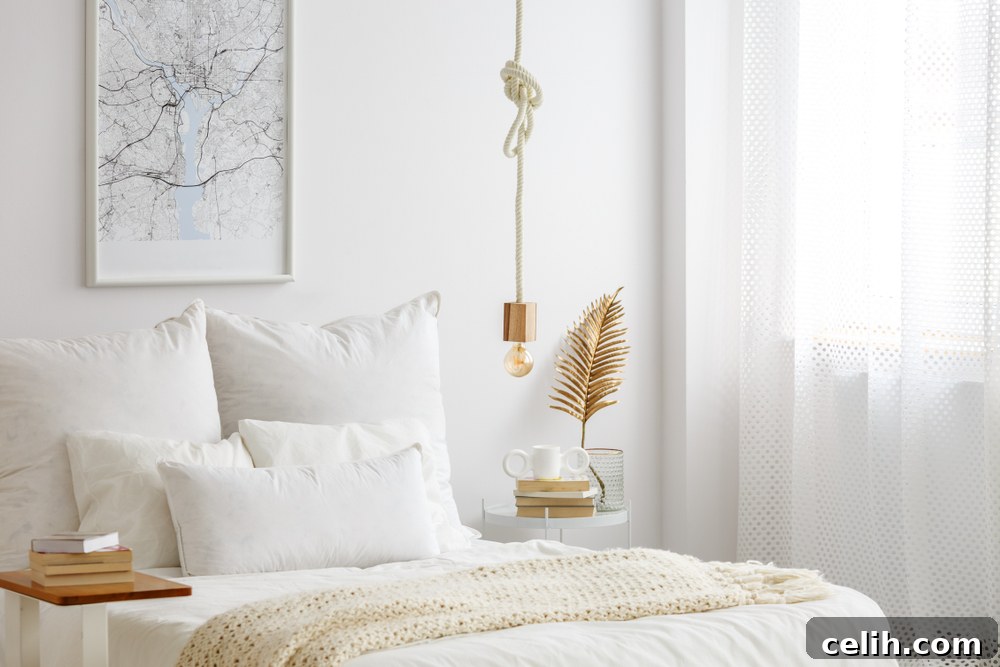
The allure of white bedrooms is undeniable, yet it often sparks a divided opinion. For some, a pristine white sanctuary represents the epitome of peace, brightness, and effortless sophistication – a tranquil haven where the mind can truly unwind. Others, however, perceive it as stark, sterile, or lacking warmth, fearing a bland, uninviting space. This dichotomy often stems from a misunderstanding of how to truly master the art of white bedroom design. Far from being monotonous, a well-executed white bedroom offers unparalleled versatility and a profound sense of serenity. It provides a timeless canvas, allowing for endless creativity through texture, subtle shades, and carefully chosen accents. If you’ve ever dreamt of transforming your bedroom into a breathtaking white retreat but felt daunted by the prospect, this comprehensive guide is for you. We’ll explore expert styling ideas that will not only dispel the myth of the “sterile” white room but also help you create a perfectly balanced, inviting, and utterly chic white bedroom that you’ll fall madly in love with.
1. Embrace the Monochromatic Charm: The Power of Uninterrupted White
Diving into a truly monochromatic bedroom scheme might seem like a bold move, but the rewards are spectacular. When we talk about an all-white bedroom, we’re not suggesting a single, flat shade. Instead, envision a symphony of whites – an exquisite layering of eggshell, ivory, cream, alabaster, and crisp pure white. This approach creates an incredible sense of depth and visual interest without introducing any other dominant color. The beauty lies in the subtle nuances and the way light interacts with each distinct shade.
One of the most remarkable transformations you’ll witness in an all-white bedroom is its dramatic expansion. Walls, floors, and ceilings painted in varying whites seem to recede, making the room feel significantly larger, brighter, and infinitely more open. This effect is particularly beneficial for smaller spaces or rooms with limited natural light, as white surfaces are masterful at reflecting light, effectively bouncing it around the room and amplifying its presence. The result is an airy, expansive atmosphere that promotes feelings of freedom and calm. Beyond the visual appeal, a monochromatic white setting inherently fosters a sense of tranquility and order, providing a perfect backdrop for relaxation and restful sleep. It’s a clean slate, a quiet whisper in a noisy world, inviting peace and clarity into your personal sanctuary.
2. Curating Comfort: Selecting Furniture for Your White Sanctuary
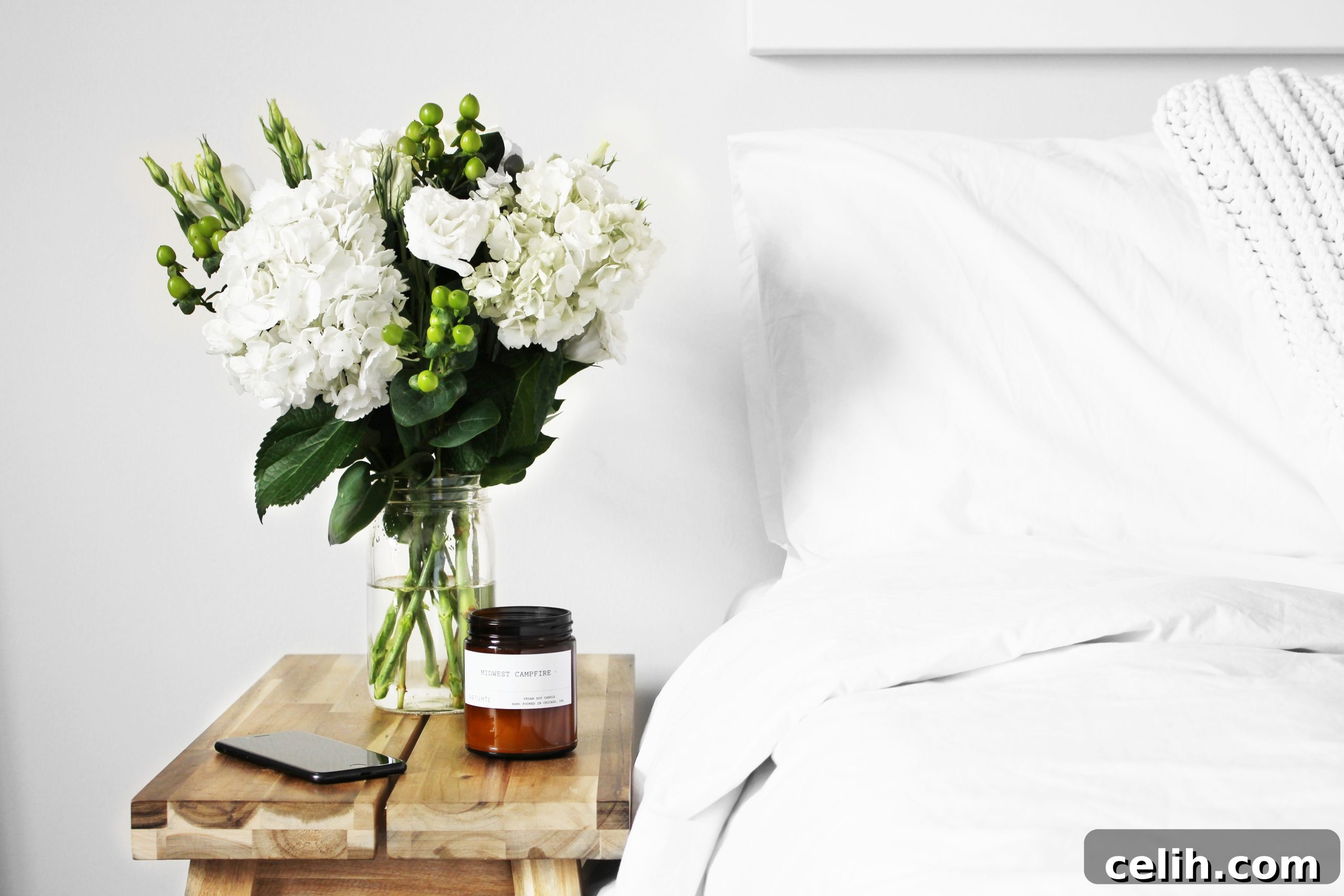
Crafting the perfect white bedroom extends beyond just paint; it critically involves choosing furniture that contributes to a rich tapestry of textures and subtle tones. The key to preventing a stark appearance is to introduce materials that naturally infuse warmth and character. Interior design experts frequently advocate for natural fabrics and finishes to achieve this harmonious balance.
When selecting textiles for bedding, curtains, and upholstery, prioritize materials like soft cotton, luxurious linen, cozy wool, or even cashmere and faux fur. Opt for these in different shades of white – think creamy off-whites, warm ivories, or cool alabasters. The inherent texture of these fabrics, combined with their distinct white hues, will effortlessly create depth and visual interest, making your white bedroom feel inviting and multi-faceted rather than flat. A chunky knit throw, a crisp linen duvet cover, and sheer cotton curtains can layer beautifully to achieve this effect.
For your core furniture pieces – beds, dressers, nightstands – consider natural wood. Reclaimed wood pieces, with their inherent imperfections and history, bring an organic, grounding element to a white space. Woods like light oak, ash, or even whitewashed pine offer a gentle contrast. You can choose to let their natural grain and color shine through, providing a touch of earthy warmth, or for a more unified look, paint them in a coordinating white, allowing their form and texture to stand out. Rattan and wicker furniture are another excellent choice, injecting a relaxed, bohemian vibe and intricate texture. A rattan headboard or a woven side table can add significant character.
For those with a bolder aesthetic, consider venturing into futuristic or minimalist furniture designs featuring metallic trimmings or sleek, reflective surfaces. Polished chrome, brushed brass, or matte black accents on lamp bases, mirror frames, or bedposts can create a striking contemporary contrast against the softness of the white. This juxtaposition of clean white with metallic sheen can elevate your bedroom to an avant-garde masterpiece, proving that white bedrooms can be both serene and sensationally stylish.
3. Illuminating Your Haven: The Art of Romantic Lighting

Lighting is a transformative element in any room, and in a white bedroom, it’s particularly crucial for imbuing warmth and a sense of coziness. Beyond its functional purpose, strategic lighting can elevate the mood and style of your space, moving it from merely bright to beautifully romantic. Learning how to create a boho-chic or serenely elegant white bedroom often starts with understanding the power of light.
One of the simplest yet most effective ways to introduce a dreamy ambiance is through the thoughtful use of string lights. Imagine delicate yellow-hued string lights gracefully draped around your bed frame, framing a window, or woven through sheer curtains. The soft, ambient glow they emit is incredibly romantic and instantly softens the entire room. This warm light contrasts beautifully with the crispness of white, creating an inviting, almost ethereal atmosphere, reminiscent of a charming Parisian hotel room on a rainy evening. These can be easily incorporated into any white bedroom style, from minimalist to bohemian, without cluttering the aesthetic.
However, don’t stop at string lights. Layering different types of lighting is key to a well-lit and versatile white bedroom. Incorporate bedside lamps with warm-toned bulbs to provide task lighting for reading and a soft glow for winding down. Consider a stylish floor lamp in a corner to add another layer of ambient light, or a statement pendant light overhead for a touch of architectural interest. Wall sconces can provide subtle, diffused light, perfect for creating a relaxing mood. Always opt for bulbs with a warm color temperature (around 2700K-3000K) to ensure your white bedroom feels inviting rather than clinical. Dimmer switches are invaluable, allowing you to adjust the intensity of light to suit any mood or time of day, transforming your white sanctuary into a versatile haven.
Maximizing natural light is also paramount. Keep window treatments light and airy – think sheer linen or cotton curtains that allow sunlight to filter through softly, enhancing the bright and spacious feel of the room. Mirrors strategically placed opposite windows can amplify natural light, further brightening and enlarging the space. Thoughtful lighting design ensures your white bedroom remains a welcoming, warm, and utterly captivating retreat at all hours.
4. The Art of Tactile Beauty: Texture is Your White Bedroom’s Best Friend!
While a white bedroom may seem limited in terms of color, it offers an incredible playground for texture, which is arguably even more effective than color in creating depth, warmth, and visual intrigue. Texture is the secret weapon against monotony, transforming a potentially flat space into a rich, multi-layered environment that engages the senses. When done right, it makes a white bedroom feel luxurious and deeply comforting.
Consider the walls themselves as a starting point. Instead of plain drywall, explore options like exposed brick that has been painted white. The natural irregularities and rugged surface of the brick, even under a coat of white paint, provide an immediate, architectural texture that evokes urban chic or rustic charm. Alternatively, shiplap paneling can introduce clean lines and subtle shadow play, adding a coastal or farmhouse feel. Textured wallpapers with embossed patterns or subtle weaves, though still white, can bring an unexpected tactile dimension to a feature wall.
Continue this tactile journey with your furnishings and textiles. Introduce rough, unfinished wooden furniture pieces – a reclaimed wood bedside table, a raw timber bench at the foot of the bed, or even a branch used as a curtain rod. These elements juxtapose beautifully with soft textiles. Layer your bed with a variety of textures: a crisp percale sheet set, a plush cotton duvet, a chunky knit throw, and velvet or faux fur accent pillows. On the floor, anchor the room with heavy, textural rugs made from natural fibers like jute, sisal, or thick-pile wool. These not only add warmth and sound absorption but also create distinct zones and tactile comfort underfoot. Don’t forget smaller decorative elements: a ceramic vase with a matte finish, a woven basket for storage, or a smooth stone sculpture can all contribute to the dynamic textural landscape of your white bedroom. It is this thoughtful layering of diverse textures that truly brings a white bedroom to life, creating a visually stimulating yet incredibly calming space.
5. Strategic Splashes: Adding a Spot of Color for Enhanced Impact
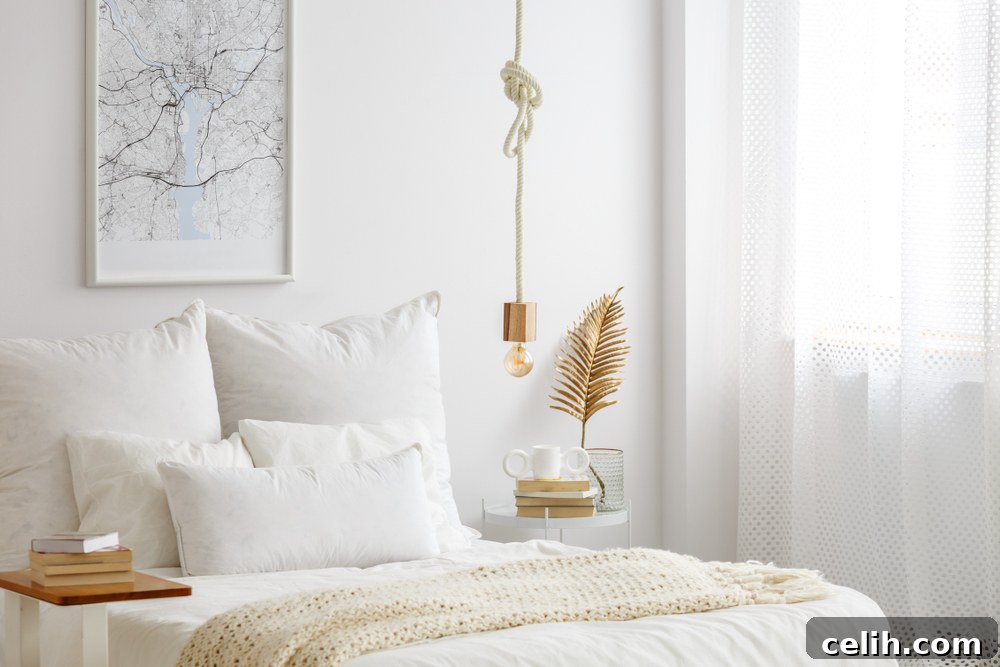
While the essence of a white bedroom lies in its pure aesthetic, the strategic introduction of a single, well-placed pop of color can paradoxically make the surrounding white appear even more brilliant and impactful. This design principle leverages contrast to enhance the primary hue, proving that a little color can go a long way in an otherwise blank canvas. The goal isn’t to diminish the white but to celebrate it by giving the eye a focal point to truly appreciate its vastness.
Consider adding two vivid throw pillows in a rich jewel tone like emerald green, sapphire blue, or ruby red on your crisp white bed. The intensity of these colors will draw immediate attention, making the expansive white duvet and sheets feel even brighter and more pristine by comparison. Alternatively, a boldly patterned rug in a vibrant yellow or a deep terracotta placed in the center of the room can anchor the space with its energetic hue, simultaneously highlighting the serene calm of the surrounding white floor and walls.
Beyond textiles, artwork is an ideal vehicle for introducing color. A large, captivating piece of art featuring a dominant contrasting color can serve as a powerful focal point above your bed or dresser. The white walls then act as a gallery, allowing the artwork to truly pop. Even a portion of one wall painted in a subtle, metallic gold or a soft blush can introduce warmth and a unique accent without overwhelming the room’s primary color scheme. For a more natural touch, vibrant green plants in simple white pots bring life and an organic splash of color that feels fresh and invigorating. The careful placement of these incredibly powerful tones will not only make the white appear even more luminous than before but will also subtly nudge anyone entering the room to appreciate the vast, peaceful expanse of white that forms the core of your design, ultimately enhancing its perceived elegance and sophistication.
6. Practicality Meets Pristine: Being Smart About Your White Bedroom
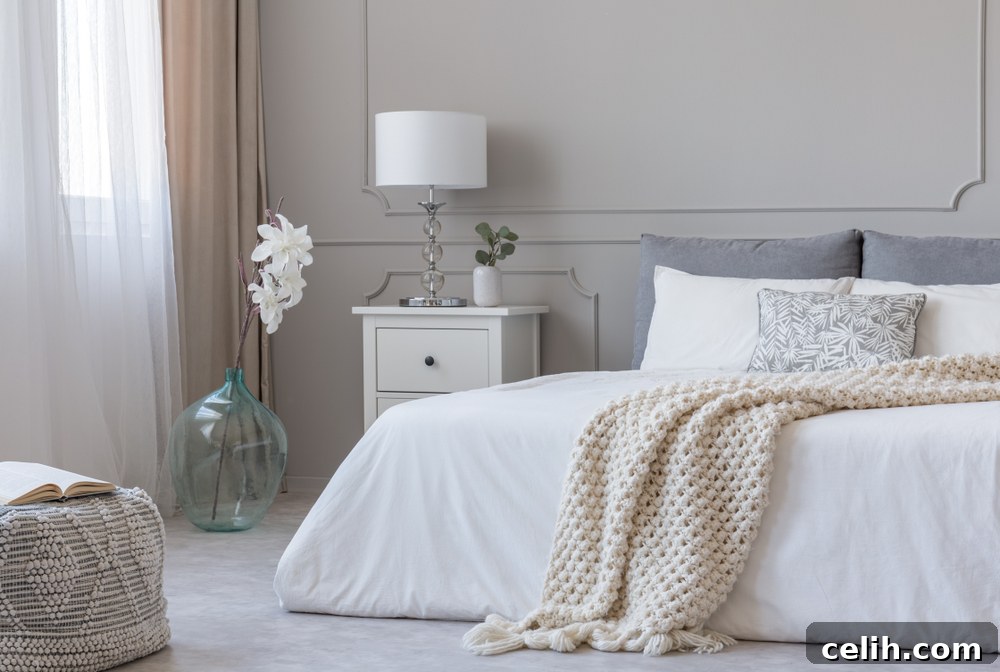
While the aspiration for a dreamy, all-white bedroom is compelling, it’s crucial to inject a dose of realism into your design strategy. White, while beautiful, demands a certain level of mindfulness when it comes to everyday living. Being smart about your choices will ensure your white sanctuary remains pristine and enjoyable, rather than becoming a source of constant stress over potential spills or dirt.
Consider the practicalities of high-traffic and high-use areas. Your vanity table and nightstands, for instance, are prime locations for makeup, skincare products, drinks, and snacks. Can these surfaces realistically remain spotless? If not, opt for materials that are easy to clean or less prone to showing marks. A white vanity top might be stunning, but a marble, quartz, or even a glass top can offer both elegance and superior stain resistance. Alternatively, use decorative trays in a contrasting material like wood or metal on your white surfaces to contain potential messes and add a touch of sophistication.
The same careful consideration applies to rugs and flooring. While plush white rugs are undeniably luxurious, they are also notorious for attracting and showcasing every speck of dirt. If you desire a rug, consider one made from a durable, washable material, or opt for a rug with a subtle pattern or a very light, natural tone (like jute or sisal) that is more forgiving. If you insist on pure white rugs, be prepared for frequent cleaning and perhaps invest in a good steam cleaner. For flooring, hard surfaces like light wood, white tiles, or polished concrete are much easier to maintain than white carpet, especially in areas where shoes might be worn. If you love the softness of carpet, consider a low-pile, stain-resistant option in a slightly off-white or very light neutral tone.
Furthermore, select fabrics for bedding and upholstery that are machine washable and preferably stain-resistant. Linen and cotton are excellent choices for their durability and ease of care. Embracing good habits, such as removing shoes at the door or using coasters for drinks, will also go a long way in preserving the immaculate condition of your white bedroom. By anticipating these everyday challenges and making practical design choices, you can create a beautiful white bedroom that is not only stylish but also functional and easy to live with.
7. Curating Your Canvas: Displaying Artwork and Personal Touches
Once you’ve mastered the foundational elements of creating a serene white bedroom, the final and most exciting step is to imbue it with personality through carefully curated artwork and personal touches. An entirely white room serves as the ultimate gallery space, allowing your chosen pieces to truly command attention and shine, transforming the room itself into a sophisticated display worthy of your most cherished possessions.
Imagine a vibrant, large-scale painting hanging above your bed. In a white room, this piece becomes an undisputed focal point, its colors intensified and its details highlighted against the pure backdrop. The white walls not only accentuate the artwork but also allow the eye to rest, preventing visual clutter and ensuring that each piece is appreciated. You can opt for a single, impactful statement piece or create a meticulously arranged gallery wall with various sizes and styles of art. Consider using white frames for a cohesive, minimalist look, or introduce natural wood or metallic frames to add another layer of texture and subtle contrast.
Beyond traditional artwork, consider other elements that tell your story. A collection of framed black and white photographs can add a timeless, elegant touch, their monochromatic nature blending seamlessly with the room’s palette while still offering personal significance. Strategically placed mirrors, especially those with unique frames, can not only act as decorative elements but also enhance the room’s brightness and sense of space by reflecting light. Decorative objects like sculptural vases, carefully chosen books on a floating shelf, or unique ceramic pieces can add depth and interest without introducing overwhelming color. The key is thoughtful curation – select pieces that resonate with you, tell a story, or simply bring you joy. In a white bedroom, every object has the opportunity to be seen, appreciated, and to contribute to a deeply personal and elegant aesthetic.
The white bedroom has long been celebrated as a classic choice for those who appreciate elegance, understated luxury, and a profound sense of calm. Far from being cold or uninviting, a thoughtfully designed white bedroom becomes a versatile canvas for texture, light, and personal expression. By layering different shades of white, incorporating natural materials, optimizing lighting, embracing diverse textures, strategically adding pops of color, and making smart, practical choices, you can transform your bedroom into the peaceful, stylish oasis you’ve always envisioned. These design principles are not only easy to implement but promise to deliver a sanctuary where comfort, beauty, and tranquility converge, making your white bedroom a truly cherished space in your home.
For more ideas and inspiration for decorating your home with white, check out our previous piece onLife in the White House.