
The Ultimate Guide to Choosing the Perfect Wine Fridge for Your Prized Collection
Are you a devoted wine enthusiast, passionate about preserving your cherished bottles in pristine condition? Then raise your glass, because you’ve come to the right place! Proper wine storage is paramount for maintaining the flavor, aroma, and overall integrity of your collection, transforming good wines into truly exceptional experiences.
Welcome to the sophisticated world of wine fridges, often known as wine coolers or dedicated wine cellars. These stylish and technologically advanced appliances are designed to be more than just refrigerators; they are essential companions for any serious collector, ensuring your wines are always perfectly chilled and ready to be savored. From crisp whites and sparkling rosés to robust reds, every bottle deserves an environment where it can truly thrive and age gracefully.
However, navigating the vast array of options available can feel like traversing a complex vineyard maze. With countless models, features, and specifications, finding the ideal wine fridge that perfectly meets your needs and complements your lifestyle can be a challenging endeavor. But don’t uncork your stress just yet – this comprehensive buying guide is meticulously crafted to steer you through the complexities, helping you pinpoint your perfect match and elevate your wine storage game to an unprecedented level.
Why Invest in a Dedicated Wine Fridge?
Unlike standard kitchen refrigerators, which are designed for general food preservation, a specialized wine fridge offers a stable, controlled, and optimized environment specifically tailored for wine. This dedicated approach prevents the detrimental effects of temperature fluctuations, humidity imbalances, and harmful external elements that can significantly compromise your cherished bottles.
A wine fridge meticulously maintains a consistent temperature, safeguarding your wines from thermal shock – a common culprit behind premature aging and flavor degradation. Furthermore, it actively shields your collection from damaging UV light and disruptive vibrations, both of which can spoil the delicate chemical structure and intricate flavors of your wine. With your prized collection always at an optimal temperature and within arm’s reach, you’re perpetually prepared to uncork and savor the perfect glass, whether for an impromptu celebration or a carefully planned dinner. Moreover, with the availability of large wine refrigerators, you can bid farewell to worries about limited space, ensuring ample room for all your favorite vintages and perfectly chilled selections.
Investing in a wine fridge is not merely about convenience; it’s about making a commitment to the longevity and quality of your wine, ensuring every sip delivers the intended experience the winemaker envisioned.
9 Essential Factors for Choosing Your Perfect Wine Refrigerator
Embarking on the journey to purchase a wine refrigerator is an exciting prospect for any wine lover. To ensure you make an informed decision that will bring years of satisfaction, it’s crucial to consider several key factors. Here’s an in-depth look at what you need to keep in mind:
1. Capacity & Size: Planning for Your Collection’s Future
While the adage “size doesn’t matter” often holds true, in the realm of wine fridges, capacity and dimensions are absolutely critical. Unlike regular refrigerators measured in liters or cubic feet, wine coolers are rated by the number of standard 750ml Bordeaux-style bottles they can accommodate.
Here’s a crucial tip for seasoned collectors and novices alike: always factor in an additional 20% to 30% more bottle capacity than your current collection or initial storage plan. This foresight provides invaluable flexibility, allowing you to expand your collection over time, accommodate impulse purchases, or store extra bottles for special occasions without immediately outgrowing your appliance. Consider whether you primarily collect standard Bordeaux bottles, or if you also have larger Burgundy, Champagne, or Magnum bottles, which typically require more space per bottle and can reduce the stated capacity.
For beginners or those with a modest collection, a wine fridge with a capacity of 20 to 30 bottles serves as an excellent starting point. This size is manageable, often more budget-friendly, and perfect for exploring different varietals. Conversely, for serious connoisseurs or those with an extensive and growing collection, a wine refrigerator boasting 50 or more bottle capacity is often ideal. Some enthusiasts even opt for models holding hundreds of bottles, mimicking a true wine cellar experience.
Beyond bottle count, precise physical dimensions are paramount. Before making any purchase, meticulously measure the intended location for your wine fridge. Consider not just the width and depth, but also the height, and ensure adequate clearance for ventilation, especially for compressor-based units. Decide whether you prefer a freestanding unit, a built-in model designed to integrate seamlessly with cabinetry, or an under-counter unit. Each type has specific ventilation requirements and aesthetic considerations. Neglecting these measurements can lead to installation headaches or inefficient operation.
2. Temperature Control & Stability: The Heart of Wine Preservation
Any true wine enthusiast understands that optimal storage temperature is the cornerstone of preserving a wine’s character and ensuring an authentic, fantastic taste experience. Different wine types demand different temperatures for ideal preservation and serving.
Storing red wines requires a slightly warmer range, typically between 57℉ to 70℉ (14℃ to 21℃), though many experts prefer the cooler end of this spectrum around 55-60°F (13-16°C) for long-term aging. This allows red wines to age gracefully, allowing their complex flavors to develop without being cooked. Sparkling, rosé, and white wines, on the other hand, demand cooler temperatures, ideally 43℉ to 46℉ (6℃ to 8℃), to maintain their crispness, acidity, and vibrant fruit notes. Storing them too warm can cause them to become flabby and lose their freshness.
But how can you accommodate both red and white wines in a single unit if you collect both? The answer lies in dual-zone or multi-zone wine refrigerators. Many reputable manufacturers offer models with two or more independent temperature-controlled compartments. These innovative designs allow you to easily set and maintain distinct temperature zones within the same appliance, creating optimum conditions for various wine types simultaneously. This means your bold Cabernet Sauvignon can age gracefully at 58°F while your refreshing Sauvignon Blanc remains perfectly chilled at 45°F, all within one sleek unit. Look for models with precise digital temperature controls and reliable compressors for consistent stability.
3. Humidity Levels: Protecting the Cork and Preventing Spoilage
You might underestimate the impact of humidity on wine, but it plays a surprisingly critical role in wine preservation. The ideal humidity range for long-term wine storage falls between 50% and 70%. Deviations from this range can severely affect the wine’s quality.
When humidity levels in the fridge are too low (below 50%), natural corks can dry out and shrink. This shrinkage creates tiny gaps or pores, allowing excessive oxygen to seep into the bottle. This process, known as oxidation, is highly detrimental to wine, causing it to prematurely age, lose its vibrant fruit flavors, and develop undesirable nutty or sherry-like notes. Conversely, if humidity levels are excessively high (above 70-80%), it can lead to the growth of mold on corks and labels, potentially damaging the aesthetic value of your bottles and, in severe cases, even affecting the wine itself.
Therefore, when selecting a wine fridge, prioritize models equipped with active humidity controls or features designed to maintain stable moisture levels. These can include integrated moisture retention systems, small water bins that require periodic refilling, or sophisticated evaporative cooling systems. Investing in a wine fridge that expertly manages humidity will significantly extend the life of your corks, protect your labels, and ultimately preserve the intended taste profile of your wines in the long run.
4. UV Ray Protection: Shielding Wine from Light Damage
Just as vital as maintaining optimal temperature and humidity, protecting your wines from harmful ultraviolet (UV) rays is crucial. Similar to how our skin can be damaged by sun exposure, wines are incredibly sensitive to both natural sunlight and artificial fluorescent lights. Exposure to UV rays initiates undesirable chemical reactions within the wine, a phenomenon known as “light strike.” This can rapidly alter a wine’s delicate aroma and flavors, leading to unpleasant rubbery or cabbage-like notes and causing premature aging, which is certainly not what you desire for your prized vintages.
Even brief exposure when you open the fridge door can contribute to this damage over time. Therefore, your best defense is to choose a wine fridge specifically designed with robust UV protection. Look for models featuring tinted, UV-resistant glass doors, which significantly block harmful light wavelengths while still allowing you to display your collection. Alternatively, if aesthetics are less of a concern than absolute protection, solid doors or opaque finishes offer the highest level of UV shielding, ensuring your wines remain in complete darkness.
These protective measures ensure that your wines remain pristine, their complex flavors and aromas perfectly preserved, even if your wine fridge is frequently opened or located in a brightly lit area.
5. Insulation & Vibration Control: Minimizing Disruptions
There’s a fundamental reason why you shouldn’t store fine wine in a standard kitchen refrigerator: beyond temperature control, regular fridges are notorious for vibrations and often lack sufficient insulation for delicate wines. These factors can profoundly affect the wine’s consistency, density, and aging potential.
Did you know that many high-quality wines contain fine sediments – natural byproducts of the winemaking process – that contribute to their overall taste and mouthfeel? Frequent movement or shaking, caused by constant vibrations, can disturb these sediments, preventing them from settling properly. This disturbance accelerates undesirable chemical reactions, leading to a “fatigued” wine that loses its freshness, vibrancy, and ultimately, its intended flavor profile.
Therefore, astute buyers should prioritize wine fridges engineered with vibration-dampening features. These often include specialized, quiet compressor systems mounted on rubber bushings, or even fan-assisted cooling (thermoelectric) systems that operate with minimal moving parts. Such designs are specifically crafted to reduce micro-vibrations, ensuring your bottles remain undisturbed for long-term storage and optimal aging.
Additionally, examine the quality of insulation. High-quality insulation materials, such as triple-pane, low-emissivity (Low-E) glass, and thick, well-sealed cabinet walls, are essential. Superior insulation minimizes temperature fluctuations caused by external ambient conditions, reduces energy consumption, and further contributes to a stable internal environment, protecting your wines from thermal stress.
6. Shelving & Storage Configuration: Accessibility and Protection
The internal shelving and storage configuration of a wine fridge significantly impacts its functionality, ease of access, and the safety of your collection. Imagine the frustration of struggling to retrieve a bottle or, worse, having one accidentally fall and break due to poor design. Your wine fridge should offer a seamless and secure storage experience, far superior to traditional wine racks.
It’s crucial to select a wine refrigerator that allows for horizontal storage of your bottles. Storing wine on its side ensures that the cork remains consistently moist, preventing it from drying out, shrinking, and allowing oxygen ingress (as discussed in the humidity section). Moreover, look for models featuring easy-to-access, smooth-gliding, slide-out racks. The best options often come with sturdy, coated-wire, wooden, or even metal shelves that extend fully without tipping or sudden stops, providing a clear view and effortless retrieval of your chosen bottle.
Each shelf material offers distinct advantages: elegant wooden shelves, often made from beech or oak, provide excellent vibration absorption and a classic aesthetic, capable of holding a high density of standard bottles. Metal shelves, typically coated to prevent scratching, are incredibly durable and often allow for more diverse bottle sizes, including wider Burgundy or Champagne bottles. Consider your specific bottle collections and how you envision organizing them. Some advanced models even offer adjustable shelves to accommodate magnum bottles or display shelves for showcasing special vintages, allowing you to customize your storage to perfectly match your needs.
7. Energy Efficiency: Saving Money and the Planet
Energy efficiency has become a cornerstone of modern appliance design, and for good reason: it translates directly into cost savings on your utility bills and significantly reduces your environmental footprint. While most common household appliances qualify for the federal government’s Energy Star program, unfortunately, dedicated wine cellars and fridges are typically excluded, making it harder to directly compare models.
This exclusion means that many less efficient wine refrigerator models can consume a surprising amount of energy – sometimes double that of a standard 18-cubic-foot kitchen refrigerator, even when maintaining a relatively constant temperature. This high energy consumption can indeed put a significant strain on your monthly budget.
However, the market also offers numerous energy-efficient wine fridge models designed to minimize power usage. When researching, look for features that contribute to lower energy consumption. Thermoelectric wine coolers, for instance, are often much cheaper to operate in the long run, particularly for smaller units, due to their solid-state cooling system which uses less electricity than traditional compressors. (Ensure it’s plugged into an active earth connection for safety, as with any appliance).
Other efficiency-boosting elements include low-temperature LED interior lighting, which generates minimal heat, and superior insulation such as triple-pane glass doors. This robust insulation keeps the cold air locked in, even when the door is briefly opened, and prevents external heat from infiltrating the unit. Combining these features – efficient cooling technology, LED lighting, and excellent insulation – will collectively lead to substantial savings on your monthly utility bills, making your wine preservation both effective and economical.
8. Noise Level: Peace and Quiet for Your Home
Every mechanical appliance in your home generates some degree of noise, typically a humming or vibrating sound during operation. Wine refrigerators are no exception; even the most acoustically optimized models will produce some discernible sound. Therefore, your preference for a quiet environment and the intended placement of your wine cooler are crucial considerations.
If your wine fridge is destined for a secluded area like a basement, a dedicated storage room, or a garage, where ambient noise levels are generally higher or direct exposure is minimal, the operational sound might not be a significant factor. However, if you plan to install it in a high-traffic living space such as a kitchen, dining room, or living area, and you value a tranquil environment, then noise levels will undoubtedly become a critical concern.
Compressor-operated wine fridges, which are generally more powerful and suitable for larger capacities or extreme ambient temperatures, typically produce an audible humming sound when their compressor kicks in. The larger the compressor, often the more noticeable the sound can be. If you choose a compressor model for a communal area, opt for models explicitly advertised as “low noise” or “quiet,” and review user feedback regarding their actual performance.
In contrast, thermoelectric wine refrigerators operate with significantly fewer vibrations and produce a negligible amount of sound because they lack a traditional compressor and use no chemical refrigerants. This makes them an excellent option if absolute quiet is a priority, especially for wine fridges intended for bedrooms, studies, or intimate living spaces. For ultimate silence, consider a thermoelectric unit without a glass door, as the solid door can further dampen any minimal operational sounds.
9. Design & Style: Integrating with Your Home Aesthetic
Beyond its primary function of preserving wine, a wine fridge is also a visible appliance that contributes significantly to the overall aesthetic and ambiance of your home. Just as you meticulously select furniture and decor, your wine cooler should not only expertly safeguard your favorite wines but also enhance the visual appeal and sophistication of your living space.
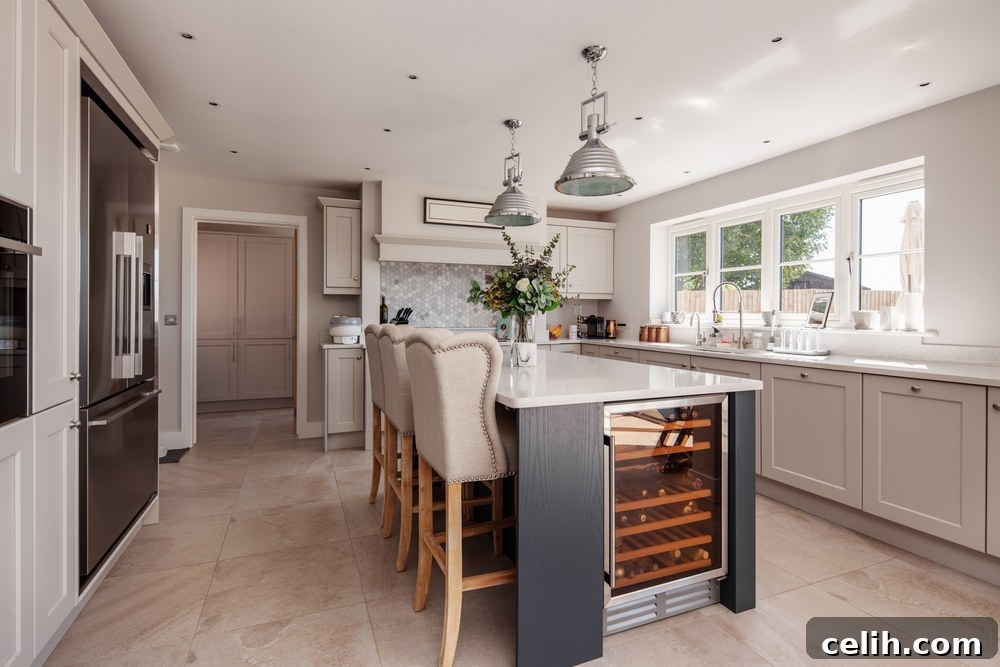
The market abounds with a diverse range of beautiful and sleek designs to suit virtually any taste and interior design scheme. You can find wine fridges crafted with classic wood finishes, which exude warmth and traditional elegance, perfect for a rustic or vintage-inspired home. Modern glass doors, often framed in sleek stainless steel or elegant black finishes, offer a contemporary and minimalist look, allowing you to stylishly display your collection while integrating seamlessly into modern kitchens or entertainment areas. Some high-end models even offer custom panel-ready options, allowing you to match the fridge door directly to your existing cabinetry for a truly integrated and discreet appearance.
Consider the color and material of the casing, the type of door (solid vs. glass), the handle design, and even the interior lighting (soft LED lighting can add a luxurious touch). Whether your home boasts a chic minimalist decor, a cozy farmhouse feel, or a grand traditional style, there’s a wine fridge design available to perfectly complement and elevate your home’s aesthetic, making it a focal point of admiration rather than just another appliance.
FAQs About Wine Fridges
1. What factors are the most critical when choosing a wine fridge?
When selecting a wine fridge, the most critical factors to prioritize are stable temperature control, adequate humidity levels (between 50-70%), robust UV protection, effective vibration dampening, and reliable insulation. These elements directly impact the long-term preservation and quality of your wine collection.
2. How can I best organize my wine cellar or fridge?
Effective organization is key to easily managing your wine collection. A great strategy is to separate various wines into different compartments or specific shelves based on varietal, vintage, region, or even anticipated drinking window (e.g., “ready to drink” vs. “age-worthy”). Labeling shelves or using wine tags can help you quickly identify what’s stored where, making retrieval effortless and preventing unnecessary disturbance of other bottles.
3. How durable is a typical wine refrigerator?
With proper care and maintenance, a good quality wine refrigerator is a durable investment. On average, you can expect a wine fridge to last between 10 to 12 years. However, well-maintained units from reputable brands can often exceed this lifespan, potentially serving you reliably for 15 years or even longer. Regular cleaning, ensuring proper ventilation, and prompt attention to any minor issues can significantly extend its operational life.
Conclusion: Toasting to Chilled Perfection
Embarking on the quest for the perfect wine fridge is an exciting journey for any oenophile. Remember, when making your purchase, don’t let aesthetics be your sole guide. While design is important, always prioritize your specific preferences and meticulously consider the critical factors we’ve meticulously outlined in this guide: capacity, precise temperature and humidity control, UV protection, vibration dampening, shelving configuration, energy efficiency, and noise levels.
An informed decision, grounded in these considerations, will undoubtedly yield the best results for your cherished wine collection. After all, the essence of wine lies in its unparalleled experience – its nuanced flavor, captivating aroma, and uncompromising quality, all of which are profoundly influenced by proper storage. Beyond the initial purchase, commit to maintaining your wine fridge diligently. Regular cleaning, ensuring adequate ventilation, and timely servicing will not only extend its lifespan but also guarantee it continues to provide top-notch service for many years to come.
So, let’s raise a glass to your success in finding the ultimate wine fridge for your home – an appliance that will faithfully preserve your passion, ensuring every bottle is uncorked at its absolute peak of perfection!